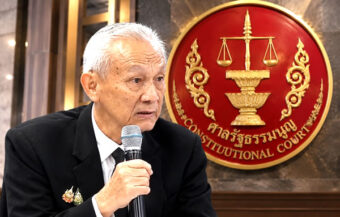
Five blue senators demand an ethics probe into EC commissioner Sitthichot Intrawises after he revealed bitter splits over the Senate collusion case, including political links and financial trails. At the same time, 26 serving senators face legal proceedings being prepared by the Election Commission for the Supreme Court.
Thailand’s Senate collusion battle intensified Monday as five “blue” senators moved against dissenting Election Commissioner Sitthichot Intrawises. They asked the NACC to investigate him after he exposed divided EC votes, political links and financial trails. The EC earlier proceeded against 77 people, including 26 senators, while political figures escaped referral. Just one day earlier, Bhumjaithai powerbroker Newin Chidchob gathered Prime Minister Anutin Charnvirakul, ministers and MPs in Buriram. There, he publicly backed Anutin for another two terms. No evidence links the events, but both thrust the powerful blue network back into focus as the Senate play a particularly influential role.
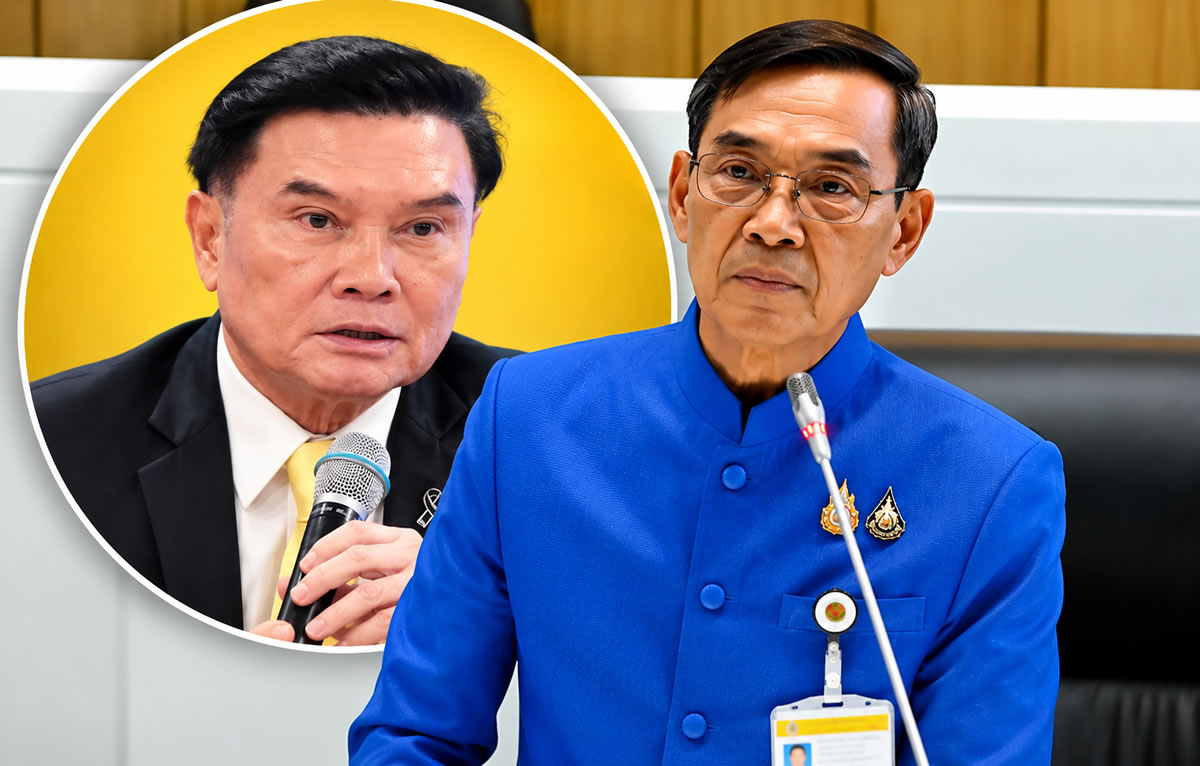
Five “blue” senators opened another front in Thailand’s Senate collusion affair on Monday. They asked the National Anti-Corruption Commission to investigate Election Commissioner Sitthichot Intrawises. Their complaint accuses him of a serious ethical breach. Specifically, they say he disclosed confidential material from the EC investigation into the 2024 Senate selection.
The move targets one of two commissioners who challenged crucial decisions by the EC majority. Notably, Mr Sitthichot publicly exposed deep divisions within the seven-member commission.
His disclosures covered voting results, witness evidence, political connections, telephone contacts and financial trails. Now, the five senators want the NACC to determine whether those disclosures crossed legal and ethical boundaries.
Newin backs Anutin for two more terms as blue senators move against dissenting Election Commissioner
The complaint also landed at a politically charged moment. One day earlier, Prime Minister Anutin Charnvirakul attended Newin Chidchob’s 68th birthday gathering in Buriram. Cabinet ministers, MPs and other political figures also travelled there. Mr Newin holds no government position. Nevertheless, he remains closely associated with Bhumjaithai and prominent figures surrounding the party.
During Sunday’s gathering, Mr Newin tied a ceremonial string around Mr Anutin’s wrist. He then wished him continued service as prime minister. More strikingly, Mr Newin referred specifically to another two terms. Thai PBS interpreted those remarks as envisaging Mr Anutin remaining premier for up to another eight years.
In response, Mr Anutin played down political interpretations of his attendance. He described the visit as a family matter. He also said he attends Mr Newin’s birthday every year. By Monday morning, however, five senators associated with the blue bloc were at NACC headquarters.
There is no evidence that Mr Newin directed or coordinated their complaint. Nor is there evidence that Mr Anutin or Bhumjaithai ordered the move. Instead, the senators based their case on Mr Sitthichot’s public disclosures about the Senate investigation.
Five blue senators seek ethics investigation after Sitthichot exposed divisions inside Election Commission
Senator Pol Lt Col Kob Achanakit led the group. At about 10 am, they submitted their petition to the NACC chairman. They requested an investigation into possible serious ethical misconduct. As part of this, their complaint cited Articles 234 and 235 of the Constitution.
At the heart of the case is a crucial EC meeting on September 14. Commissioners considered findings from the investigation into alleged collusion during the 2024 Senate selection. Ultimately, the EC decided to proceed against 77 people. They included 26 serving senators, 36 eligible Senate candidates and another 15 individuals.
Yet the commission declined to proceed against political figures caught within the wider investigation. That decision exposed sharp divisions among the seven commissioners. Mr Sitthichot and fellow commissioner Chai Nakornchai opposed important elements of the majority position. The following day, Mr Sitthichot took those disagreements into public view.
First, he disclosed voting divisions on individual allegations. These included decisions reached by margins of 5–2 and 6–1. He also identified himself and Mr Chai as minority commissioners on important questions. Crucially, his account extended beyond the voting figures.
Sitthichot’s evidence disclosures and divided EC votes become central to blue senators’ ethics complaint
Mr Sitthichot discussed evidence gathered during the investigation. This included witness statements, telephone contacts and financial information. In addition, he said evidence pointed towards people associated with one political party. He also disclosed another closely divided EC vote involving financial trails.
According to Mr Sitthichot, commissioners voted 4–3 against pursuing further investigation into some financial transactions. That revelation now sits at the centre of the senators’ complaint. They accuse him of disclosing confidential material from EC meetings and deliberations. Separately, they accuse him of discussing information contained within the investigative case file.
The senators argue that Election Commissioners must respect decisions reached by the majority. They also question whether Mr Sitthichot’s disclosures could prejudice people implicated in the investigation. At the same time, their petition raises potential consequences for other commissioners and witnesses.
Their challenge goes further. The senators also question the accuracy and completeness of Mr Sitthichot’s public account. Consequently, they want his statements checked against official EC records. That includes his description of individual votes and the reasoning behind them.
Senators seek EC records and witnesses as dispute grows over what Sitthichot was permitted to disclose
Likewise, they want his statements about the investigation’s scope examined against the original files. His comments concerning financial transactions are another focus. The senators want investigators to compare those remarks with evidence contained in the case records.
The evidential request is substantial. The senators want the complete recording of Mr Sitthichot’s September 15 media interview. They also seek recordings and minutes from the September 14 EC meeting. Alongside those records, they want relevant media reports examined by NACC investigators.
However, the complaint contains an important complication. Mr Sitthichot said EC chairman Narong Klanwarin previously approved disclosure of voting numbers. He said those figures could be released for transparency. Accordingly, the NACC may need to determine precisely what disclosure commissioners had agreed to permit.
On this point, the senators want evidence from Mr Narong himself. They also seek testimony from the remaining Election Commissioners. Beyond that, they want evidence from the EC secretary-general and spokesman. Journalists involved in reporting Mr Sitthichot’s statements could also become witnesses.
The senators had originally planned to file their complaint on October 2. Instead, they postponed it following another public appearance by Mr Sitthichot. Three days earlier, he had spoken at a Royal Institute forum about the Senate investigation.
Royal Institute appearance expands senators’ case as complaint sets out confidentiality and ethics rules
The September 30 event carried a striking title. It was translated approximately as “Senate Collusion Case: The Truth All Thais Must Know.” Once again, Mr Sitthichot discussed the politically sensitive investigation. The senators considered those remarks additional material supporting their complaint.
As a result, they delayed their NACC filing. They then incorporated material from the forum into their submission. The final complaint therefore covers more than Mr Sitthichot’s September 15 interview.
The petition also sets out ethical requirements applying to Election Commissioners. According to the senators, commissioners must perform their duties independently and impartially. They must operate without bias or improper influence. Similarly, they must not yield to social pressure or unlawful pressure.
The complaint also stresses confidentiality. It says commissioners must protect information surrounding EC meetings and deliberations. Moreover, they must respect majority decisions and the reasoning presented by all sides. Public information must also be accurate, complete and impartial, the senators argue.
Even so, the complaint acknowledges a significant distinction. Confidentiality does not require every EC decision to remain secret. Rather, the dispute concerns how far an individual commissioner may reveal internal deliberations. Laws, regulations and EC resolutions govern those boundaries, according to the petition.
NACC complaint opens another legal front after divided EC sent 77 Senate selection cases forward
The NACC must now decide whether to investigate further. Importantly, no finding has been made against Mr Sitthichot. The allegations remain claims submitted by the five senators. Should serious ethical misconduct eventually be established, further constitutional proceedings could follow.
Meanwhile, the complaint adds another layer to the sprawling 2024 Senate selection case. That process produced Thailand’s current 200-member Senate. Subsequent allegations of coordinated voting triggered an extensive EC investigation.
The wider inquiry initially covered 229 people. They included 138 senators and 91 political figures or other individuals. An investigative committee and the Department of Special Investigation recommended proceedings against all 229.
On another front, a later committee reached a sharply different conclusion. Committee 36 voted 5–2 to clear the entire group. The seven Election Commissioners then considered the evidence themselves. Their September 14 decision produced the 77 referrals.
Of those 77, 26 were serving senators. Another 36 were eligible Senate candidates, while 15 were other individuals. Political figures facing allegations connected with assistance were not referred. That distinction became a major source of disagreement inside the EC.
Pullman meeting, voting lists and financial trails underpin bitter divisions inside Election Commission
The underlying investigation contained extensive evidence. Investigators examined provincial meetings, suspected voting lists, telephone communications and financial information. They also examined links between candidates and other individuals involved in the selection process.
Among the evidence was a July 21, 2024 gathering at the Pullman Bangkok hotel. At least 40 senators were linked to that meeting during the investigation. Investigators also examined 12 suspected voting lists. In some provinces, those lists reportedly corresponded with candidates ranked between first and seventh.
In parallel, investigators examined telephone records and financial trails. Those strands later became important during the EC’s deliberations. Mr Sitthichot’s disclosures subsequently revealed how closely divided commissioners became over further financial investigation.
The 4–3 vote was particularly significant. The majority rejected further investigation into some financial trails. Mr Sitthichot disagreed with that decision. He maintained that evidence justified additional examination involving political figures.
Meanwhile, Mr Chai also dissented from important parts of the majority position. Together, the two commissioners became the minority voices following the September 14 meeting. Mr Sitthichot then publicly explained significant parts of that disagreement.
Blue senators challenge Sitthichot as Newin publicly backs Anutin for another two terms as prime minister
Now, five senators associated with the blue bloc are challenging his conduct. Their complaint does not simply attack his dissent. Instead, it focuses on what he disclosed after losing those votes.
From the senators’ perspective, the issue is confidentiality and ethical conduct. From Mr Sitthichot’s public account, however, voting figures had been cleared for disclosure. The NACC may therefore have to establish exactly where the authorised boundary stood.
Against that backdrop, Sunday’s gathering in Buriram placed the blue political network under renewed attention. Ministers, MPs and other political figures travelled there for Mr Newin’s birthday. The gathering once again displayed his continuing relationship with Bhumjaithai’s senior political figures.
Mr Newin’s position remains unusual. He holds no cabinet portfolio and has no parliamentary seat. Even so, his relationship with Bhumjaithai’s leadership remains highly visible. Sunday’s ceremony placed that relationship prominently before the public.
At the gathering, Mr Newin tied the ceremonial wrist string around Mr Anutin. He then offered his blessing to the prime minister. He said Mr Anutin should continue serving until he became tired of the job. He also referred to another two terms.
Anutin plays down Newin gathering as blue senators take separate complaint against Sitthichot to NACC
For his part, Mr Anutin rejected suggestions that attending the event was unusual. He said he goes every year. Furthermore, he described his attendance as a family matter rather than a political event.
Bangkok Biz News has described Mr Newin’s annual birthday as a longstanding gathering point for political figures. Its commentary has also examined the expanding influence associated with Bhumjaithai and the blue network. Such commentary, however, does not establish control over institutions.
Mr Newin has previously spoken openly about his relationship with Bhumjaithai politicians. At his 2022 birthday gathering, he described himself as Bhumjaithai’s “head teacher.” He also spoke about wanting one of his political “students” to become prime minister.
Four years later, Mr Anutin occupies that office. On Sunday, Mr Newin publicly wished him another two terms. The next morning, five blue senators arrived at NACC headquarters with their complaint against Mr Sitthichot.
Despite the timing, the two developments remain separate. No evidence links Mr Newin to the senators’ decision. Equally, no evidence shows that Mr Anutin or Bhumjaithai directed the complaint.
NACC must test Sitthichot’s disclosures against EC records as wider Senate selection battle continues
For the NACC, the immediate questions are narrower. Investigators must establish precisely what Mr Sitthichot disclosed. They must determine which disclosures had been authorised. They must also identify what information remained protected by EC confidentiality rules.
In addition, his account can be tested against official meeting records. Those records should show the votes he described as 5–2, 6–1 and 4–3. They can also establish what reasons majority and minority commissioners formally recorded.
Former top judge advocates collecting evidence for a Constitutional Court case to strike down the Senate
Serving Election Commissioner again voicing his concerns about the probe into the 2024 Senate poll
At the same time, the original Senate collusion proceedings remain alive. The EC’s September decision moved cases involving 77 people towards further legal proceedings. Internal disputes surrounding that decision have now generated a separate constitutional complaint.
Those disputes cover political connections, financial trails and the limits of the original investigation. Mr Sitthichot brought significant details of those disagreements into public view. Five blue senators now want the NACC to investigate whether he crossed the line.
Thus, the battle surrounding the 2024 Senate selection has spread beyond the senators originally investigated. It now reaches directly into the Election Commission and one of its most outspoken dissenting members.
Join the Thai News forum, follow Thai Examiner on Facebook here
Follow Thai Examiner on Google here
Receive all our stories as they come out on Telegram here
Follow Thai Examiner here
Further reading:
Serving Election Commissioner again voicing his concerns about the probe into the 2024 Senate poll
Election Commission exposed based on Monday’s sweeping decisions and judgments warns opposition
Election Commission creates more questions than answers as it refers 77 people to the Supreme Court
Ex Pheu Thai minister warns Commission members that soon they could be judged as crunch vote looms