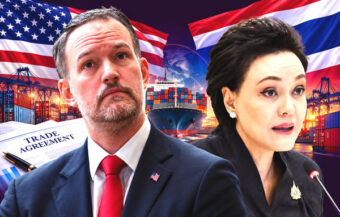
Deputy Prime Minister and Commerce Minister Suphajee Suthumpun wants a ฿450 tourist levy with insurance. THA President Thienprasith Chaiyapatranun questions ฿7bn in medical debts as injured visitors face huge bills. Insurance coverage is still unclear.
Deputy Prime Minister Suphajee Suthumpun is pushing ahead with Thailand’s proposed ฿450 tourist levy despite mounting opposition from hotel operators. The government promises accident insurance and billions in tourism funding, but its justification is coming under fire. At the centre of the row is ฿7 billion in unpaid foreign medical bills, including debts involving migrant workers rather than tourists. Yet serious accidents involving British holidaymakers have exposed another problem, with families raising over £150,000 to cover treatment and repatriation. The dispute comes as ASEAN arrivals fall and Thailand faces fierce competition from regional rivals, while already considering further passenger taxes. With insurance benefits still undefined and Cabinet approval pending, the battle now centres on who pays, who benefits and who controls the billions collected.
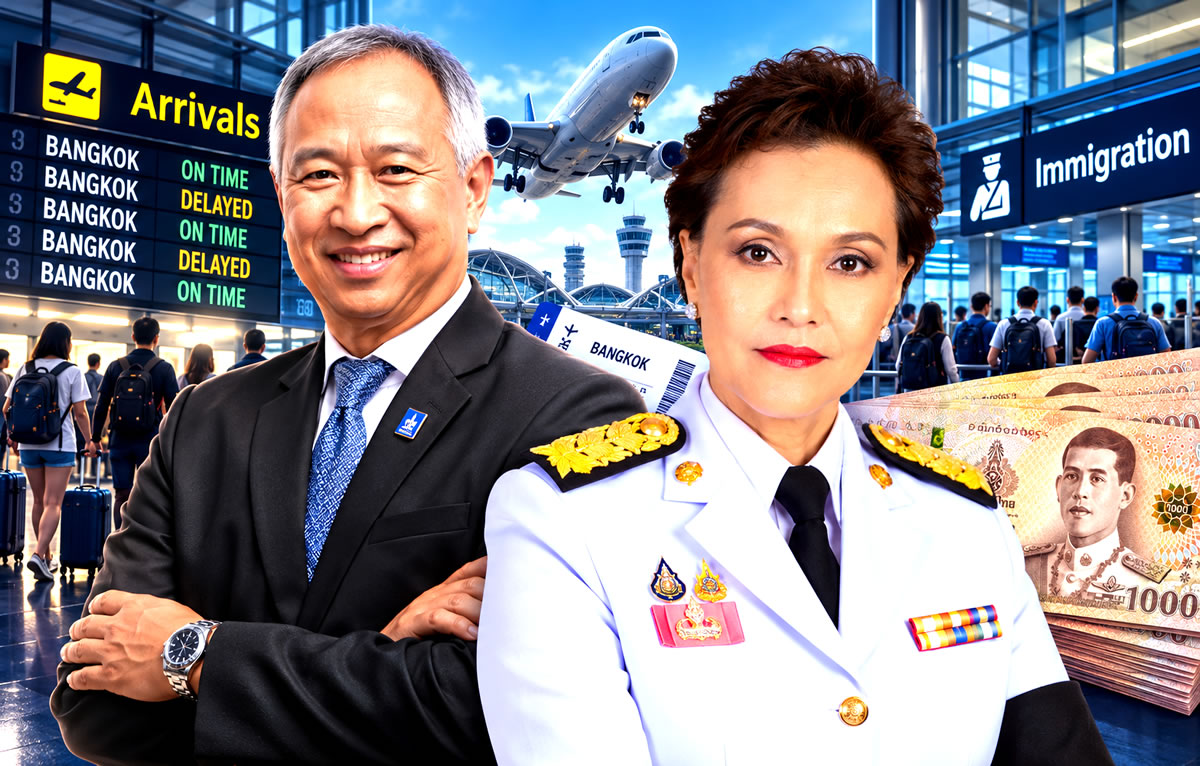
Deputy Prime Minister and Commerce Minister Suphajee Suthumpun has reaffirmed her support for Thailand’s proposed ฿450 tourist levy over the weekend. However, growing resistance within the tourism industry is complicating the government’s plans.
The charge would provide accident and death insurance for foreign visitors while raising billions of baht for tourism development. Significantly, industry objections now extend to the insurance arrangements, healthcare costs and control of the revenue.
The dispute comes amid mounting international publicity over seriously injured tourists whose families face enormous hospital bills. Meanwhile, online fundraising appeals have exposed the financial risks of visiting Thailand without adequate insurance. The controversy adds to mounting difficulties for a tourism industry facing weaker regional arrivals, higher travel charges and intensifying competition.
Suphajee pushes ฿450 tourist levy towards Cabinet as officials prepare insurance and collection rules
On Friday, October 9, Suphajee instructed government agencies to finalise detailed arrangements for the proposed levy. Initially, the charge would apply to eligible foreign visitors arriving by air.
Collection from land and sea arrivals would follow under a phased introduction. However, Cabinet approval remains outstanding, while officials must settle insurance provisions, collection procedures and expenditure rules.
Tourism and Sports Minister Surasak Phancharoenworakul has targeted early 2027 for implementation. Nevertheless, that timetable remains dependent on completing the necessary legal and administrative procedures.
The proposal has already been discussed by the National Tourism Policy Committee. Earlier consultations also indicated substantial industry support for introducing the charge. Yet the latest objections reveal growing disagreement over how the proceeds should be distributed.
Suphajee, who oversees the Ministry of Tourism and Sports, has demanded transparent collection and expenditure arrangements. In particular, she wants financial procedures open to scrutiny before the proposal reaches Cabinet. Her intervention comes as tourism businesses increasingly question the government’s financial priorities.
Government backs tourist protection and development funding but insurance terms remain unresolved
Importantly, Suphajee identified tourist safety and insurance protection among the principal purposes of the levy. Revenue would also support attractions and infrastructure lacking sufficient development funding.
She pointed out that other countries already impose comparable visitor charges. At the same time, she acknowledged the need to establish precisely how Thailand would use the money. Her comments followed renewed efforts by the Tourism and Sports Ministry to advance the long-delayed measure.
Successive governments have considered imposing a foreign tourist entry charge. However, the current proposal has moved towards Cabinet consideration with a revised fee of ฿450. The initial collection system would concentrate on international air arrivals.
Subsequently, eligible visitors entering through land and sea borders would also face charges. The phased arrangements would allow officials to establish collection procedures before extending the system to other entry points.
Crucially, the insurance provisions remain unfinished. The government has not published final medical benefits, death compensation limits or detailed exclusions. Nor has it disclosed a complete breakdown showing how much of each payment would finance insurance.
These outstanding details have become increasingly important as tourism businesses examine the proposed financial arrangements. Indeed, the insurance component has emerged as a central issue in the dispute over the levy.
Hotel association challenges ฿7 billion healthcare debt figures used to justify new tourist charge
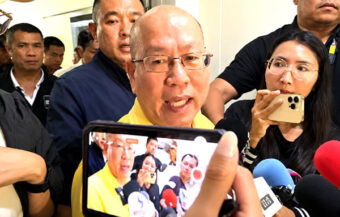
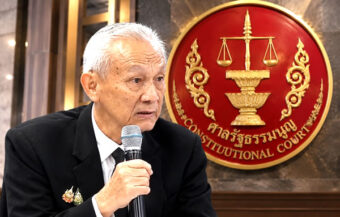
On Saturday, October 10, Thai Hotels Association president Thienprasith Chaiyapatranun challenged the government’s justification for imposing another charge on foreign visitors. Specifically, he questioned estimates suggesting that foreigners had accumulated approximately ฿7 billion in unpaid healthcare costs.
The association president highlighted the inclusion of Burmese, Cambodian and Lao nationals in the figures. Many foreigners from those countries receiving medical treatment are migrant workers rather than international tourists.
Thienprasith argued that their healthcare needs should be addressed through appropriate employment and social security arrangements. Consequently, he questioned whether their unpaid hospital bills justified imposing another charge on incoming holidaymakers.
The distinction is significant because the proposed insurance would cover qualifying visitors paying the levy. It would not automatically cover migrant workers, foreign residents or other people outside the scheme’s eligibility rules. Therefore, tourist insurance could not eliminate every category of unpaid foreign healthcare debt.
Nonetheless, the dispute over those figures does not resolve the separate problem of uninsured tourists requiring emergency treatment. That issue has repeatedly generated international news coverage following serious accidents involving foreign visitors.
Separately, the hotel association has raised concerns about allocating money to healthcare rather than tourism development. Its objections include questions over insurance benefits and how the proceeds would be managed. The association’s reported position does not establish outright opposition to every form of tourist insurance.
Industry resistance grows as proposed levy promises billions for tourism projects and protection
Instead, its criticism centres on the additional charge, the government’s healthcare calculations and the proposed distribution of revenue. Even so, the intervention represents significant resistance from one of Thailand’s principal tourism organisations.
It also exposes competing demands over a fund expected to control billions of baht annually. The government has suggested that the levy could generate substantial development revenue after insurance and collection expenses. Tourism and Sports Minister Surasak has indicated that at least ฿8 billion annually could remain available for tourism projects.
The money would support infrastructure, environmental restoration, destination improvements and community development. Additionally, tourism promotion and visitor protection are among the proposed purposes.
At 30 million chargeable arrivals, the ฿450 levy would theoretically produce ฿13.5 billion annually. Actual receipts, however, would depend on visitor numbers, exemptions and the phased implementation programme. Insurance premiums and collection expenses would then reduce the amount available for other purposes.
Even the government’s lower estimate represents a substantial new source of tourism funding. As a result, attention is turning towards who would control expenditure and determine which projects receive support.
The Association of Thai Travel Agents previously estimated that the scheme could generate approximately ฿10 billion annually. During discussions in August, industry representatives sought a role in decisions over how the money would be distributed. Former Tourism Minister Weerasak Kowsurat also proposed greater transparency in managing the fund.
Tourism fund faces scrutiny over spending rules as disputed medical debts complicate insurance plans
Notably, his suggestions included allowing public scrutiny of committee discussions. The government, however, has not finalised the fund’s management structure or the powers of private-sector representatives. Procedures for auditing expenditure and selecting projects also remain unsettled.
The dispute has therefore expanded beyond the original question of whether foreign tourists should pay another charge. Instead, it increasingly concerns insurance expenditure, healthcare funding and control over substantial tourism development revenue.
On another front, questions have emerged over the healthcare figures used to support the insurance component. Earlier government reporting in August referred to approximately ฿300 million to ฿400 million annually in unrecovered medical expenses involving foreigners. By October, discussions referred to approximately ฿7 billion.
The Tourism and Sports Ministry acknowledged that the larger figure covered different categories of foreign nationals. Consequently, the figures cannot be directly compared without establishing their accounting periods and patient populations.
The government has not published a definitive breakdown identifying unpaid hospital bills attributable exclusively to short-term tourists. That information is relevant when assessing the financial assumptions behind the proposed insurance scheme.
However, the wider problem of uninsured visitors remains separate from healthcare debts involving foreign workers. Indeed, a succession of serious accidents has exposed the financial consequences facing tourists without adequate protection. Several cases involving British visitors have generated extensive international coverage during the past two years.
British tourists face huge medical bills as families launch urgent appeals after serious accidents
In each case, families faced substantial medical or repatriation expenses following serious injuries in Thailand. Furthermore, the incidents prompted online fundraising campaigns that attracted attention through British news outlets and social media.
The appeals involved different accidents and insurance circumstances. Yet they shared a recurring feature: relatives seeking substantial public donations to meet treatment or repatriation costs. The amounts involved reached tens of thousands of pounds and, in one case, exceeded £150,000.
In February 2026, British backpacker Tiger Duggan, 23, suffered catastrophic injuries in a motorcycle accident on Koh Samui. His family subsequently launched an urgent appeal to finance medical treatment and possible repatriation.
Within six days, donations exceeded £150,000, approximately ฿6.44 million. The case attracted international publicity as concerns emerged about the insurance protection available. Moreover, the enormous fundraising target illustrated the financial consequences of serious accidents requiring prolonged medical care.
The incident was not an isolated example. In June 2026, British tourist Ethan Lacey, 20, suffered severe brain injuries after falling from a moving pickup in Pattaya. His travel insurance had expired after he extended his holiday.
Consequently, his family faced substantial hospital expenses and specialist repatriation costs without an active policy. Relatives began fundraising and seeking loans to finance his treatment and return home. The case subsequently attracted attention in the British Parliament.
Insurance exclusions leave injured British visitors facing major bills and public fundraising appeals
Elsewhere, another British holidaymaker faced substantial medical bills despite having purchased travel insurance. In April, Jo Ingram suffered serious spinal injuries during a beach pony ride in Thailand. She broke her back in three places.
Her insurer, however, classified the activity as an excluded extreme sport. Medical expenses reached at least £21,000, prompting another online fundraising appeal. The case demonstrated how policy exclusions can leave insured travellers facing substantial uncovered costs.
In particular, the nature of an activity can determine whether an insurer accepts responsibility for treatment. Similarly, British backpacker Okemena Sule, 31, suffered a severe brain injury in a Koh Samui motorcycle accident in March 2025.
His family could not establish whether he held valid travel insurance. Relatives consequently raised more than £38,000 as medical expenses mounted. The case also attracted international news coverage, adding to the series of reports involving injured British visitors.
Together, the four incidents involved different circumstances, injuries and insurance arrangements. All resulted in serious financial difficulties for injured tourists or their families. Moreover, each generated publicity involving Thailand, medical emergencies and urgent appeals for public donations.
The cases form part of wider international reporting concerning visitor safety and healthcare risks in Thailand. There is, however, no established figure measuring how many tourists have been discouraged specifically by these reports.
British travel warnings highlight motorcycle risks as Thailand finalises proposed tourist insurance
Nor has the financial impact of such coverage on Thailand’s tourism industry been quantified. Nevertheless, the incidents document the scale of medical expenses arising when insurance is absent or inadequate.
The British Foreign, Commonwealth and Development Office already warns travellers about Thailand’s road safety record. Its official guidance highlights the country’s high number of road accidents, particularly those involving motorcycles. Additionally, it warns that riding without the appropriate motorcycle licence can invalidate insurance.
British government healthcare advice also cautions visitors about the cost of private hospital treatment. Hospitals may require guarantees of payment before providing certain services. Accordingly, travellers are advised to obtain adequate medical and evacuation insurance before visiting Thailand.
These warnings are available to prospective British tourists before they book or undertake their journeys. Meanwhile, online fundraising cases provide further examples of the financial exposure associated with serious accidents abroad.
The proposed government-backed insurance scheme is intended to address some of those risks. Its effectiveness, however, will depend on the coverage limits, exclusions and procedures eventually approved.
The government has not yet disclosed the final policy conditions. In particular, motorcycle accidents present a significant unresolved issue. Motorcycle crashes feature prominently in reports involving seriously injured foreign visitors. Yet commercial travel insurance frequently includes conditions concerning licensing, engine size, helmets and alcohol consumption.
Motorcycle policy exclusions and repatriation costs raise questions over proposed insurance coverage
Some policies also exclude particular activities or circumstances. British government insurance guidance has previously highlighted a traveller facing a £23,000 medical bill after a motorcycle accident.
The policy covered motorcycles only up to 50cc, while the visitor had ridden a 125cc machine. As a result, the insurer’s conditions left the traveller facing substantial expenses. Thailand’s proposed insurance arrangements have not established how comparable claims would be handled.
Furthermore, the government has not explained whether the scheme would cover medical evacuation or specialist repatriation. Those expenses featured prominently in the cases involving injured British tourists.
Questions also remain over emergency hospital payments and procedures for submitting claims. A tourist paying the levy could receive some accident protection while remaining subject to significant exclusions. Ultimately, the final insurance specifications will determine the practical value of the proposed charge.
Thailand has previously operated a government-funded assistance programme for foreign tourists injured during their visits. In February 2024, the Tourism Authority of Thailand announced a ฿50 million allocation for accident assistance.
Earlier tourist accident assistance offered limited benefits as new levy insurance terms remain unclear
Under that programme, the death of a foreign tourist could qualify for assistance of up to ฿1 million. Accident-related medical treatment could attract up to ฿500,000. Meanwhile, permanent disability or organ loss could qualify for assistance of up to ฿300,000.
However, eligibility conditions applied, and certain circumstances were excluded. Those benefits belonged to the earlier government assistance programme. They are not confirmed benefits under the proposed ฿450 tourist levy.
Nevertheless, the programme established a precedent for state-supported accident assistance involving foreign visitors. The proposed levy would introduce a dedicated revenue source linked to international tourist arrivals.
Consequently, the government would have a recurring funding mechanism rather than relying solely on limited assistance allocations. The financial structure, however, has yet to be finalised. Officials must determine the premium paid for each insured visitor and the extent of the resulting coverage.
In addition, they must establish how claims will be processed and how medical providers will receive payment. The duration of insurance protection also remains an important consideration.
Foreign tourists can remain in Thailand for different periods, including extended holidays. Yet the government has not fully explained how the proposed coverage would operate across those different stays. Similarly, the treatment of visitors entering through land and sea borders remains tied to the phased introduction.
Hotel industry warns falling ASEAN arrivals and rising travel charges threaten Thailand’s competitiveness
These unresolved questions are becoming more significant as industry representatives challenge the insurance arrangements. At the same time, the proposed levy is encountering resistance over Thailand’s wider travel costs.
On October 10, Thai Hotels Association president Thienprasith warned that arrivals from ASEAN markets had fallen by approximately 20%. He argued that additional visitor charges could further weaken Thailand’s competitiveness.
Specifically, he identified Vietnam and Hong Kong among competing destinations. He also warned that rising travel costs could discourage price-sensitive tourists. Furthermore, he raised concerns about possible consequences for airline services and flight frequencies.
The objections come after Thailand increased its international airport passenger service charge to ฿1,120. Separately, the government is considering a proposed ฿1,000 international departure tax.
That measure remains under consultation and is distinct from the proposed ฿450 tourist levy. If all three charges applied, an eligible foreign air passenger would face a combined total of ฿2,570. However, that amount is not currently payable because the two proposed taxes have not received final approval.
Hotels oppose separate departure tax as government examines funding for tourism and foreign films
The Thai Hotels Association has formally objected to the separate departure tax. Its submission was made to the Revenue Department. Meanwhile, the association’s October 10 comments also challenged the tourist levy and its financial justification.
The reported formal submission, however, concerned the departure-tax proposal rather than the insurance scheme. The distinction is important because objections to several different travel charges are becoming intertwined.
Even so, the cumulative cost of visiting Thailand has become a prominent issue within the industry. The hotel association’s concerns arise as tourism businesses face competition from destinations offering alternative prices and travel arrangements.
In parallel, the government is seeking new funding for tourism development and visitor protection. The proposed insurance component has therefore become part of a wider disagreement over financial priorities.
There is also a further complication involving Thailand’s international film industry. On Friday, October 9, Suphajee revealed that officials were examining whether tourism-related revenue could support foreign film productions. She assigned former Tourism Minister Weerasak Kowsurat, now an adviser, to investigate the legal position.
The proposal concerns Thailand’s existing Cash Rebate scheme for international film productions. Under that programme, the government provides financial incentives to attract overseas filmmakers.
Film production rebates face funding questions as Suphajee reviews payments and legal arrangements
However, increasing production activity could place additional pressure on the available budget. As part of this, officials are studying whether alternative funding arrangements would be legally possible.
No decision has been made to allocate proceeds from the proposed tourist levy to film production incentives. The matter remains under examination. Separately, Suphajee addressed delays in payments under the existing film rebate programme.
She explained that the government transition had delayed the appointment of the relevant committee. A new committee has now been established. Consequently, officials can accelerate the processing of outstanding payments to film operators.
Suphajee also discussed closer coordination between foreign production incentives and support for Thailand’s domestic film industry. The foreign production programme falls under the Ministry of Tourism and Sports.
By contrast, support for Thai film operators is administered through the Ministry of Culture. She said closer cooperation could improve the management of film industry incentives. However, any proposal involving tourist levy proceeds would require an appropriate legal basis.
The discussion nevertheless introduces another possible beneficiary of the substantial revenue expected from the tourist charge. As such, the government’s promised transparency over expenditure has become increasingly important.
Tourism levy spending plans remain unsettled amid industry pressures and international accident reports
The proposed fund could finance infrastructure, destination improvements, environmental projects and tourist protection. Insurance costs must first be established before the amount available for development can be determined.
Similarly, the government must decide which agencies and industry representatives will participate in expenditure decisions. Those arrangements remain unfinished despite renewed political support for the levy.
The latest dispute also comes against the background of Thailand’s wider tourism difficulties. The industry faces pressure from competing destinations, rising travel charges and weaker arrivals from some regional markets.
At the same time, international reports continue to highlight serious accidents involving foreign visitors. Several have involved families seeking large public donations to pay for hospital treatment and repatriation. Those cases have received coverage far beyond Thailand.
Meanwhile, official foreign travel advisories continue to identify road accidents and medical costs as significant risks. The government’s proposed insurance scheme addresses the financial consequences of some tourist emergencies. However, it does not replace accident prevention, road safety enforcement or emergency medical services. Its actual coverage also remains unknown until the policy terms are finalised.
Hotel association disputes new visitor costs and healthcare figures as Cabinet decision remains pending
The Thai Hotels Association’s objections have therefore opened two separate disputes. The first concerns the additional cost imposed on foreign visitors and Thailand’s competitiveness.
The second concerns the financial justification for insurance and the allocation of revenue. The government’s use of unpaid healthcare figures involving migrant workers has become particularly contentious. However, the financial exposure facing uninsured holidaymakers remains a distinct issue.
The cases involving Duggan, Lacey, Ingram and Sule illustrate the scale of that exposure. They also show how serious accidents can generate substantial international publicity through fundraising appeals.
Nevertheless, it remains unclear whether the proposed insurance would have covered any of those particular incidents. That will depend on the final benefits and exclusions. For now, the government has not announced the premium structure or selected the definitive insurance arrangements.
Nor has it published a complete breakdown of the proposed fund’s expenditure. The Cabinet must still approve the levy before implementation can proceed. Furthermore, the government must complete the required administrative and legal steps. Suphajee’s October 9 intervention indicates that the proposal retains high-level political support. Her instructions also place transparency and detailed financial planning at the centre of the next stage.
Tourism sector challenges levy spending plans as rising costs and tourist accidents add to pressures
However, the October 10 objections from the Thai Hotels Association show that industry agreement remains incomplete. The association is challenging the healthcare figures, the proposed allocation of funds and the growing cost of visiting Thailand.
Meanwhile, other tourism representatives have sought greater participation in managing the expected revenue. The possibility of film industry funding has added another question over permitted expenditure.
Consequently, the debate now extends well beyond the original proposal to charge foreign visitors ฿450. It involves insurance protection, unpaid hospital bills, tourism infrastructure and the management of billions in annual receipts. The dispute is developing as Thailand’s tourism sector faces mounting commercial and reputational pressures.
New taxes simply for going in and out of Thailand in addition to higher airport tax already implemented
New tourist tax of 450 baht a step closer with officials targeting early 2027 after cabinet approval is obtained
Industry representatives are warning about falling arrivals from some markets and increasingly competitive regional destinations. At the same time, serious accidents involving uninsured or underinsured tourists continue to attract international attention.
The resulting fundraising appeals have exposed the substantial medical costs facing visitors and their families. However, the government’s insurance proposal remains incomplete, with coverage conditions and financial arrangements still unresolved.
The next stage will determine whether officials can settle those questions and secure Cabinet approval. Until then, Thailand’s proposed ฿450 tourist levy remains a significant source of disagreement within an industry facing growing pressure over visitor numbers, safety and international confidence.
Join the Thai News forum, follow Thai Examiner on Facebook here
Follow Thai Examiner on Google here
Receive all our stories as they come out on Telegram here
Follow Thai Examiner here
Further reading:
60-day visa regime to be ended confirms Minister responding to rising industry security concerns
Tourism boss warns Thailand it is facing a Chinese blacklist if another security controversy erupts