Macron confronts Hun Manet in Phnom Penh over the Bangkok assassination of Cambodian opposition MP Lim Kimya, 74. The Thai hitman is jailed for life, but two Cambodian suspects remain free, including a former Hun Sen adviser.
French President Emmanuel Macron has confronted Cambodian Prime Minister Hun Manet over the cold-blooded assassination of opposition politician Lim Kimya, 74, gunned down near Bangkok’s Khao San Road on January 7, 2025. The former MP was shot minutes after arriving by bus from Cambodia with his wife. On Sunday, November 15, his son welcomed Macron’s demand for justice. Although the Thai hitman is serving life imprisonment, two Cambodian suspects remain at large, including a former adviser to Hun Sen. Police traced suspected payments, surveillance and cross-border movements surrounding the killing. Yet the men who ordered the assassination remain unidentified. Cambodia has refused to extradite its nationals, leaving Thai arrest warrants unenforced. Macron’s public intervention has thrust the murder back into the international spotlight, confronting Phnom Penh with unanswered questions about a killing linked by investigators to suspects within Cambodia’s political establishment.
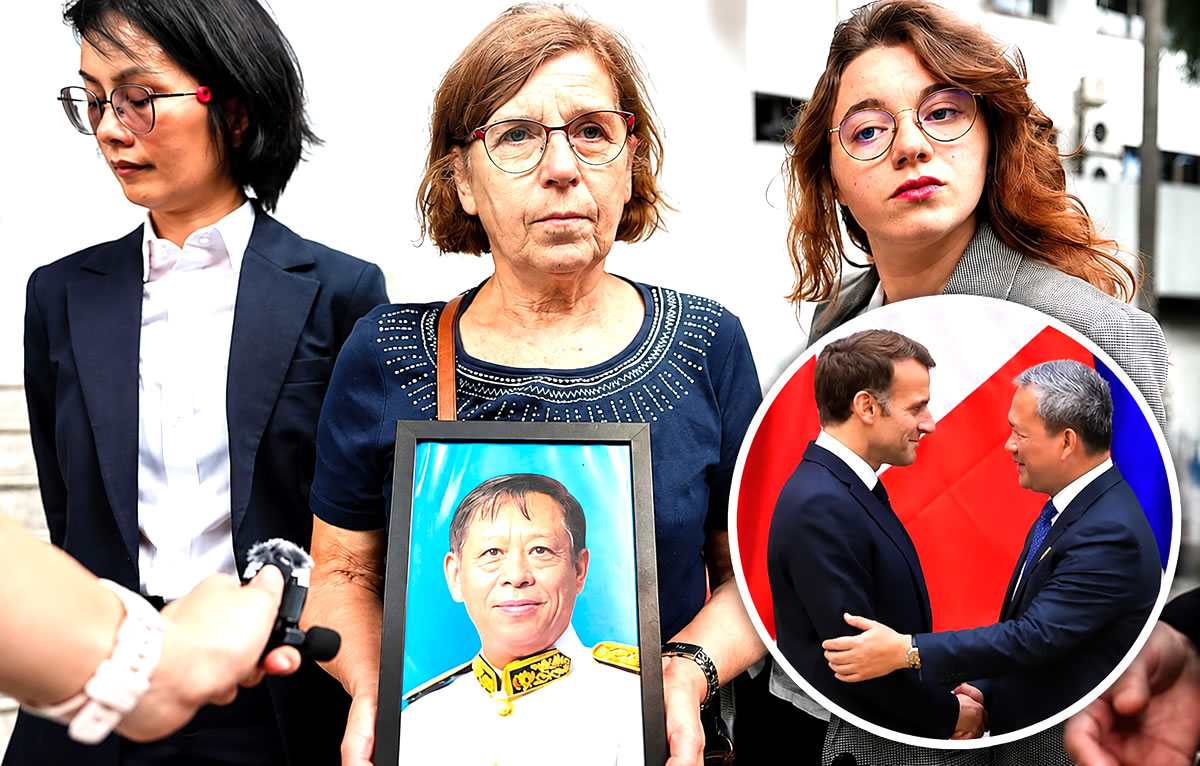
The son of murdered Cambodian opposition politician Lim Kimya has welcomed French President Emmanuel Macron’s demand for justice over his father’s assassination. The intervention came on Sunday as Macron stood alongside Cambodian Prime Minister Hun Manet in Phnom Penh.
The former opposition MP was gunned down in Bangkok in January 2025, shortly after arriving from Cambodia. Although a Thai hitman is serving life imprisonment, investigators identified two Cambodian suspects with connections to the country’s political establishment.
One was a former adviser to Hun Sen, Cambodia’s long-serving former prime minister and father of the current leader. Police also uncovered evidence of suspected payments, surveillance and cross-border movements. Yet neither Cambodian suspect has faced trial. Lim Kimya’s son believes those who ultimately commissioned the assassination remain free.
Macron confronts Hun Manet over Bangkok assassination as Cambodian political links face fresh scrutiny
Macron raised the politically sensitive murder on November 15 during his official visit to Cambodia. Standing beside Hun Manet, the French president demanded a full investigation into the assassination.
His intervention came during a joint press conference at the 20th Francophonie Summit in Phnom Penh. The two leaders had just concluded bilateral discussions and signed 29 cooperation agreements.
Macron declared: “I would like to raise the murder case of Mr. Lim Kimya in Bangkok.” He demanded that investigators establish who organised the killing and bring those responsible before the courts.
Notably, the remarks were broadcast through Hun Manet’s own Facebook account. The French president had placed an unresolved assassination before Cambodia’s prime minister during a major international diplomatic gathering.
The intervention also revived scrutiny of suspected Cambodian involvement in the murder of a French citizen on Thai territory. Macron did not publicly accuse Hun Manet, Hun Sen or the Cambodian government of ordering the killing.
Nevertheless, the investigation involves two wanted Cambodian nationals with reported connections to the country’s political establishment. One previously served as an adviser to Hun Sen. The other has family connections to a politician involved in dismantling Cambodia’s main opposition party.
Lim Kimya’s son welcomes Macron intervention but fears the masterminds behind murder remain at large
Both men remain outside Thai custody despite arrest warrants and international police notices. In response, the murdered politician’s family welcomed the French president’s intervention.
Lim Thomas, the victim’s son, thanked Macron for raising the case during his visit to Phnom Penh. Speaking to Cambodian news organisation CamboJA, he expressed concern that the investigation could remain unresolved. He feared it might follow earlier Cambodian political assassination cases in which those responsible were never fully identified.
More importantly, Lim Thomas questioned whether the two Cambodian suspects were the ultimate organisers. He suggested they could have acted as intermediaries for others who commissioned the killing.
The family wants investigators to identify the people who ordered the assassination, not simply those who carried it out. His comments reflected the family’s assessment rather than a judicial finding.
However, they exposed a major gap in the criminal proceedings already completed in Thailand. The gunman has been convicted and imprisoned, yet the person who ultimately commissioned the assassination remains unidentified.
Murdered former opposition MP was shot in Bangkok after crossing from Cambodia with his family aboard
Lim Kimya, 74, held French and Cambodian citizenship. He was a former member of Cambodia’s National Assembly and had represented the Cambodia National Rescue Party. The CNRP was once the principal parliamentary challenger to the ruling Cambodian People’s Party.
However, Cambodia’s Supreme Court dissolved the opposition party in 2017. The decision eliminated the country’s main parliamentary opposition before the 2018 general election. In parallel, numerous former opposition politicians faced prosecution, imprisonment or exile.
Lim Kimya remained associated with the opposition movement and had criticised Cambodia’s ruling establishment. His murder subsequently attracted international attention because of his political background and the circumstances surrounding the attack.
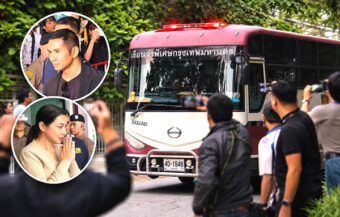
On Tuesday, January 7, 2025, he travelled from Cambodia to Bangkok by bus. His wife and another family member accompanied him. Shortly after arriving in the Thai capital, the former politician was attacked near Wat Bowonniwet, close to Khao San Road.
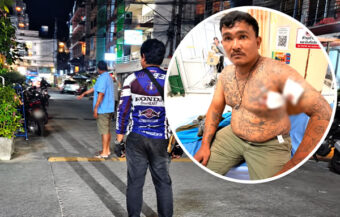
A gunman approached Lim Kimya and opened fire before escaping on a motorcycle. The former opposition MP died at the scene. The killing immediately raised questions about how the attacker had located his target after the cross-border journey.
Thai investigators quickly identified the shooter as Ekkalak Paenoi, a former Thai marine. Ekkalak had subsequently worked as a motorcycle taxi driver. Following the assassination, he fled Thailand and crossed into Cambodia.
Thai hitman receives life sentence as investigators identify two Cambodian suspects in the murder
Cambodian police located and arrested him in Battambang province the following day. Authorities subsequently transferred him to Thai custody on January 11. The arrest established the identity of the gunman.
Nevertheless, investigators still had to determine who organised the operation and whether others helped locate the victim. Ekkalak confessed to shooting Lim Kimya. In October 2025, a Bangkok criminal court convicted him of premeditated murder and initially imposed the death penalty.
The court reduced the punishment to life imprisonment following his confession. It also ordered compensation of ฿1.79 million to the victim’s family. Separately, another Thai defendant faced accusations of helping transport the killer towards the Cambodian border.
That defendant was acquitted after the court found insufficient evidence establishing his involvement. The verdict therefore secured a conviction against the gunman but left the suspected organisers beyond the prosecution’s reach.
Thai investigators had already identified two Cambodian nationals suspected of involvement in the assassination. The first was Ly Ratanakrasmey, a former adviser to Hun Sen. The second was Pich Kimsrin, suspected of helping identify and track the victim.
Police trace suspected payments and border movements to former adviser of Cambodia’s leader Hun Sen
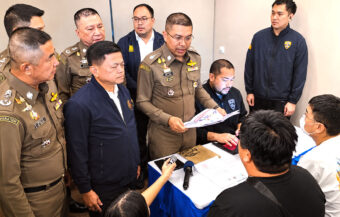
Their suspected involvement became a central focus of the investigation. On January 15, 2025, Bangkok Metropolitan Police Major General Atthaphon Wongsiriprida publicly identified Ly as a suspect. Investigators believed he had recruited Ekkalak to carry out the murder.
According to police, the gunman identified Ly as the person who approached him about killing Lim Kimya. Ekkalak reportedly claimed that Ly held a personal grudge against the former opposition politician.
However, investigators also uncovered evidence of money transfers to the shooter. Those financial transactions became an important part of the police investigation. The precise purpose of the transfers and their ultimate source have not been established in a public court finding. Nevertheless, the suspected payments formed part of the evidence supporting police action against Ly.
His movements across the Thai-Cambodian border provided another significant lead. Police reported that Ly entered Thailand on January 6, 2025, one day before the assassination. He reportedly returned to Cambodia on January 8, the day after the killing.
The timing placed the former Hun Sen adviser in Thailand during the critical period surrounding the murder. Combined with the gunman’s statements and suspected financial transfers, the movements supported further investigation. Thai authorities subsequently obtained an arrest warrant and sought international assistance to locate Ly.
Former Hun Sen adviser faces scrutiny over alleged recruitment and suspicious travel around killing
His previous employment also attracted political attention. Ly had served as an adviser to Hun Sen, Cambodia’s former prime minister. Hun Sen governed Cambodia for nearly four decades before transferring the premiership to his son, Hun Manet, in 2023.
He remains a central figure in the Cambodian People’s Party and the country’s political establishment. Consequently, the identification of a former adviser as a murder suspect attracted considerable scrutiny.
The Cambodian People’s Party responded by distancing itself from Ly. It maintained that he had been dismissed from his advisory position in March 2024, approximately ten months before the assassination.
The dismissal meant Ly was no longer officially serving as Hun Sen’s adviser when the murder occurred. Nevertheless, his previous position established a connection to the former prime minister’s political circle. There has been no public court finding that Hun Sen ordered, financed or knew about the assassination.
On another front, investigators pursued a Cambodian suspect whose reported movements suggested advance surveillance of the victim. Pich Kimsrin was identified as a possible spotter involved in locating Lim Kimya.
Suspected Cambodian spotter followed victim to Bangkok and has links to opposition party dissolution
Thai police believed he travelled on the same bus as the former politician from Cambodia to Bangkok. CCTV footage reportedly showed Pich travelling with or following the victim during the journey. Investigators suspected he helped identify Lim Kimya for the gunman.
The evidence raised questions about whether the assassination had been coordinated before the victim reached Thailand. However, Pich has not been convicted, and his precise role remains an allegation. His family connections also attracted attention.
Radio Free Asia reported that Pich was the brother of Cambodian politician Pich Sros. Pich Sros had initiated proceedings contributing to the dissolution of the Cambodia National Rescue Party in 2017. That decision removed Cambodia’s principal opposition party from the parliamentary system.
Pich Kimsrin reportedly held an administrative position at Phnom Penh’s Phsar Kandal market. His employment history also included work for a pro-government news organisation. The connections were significant because Lim Kimya had represented the opposition party dismantled in 2017.
Nevertheless, family relationships and previous employment do not establish participation by senior Cambodian officials. The police investigation focused on Pich’s suspected movements and his possible role in identifying the victim.
Thai warrants fail to bring Cambodian suspects to court as allegations reach Phnom Penh deputy governor
Thai authorities obtained arrest warrants against both Cambodian suspects. International police notices were also issued as investigators sought assistance locating them. Yet neither man had been brought before a Thai court by November 16, 2026.
The investigation subsequently widened to include allegations concerning another Cambodian political figure. On January 29, 2025, Radio Free Asia reported accusations involving Khliang Huot, a deputy governor of Phnom Penh.
Exiled Cambodian opposition leader Sam Rainsy had publicly connected the official to the two wanted suspects. The accusations followed the circulation of audio recordings reportedly involving Khliang Huot.
In those recordings, he was allegedly heard discussing measures against Cambodian opposition activists based in Thailand. However, Khliang Huot rejected the accusations and denied knowing either Cambodian suspect. No evidence reported in that investigation established that he ordered, financed or participated in Lim Kimya’s murder.
Human Rights Watch raises political murder concerns but no court has linked Cambodian leaders to killing
The allegations widened scrutiny of possible political connections surrounding the assassination. They also drew attention to the position of Cambodian opposition figures living outside their homeland.
Human Rights Watch had already expressed serious concerns shortly after the killing. The organisation warned about possible foreign government involvement in a politically motivated assassination on Thai territory. It also documented Cambodia’s record of prosecutions, intimidation and violence against political opponents.
However, the Thai prosecution has not established that the Cambodian government directed Lim Kimya’s murder. The gunman’s criminal responsibility has been established by a Thai court.
In contrast, the suspected recruitment, surveillance and financial arrangements remain subject to further investigation. The political connections of the Cambodian suspects have also been documented or reported. Yet no publicly established chain of command connects the assassination to Hun Sen, Hun Manet or another senior Cambodian official.
Hun Manet denies state involvement and points to Cambodia’s swift arrest and handover of Thai gunman
Hun Manet addressed accusations against his government and family on January 20, 2025. The Cambodian prime minister rejected suggestions that his father or Cambodian authorities had organised the murder.
He pointed to Cambodia’s arrest of Ekkalak and his subsequent transfer to Thailand. According to Hun Manet, Cambodian authorities could have sheltered the killer if the government had commissioned the assassination. Instead, Cambodian police arrested him and handed him over to Thai investigators.
He described accusations against his family as unfounded and politically motivated. The prime minister also suggested that Thai investigators had considered a personal dispute rather than a political motive.
Nevertheless, the identification of two Cambodian suspects left important questions unresolved. Investigators continued examining the suspected financial arrangements, travel records and surveillance evidence. However, efforts to bring the two Cambodian nationals before a Thai court encountered a major legal obstacle.
Cambodia cites extradition ban as two wanted nationals remain beyond the reach of Thai investigators
In February 2025, Cambodian Interior Ministry spokesman Khieu Sopheak dismissed the effectiveness of Thailand’s arrest warrants. He also cited Cambodia’s constitutional prohibition against extraditing Cambodian citizens.
The restriction prevents Thai authorities from compelling Cambodia to surrender its nationals through ordinary extradition proceedings. Thailand can issue warrants, request international police cooperation and continue gathering evidence. However, securing custody of Cambodian suspects requires cooperation from Phnom Penh.
Cambodian officials had previously indicated that they would investigate following an appropriate request from Thailand. Nevertheless, there was no confirmed public announcement that either wanted suspect faced prosecution in Cambodia by November 16.
The prohibition on extradition does not automatically prevent Cambodia from conducting its own criminal proceedings. Any domestic prosecution would depend on Cambodian law, jurisdiction and the available evidence. Meanwhile, the unresolved case has created a separate diplomatic issue for France.
France raises murder case during landmark Cambodia visit as leaders sign 29 bilateral agreements
Lim Kimya was a French citizen as well as a Cambodian national. The French Foreign Ministry condemned his killing in January 2025 and said it was monitoring the investigation.
Consequently, Macron’s intervention on Sunday brought renewed French attention to the unresolved criminal case. His visit to Phnom Penh was intended to strengthen relations between France and Cambodia. It marked the first French presidential state visit to Cambodia since François Mitterrand travelled there in 1993.
The two governments signed 29 agreements covering investment, defence, digital technology, culture and other areas. The agreements represented a significant programme of bilateral cooperation.
However, Macron also raised judicial cooperation and the unresolved assassination during his discussions with Hun Manet. He demanded further investigation despite the murder conviction already secured in Bangkok. The French president also discussed cooperation against drug trafficking and human trafficking.
At the same time, Hun Manet called for stronger cooperation against transnational crime, cybercrime and online scams. Those discussions came amid continuing international scrutiny of suspected criminal operations involving Cambodian scam centres.
Scam centre concerns form separate backdrop as Macron presses Cambodia on unresolved political murder
However, the supplied evidence establishes no operational connection between those centres and Lim Kimya’s assassination. The murder investigation remains a separate case involving specific suspects, suspected financial transactions and reported surveillance. Nevertheless, both issues formed part of wider discussions about international criminal activity during Macron’s visit.
The assassination also featured against a background of continuing concerns over Cambodia’s treatment of political opponents. Ahead of the Francophonie Summit, opposition figures and human rights organisations had urged international leaders to address political repression.
Macron’s decision to raise Lim Kimya’s murder publicly brought one unresolved case directly into the diplomatic proceedings. The remarks were delivered with Hun Manet standing beside him. They were also broadcast through the Cambodian prime minister’s own Facebook account.
However, there is no verified evidence that Hun Manet was unaware Macron intended to raise the assassination. Nor did Macron announce new evidence implicating Cambodia’s ruling family. His demand concerned identifying those responsible and bringing them before the courts.
For Lim Thomas, the intervention offered renewed international attention to an investigation his family considers incomplete. The victim’s son welcomed the French president’s remarks and pressed for further action.
Victim’s family seeks masterminds as investigators examine payments, surveillance and political links
He remains concerned that those who ultimately commissioned the murder have not been identified. The family’s position goes beyond securing the conviction of the man who fired the shots. It also extends beyond the two Cambodian suspects already named by Thai police.
Lim Thomas believes investigators must establish whether others directed the operation. However, that suspicion has not been established by a court.
The available police findings identify a convicted gunman, a suspected recruiter and a suspected surveillance operative. Investigators also reported financial transfers and cross-border movements immediately surrounding the assassination.
One wanted suspect previously served as an adviser to Hun Sen. The other has family connections to a politician involved in dissolving Cambodia’s principal opposition party. These findings provide specific grounds for investigating a suspected Cambodian network behind the killing.
Nevertheless, they do not establish that Cambodia’s ruling family ordered the assassination. Nearly two years after Lim Kimya was murdered in central Bangkok, the criminal investigation remains unfinished.
Thai gunman serves life but suspected organisers remain free as Macron renews pressure for justice
The Thai court established that Ekkalak Paenoi committed the murder and sentenced him to life imprisonment. However, neither Cambodian suspect has faced trial in Thailand. Meanwhile, Cambodia’s constitutional prohibition on extraditing its citizens continues to complicate attempts to secure their custody.
The person who ultimately commissioned the assassination has not been identified. Macron’s intervention has therefore returned the unresolved case to the highest level of French-Cambodian relations.
Hitman who murdered Kim Limya in Bangkok gets life in prison on Friday. Cambodian abettors remain free
Time to face up to the villainous regime on Thailand’s eastern border. Hun Sen’s gangsterism exposed in new audio clip
It also places renewed attention on Cambodia’s handling of the two wanted nationals. For Lim Kimya’s family, the central demand remains unchanged. They want the suspected organisers brought before the courts and the identity of anyone directing them established.
The gunman is serving life imprisonment in Thailand. The two Cambodian suspects remain outside Thai custody. Meanwhile, the investigation has still not established who ultimately ordered the assassination of the former opposition MP.
Join the Thai News forum, follow Thai Examiner on Facebook here
Receive all our stories as they come out on Telegram here
Follow Thai Examiner here
Further reading:
Police chief insists murder of former Cambodian MP Kim Limya was a personal grudge and not political
Murder of ex-Cambodian MP Kim Limfa linked to regime through second wanted suspect Kimsrin Pich
Hitman who gunned down former Cambodia MP in Bangkok arrested in Cambodia. Taken to Phnom Penh
Former Cambodian French opposition MP and thorn in the side of ruling party gunned down in Bangkok
Increased US naval presence and operations as China expands its footprint
Thai woman’s claims that she was targeted for organ harvesting being probed in Cambodia by police
Cambodia’s recall of diplomatic passports linked to press reports of Yingluck’s Hong Kong dealings
Cambodian opposition will be denied entry into Thailand as it seeks to topple Hun Sen