Thailand has launched a 12-year bid to become a high-income nation, targeting AI, investment and competitiveness. Yet weak productivity, ageing demographics, skills shortages and rising debt threaten to derail the kingdom’s biggest economic gamble in decades.
Thailand has launched its most ambitious economic overhaul in decades, setting a 12-year deadline to achieve high-income status and break free from the middle-income trap. Backed by Prime Minister Anutin Charnvirakul, the plan targets AI, advanced industry and investment growth. However, it comes amid warnings over weak productivity, skills shortages, an ageing population, rising inequality, fiscal strain and fierce competition from Vietnam, making it a defining test to find out if the government can forge a brighter economic future.

Thailand has unveiled a 12-year economic strategy aimed at achieving what has eluded policymakers for more than two decades. Government ministers and business leaders agreed on the plan during the first meeting of the Joint Public-Private Consultative Committee on Monday.
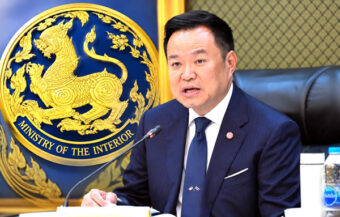
Prime Minister Anutin Charnvirakul chaired the session at Government House, while Deputy Prime Minister and Finance Minister Ekniti Nitithanprapas later outlined its objectives.
The headline ambition is straightforward. Thailand aims to become a high-income country within 12 years. Alongside that target, officials have established a milestone for 2030. By then, Thailand hopes to rank among the world’s top 20 most competitive economies. At the same time, policymakers want to raise economic potential from 2.7% to at least 3%.
Thailand sets 12-year path to high-income status with competitiveness goals targeted by 2030
Notably, Ekniti stressed that the figure does not refer to GDP growth. Instead, it measures economic capacity and competitiveness. The focus is therefore on strengthening the economy’s foundations rather than pursuing short-term expansion.
The initiative arrives at a pivotal moment. Thailand’s rise during the late twentieth century transformed the kingdom’s economy. Manufacturing expanded rapidly. Export industries flourished. Foreign investment poured into industrial zones nationwide. Consequently, Thailand emerged as one of Southeast Asia’s most successful developing economies.
Yet that momentum gradually faded. While Thailand escaped low-income status, it never completed the transition to a high-income economy. Instead, growth slowed as traditional advantages weakened. Labour costs increased. Competition intensified. Productivity gains became harder to achieve. As a result, Thailand became stuck in what economists describe as the middle-income trap.
Decades of growth lose momentum as Thailand struggles to escape the middle-income trap
The problem has persisted for years. Countries often reach a point where growth driven by cheap labour begins to lose force. Thereafter, success depends on innovation, technology and higher productivity. Thailand has repeatedly struggled with that transition. Consequently, economic performance has increasingly fallen short of earlier expectations.
Productivity remains one of the most significant concerns. During Thailand’s manufacturing boom, competitive wages attracted investment from around the world. Factories expanded. Export volumes surged. Employment increased. However, productivity growth failed to keep pace as wages rose. That imbalance has become increasingly visible.
In response, Thailand now faces pressure from both ends of the economic spectrum. Lower-cost economies continue attracting labour-intensive industries. Meanwhile, advanced economies dominate higher-value sectors requiring technology and innovation.
Vietnam illustrates the challenge. Increasingly, multinational manufacturers are expanding operations there. Competitive labour costs remain a major attraction. In addition, favourable trade agreements have strengthened Vietnam’s position. Cambodia and Indonesia have also gained ground in labour-intensive production. Thailand, therefore, faces growing pressure to move into more sophisticated industries.
Rising regional competition and weak productivity expose structural weaknesses in Thailand’s economy
Human capital represents another obstacle. Despite years of public spending, concerns persist over educational outcomes. Mathematics, science and English-language proficiency remain recurring weaknesses. Employers frequently report shortages of qualified workers. Engineering, technology and digital industries are particularly affected.
As part of the new strategy, workforce development has moved to the centre of policy planning. Officials see skills development as essential for future competitiveness. Without stronger technical capabilities, moving into higher-value sectors becomes increasingly difficult.
Research and development present a similar challenge. South Korea, Taiwan and Singapore invested heavily in innovation during their economic rise. They built domestic technology industries and created globally recognised companies. Thailand followed a different path. Instead, it relied heavily on foreign firms to introduce technology and expertise.
That approach supported industrialisation. However, it produced fewer domestic technology champions. Consequently, innovation capacity remains weaker than in many successful high-income economies.
Skills shortages and weak innovation threaten ambitions for a more advanced economy
Separately, demographic pressures continue to intensify. Thailand now has one of Asia’s fastest-ageing populations. Birth rates have declined sharply. Life expectancy has increased steadily. As a consequence, the working-age population is shrinking.
The implications are significant. Labour shortages are expected to become more severe. At the same time, pension obligations continue rising. Healthcare costs are also expected to increase. Together, those trends place additional strain on public finances and future growth.
Political instability has added another layer of difficulty. Over the past two decades, Thailand has experienced repeated political crises and frequent government changes. While investors continue to view Thailand as an important market, uncertainty can discourage long-term commitments. This is particularly true for technology-intensive industries requiring stable policy environments.
On another front, Thailand remains vulnerable to external shocks. Tourism became one of the country’s largest revenue generators before the COVID-19 pandemic. However, international travel collapsed in 2020. The disruption exposed the risks of relying heavily on a single sector. Likewise, exports remain dependent on global demand and economic conditions among major trading partners.
Ageing demographics, political uncertainty and external shocks add to economic headwinds
Infrastructure presents a mixed picture. Thailand possesses stronger transport networks than many regional neighbours. Industrial infrastructure is also relatively advanced. Nevertheless, delays, regulatory obstacles and bureaucratic inefficiencies continue affecting competitiveness. Consequently, investors often face challenges that reduce project momentum.
Climate-related risks add further complexity. Floods, droughts and extreme weather events continue affecting agriculture, industry and tourism. Moreover, infrastructure remains exposed to environmental disruption. These pressures increase adaptation costs and complicate long-term planning.
Against that backdrop, the new committee has adopted a football-style structure. Ekniti used the analogy to explain the government’s approach. Defence focuses on fiscal discipline and economic stability. Midfield covers infrastructure and economic foundations. Attack targets industries capable of generating future growth.
According to Ekniti, fiscal discipline maintained during the past seven to eight months has supported stability. Equally important, it has preserved confidence among international credit rating agencies. Officials argue that credibility remains essential for attracting long-term investment.
Government links infrastructure reform and fiscal stability to future investment and growth
The committee has identified seven areas where Thailand already possesses competitive strengths. Building on those advantages, four working groups have been established under the banner “Reinvent Thailand”.
The first group focuses on investment and will be chaired by Ekniti. Its objective is to position Thailand as a future investment hub. Priority sectors include artificial intelligence, digital infrastructure, data centres, financial services, the green economy and smart automotive manufacturing.
Importantly, officials want domestic firms to benefit alongside foreign investors. Therefore, the group has been tasked with ensuring opportunities reach Thai companies and SMEs.
Meanwhile, a second group will focus on trade and services. Deputy Prime Minister and Commerce Minister Suphajee Suthumpun will lead the initiative. Tourism, wellness industries, agriculture, retail commerce and international trade will receive priority attention. In parallel, the group will work to accelerate free trade agreements.
Four working groups will drive investment, trade and industrial development under the new strategy
A third group will focus on human capital. Deputy Prime Minister and Higher Education Minister Yotchanun Wongsawat will oversee the programme. Responsibilities include research, innovation, science, technology, engineering and mathematics education. The group will also supervise workforce upskilling, reskilling, startup development and AI literacy.
The fourth group will target government efficiency. Deputy Prime Minister Pakorn Nilprapan will chair the effort. Its mandate includes regulatory reform, digital government, public sector restructuring and public asset management. Furthermore, it will focus on improving the ease of doing business and reducing obstacles to investment.
Under the committee’s timetable, all four groups must submit plans within one month. Thereafter, progress reports will be required every two months. Officials also expect quick wins within six to 12 months. Larger structural reforms are scheduled over four years.
Investment remains central to the strategy. Thailand’s investment-to-GDP ratio currently stands at approximately 22%. Policymakers want to raise that figure to around 30%. Ekniti described the target as a critical measure of sustainable economic growth.
However, fiscal limitations are not expected to derail the plan. Instead, the government intends to expand public-private partnership mechanisms. Private capital will be mobilised through the Thailand Future Fund. Those resources will be used to co-invest in major infrastructure projects.
Private capital and infrastructure funding have become central to Thailand’s long-term economic plan
Accordingly, the 2027 budget may show a lower proportion of direct public investment. Officials say that the change reflects a funding shift rather than reduced infrastructure spending. The emphasis is moving towards leveraging private capital alongside government resources.
For Thailand, the stakes are considerable. The country retains major strengths. It occupies a strategic location. It possesses established industrial clusters, strong tourism assets and a diversified manufacturing base. In addition, projects such as the Eastern Economic Corridor reflect efforts to reposition the economy.
Stark and disturbing data shows Thai households are losing out in an economy that is driving inequality
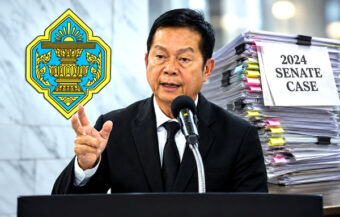
Prachachart Party leader warns public finances face a deep crisis with falling tax income and more debt
Nevertheless, the obstacles remain formidable. Productivity growth remains weak. Skills shortages persist. Innovation spending lags regional leaders. Demographic pressures are intensifying. Competition from neighbouring economies continues to increase.
The government’s new roadmap is designed to confront those challenges directly. More importantly, it represents the clearest acknowledgement yet that Thailand’s economic model requires significant upgrading. Whether the plan succeeds will determine if the kingdom finally escapes the middle-income trap that has constrained growth for more than twenty years.
Join the Thai News forum, follow Thai Examiner on Facebook here
Receive all our stories as they come out on Telegram here
Follow Thai Examiner here
Further reading:
Business lobby urges Anutin to improve climate for inward investment by axing old laws and red tape
Tax and welfare revolution as Thailand moves ahead with Negative Income Tax that expands reporting
Thumbs up from economic gurus for 2027 Negative Income Tax plan. It’s a game-changer for progress
Expert warns foreign tourism has become Thailand’s curse, fueling inertia and a widespread malaise