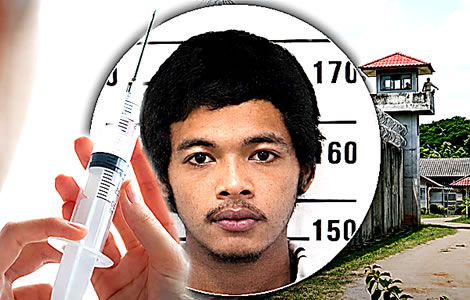
Thailand’s grisly discovery of two mass murder scenes in Pattaya has reignited demands for executions to resume. PM Anutin says convicted killers will receive no leniency despite the country holding 480 death row prisoners without an execution since 2018.
Thailand’s death penalty has been thrust back to the forefront of national debate after the discovery of five murder victims in neighbouring graves outside Pattaya united two of the country’s most horrifying mass murder investigations into one defining moment. As Prime Minister Anutin Charnvirakul vowed no leniency for those convicted, public outrage has reignited demands for executions to resume, exposing the widening gulf between a legal system that continues to impose death sentences and a justice system that has not carried out an execution since 2018 despite 480 prisoners remaining on death row.
Thailand’s death penalty has returned to the centre of national debate after police uncovered the victims of two separate mass murders during a single recovery operation in woodland outside Pattaya.
Although the killings occurred about three weeks apart, both crimes came to light almost simultaneously beneath powerful floodlights as forensic teams excavated neighbouring graves among coconut trees.
Consequently, the discoveries merged into one of Thailand’s most disturbing crime scenes in years and immediately reignited calls for executions to resume.
Discovery of murder graves near Pattaya reignites nationwide calls for executions to resume
One grave contained the bodies of Russian siblings Diana Nazimova, 22, and Roman Nazimov, 17. Nearby lay the remains of a Thai family of three.
Together, the neighbouring graves transformed two unrelated murder investigations into a single national story. Images of forensic officers working through the night dominated television bulletins and social media. As a result, public attention quickly shifted from the individual cases to Thailand’s wider approach to capital punishment.
Reports suggest the Thai family was abducted from its home by gunmen posing as police officers. Investigators say the victims were handcuffed before being driven to the remote woodland. There, they were allegedly forced to watch their own graves being dug for about two hours.
They were then executed and buried beneath the coconut trees. Separately, reports have suggested detectives are examining whether the murders were linked to complaints the family had made to Pattaya police about the activities of a drug trafficking gang.
Investigators say the Russian brother and sister were murdered about three weeks later before also being buried in shallow graves only metres away. However, neither crime became public until officers uncovered both burial sites during the same operation.
Prime Minister signals no leniency as renewed death penalty debate gathers pace across Thailand
In turn, the combined discoveries have generated a single wave of national outrage. Calls for the death penalty rapidly gathered momentum as details of both investigations emerged together.
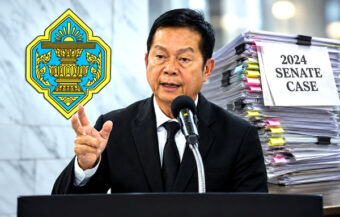
In response, Prime Minister Anutin Charnvirakul declared there would be no leniency for those responsible if they are convicted. At the same time, he stressed that sentencing ultimately remains a matter for Thailand’s independent courts. Nevertheless, his remarks reflected the intensity of public anger following the discoveries.
Attention has therefore returned to Thailand’s unusual capital punishment system. The death penalty remains fully available under Thai law. Courts continue to impose death sentences for the gravest crimes. Yet executions have become exceptionally rare. Official Department of Corrections figures show 480 prisoners were on death row as of June 23, 2026. Even so, no execution has taken place since June 18, 2018.
The renewed debate has again highlighted the growing gap between Thailand’s legal framework and its practical application. Judges continue to impose capital punishment. However, the overwhelming majority of condemned prisoners are never executed.
Hundreds remain on death row despite Thailand carrying out no executions since June 2018
Instead, many spend years on death row while appeals continue. Others later receive commutations through the royal clemency process. Consequently, hundreds remain under sentence of death despite the absence of executions.
According to the Department of Corrections, the 480 condemned prisoners comprised 419 men and 61 women. Notably, 439 prisoners were still pursuing appeals. Another 13 cases awaited Supreme Court rulings. Only 28 prisoners had exhausted every legal avenue and remained under final death sentences.
Thailand abandoned execution by firing squad in 2003. Since then, lethal injection has become the country’s sole execution method. Even so, only seven executions have been carried out using that procedure.
The last execution took place on June 18, 2018, at Bang Kwang Central Prison. The prisoner was 26-year-old Theerasak Longji. He had been convicted of murdering 17-year-old Danudet Sukmak during a robbery in Trang province.
Court records showed he stabbed the teenager 24 times before stealing his mobile phone and cash. Subsequently, the Criminal Court imposed the death sentence. The Appeal Court and Supreme Court later upheld the conviction, leaving no further legal avenue before the execution proceeded.
Thailand’s last execution in 2018 ended a nine-year pause but no prisoner has since been put to death
That execution ended an unofficial nine-year pause in capital punishment. Previously, Thailand had last carried out executions in 2009, when two prisoners convicted of drug offences were put to death.
At the time, many observers believed the country was quietly moving towards ending executions in practice. However, the 2018 execution demonstrated that the legal framework remained fully operational.
Since then, more than eight years have passed without another execution despite courts continuing to hand down death sentences. Meanwhile, Thailand’s death row population has continued to grow as new capital convictions have been added to the system.
The execution process itself remains tightly controlled by Department of Corrections regulations. Prisoners receive no advance notice. Instead, officers summon them only after they have returned to their cells. Executions are then carried out during the evening.
Before entering the execution chamber, prisoners may make one final telephone call to relatives. They are also permitted a last meal. In addition, they may ask forgiveness before the sentence is enforced. The execution itself consists of three injections.
First comes a sedative. Next follows a muscle relaxant. Finally, a third injection stops the prisoner’s heart. According to officials, the entire procedure takes no more than 30 minutes.
Strict execution procedures remain in place despite Thailand’s prolonged absence of capital punishment
After death is confirmed, a doctor conducts a final examination. Thereafter, relatives may collect the body the following morning for funeral rites.
An official committee witnesses each execution. That committee includes the provincial governor or a representative, the provincial prosecutor, the local police superintendent, the prison commander and a representative from the Department of Corrections.
Thailand therefore occupies a distinctive position within Asia. Capital punishment remains firmly embedded in the Criminal Code. Moreover, governments have repeatedly defended its retention. Judges also continue to impose death sentences. In practice, however, executions have become exceptional rather than routine.
That distinction has become increasingly visible over the past decade. Although courts continue to pass capital sentences, very few prisoners reach the execution chamber. Instead, appeals, judicial reviews and royal clemency petitions frequently extend proceedings for many years. Consequently, many condemned prisoners ultimately receive life imprisonment instead of execution.
The issue has remained politically sensitive for successive governments. Human rights organisations have repeatedly urged Thailand to abolish capital punishment altogether. They argue the death penalty should be removed from the Criminal Code.
However, successive administrations have rejected that position, maintaining that the ultimate punishment remains necessary for the country’s gravest crimes.
Governments defend capital punishment despite growing calls to abolish Thailand’s death penalty altogether
Thailand appeared to be moving steadily towards practical abolition before 2018. Following the executions of two drug offenders in 2009, no further executions took place for almost nine years.
During that period, many observers believed the kingdom was quietly abandoning capital punishment without formally repealing it. Nevertheless, that perception changed abruptly with the execution of Theerasak Longji.
The decision drew international attention because many believed Thailand was approaching a decade without an execution. Some observers argued that such a milestone would have strengthened the country’s image as a state moving away from capital punishment. Instead, the 2018 execution confirmed that the legal framework remained fully operational whenever the government chose to enforce it.
Even after that execution, however, the practical position changed little. More than eight years have now passed without another prisoner being put to death. Meanwhile, courts have continued imposing capital punishment and the number of prisoners awaiting execution has continued to rise.
As part of this debate, the Cabinet considered proposals to abolish the death penalty altogether. In 2024, ministers rejected a recommendation from the National Human Rights Commission seeking its abolition. Instead, the government concluded that removing the maximum punishment for the most serious crimes could negatively affect public morale.
Thailand differs from Asian neighbours by retaining executions while rarely carrying out death sentences
Thailand’s approach also differs from several neighbouring countries. China remains widely regarded as the world’s most active executioner.
Although official figures are treated as a state secret, international rights organisations estimate that thousands of executions occur every year. Capital punishment also remains available there for dozens of criminal offences despite recent legal reforms.
Vietnam likewise continues to enforce the death penalty. Executions are carried out by lethal injection and apply to offences including murder, drug trafficking and corruption. Although official statistics are unavailable, rights organisations believe dozens of executions still occur annually. Drug offences account for a significant proportion of those cases.
Singapore has also retained capital punishment, particularly for major drug trafficking offences. Likewise, Indonesia continues to provide for the death penalty despite lengthy pauses between executions. Both countries therefore continue to reserve the ultimate punishment for the most serious criminal offences.
By contrast, Thailand sits between abolition and active enforcement. The law continues to authorise executions. Courts continue to sentence offenders to death. Governments also continue to defend the legislation. Yet executions themselves have become increasingly uncommon.
Pattaya murder discoveries revive demands to resume executions despite years of extended hiatus
The discoveries outside Pattaya have nevertheless altered the public conversation. Images of neighbouring graves being excavated beneath floodlights created one of the most powerful crime scenes seen in Thailand for years. Consequently, demands for the death penalty have intensified following the exposure of the two unrelated murder cases.
Prime Minister Anutin Charnvirakul reflected that mood when he declared there would be no leniency for those responsible if they are convicted. At the same time, he recognised that punishment remains entirely within the jurisdiction of Thailand’s courts. Prosecutors are nevertheless expected to pursue the maximum penalty where the law permits.
No leniency for killers says Prime Minister who flew to Pattaya on Saturday and apologised to Russians
Pattaya Horror as murder of two Russian siblings exposes dark-hearted criminal gang who killed people for kicks
Whether any future death sentence would ultimately be carried out remains uncertain. Thailand’s modern record suggests otherwise. Although judges continue imposing capital punishment, executions have become increasingly rare. Instead, many condemned prisoners spend decades on death row before their sentences are reduced through the clemency process.
Official figures underline that contradiction. Hundreds of prisoners remain under sentence of death. Yet only one execution has taken place during the past eight years. The widening gap between law and practice has become one of the defining characteristics of Thailand’s criminal justice system.
The simultaneous discovery of two separate mass murder scenes outside Pattaya has now brought that contradiction back into sharp focus. Public outrage has revived demands for executions to resume. However, Thailand’s recent history demonstrates that imposing the death penalty and carrying it out have become two very different things.
Join the Thai News forum, follow Thai Examiner on Facebook here
Receive all our stories as they come out on Telegram here
Follow Thai Examiner here
Further reading:
Police search for Russian siblings who disappeared after Sunday morning motorbike ride in Pattaya
Thailand closes its doors to dodgy foreigners and tourists who abuse their welcome through crime
60-day visa regime to be ended confirms Minister responding to rising industry security concerns
Tourism boss warns Thailand it is facing a Chinese blacklist if another security controversy erupts
Visa waiver scheme questioned with another China Crisis for foreign tourism driven by security fears
Tourism cryptocurrency sandbox payment plan is bound to face stiff opposition from the central bank