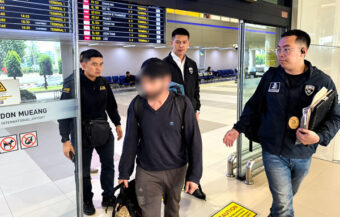
Thailand has allowed Chinese activist Zhang Xinyan to fly to Canada after blocking her July 8 departure despite her UN refugee status. Canadian diplomatic pressure and a senior Thai police escort ended the international stand-off over her fate.
After weeks of mounting diplomatic pressure, Chinese activist Zhang Xinyan has finally escaped Thai immigration detention and reached Canada, ending a case that tested Thailand’s handling of a UN-recognised refugee and drew intervention from Ottawa, the United Nations and Thai lawmakers. After Thai authorities blocked her Canadian embassy-arranged flight from Bangkok on July 8, Zhang was eventually escorted to Suvarnabhumi Airport by senior Thai police before flying to Vancouver, avoiding what supporters feared could have become the first deportation of a Hong Kong National Security Law suspect into Chinese custody.
Chinese activist Zhang Xinyan has arrived in Canada after spending nearly three months in immigration detention in Thailand. Her departure followed weeks of diplomatic pressure. It also ended one of Thailand’s most closely watched refugee cases this year.
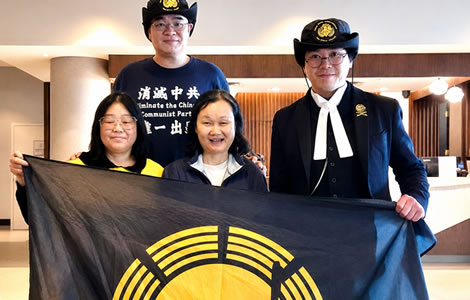
The 55-year-old landed at Vancouver International Airport on Monday after flying from Bangkok. Toronto-based activist Sheng Xue confirmed her arrival.
She also posted a photograph showing Zhang with supporters at the airport. The successful journey came almost a month after Thai authorities blocked an earlier departure.
Canadian-approved refugee returned to Bangkok detention despite embassy arranging her flight
On July 8, the Canadian embassy in Thailand arranged Zhang’s flight to Vancouver. Canada had already approved her resettlement application after reviewing her case. Nevertheless, Thai police prevented her from boarding the aircraft. Instead, officers returned her to Bangkok’s Suan Phlu Immigration Detention Centre.
Ms Sheng first brought Zhang’s detention to international attention. She subsequently coordinated efforts to secure the activist’s release. In parallel, Canadian officials pursued diplomatic negotiations with Thai authorities.
The United Nations refugee agency also became involved. Notably, Thai lawmakers joined international human rights groups in pressing for Zhang’s departure.
Zhang, who is also known as Lily Zhang, moved to Thailand in 2014. She fled China after facing persecution linked to her participation in Falun Gong. The spiritual movement remains banned by the Chinese government. She lived in Thailand for more than a decade before her arrest.
UN-recognised refugee also faced a Hong Kong arrest warrant carrying rewards of up to HK$1 million
Then, on May 7, Thai authorities arrested Zhang in Bangkok for overstaying her visa. She was immediately transferred to immigration detention. Supporters feared she could eventually be deported. Those concerns quickly intensified because Zhang already held refugee status recognised by the United Nations.
At the same time, Zhang faced separate legal risks beyond Thailand. She is one of 19 overseas activists targeted by Hong Kong police. Arrest warrants were issued in July 2025 under the Beijing-imposed National Security Law.
Hong Kong authorities accuse the group of subversion. They also announced rewards ranging from HK$200,000 to HK$1 million for information leading to arrests.
Consequently, campaigners viewed Zhang’s detention with growing alarm. Had she been returned to Hong Kong, she would have become the first person sought under the National Security Law to be deported there. She also faced imprisonment if prosecuted. That possibility significantly increased the international attention surrounding her case.
As diplomatic efforts intensified, pressure mounted from several directions. Ottawa continued discussions with Thai officials throughout July. Meanwhile, the UN refugee agency maintained its involvement. Separately, Thai lawmakers pressed for a solution. International human rights organisations also continued lobbying on Zhang’s behalf.
Canadian pressure and Thai police escort finally saw activist’s departure after weeks of uncertainty
Eventually, Thai authorities allowed Zhang to leave the country. Ms Sheng credited Canada’s firm diplomatic position with changing the outcome. She said sustained pressure finally produced a breakthrough after weeks of uncertainty.
“Once Thai authorities recognised Canada’s uncompromising stance, they abandoned their resistance and pivoted to ensuring her safe departure by all available means,” she wrote in an email to the Globe and Mail newspaper in Toronto.
Ms Sheng also described the final hours before Zhang’s departure. According to her account, Canadian diplomats accompanied the activist throughout the process.
In response, senior Thai police officers personally escorted Zhang under direct orders from senior commanders. Dedicated police drivers then transported her to Suvarnabhumi Airport. She boarded the flight without further difficulty.
The escort marked a sharp contrast with the events of July 8. On that occasion, Zhang had been prevented from boarding despite Canadian travel arrangements. No public explanation was issued for the decision. However, the second attempt proceeded without incident.
Zhang reaches Canada as Thailand still holds journalist Bai Zhaodong over China’s extradition request
Ms Sheng said the outcome represented a significant setback for efforts to pursue Chinese government critics overseas. She described Zhang’s arrival in Canada as “a major defeat for the CCP’s long-arm jurisdiction, diplomatic coercion and transnational repression in Southeast Asia and beyond.”
On another front, Thailand continues to hold another prominent Chinese national in immigration detention. Chinese journalist Bai Zhaodong was detained around the same time Zhang’s July departure was blocked.
Thailand’s human rights questioned after Hong Kong activist and UN refugee taken off a Canadian flight
Thailand urged not to cave to China’s extradition request for on the run journalist Bai Zhaodong
China has requested his extradition, accusing him of extortion and bribery. His immigration case remains unresolved.
For Zhang, the successful flight concluded nearly three months in Thai detention. More importantly, it ended a prolonged diplomatic dispute involving Canada, the United Nations, Thai lawmakers and international advocacy groups.
Her arrival in Vancouver finally completed a resettlement process that had been interrupted only weeks earlier at Bangkok’s main international airport.
Join the Thai News forum, follow Thai Examiner on Facebook here
Receive all our stories as they come out on Telegram here
Follow Thai Examiner here
Further reading:
Immigration boss warns that a new crackdown on foreigners flouting Thai laws has begun