
Thailand unveils its biggest tax and welfare overhaul in decades, using big data and a Negative Income Tax to require universal tax filing, target benefits by verified income, bring millions into the tax system and strengthen its OECD membership ambitions.
Thailand is laying the foundations for the biggest transformation of its tax and welfare systems in a generation, with every citizen eventually expected to file an annual tax return as the government builds a Negative Income Tax model powered by nationwide big data. The sweeping reform will link government databases for the first time, target welfare payments using verified household income, bring millions of informal workers into the tax system and strengthen Thailand’s drive to join the Organisation for Economic Co-operation and Development (OECD), marking the start of a far-reaching overhaul of how the state collects information, distributes benefits and measures the nation’s economy.
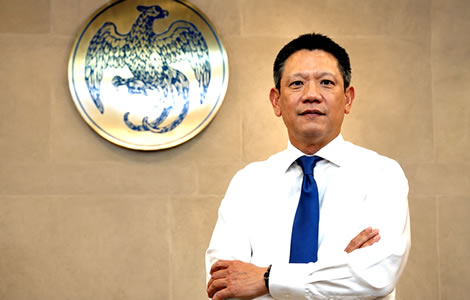
Thailand is preparing the biggest overhaul of its tax and welfare systems in decades as the Ministry of Finance advances a Negative Income Tax (NIT) model built on big data and interconnected government records.
The reform seeks to widen tax registration while creating a single, income-based welfare framework covering every Thai citizen. Officials also view the project as a major structural reform supporting Thailand’s long-term ambition to join the Organisation for Economic Co-operation and Development (OECD).
The initiative accelerated after the Royal Decree on Government Data Linkage came into force on June 30, 2026. The law allows ministries and state agencies to exchange information directly for the first time.
Government data overhaul paves the way for a unified welfare system built on nationwide income records
Previously, government databases operated largely in isolation. As a result, officials often struggled to verify incomes or identify duplicate welfare payments. Different agencies also developed separate support schemes, making comprehensive assessments difficult.
The Ministry of Finance believes those limitations can now be overcome. Permanent Secretary Lawaron Saengsanit said the decree would allow a much faster review of Thailand’s welfare system.
More importantly, it would enable officials to assess every citizen using complete government information rather than fragmented records. The Comptroller General’s Department is now linking data from agencies nationwide.
It is also reviewing every welfare programme to identify overlapping benefits and duplicate spending. Once completed, the exercise will allow the government to design welfare packages based on each individual’s verified financial circumstances.
Mr Lawaron acknowledged that such a review was impossible under the previous system. “It must be acknowledged that in the past, government data was not interconnected,” he said. “Today, we can utilise data from all government departments. That constitutes big data.”
Universal tax filing becomes the cornerstone of a new welfare model based on verified household income
He said the information would underpin welfare reform under the Negative Income Tax model. Every Thai citizen would eventually be expected to submit an annual income tax return.
Crucially, that requirement would apply even to people who owe no income tax. According to Mr Lawaron, those earning below the prescribed threshold would receive one form of government welfare. Those above it would qualify for another. “The government must ensure that all Thai people receive the same government welfare benefits,” he said.
The proposal represents a fundamental shift in Thailand’s tax administration. Currently, millions of people remain outside the formal tax system because their incomes fall below taxable levels.
They include street vendors, market traders, freelancers, agricultural workers and many self-employed people. Consequently, the Revenue Department has only a partial picture of household earnings across the country. Welfare agencies, therefore, depend on separate databases that frequently contain incomplete information.
Under the proposed system, that position would change significantly. Unlike a conventional tax regime, the Negative Income Tax model works in reverse for lower earners. People below the qualifying threshold would not simply pay no tax.
Reverse income tax aims to expand tax base while targeting welfare through verified national income data
Instead, they could receive direct government support through the tax system itself. In effect, tax registration becomes the gateway to welfare eligibility. Officials expect that requirement to encourage millions of low-income workers to register voluntarily with the Revenue Department for the first time.
In turn, the government would gain a far more accurate picture of household incomes nationwide. That information could then be used to allocate welfare payments with much greater precision.
Existing schemes often rely on disconnected records maintained by different ministries. By contrast, the new model would use one integrated national database. Duplicate welfare payments could therefore be identified more quickly. Public spending could also be directed more efficiently towards those who qualify under uniform national criteria.
The initiative first gathered momentum under the previous Pheu Thai-led government. Since then, the current administration has continued developing the project.
Although many operational details remain under design, the policy direction has become increasingly clear. Officials now describe the proposal as a long-term structural reform rather than a simple welfare revision. As part of this strategy, the government intends to combine taxation, welfare administration and digital data management within a single framework.
OECD ambitions drive reforms linking tax reporting, digital records and a modern social welfare system
The project also reflects Thailand’s wider economic ambitions. OECD membership remains one of the government’s principal long-term objectives. The organisation places strong emphasis on transparent governance, efficient tax administration and effective public financial management.
Many OECD members already operate integrated tax and welfare systems built around verified household income. Those systems generally reduce duplication while improving administrative efficiency. They also provide governments with stronger economic data for policy decisions.
Notably, Thai officials increasingly link the Negative Income Tax project to those international standards. Developing a comprehensive income reporting system would strengthen Thailand’s institutional framework as it pursues OECD accession. It would also improve the government’s understanding of household earnings across the economy. Better income data could support future tax policy, labour market planning and social welfare reforms.
Separately, the Ministry of Finance continues preparing the next phase of the existing State Welfare Card programme. The 2027 Budget allocates 42 billion baht for the scheme. Mr Lawaron said additional funding could be requested from the annual central budget if recipient numbers exceed current projections. That process already operates each year whenever demand exceeds the original allocation.
Cabinet decision will determine welfare card eligibility before final list of successful applicants announced
However, officials have not yet confirmed whether the number of welfare card recipients will increase in 2026. The outcome depends on the latest eligibility screening, which is nearing completion. Afterwards, the results must be submitted to the Cabinet. Ministers are expected to consider the proposal on either July 7 or July 14. Cabinet approval must be secured before the government announces the final list of successful applicants on July 17.
On another front, the Ministry of Finance continues monitoring the broader economy. Mr Lawaron said economic growth during the first half of 2026 broadly matched official forecasts. He added that the government’s “Thai Helps Thai Plus 60/40” measures introduced during the third quarter helped prevent a sharper slowdown.
He also expects further economic stimulus during the fourth quarter. However, he said he was unaware of the details because any package will depend on government policy decisions.
Prachachart Party leader warns public finances face a deep crisis with falling tax income and more debt
Tax and welfare revolution as Thailand moves ahead with Negative Income Tax that expands reporting
Taken together, the reforms mark the beginning of a major transformation in Thailand’s fiscal administration. Universal tax filing, integrated government databases and targeted welfare payments are being brought together for the first time.
While implementation remains in its early stages, the Ministry of Finance is laying the foundations for a unified income-based welfare system that could reshape both taxation and social protection for years to come.
Join the Thai News forum, follow Thai Examiner on Facebook here
Receive all our stories as they come out on Telegram here
Follow Thai Examiner here
Further reading:
Tax and welfare revolution as Thailand moves ahead with Negative Income Tax that expands reporting
Thumbs up from economic gurus for 2027 Negative Income Tax plan. It’s a game-changer for progress
Expert warns foreign tourism has become Thailand’s curse, fueling inertia and a widespread malaise