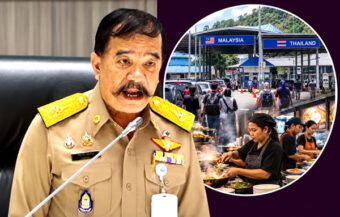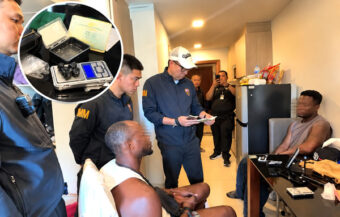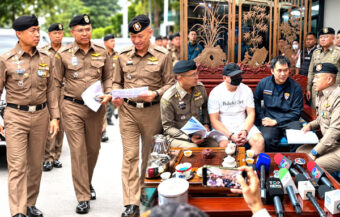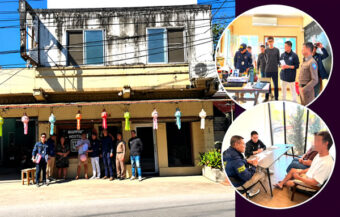
Thailand chases OECD membership by 2028 while Anutin’s government targets foreign landholding, smaller firms and restricted jobs. The bloc warns Bangkok’s tangled laws, loopholes and sweeping investment barriers threaten confidence and its entry bid.
Thailand’s widening crackdown on foreign landholding, small businesses and restricted jobs is colliding with its drive for Organisation for Economic Co-operation and Development (OECD) membership by 2028. While officials pursue suspected nominees and minor operators, Bangkok seeks entry into a bloc demanding open, transparent investment rules. The OECD has already warned that Thailand’s fragmented laws, selective exemptions and loopholes create costly uncertainty. It demands clearer legislation and greater liberalisation across services and ordinary commerce. Yet Thailand’s combined barriers remain tougher than those of every existing OECD member. Prime Minister Anutin Charnvirakul must now reconcile the grassroots crackdown with economic reforms requiring unanimous approval from all 38 members before Thailand can join the top tier club.
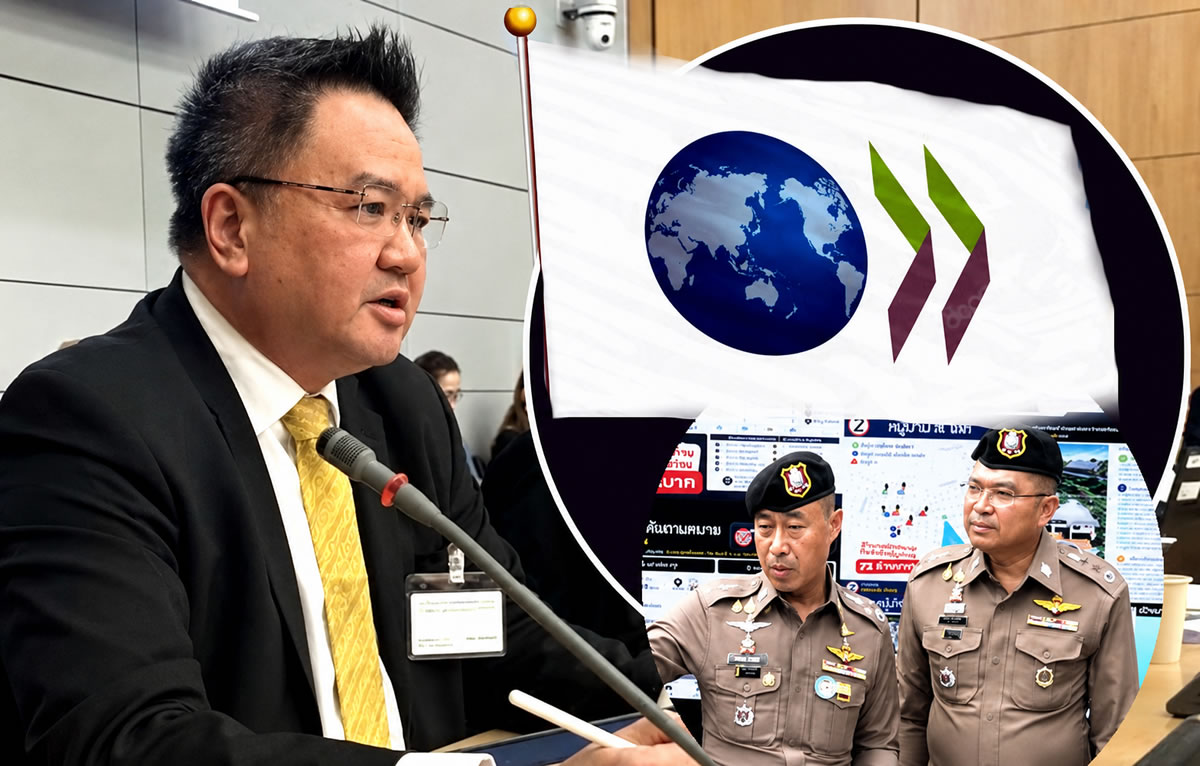
Thailand’s campaign to join the Organisation for Economic Co-operation and Development faces a direct conflict over foreign investment.
The previous Pheu Thai-led government launched the membership drive. Prime Minister Anutin Charnvirakul has retained it as a core objective. Yet his government is intensifying enforcement of Thailand’s extensive foreign ownership laws.
The campaign began in southern Thailand shortly after Mr Anutin took power in 2025. Since then, investigations have spread across major tourism and property markets. Officials are examining landholdings, company structures, employment practices and restricted occupations.
At the centre are foreigners controlling Thai land through locally registered companies. Investigators are checking whether Thai shareholders are genuine investors. They are also tracing capital, voting rights, dividends and corporate control.
Foreign business crackdown exposes Thailand’s growing conflict with its OECD membership campaign
In parallel, smaller foreign businesses face checks under the Foreign Business Act. Work permits and occupations reserved for Thais are also under examination. Criminal proceedings can follow where officials uncover illegal nominee arrangements.
Thailand remains entitled to enforce its existing laws during accession negotiations. OECD membership does not require officials to disregard suspected offences. Even so, those laws will face detailed examination by OECD committees.
Bangkok seeks membership of an organisation built around open and transparent markets. Thailand, however, maintains unusually broad restrictions on foreign economic participation. These controls extend far beyond land, security and critical infrastructure.
Instead, they reach hotels, restaurants, retail, construction and numerous service businesses. Restrictions also affect foreign directors, managers and ordinary workers. Smaller operators frequently face tighter practical limits than promoted international investors.
Against that backdrop, the OECD has already delivered extensive criticism. Its findings cover ownership barriers, selective exemptions and unclear business classifications. The organisation has also identified regulatory uncertainty and legal loopholes.
The clearest warning appeared in the OECD Investment Policy Review of Thailand. Published as its 2020 review, the report examined barriers facing foreign investors. It found an investment regime more restrictive on paper than in practice.
OECD review warns Thailand’s exemptions and legal loopholes create costly uncertainty for investors
That difference arose partly from exemption schemes and special investment channels. Some companies obtained privileges through the Board of Investment. Others benefited from industrial estate legislation, government approval or international treaties.
At the same time, investors used preferential shares and indirect holding structures. Some also used nominee shareholders, which Thai law expressly prohibits. The written rules therefore showed only part of Thailand’s investment regime.
Crucially, the OECD said exemptions and legal loopholes created uncertainty for investors. It warned that this uncertainty could damage Thailand’s attractiveness. Policy inconsistency also imposed likely costs on investors and the country.
For accuracy, that detailed warning did not originate in Thailand’s Initial Memorandum. Nor did it appear first in the OECD’s 2025 Economic Survey. The earlier investment review contained the strongest findings on loopholes and uncertainty.
The 2025 survey reinforced the wider criticism. It found Thailand’s foreign investment rules “considerably more restrictive” than the OECD average. Its formal recommendation was equally direct: “Further reduce FDI restrictions, particularly in service sectors.”
Taken together, the reports describe a restrictive and fragmented system. Foreign businesses must examine the Foreign Business Act and separate sectoral legislation. They must also determine whether investment privileges or treaty rights apply.
Overlapping investment laws leave foreign businesses facing restrictions despite liberalisation claims
In practice, some activities described as liberalised remain restricted elsewhere. Sector-specific regulations can override changes under the Foreign Business Act. Removing an activity from one list may therefore change little.
As a result, investors can face several overlapping laws and approval systems. One government agency may promote an investment. Another law may restrict the same activity. The OECD identified that inconsistency as a source of uncertainty.
To address it, the review recommended revising the Foreign Business Act. The law should reflect restrictions contained in other legislation. Existing exemptions and established practices should also be codified where possible.
Additionally, the OECD demanded clearer definitions across the Act’s three restricted-business lists. Those lists do not consistently use standard industrial classifications. Consequently, the scope of some restricted activities remains uncertain.
The OECD proposed using Thailand’s Standard Industrial Classification. That framework conforms to the recognised international classification system. Clearer codes would help investors and enforcement agencies interpret the same activity consistently.
On transparency, the review focused on the Foreign Business Commission. The commission reviews restricted activities and recommends possible changes. Its non-confidential deliberations and supporting assessments have not always been made public.
OECD calls for published records, wider scrutiny and hard evidence supporting foreign investment controls
Accordingly, the OECD recommended publishing meeting records and supporting documents. It also proposed broader representation inside the commission. Suggested participants included competition officials, academics and foreign chambers of commerce.
Beyond that, the OECD called for a comprehensive regulatory impact assessment. The study would measure the economic effects of current foreign investment restrictions. Its results should then be published.
As part of this, Thailand should examine non-discriminatory alternatives serving the same objectives. The recommendation demanded evidence supporting each restriction. It also sought a firmer and more transparent legal foundation.
Historically, many restrictions date from the 1970s. They were designed to protect Thai businesses from foreign competition. The country’s economy has changed substantially since then.
Thailand opened much of its manufacturing sector relatively early. Foreign capital helped build a major regional production base. Japanese vehicle manufacturers and international electronics groups became central investors.
By comparison, services and primary industries remained substantially protected. The Foreign Business Act came into force in 1999. The OECD found little significant liberalisation followed its introduction.
Rivals overtake Thailand as protected services weigh on investment, manufacturing and consumers
During the same period, other Southeast Asian economies opened their markets further. Several subsequently overtook Thailand in foreign investment openness. Thailand also stopped attracting foreign capital as effectively as before.
More recently, manufacturing has become increasingly dependent on international services. Logistics, finance, software and communications now support complex supply chains. Professional services also influence production costs and competitiveness.
For that reason, restrictions on services also affect industrial companies. Thai manufacturers may pay more for important commercial inputs. Consumers can face higher prices or reduced competition.
The earlier OECD review illustrated the potential investment cost. One simulation suggested inward investment stocks could be 25% higher under moderate reform. A wider reform comparison produced an estimated increase of 80%.
These figures were illustrations, not forecasts. Nonetheless, they showed the scale of Thailand’s measured restrictions. They also demonstrated the possible cost of remaining less open than competing economies.
The OECD’s regulatory index provides another stark comparison. It measures formal foreign investment restrictions across 22 sectors. Scores run from zero to one.
OECD index exposes Thailand’s foreign investment barriers as tougher than those of every existing member
A zero score represents a fully open investment regime. A score of one represents a completely closed system. The calculation covers equity ceilings and discriminatory screening requirements.
It also measures restrictions on foreign directors and other key personnel. Operational barriers involving commercial property and business land are included. Thailand performs poorly across that combined assessment.
Thailand’s comparable score stood at approximately 0.240. That was substantially higher than every existing OECD member. Mexico scored about 0.147, while New Zealand recorded approximately 0.144.
Likewise, Canada, Australia and Türkiye remained below Thailand. Their controls are generally concentrated in selected sectors or sensitive assets. Thailand combines those concerns with wide restrictions on ordinary commercial activity.
Property ownership alone presents a more complicated comparison. Several OECD countries impose tough rules on foreign homebuyers. Some also restrict farmland and sensitive land.
For example, New Zealand generally prevents overseas buyers from purchasing existing residential homes. Sensitive land acquisitions also require official approval. Its rules can therefore be tougher for a particular housing purchase.
OECD members restrict selected property, but Thailand reaches far deeper into ownership and business
Australia tightly controls foreign purchases of established homes. It also screens agricultural land, commercial property and sensitive assets. Canada has separately restricted many residential purchases by non-Canadians.
At the provincial level, several Canadian jurisdictions restrict foreign or non-resident farmland ownership. Those controls vary by location and property category. They do not amount to Thailand’s broader nationwide commercial system.
Elsewhere, Mexico prohibits direct foreign ownership near borders and coastlines. The border restriction covers land within 100 kilometres. The coastal restriction applies within 50 kilometres.
Unlike Thailand, Mexico provides a recognised bank-trust route within those areas. Foreign buyers commonly use that structure. The arrangement supplies a formal legal mechanism for controlled property ownership.
Other OECD countries use residency, approval or agricultural-use requirements. Iceland and several European states apply such conditions. Parts of the United States also restrict foreign farmland ownership.
In particular, some American measures target buyers linked to specified countries. These rules can be severe within their chosen category. They remain narrower than Thailand’s combined restrictions.
OECD membership allows property controls, but Thailand’s wider ownership barriers pose the problem
Thus, OECD membership does not demand unrestricted foreign property ownership. Thailand could retain strong controls over homes, farmland and sensitive sites. Existing members maintain comparable protections in selected areas.
The harder problem concerns Thailand’s overall combination of restrictions. Foreigners generally cannot own land directly. The country also restricts company ownership, management, employment and ordinary services.
Under condominium law, qualifying foreigners can own individual units. Foreign ownership cannot exceed 49% of total saleable space. Direct land ownership remains generally prohibited outside narrow statutory exceptions.
Alongside that ban, the Foreign Business Act restricts extensive commercial activities. A company becomes foreign when foreign ownership reaches 50%. Its legal position can then change completely.
Such companies cannot freely undertake listed activities. They require licences, exemptions or recognised investment privileges. Approval can also involve discretionary government decisions.
The Act divides restricted activities across three lists. List One covers businesses foreigners cannot undertake for designated reasons. These restrictions include activities connected with national interests.
Foreign Business Act’s three lists place sweeping controls across national interests and services
List Two covers security, culture, natural resources and traditional industries. Foreign participation may require Cabinet approval and Thai ownership. Different capital and management conditions can also apply.
List Three covers businesses where Thai operators are considered unready for foreign competition. It extends restrictions across many service activities. Foreign business licences provide a possible route into some fields.
Separate legislation then adds further controls. Banking, insurance, aviation, media and telecommunications have their own equity limits. Other regulated industries use additional licensing and screening arrangements.
On the employment side, numerous occupations remain reserved for Thai nationals. Foreign workers must also perform duties permitted by their work authorisation. Ownership compliance does not therefore guarantee employment compliance.
Equally important, restrictions affect foreign directors, managers and technical specialists. Work permits can limit their legal roles. Companies must navigate ownership and employment rules simultaneously.
Large promoted investors operate under a different system. The Board of Investment can provide substantial concessions. These may allow majority or complete foreign ownership in promoted fields.
Board of Investment privileges divide promoted foreign projects from smaller firms facing tighter controls
Such privileges can also support foreign specialist employment. Promoted companies may obtain land rights connected with approved operations. Tax and import concessions can further strengthen the package.
Ordinary investors frequently lack those advantages. Smaller foreign businesses must therefore operate through the standard restrictive framework. This creates two sharply different investment tracks.
One track welcomes selected projects offering scale, technology or targeted economic value. The other restricts foreign participation across everyday commercial activity. The OECD directly questioned that policy split.
Notably, some activities promoted under investment legislation remain restricted under the Foreign Business Act. One part of government can therefore encourage what another part controls. The OECD recommended eliminating these inconsistencies.
Preferential shares add another layer of complexity. Thai shareholders can hold most registered capital but receive weaker voting rights. Foreign shareholders can retain greater control through enhanced voting arrangements.
Under the Foreign Business Act, company nationality is generally determined through capital ownership. The law does not rely solely on operational control. A company may therefore remain Thai despite strong foreign influence.
Indirect ownership and nominees trigger deep checks into company funding, voting control and dividends
Indirect ownership structures create similar complications. Foreign investors can hold minority stakes through several connected companies. Each entity may remain technically Thai when examined separately.
Viewed together, however, the structure can deliver substantial foreign control. The OECD identified such arrangements as legal loopholes. It also noted that they had not always faced decisive judicial testing.
Nominee structures present a clearer offence. They involve Thais holding shares for foreigners without genuine ownership. Such arrangements are explicitly illegal and carry criminal consequences.
Still, proving nominee status can require detailed financial evidence. Investigators must examine capital payments, voting behaviour and dividend distribution. They may also inspect agreements, loans and share pledges.
In response, Thailand’s current crackdown is targeting these precise issues. Officials are tracing the source of Thai shareholders’ investment funds. They are also examining who directs company operations.
Another focus is whether Thai investors receive genuine financial returns. Regulators can compare dividends with recorded ownership. Voting records and corporate resolutions may also reveal actual control.
Crackdown spreads across Thailand’s tourist islands as officials examine foreign land and companies
Geographically, the campaign has concentrated on tourism and property centres. Foreign demand has increased land values in those locations. International businesses also operate widely across local service industries.
In Surat Thani, officials examined firms on Koh Samui, Koh Phangan and Koh Tao. Reviews covered landholding, corporate ownership and protected occupations. Revenue officials examined 110 entities during one campaign.
Separately, a Koh Phangan land review flagged 112 entities above its examination threshold. That inquiry focused attention on local companies holding valuable property. Corporate structures and shareholder funding became central questions.
On Koh Tao, officers arrested six foreign diving instructors working without permits. They were staying under Destination Thailand Visas. The group included one British and five Spanish nationals.
Three Myanmar workers were also arrested at other businesses. Meanwhile, company investigations were opened over possible nominee arrangements. Earlier enforcement on the island had already produced 47 foreign arrests during 2026.
Phuket has faced an even broader examination. Officials inspected more than 100 companies reporting over ฿5 billion in revenue. Sixteen people were prosecuted after those checks.
Phuket, Pattaya and national investigations widen scrutiny of foreign ownership and suspected nominees
The defendants included ten Thai nationals and six foreigners. The foreign group comprised two Canadians, three Russians and one Kazakhstani. The inspections covered ownership, business activity and compliance with Thai law.
On another front, Pattaya became the subject of nominee investigations. One operation targeted a suspected Israeli-linked business network. Assets connected with the inquiry were valued at several hundred million baht.
Nationally, officials have screened hundreds of companies. A separate government campaign examined 361 businesses. The focus included landholding, restricted activities and possible use of Thai nominees.
Despite its force, this enforcement does not automatically breach OECD accession rules. Thailand may prosecute violations of laws already in force. The critical issue is whether those laws can survive technical scrutiny.
At present, Thailand is policing a system the OECD considers exceptionally restrictive. Simultaneously, Bangkok promises greater alignment with open-market principles. That tension will sharpen as accession reviews advance.
Thailand’s OECD bid enters technical scrutiny while Bangkok enforces rules the organisation has criticised
The OECD Council opened accession discussions with Thailand in June 2024. The formal roadmap followed on July 10. It sets the terms, conditions and process for the application.
Thailand submitted its Initial Memorandum in December 2025. Mr Anutin handed the document to OECD representatives in Bangkok. The submission marked a major procedural step.
Importantly, the memorandum was Thailand’s own preliminary self-assessment. It compared Thai laws, policies and practices with OECD instruments. It was not an independent OECD report condemning legal loopholes.
Following submission, the technical review phase began. Relevant parts of the memorandum were distributed among OECD committees. Each committee will now examine Thailand within its assigned field.
Where Thailand is not aligned, it must explain the difference. An action plan may also be required. That plan would identify proposed reforms and an implementation timetable.
Throughout this process, committees will assess more than written laws. They will also examine government policies, regulatory practices and enforcement. Thailand’s willingness and ability to implement reforms will matter.
Standstill commitment limits new barriers as OECD committees test consistency, clarity and equal treatment
The Investment Committee will examine non-discrimination, transparency and predictability. It will also review Thailand under the OECD Codes of Liberalisation. Those codes cover capital movements and international services.
Existing restrictions can be recorded as formal reservations. Still, reservations are not an automatic defence against reform. Their scope must survive committee examination and political negotiation.
Under the roadmap, Thailand should also avoid introducing additional restrictions. This creates an effective standstill commitment. Enforcement of existing law remains a separate matter.
Even so, enforcement reveals how the system functions. Committees may examine whether rules are applied consistently. They may also study whether investors can identify obligations before committing capital.
From that perspective, ambiguous classifications become important. Overlapping laws and discretionary licences also attract attention. Selective privileges raise further questions about equal treatment.
Thailand may retain sensitive controls, but ordinary service restrictions face tougher OECD examination
Thailand could probably retain controls over residential and agricultural land. Restrictions involving defence, media and critical infrastructure could also remain. Similar protections exist across OECD countries.
By contrast, preserving every ordinary service restriction will prove harder. Thailand’s controls cover activities rarely restricted so extensively among existing members. They also place smaller investors at a clear structural disadvantage.
One possible reform would narrow the three restricted-business lists. Another would simplify licensing and reduce discretionary approvals. Business land-use rights could also be clarified without permitting unrestricted ownership.
Likewise, Thailand could standardise definitions across its laws. Recognised exemptions could be formally codified. Conflicting sectoral rules could then be brought into alignment.
Greater transparency would answer another OECD concern. The government could publish regulatory assessments and commission records. It could also explain the economic basis for retaining each restriction.
None of these changes can be ordered directly by the OECD. Legislative decisions remain with Thailand’s government and Parliament. The organisation’s leverage comes from control over membership.
OECD holds the membership leverage as Thailand faces legal reforms, monitoring and unanimous approval
Technically, committees can recommend changes to laws, policies and administrative practices. Essential reforms may be required before accession. Other commitments could remain under post-membership monitoring.
There is no guaranteed completion date. Progress depends partly on Thailand’s response to committee recommendations. Delayed reforms can therefore extend accession negotiations.
Ultimately, every existing OECD member must approve Thailand. The final invitation requires unanimity. One dissenting member could prevent admission.
Mr Anutin has targeted membership in 2028. He chairs the national committee directing the campaign. He has also sought international support during official travel.
His visits have included France, Australia and New Zealand. During his Paris visit, he presented membership as an economic objective. He said it would promote development and strengthen investor confidence.
Domestically, public knowledge remains exceptionally weak. King Prajadhipok’s Institute surveyed 2,000 people nationwide. The polling ran from August 21 until Monday.
Respondents represented different ages, occupations, educational groups and regions. Only 2% said they understood the OECD. Another 42% had never heard of it.
Survey reveals scant understanding of OECD as Thailand approaches politically difficult reforms
Among the remainder, 20% were uncertain or could not remember. About 19% recognised the name but understood little. A further 17% did not know what the OECD did.
Regional differences were also striking. More than 40% of unaware respondents lived outside Bangkok. They were concentrated across northern, northeastern and southern Thailand.
Bangkok residents represented only 20% of that group. Almost half expressed no interest because they lacked knowledge. Another 20% could not find easily understood information.
King Prajadhipok’s Institute identified a communication problem. It recommended explaining basic facts before accession procedures and policy details. Public information would then connect membership with practical national changes.
The National Economic and Social Development Council has created dedicated online material. Its website provides news, videos and downloadable information. Nevertheless, the most difficult policy explanation remains ahead.
Thailand is not merely seeking another international designation. Accession requires examination of its economic and regulatory machinery. Investment rules will form a major part of that review.
OECD reviews collide with Thailand’s foreign business crackdown as the 2028 membership target draws closer
For decades, Thailand combined manufacturing openness with strong protection elsewhere. That formula helped build an export base. It also left services and smaller businesses comparatively closed.
Now, the OECD is examining the remaining restrictions. Its earlier investment review identified loopholes, inconsistency and regulatory uncertainty. The 2025 survey confirmed that Thailand remained far more restrictive than the OECD average.
Meanwhile, Thailand is intensifying enforcement against foreigners operating under that system. The campaign targets suspected nominees, illegal land control and employment breaches. Its findings will expose how the restrictions work in practice.
Economy to be transformed with new reverse income tax system. Everyone in Thailand will report income
OECD tax changes and other moves at the heart of growing rifts appearing in Thailand’s government
Thailand can retain targeted controls over land and sensitive industries. Existing OECD members maintain such restrictions. Yet Thailand’s combined barriers reach further than those of any current member.
The final choice will not rest with Bangkok alone. OECD committees will assess Thailand’s reforms, reservations and enforcement practices. All 38 members must then accept the final package.
Without unanimous approval, Thailand cannot join. Without substantial legal clarity, the 2028 timetable could slip. The accession campaign and the foreign business crackdown are now on a collision course.
Join the Thai News forum, follow Thai Examiner on Facebook here
Receive all our stories as they come out on Telegram here
Follow Thai Examiner here
Further reading:
Tax and welfare revolution as Thailand moves ahead with Negative Income Tax that expands reporting
Thumbs up from economic gurus for 2027 Negative Income Tax plan. It’s a game-changer for progress
Expert warns foreign tourism has become Thailand’s curse, fueling inertia and a widespread malaise