Bangkok Iranians back the US, demand regime change in Tehran, as Islamabad hosts US-Iran talks amid tensions. Protesters call for continued pressure on the IRGC and reject negotiations while regional crises escalate across Lebanon, the Gulf and the Hormuz Strait.
Iranian expats were on the streets of Bangkok on Saturday as talks commenced in Islamabad between Iranian officials and a high-powered US delegation led by US Vice President JD Vance. However, the Iranians who declared support for the United States in the Thai capital opposed the talks. In short, the group called for continuation of the US-Israeli onslaught on Iran and efforts to depose what they described as a cruel and illegitimate Iranian regime.
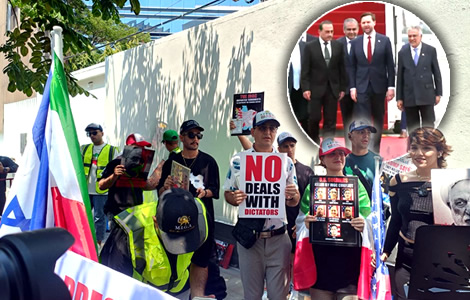
Just before US and Iranian representatives sat down in Islamabad on Saturday, developments unfolded in Bangkok. Meanwhile, Iranian supporters of Crown Prince Reza Pahlavi took to the streets. They called for regime change in Tehran.
They also voiced support for the United States. In addition, they opposed what they described as a despised Islamic regime. The Iranian regime is opposed by over 80% of the population in the country. Figures from activist groups vary from 70- 92%.
On April 11, 2026, at around 1:00 PM, a single protest was held in Bangkok. Specifically, the Iranian Patriotic Group in Thailand gathered in front of the US Embassy on Wireless Road. Moreover, the group consisted of Iranians residing in Thailand. They described the gathering as a symbolic political message.
Iranian protest in Bangkok back the United States and demands end of the Islamic regime as a priority
During the protest, participants displayed images of persecuted Iranians. Furthermore, they carried messages calling for continued war until the IRGC leaves Iran. In addition, they addressed US President Donald Trump directly. Meanwhile, they chanted support for the former Iranian king in Farsi and sang the Iranian national anthem.
At the same time, a representative attempted to present flowers to police officers. However, the police declined the gesture due to bureaucratic regulations. Consequently, the exchange remained symbolic only.
Meanwhile, a spokesperson named Sam addressed the gathering. He said over 90% of Iranians want Reza Pahlavi to return to power. Moreover, he called for the removal of IRGC influence from Iran and the reviled regime. Additionally, he stated that the movement operates across multiple countries.
Furthermore, the group supported continued pressure tactics. They acknowledged this could involve violence. Meanwhile, they stated support for the continuation of the war to pressure and remove the IRGC, which presently represents the decimated regime. They also accused the current authorities of using violence against their population.
Protesters reject Iran talks call for escalation and pressure on Tehran, including continued war
At the same time, they rejected negotiations involving the IRGC. Moreover, they opposed peace talks taking place in Pakistan on the same day. In addition, they called for increased pressure from US leadership and Israeli Prime Minister Benjamin Netanyahu.
Meanwhile, Sam said many inside Iran want political change. He cited restricted communication, including internet limits and insecurity regarding life and property. Consequently, he said conditions inside Iran suppress internal opposition activity.
At the same time, the group addressed global consequences. They were asked about energy market impacts. Meanwhile, they said allowing the current government to remain would produce worse long-term outcomes. In addition, they acknowledged that war is not desirable.
However, they maintained their position on the Strait of Hormuz. They said Iran was responsible for its closure and the damage caused to shipping. On March 11th, three Thai engineers were killed when the Mayuree Naree cargo ship was crippled in waters off Oman.
Meanwhile, attention shifted to Islamabad. US and Iranian representatives met on Saturday. Moreover, the talks took place amid multiple regional developments. In addition, scepticism persisted over any agreement.
Israel reportedly opposes mediation as reports of a ceasefire in Lebanon and Qatar asset release emerged
At the same time, it is reported that Israel, behind the scenes, also opposes these mediation efforts. It is understood that Prime Minister Benjamin Netanyahu wishes to prosecute the war against the weakened regime. However, Israel has reluctantly agreed to facilitate American diplomatic efforts.
Meanwhile, earlier reporting noted a tentative ceasefire in southern Lebanon. It involved Israeli and Hezbollah forces. Moreover, it was said to have come into effect before the Islamabad meeting. However, details remained limited.
At the same time, financial reporting stated that Qatar would release $6 billion in assets linked to the Iranian regime. No conditions or timeline were provided in the bulletin. The concessions made to the United States in advance of these talks have certainly raised eyebrows.
Maritime tensions continue around the Strait of Hormuz. Before that, on Friday, President Trump said he was displeased with Iran’s actions. On Saturday, he said US forces had cleared the strait.
Strait of Hormuz tensions escalate as US-Iran maritime claims conflict and naval movements stall
Meanwhile, reports described US naval vessels attempting passage through the waterway. One source said the vessels later retreated after warnings from Iranian forces. The Strait of Hormuz remained contested.
Iranian state media reported that three-party talks began in Islamabad after Iranian preconditions were met. Moreover, these conditions reportedly included a reduction in Israeli attacks on Lebanon. Consequently, the negotiations proceeded following that reported adjustment. The talks are taking place amid heightened regional tensions.
Meanwhile, the diplomatic process follows earlier developments in southern Lebanon. In addition, the ceasefire context has been referenced in prior reporting. Therefore, the wider security environment remains directly linked to the negotiations. The Islamabad meeting has become a central diplomatic focus.
According to Al Jazeera’s Abid Hussain in Islamabad, the format shifted during the day. Initially, the process was described as “proximate talks”. However, sources close to mediation said the structure changed. As a result, both sides are now engaged in direct negotiations. Pakistani mediators remain present inside the room.
Direct US-Iran negotiations emerge in Islamabad as Pakistan mediates high-level talks between delegations
At the same time, the talks retain a three-party framework. Moreover, the United States and Iran are both directly represented. Consequently, Pakistan continues its mediation role throughout the discussions. This structure has remained consistent since the shift in format.
Meanwhile, the US delegation is led by Vice President JD Vance. In addition, it includes special envoy Steve Witkoff. It also includes Jared Kushner, adviser and son-in-law of President Donald Trump. Therefore, the delegation combines senior political and advisory representation.
On the Iranian side, the delegation exceeds 70 members. Moreover, it is led by parliamentary Speaker Mohammad Bagher Ghalibaf. It also includes Foreign Minister Abbas Araghchi. Consequently, Iran has deployed a large and senior-level negotiating team.
Earlier in the day, bilateral meetings preceded the joint talks. For instance, JD Vance met Pakistan’s Prime Minister Shehbaz Sharif separately. Meanwhile, Ghalibaf also held a separate meeting with Sharif. Therefore, both delegations engaged Pakistan before entering joint negotiations.
Pakistan positions itself as mediator as leaders meet separately and signals hope for durable regional peace
In addition, Pakistan confirmed its continued facilitation role. Moreover, Sharif’s office said Islamabad will continue supporting both sides. Consequently, Pakistan remains positioned as an active mediator in the process. The meetings reinforced that role publicly.
Furthermore, Sharif’s office issued a statement after the engagements. It said the Prime Minister expressed hope for progress. In addition, it said the talks could serve as a stepping stone toward durable regional peace. Therefore, Pakistan framed the negotiations within a broader stability context.
Three Thai seamen were killed aboard the Mayuree Naree when Iran crippled the vessel on March 11th last
Thai economy feels the stress as US Israeli War on Iran continues with 2 key Iranian leaders just killed
Meanwhile, the structure of talks remains fluid inside Islamabad. Notably, reporting indicates direct engagement between the two delegations. However, Pakistani mediators remain present throughout the process. Consequently, the talks continue under supervised mediation conditions.
At the same time, no agreement or indication of progress has emerged. Certainly, no final outcome has been reported from the discussions. Indeed, the situation is seen as highly uncertain given the breakdown of previous talks. Furthermore, the toll inflicted on the Iranian regime in the 40 days of all out war cannot be easily forgotten. The situation, to some extent, is surreal.
Join the Thai News forum, follow Thai Examiner on Facebook here
Receive all our stories as they come out on Telegram here
Follow Thai Examiner here
Further reading:
US Ambassador Seán O’ Neill briefed Prime Minister Anutin Charnvirakul at Government House on War