People’s Party deputy leader Sirikanya Tansakul says Thailand’s 2027 budget exposes a worsening fiscal crisis, with recurring costs up ฿120 billion, investment spending cut by ฿70 billion and pension and interest bills adding nearly ฿100 billion as MPs target the TH-AI Passport project, budget transfers and plans for up to ฿400 billion in new borrowing presently being processed.
Thailand’s public finances are heading for a parliamentary showdown after People’s Party deputy leader Sirikanya Tansakul warned the government is cornered by soaring pension and interest costs that have added nearly ฿100 billion to recurring expenditure and slashed investment spending by ฿70 billion. Meanwhile, opposition MPs are preparing to probe a 30% jump in digital economy spending, the expanding TH-AI Passport project, a budget transfer that yielded only ฿10 billion instead of an expected ฿100 billion and plans for hundreds of billions of baht in new borrowing, setting up a high-stakes battle over debt, spending priorities and Thailand’s economic direction.
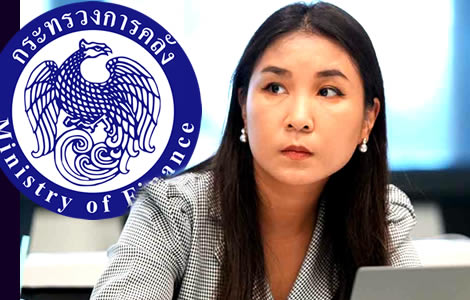
People’s Party deputy leader Sirikanya Tansakul has launched a sweeping attack on the government’s 2027 budget, warning that rising recurring expenditure is consuming investment spending and exposing mounting fiscal strain.
At the same time, she singled out a sharp increase in digital economy spending and signalled fresh scrutiny of the TH-AI Passport project as Parliament prepares for a critical budget debate.
Speaking after the seventh meeting of the People’s Party Shadow Cabinet at Parliament on Sunday, Ms Sirikanya outlined preparations for the first reading of the 2027 Budget Bill. The debate is scheduled from June 29 to July 1.
Sirikanya says final 2027 budget will change little as structural weaknesses and spending strains deepen
Before that, the Cabinet is expected to approve the final budget package on June 23. Based on Cabinet discussions, she said the final document is unlikely to differ significantly from the version approved on June 18.
Notably, Ms Sirikanya argued that the core problems remain untouched. According to the party-list MP, the latest spending plan has exposed weaknesses that have accumulated for years. Those pressures, she said, are now impossible to conceal. As budget figures become more transparent, the government faces growing constraints on how it allocates resources.
The most striking change involves recurring expenditure. Ms Sirikanya said recurring spending has increased by approximately ฿120 billion. Meanwhile, capital expenditure has fallen by around ฿70 billion. Consequently, ministries focused on investment are bearing much of the burden. The Ministry of Transport and the Department of Public Works were among the agencies highlighted during her assessment.
A closer examination reveals that pension-related obligations account for much of the increase. Pension payments for retired civil servants have risen by roughly ฿20 billion.
Pension costs, fund contributions and interest payments add nearly ฿100 billion to state spending
In parallel, contributions to the Government Pension Fund have increased by around ฿50 billion. Interest payments have also climbed by approximately ฿40 billion. Together, those three items account for roughly ฿100 billion in additional expenditure.
Importantly, Ms Sirikanya said the larger allocations do not reflect expanded benefits. Nor do they represent a deliberate increase in interest costs. Rather, they reflect a more accurate recognition of obligations that already existed. For years, she argued, governments understated pension and interest requirements in annual budgets. As a result, reserve funds were repeatedly needed to bridge the gap.
According to Ms Sirikanya, pension expenditure has remained close to ฿400 billion annually for many years. Yet official allocations frequently fell below actual requirements. Consequently, central budgets, emergency funds and treasury reserves were used to compensate. For 2027, she said, approximately ฿70 billion from treasury reserves was required because pension and interest budgets had been set too low.
Treasury reserves repeatedly used to cover pension gaps as budget realities become unavoidable
In response, the government has been forced to confront costs previously absorbed elsewhere. That, Ms Sirikanya argued, explains the sharp increase in recurring expenditure. It also explains the squeeze on investment spending. As recurring obligations consume a larger share of resources, fewer funds remain available for infrastructure and development projects.
“The government is backed into a corner and can no longer manipulate the budget figures as before,” she said. Instead, ministers must now confront what she described as the true state of Thailand’s finances. The latest budget, she argued, exposes pressures that have accumulated across successive fiscal years.
Against that backdrop, one ministry stands apart from the wider pattern of reductions. While many agencies face tighter budgets, the Ministry of Digital Economy and Society is expected to receive an increase exceeding 30%.
Separately, the National Digital Economy and Society Commission is expected to receive the largest increase of all. According to Ms Sirikanya, the commission’s allocation is set to double.
That increase has drawn particular attention because the commission oversees the TH-AI Passport project. As part of this year’s review, Parliament is expected to scrutinise the project’s second phase. The Permanent Secretary of the ministry has already confirmed its inclusion in the budget process. Consequently, funding details will be available for direct parliamentary examination.
Digital ministry budget surge and TH-AI Passport project set for intense parliamentary scrutiny
Previously, Ms Sirikanya said, spending through the ministry may not have been easily visible. Now, however, lawmakers will be able to examine allocations in detail. The opposition believes that increased transparency will allow closer scrutiny of spending decisions and procurement plans connected to the project.
On another front, the People’s Party is preparing to investigate off-budget expenditure. Ms Sirikanya said such spending often escapes normal parliamentary oversight.
Therefore, MPs will examine whether off-budget programmes overlap with projects already funded through regular appropriations. They also intend to assess whether duplicate spending exists across multiple channels.
Attention is also turning to the 2026 Budget Transfer Bill. Parliament is scheduled to debate the measure on June 25. The legislation seeks authority to reallocate expenditure within the current fiscal year. However, opposition parties have already questioned both its timing and effectiveness.
Opposition questions the effectiveness of the budget transfer plan after only ฿10 billion is reallocated
From the outset, Ms Sirikanya said her party warned that large transfers would be difficult during the third quarter. Those concerns now appear justified.
Although the original target reportedly approached ฿100 billion, only about ฿10 billion has ultimately been transferred. Consequently, opposition MPs are questioning whether the process achieved its intended objective.
According to Ms Sirikanya, procurement projects were temporarily frozen while the Budget Bureau reviewed expenditure plans. During that period, officials determined which allocations would continue and which would face reductions. The process took several months. As a consequence, budget disbursement slowed while agencies faced uncertainty over spending decisions.
For the opposition, the result raises broader questions about fiscal conditions. The eventual transfer amounted to only a fraction of initial expectations. Nevertheless, Ms Sirikanya said the government’s determination to secure even ฿10 billion was revealing. In her view, it suggests increasing pressure on available resources during fiscal 2026.
Cambodia funding claims and budget reallocations face scrutiny from opposition parties
The government has stated that the transferred funds will help address the impact of clashes between Thailand and Cambodia. Even so, the People’s Party intends to scrutinise every reduction and reallocation. Further details are expected after Cabinet consideration on June 23. The legislation will then move to Parliament two days later.
Criticism is also emerging from other opposition parties. Democrat Party leader Abhisit Vejjajiva said lawmakers have yet to receive full details of the transfer bill. Without those details, he argued, Parliament cannot properly assess the reallocations being proposed.
Mr Abhisit also questioned why the government acted slowly. According to him, delays may have reduced opportunities to limit borrowing costs. He further questioned why the transfer amount appears relatively small.
Debt concerns grow as opposition prepares broad assault on borrowing and spending priorities
That issue is particularly significant because ministers have argued that up to ฿400 billion in borrowing may be required to support spending plans and government projects.
Looking ahead, opposition parties are preparing for an extensive examination of spending priorities, debt levels and borrowing requirements. Around 30 People’s Party MPs are expected to participate.
Thai government to steady the ship with a 500 billion loan decree as public finances come under pressure
People’s Party Sirikanya attacks GDP growth claims by Minister. Points to rising Chinese transshipments
Recurring expenditure, investment reductions and off-budget spending are likely to dominate proceedings. The TH-AI Passport project is also expected to feature prominently.
For Ms Sirikanya, however, the central issue remains fiscal flexibility. Rising pension obligations, increasing interest costs and shrinking investment budgets are consuming a growing share of state resources. As those pressures intensify, the government’s room to manoeuvre continues to narrow.
Join the Thai News forum, follow Thai Examiner on Facebook here
Receive all our stories as they come out on Telegram here
Follow Thai Examiner here
Further reading:
60-day visa regime to be ended confirms Minister responding to rising industry security concerns
Tourism boss warns Thailand it is facing a Chinese blacklist if another security controversy erupts
Visa waiver scheme questioned with another China Crisis for foreign tourism driven by security fears