Thailand is set to bankroll the conversion of petrol and diesel vehicles into EVs under a proposed ฿400 billion programme, marking a dramatic policy shift. The plan could create a major new engineering industry while reshaping the kingdom’s automotive future.
Thailand is set for a dramatic shift in electric vehicle policy with plans for the country’s first nationwide financial support scheme to convert petrol and diesel vehicles into EVs under the government’s ฿400 billion emergency borrowing programme. Covering every vehicle category, the proposal breaks with years of incentives favouring new EV sales and comes as officials race legal deadlines while wider battles intensify over ageing vehicles, EV safety and the future of Thailand’s automotive industry.
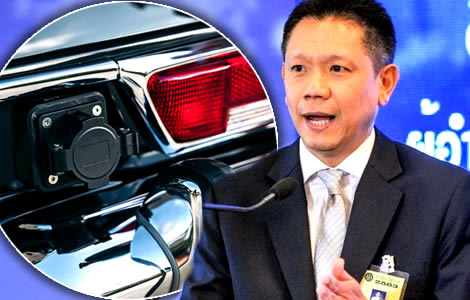
Thailand is preparing a nationwide financial support programme to help convert conventional vehicles into electric vehicles, signalling a significant expansion of its clean transport policy.
The Ministry of Finance confirmed the Excise Department is finalising the proposal. Notably, officials said the scheme will cover every vehicle category rather than selected segments. The project will draw funding from the government’s ฿400 billion Emergency Decree borrowing programme.
Mr Lavaron Sangsnit, Permanent Secretary of the Ministry of Finance, said discussions with the Excise Department have produced a clear project framework. However, several technical details still require refinement before formal submission.
Government pushes EV conversion plan under ฿400 billion borrowing programme and strict deadlines
Once completed, the proposal will go before the committee screening projects financed under the emergency borrowing programme. The committee will then examine the project before approving any funding. As part of this process, officials must also ensure compliance with the Emergency Decree governing the borrowing package.
Time is becoming an important factor. Under the decree, every approved project must complete disbursement by September 30, 2027. Consequently, the Finance Ministry wants the proposal submitted without delay. An earlier submission would provide more time for scrutiny and implementation.
“It would be best if the Excise Department submitted the new details as soon as possible, so that we have more time to work on it, in accordance with the regulations for using the Emergency Decree on Borrowing, which requires disbursement to be completed by September 30, 2027,” Mr Lavaron said.
The proposal marks a departure from Thailand’s established EV strategy. Until now, government policy has concentrated on encouraging motorists to purchase new electric vehicles.
EV policy has favoured new vehicle sales while conversion incentives remained largely unavailable
Successive incentive packages focused on expanding battery-electric vehicle ownership and domestic manufacturing. In parallel, the EV 3.0 and EV 3.5 programmes offered tax reductions, purchase incentives and production support. As a result, Thailand built its EV policy around new vehicle sales rather than converting existing petrol and diesel models.
Private motorists have therefore received no nationwide financial support to convert existing vehicles into battery-electric models. Instead, government incentives strengthened the broader EV ecosystem through manufacturing subsidies, investment promotion and tax measures.
Those policies encouraged new production capacity while expanding the domestic supply chain. By contrast, owners wishing to retain existing vehicles received little direct assistance.
Thailand has nevertheless established the legal foundations for vehicle conversion. Existing technical regulations permit approved internal combustion engine vehicles to be converted to electric power.
Every conversion must comply with engineering and safety standards. Separately, research organisations and industry groups have promoted EV conversion as a potential growth industry. Their work has focused particularly on classic vehicles, specialist transport and commercial fleets.
Officials have yet to settle funding rules as broader vehicle replacement plans continue alongside conversion
Questions remain over how the proposed scheme will operate. Officials have not yet confirmed whether assistance will take the form of grants, loans or other incentives. Likewise, eligibility rules remain under review. Funding limits have also not been announced.
Nor have officials detailed technical requirements or vehicle age criteria. Those elements are expected to be finalised before the proposal reaches the screening committee.
The initiative also follows broader policy discussions within the Ministry of Finance and the Excise Department. Earlier this year, officials examined an old vehicle trade-in programme. Under that proposal, owners would scrap ageing vehicles and replace them with new battery-electric vehicles, hybrids or cleaner models. In contrast, the latest initiative focuses on supporting vehicle conversion rather than replacement.
Commercial transport has already received stronger government backing. Previously, enhanced tax deductions were approved for companies replacing truck and bus fleets with battery-electric vehicles. Those incentives targeted businesses investing in cleaner commercial transport.
Meanwhile, private motorists remained outside comparable nationwide support programmes. The proposed conversion scheme could narrow that gap by extending assistance across all vehicle categories.
Conversion scheme broadens Thailand’s EV strategy as a wider industry as excise policies continue evolving
Thailand’s wider EV policy continues to emphasise investment and industrial development. Manufacturing incentives have attracted producers of electric vehicles and batteries.
At the same time, policymakers are examining ways to reduce emissions from the country’s large fleet of conventional vehicles. Against that backdrop, the conversion proposal represents another element of the government’s clean energy programme rather than a replacement for existing EV incentives.
Another EV car fire erupted in the northern province of Phichit as three homes went up in flames nearby
Thaksin wants higher excise duties on EV cars that are simply assembled in Thailand by Chinese firms
For now, the Excise Department continues refining the proposal before its formal submission. Afterwards, the screening committee will decide whether the project qualifies for funding under the ฿400 billion borrowing programme.
If approved, the initiative would become Thailand’s first nationwide financial programme supporting vehicle conversion across all categories. It would also broaden national EV policy beyond encouraging motorists to purchase new battery-electric vehicles alone.
Converting older petrol and diesel vehicles into electric vehicles could become an important new growth industry for Thailand, adding another pillar to the country’s expanding EV sector.
EV conversion could create new engineering jobs while strengthening Thailand’s automotive industry base
Rather than depending solely on new battery-electric vehicle sales, the industry could generate fresh opportunities for manufacturers, engineers, specialist workshops and automotive suppliers. In turn, it would strengthen Thailand’s long-established position as Southeast Asia’s leading automotive production hub while broadening its clean transport economy.
Unlike purchasing a new battery-electric vehicle, conversion allows existing vehicles to remain in service with an electric drivetrain. Consequently, owners could extend the working life of valuable assets instead of replacing them outright.
That approach could prove especially attractive for commercial operators running vehicles over long service lives. Delivery companies, logistics firms, bus operators, pickup truck fleets and specialist transport businesses could all become potential customers if conversion costs remain commercially viable. Similarly, owners of classic and vintage vehicles could preserve original bodywork while replacing ageing engines with modern electric systems.
Thailand already possesses many of the capabilities needed to support such an industry. The country has an extensive automotive supply chain, experienced manufacturers, component producers and thousands of skilled technicians.
Moreover, existing engineering expertise could be redirected towards conversion services without creating an entirely new industrial base. As part of this, businesses could manufacture battery packs, electric motors, control units, wiring systems and specialist conversion components. That expansion could also create opportunities for small and medium-sized engineering firms serving the automotive sector.
Strict standards and investment could turn EV conversion into a major new automotive sector
Notably, a successful conversion industry would require certified workshops, approved testing centres and qualified vehicle inspectors. Every converted vehicle would also need to comply with engineering and safety standards before returning to public roads. In parallel, demand would increase for specialist maintenance, technical certification and engineering services.
Separately, research organisations and industry groups have already identified EV conversion as a promising commercial opportunity. Their work has focused particularly on classic vehicles, specialist transport and commercial fleets.
The Finance Ministry’s proposed support scheme could therefore extend beyond helping motorists convert existing vehicles. It could also encourage investment across a wider engineering, manufacturing and automotive services sector.
On another front, Thailand’s established EV manufacturing industry already provides an industrial ecosystem capable of supporting both new vehicle production and conversion businesses. If the proposal proceeds, EV conversion could emerge as another important pillar of Thailand’s automotive economy, creating new opportunities across engineering, manufacturing and specialist vehicle services while complementing the country’s established EV industry.
Join the Thai News forum, follow Thai Examiner on Facebook here
Receive all our stories as they come out on Telegram here
Follow Thai Examiner here
Further reading:
Khon Kaen Police probing a pre dawn blaze caused by a charging EV that burned down a family home
Government sends strong warning to EV industry after a dramatic surge in consumer complaints
Thaksin wants higher excise duties on EV cars that are simply assembled in Thailand by Chinese firms