The race for Thailand’s top police job appears all but over, with Big Ran heavily favoured ahead of Tuesday’s vote. At just 51, he is expected to become the Royal Thai Police’s youngest Commissioner-General in many years after a career tackling the country’s toughest cases.
Thailand’s Police Commission will decide the country’s next national police chief on July 22, with Big Ran widely expected to take command after more than three decades at the sharp end of policing. Prime Minister Anutin Charnvirakul will chair the decisive meeting as 12 eligible commissioners weigh four candidates under strict legal criteria. Big Ran ranks only third in seniority, yet his record spans the Korat mass shooting, Din Daeng unrest, southern bomb plots, foreign nominee crackdowns and major international policing operations. The choice will determine the 16th Commissioner-General of the Royal Thai Police and place one of Thailand’s most battle-tested commanders at the head of the force.
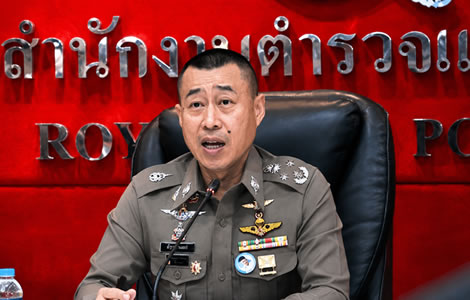
Thailand’s Police Commission will meet on July 22 to choose the country’s next national police chief, with Deputy Commissioner-General Pol Gen Samran Nuanma, better known as Big Ran, widely expected to secure the appointment. General Samran, at 51 years of age, is a relatively young officer and insiders see that as a particularly good thing.
The meeting begins at 1pm and will be chaired by Prime Minister and Interior Minister Anutin Charnvirakul as chairman of the Police Civil Service Commission. The appointment will replace Pol Gen Kittirat Phanphet, who retires on September 30 after reaching the mandatory retirement age. The decision will determine the 16th Commissioner-General of the Royal Thai Police and shape the force’s leadership for the coming years.
The appointment follows Section 78 of the National Police Act (2022). The law requires the Prime Minister to nominate a qualified senior police officer after considering seniority, knowledge and professional ability.
Notably, it also places particular emphasis on experience in criminal investigation and crime prevention and suppression. The Police Commission must approve the nomination before it is submitted for royal appointment by His Majesty the King.
Four senior police generals qualify for consideration but Big Ran has emerged as overwhelming favourite
Four senior officers satisfy the statutory qualifications. Deputy Commissioner-General Pol Gen Nirandon Lueamsri is the most senior candidate and graduated from Police Cadet Class 43.
Deputy Commissioner-General Pol Gen Thatchai Pitanilabutr ranks second and belongs to Police Cadet Class 42. Big Ran stands third in seniority after graduating from Police Cadet Class 50. Inspector-General Pol Gen Itthipol Achariyaprasit completes the shortlist as another Police Cadet Class 43 graduate. Even so, seniority is only one factor considered under the legislation.
Big Ran has nevertheless emerged as the overwhelming favourite ahead of Wednesday’s meeting. His supporters point to an unusually broad operational career rather than his position on the seniority list.
Over more than three decades, he has served in investigations, detective work, crime suppression, patrol operations, metropolitan policing and national command. Just as importantly, successive police chiefs repeatedly selected him to manage some of Thailand’s most demanding security crises. That record has steadily strengthened expectations surrounding his promotion.
Voting rules leave just 12 Police Commission members to decide Thailand’s next police chief appointment
The Police Commission currently has 16 members. However, the four candidates must immediately withdraw once deliberations begin because each has a direct conflict of interest.
As a result, only 12 commissioners remain eligible to participate in the vote. They include Prime Minister Anutin Charnvirakul, outgoing Commissioner-General Pol Gen Kittirat Phanphet, Deputy Commissioner-General Pol Gen Thana Chuwong and Deputy Commissioner-General Pol Gen Korachai Klaiklung.
The panel also includes Civil Service Commission Secretary-General Piyawat Sirirak and Office of the Civil Service Commission Secretary-General Onfa Vejchasiva. Expert commissioners Pol Gen Winai Thongsong, Pol Gen Manu Mekmok, Pol Gen Rungroj Saengkram, Chatchai Promlert, Pratit Santipraphop and Witthawal Sunthonkhajit complete the voting membership.
Under the established procedure, the Prime Minister first nominates a candidate for consideration. If the commission unanimously supports that nomination, the chairman does not vote. Conversely, a tied vote allows the chairman to exercise a casting vote and immediately determine the outcome. The procedure ensures the appointment cannot remain unresolved.
Interest in Big Ran extends well beyond the succession process. His career spans more than 30 years and almost every major policing discipline.
Big Ran’s early life and family background shaped a policing career built through frontline service
Born in Phetchaburi, he graduated from the 34th class of the Armed Forces Academies Preparatory School before entering the Royal Police Cadet Academy as a member of Class 50.
Unlike many senior officers, he has consistently highlighted his ordinary family background. He has often said he had no influential surname or political connections to advance his career. Instead, he built his reputation through operational policing.
According to accounts of his career, the ambition to become a police officer emerged during childhood. He watched powerful figures bully his father without anyone stepping forward to help. That experience shaped his future.
He later resolved to become someone ordinary people could depend upon. More than three decades later, he has repeatedly linked that childhood experience to his policing philosophy.
Big Ran began police service in 1997 as a deputy investigation officer at Phra Khanong Police Station. His duties included interviewing complainants, collecting evidence and preparing criminal case files.
At the same time, he dealt daily with members of the public seeking justice through their local police station. He has since described those years as the period that taught him where the public forms its opinion of the entire police service.
Detective work and Unit 191 service established Big Ran’s reputation in crime suppression and cases
In 2003, he transferred to the investigative unit at Thonglor Police Station. There, he combined detective work with formal criminal investigations. He later explained that the two disciplines cannot operate independently.
Detectives identify suspects, while investigators assemble the evidence needed to secure convictions. That practical approach became a defining feature of his later command style.
His career then moved to the Patrol and Special Operations Division, widely known as Unit 191. That assignment proved decisive. He remained there for many years and rose from inspector to commander.
During that period, he supervised operations against contract killers, illegal firearms factories and organised criminal networks. In parallel, he introduced social media-based investigative systems to strengthen narcotics enforcement. Those methods continue to be used by younger officers today.
A major leadership test arrived in 2011 when severe flooding engulfed Bangkok. Big Ran was serving as superintendent of Don Mueang Police Station when floodwater rendered the station unusable.
Flood leadership and policing philosophy strengthened Big Ran’s reputation before major crises
Rather than suspend services, he immediately relocated operations to temporary premises. Police continued receiving complaints while restoration work progressed.
Afterwards, the station underwent extensive renovation and later received recognition as an outstanding police station. Officials also reported a 100% clearance rate for major criminal cases during his command.
His experience subsequently broadened further. He worked across investigations, crime suppression, traffic policing and administration. Consequently, supporters argue few senior officers have experienced every major operational discipline.
Big Ran has consistently summarised that philosophy through a simple principle: “Put the right man on the right job.” That approach has remained central throughout his career.
National emergencies later brought him into the public spotlight. On February 8, 2020, Thailand suffered its deadliest mass shooting after a soldier attacked Terminal 21 Korat shopping centre and seized hostages.
Big Ran led response to Thailand’s deadliest mass shooting before restoring order at Din Daeng
Thirty-one people died and 58 others were injured. Big Ran was then commanding the Patrol and Special Operations Division. He received orders to lead Arintharat 26 officers into the operation.
Negotiations failed while gunfire continued inside the complex. Eventually, police launched a decisive assault during the morning of February 9. The gunman was killed and most surviving hostages were rescued.
Another defining assignment followed in 2021 after Big Ran became Commissioner of the Metropolitan Police Bureau. Bangkok was then experiencing prolonged unrest around Din Daeng Triangle. Police vehicles and traffic booths had been burned.
Violent confrontations between protesters and riot police continued almost daily. Instead of relying only on visible deployments, he ordered concealed CCTV cameras throughout the area. Investigators monitored movements continuously and screened people entering and leaving the neighbourhood.
Meanwhile, officers maintained round-the-clock operational control. Big Ran also met residents personally during the operation. According to official accounts, the unrest subsided within about 10 days after the strategy changed.
Bomb plot investigation expanded across southern Thailand after suspicious vehicle triggered the case
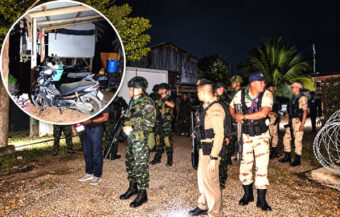
A different security challenge emerged in June 2025 while he was serving as Deputy Commissioner-General. Officers discovered a suspicious vehicle in Phang Nga containing what appeared to be an improvised explosive device. In response, Big Ran ordered an immediate expansion of the investigation.
Detectives subsequently uncovered plans involving 16 suspected bomb locations across the three southern border provinces together with Phuket, Phang Nga and Krabi. Investigators concluded senior figures linked to the southern insurgency had hired operatives to plant devices targeting tourism and the regional economy.
Potential targets included Phuket International Airport. Explosive Ordnance Disposal specialists and forensic teams recovered every device before detonation.
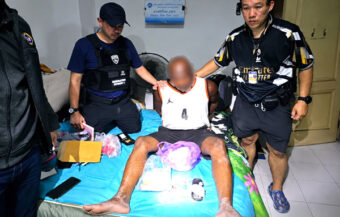
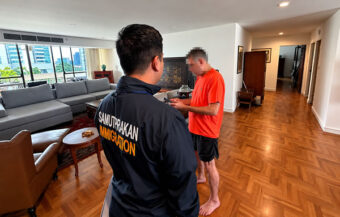
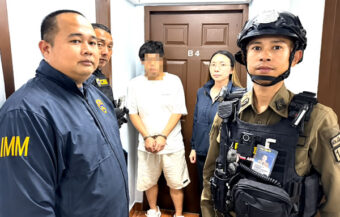
On another front, Big Ran has become closely associated with Thailand’s nationwide crackdown on foreign nominee business structures. Police investigations across Phuket, Phang Nga and Krabi identified more than 37,000 registered legal entities.
Nominee investigations widened into a multi-phase crackdown spanning southern provinces
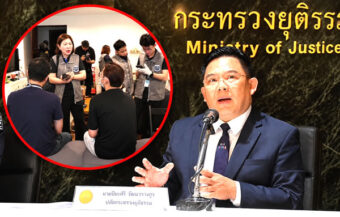
Officers selected over 1,450 companies for closer examination after identifying suspected nominee arrangements. Investigators also examined allegations involving forged documents, luxury villa developments and signatures allegedly belonging to deceased individuals appearing on official records. The investigations expanded through three operational phases beginning in May rather than ending after a single raid.
The latest phase reached Koh Phangan in Surat Thani. Police reported 105 criminal cases and arrested suspects of several nationalities, including Russian, Israeli, French and Ukrainian citizens.
Investigators also examined transactions involving more than 80 rai of land. Separately, financial investigators analysed corporate records and ownership structures stretching across multiple provinces. Those inquiries required months of documentary examination before arrests were made.
Big Ran has also represented Thailand internationally. He attended the INTERPOL General Assembly in Glasgow alongside senior police leaders from more than 169 countries.
Discussions focused on facial recognition, fingerprint systems, DNA identification and AI-assisted policing. In addition, delegates examined stronger cooperation against increasingly sophisticated transnational criminal organisations.
International policing and frontline experience reinforce Big Ran’s credentials for the top job
Within the Royal Thai Police, Big Ran has also promoted improved operational capability. He supported procurement of 14,000 bullet-resistant vests for investigative and crime suppression officers.
He also backed the acquisition of thermal imaging drones, night-vision equipment and satellite communications systems. Those resources were intended for frontline deployments rather than ceremonial duties.
Nominee shareholding crackdown moves into Chiang Mai with 31 firms raided and 5 foreigners arrested
Nominee shareholding crackdown is impacting the property market in Phuket and small foreign investors
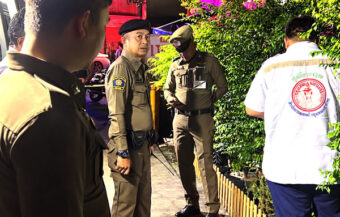
Throughout his career, Big Ran has regularly appeared at floods, protests, bomb investigations and major criminal incidents.
He has consistently favoured directing operations from the field instead of remaining at headquarters. Finally, as the Police Commission prepares to meet on July 22, that operational record has positioned him as the leading candidate to become Thailand’s 16th Commissioner-General of the Royal Thai Police.
Join the Thai News forum, follow Thai Examiner on Facebook here
Receive all our stories as they come out on Telegram here
Follow Thai Examiner here
Further reading:
Nominee shareholding crackdown moves into Chiang Mai with 31 firms raided and 5 foreigners arrested
Koh Samui and Koh Phangan raids target a Chinese backed investment network on the paradise islands
Huai Khwang raid shows nominee shareholdings being used by Chinese infiltrating the economy
Sweep of nominee firms and business networks on Koh Phangan. 22 arrested, 200 million in land seized
Anutin visits Koh Phangan as nominee crackdown shows 68% of firms with foreign ownership links
Blitzkrieg on foreign firms and enterprises on Koh Phangan continues with French owned resort busted
Russian-Chinese Koh Phangan alliance to sell drugs to foreigners. Accused entered Thailand illegally