Thailand showcases road safety at the UN despite having one of Asia’s deadliest road networks. UK warnings remain in force as 14,144 motorcyclists died last year and tourist crashes continue to expose failures in helmet use and enforcement.
Thailand is promoting its road safety strategy on the world stage despite recording one of Asia’s worst motorcycle death tolls, as new figures reveal more than 14,000 riders died last year, British tourists remain under official travel warnings and two high-profile fatalities on Koh Samui have intensified international scrutiny. An investigation into the latest UK-Thailand road safety talks reveals a stark contrast between diplomatic discussions on community checkpoints and helmet campaigns and a road safety crisis that continues to claim thousands of lives each year despite decades of government initiatives, tougher laws and repeated enforcement drives.

Thailand promoted its road safety strategy at a United Nations conference in New York this week despite continuing to record one of the world’s highest motorcycle death rates.
Meanwhile, the United Kingdom still warns its own citizens that Thailand’s roads remain among the most dangerous they are likely to encounter overseas, particularly when riding motorcycles.
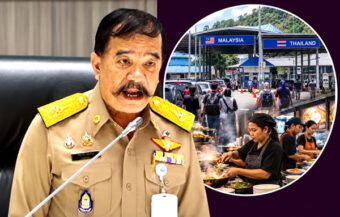
Deputy Interior Minister Jeseth Thaiseth met Lilian Greenwood, the United Kingdom’s Minister for the Future of Roads, on Thursday during the United Nations High-Level Conference on Road Safety.
The bilateral meeting focused on reducing road deaths and strengthening cooperation between the two countries. In particular, both ministers discussed motorcycle safety and exchanged views on measures intended to reduce fatalities.
Foreign tourist deaths on Koh Samui formed backdrop as ministers shared safety initiatives
The discussions came only months after a series of widely reported deaths involving foreign visitors in Thailand. British tourist Tiger Duggan, 23, died in a Bangkok hospital on February 19. He had suffered devastating injuries in a motorcycle crash on Koh Samui on February 1.
Separately, rising Australian athlete Jemma Stapleton died on Koh Samui on June 10. Her death attracted international attention and prompted Tourism and Sports Minister Surasak Phancharoenworakul to travel to the island to review local safety measures.
However, neither tragedy appeared to feature prominently during the discussions in New York. Instead, both governments concentrated on exchanging existing road safety initiatives. Britain’s interest centred on Thailand’s “community checkpoint” programme despite the United Kingdom maintaining one of Europe’s stronger road safety records.
Consequently, the meeting focused on sharing experience rather than examining the continuing pattern of fatal crashes involving foreign visitors.
According to Jeseth, British officials wanted to understand how Thailand had developed community participation in road safety.
He said the United Kingdom was interested in measures aimed at reducing motorcycle deaths despite Britain’s comparatively strong safety performance. As part of the discussions, the deputy minister outlined Thailand’s current strategy and described community involvement as one of its principal strengths.
Thailand highlights tougher enforcement on helmet use and community checkpoints as key measures
Jeseth said Thailand currently relies on three main approaches. Firstly, authorities have intensified enforcement of traffic laws. Secondly, officials continue encouraging greater helmet use among riders and passengers.
Thirdly, communities participate through locally organised checkpoints. He also noted that Thailand has an exceptionally large number of motorcycles with engines below 125cc. Their usage, he said, differs significantly from motorcycles commonly seen in many developed countries.
Community checkpoints have become a familiar feature during Thailand’s busiest travel periods. They operate extensively during Songkran, New Year and other long public holidays. Local officials establish temporary roadside stations in villages and high-risk communities.
Village headmen, local administrative organisations, village health volunteers and civil defence volunteers all participate. Residents also assist with monitoring traffic and warning motorists about unsafe driving.
Jeseth described the checkpoints as preventative rather than punitive. Their purpose is to monitor traffic, warn drivers and encourage safer behaviour before collisions occur. He said the programme had reduced losses during previous holiday periods.
Likewise, he argued that effective road safety required cooperation beyond traditional police enforcement. Community participation, he said, remained an essential part of that approach.
Deputy minister urges UK tourists to study Thai roads as holiday checkpoint plan begins
Thailand remains prepared to share its experience internationally, according to the deputy minister. He said cooperation with Britain supported the United Nations’ objective of reducing road deaths and serious injuries worldwide.
At the same time, he expressed concern about British tourists travelling independently around Thailand. Many visitors hire motorcycles or cars shortly after arriving, particularly in resort destinations.
Jeseth urged British visitors to familiarise themselves with Thai traffic laws before driving. He also encouraged them to study local routes before setting out. In addition, he advised motorists to wear approved safety equipment at all times. Drivers should avoid speeding, remain cautious and never drive when physically unfit, he said. Those measures, he argued, would help visitors travel more safely throughout Thailand.
Upon returning home, Jeseth said he would immediately accelerate the community checkpoint programme ahead of next week’s four-day public holiday. Millions of people are expected to travel nationwide during the extended break.
In response, he instructed the Department of Disaster Prevention and Mitigation to coordinate preparations across the country. Provincial governors, district officers and other relevant agencies also received instructions.
Thailand’s motorcycle death toll remains among Asia’s worst despite years of campaigns
On another front, local government organisations, village leaders, health volunteers and civil defence volunteers will expand their cooperation. Community checkpoints will be established across high-risk areas nationwide.
Officials will monitor traffic, issue warnings and promote safer driving behaviour. Law enforcement will operate alongside public awareness campaigns. Together, those measures are intended to reduce accidents during one of Thailand’s busiest travel periods.
Jeseth described community checkpoints as one of the Interior Ministry’s priority measures. He said they would help reduce accidents, minimise losses and strengthen confidence among both Thai citizens and foreign tourists.
Notably, the renewed emphasis comes after years of similar campaigns, holiday operations and ministerial initiatives. Yet Thailand’s road safety record remains among the weakest in Asia despite repeated government efforts.
Official figures illustrate the scale of the challenge. Thailand recorded 17,447 road deaths during 2024. Motorcycles accounted for 14,144 of those fatalities. That represented roughly four out of every five road deaths nationwide.
Government health officials estimate that three people died in motorcycle crashes every two hours throughout the year. Even after repeated enforcement campaigns, those figures have remained persistently high.
WHO figures and headlines confirm UK’s ongoing warnings about Thailand’s dangerous roads
The World Health Organisation estimates Thailand’s road traffic death rate at 25.4 per 100,000 people. That places the kingdom among Asia’s worst-performing countries for road safety. Motorcyclists account for nearly 84% of all road fatalities.
By comparison, many developed countries have steadily reduced motorcycle deaths through sustained enforcement, licensing standards and higher helmet compliance. Thailand, however, continues to struggle with the same underlying risk factors year after year.
Those figures also provide the backdrop to Britain’s continuing travel advice. While foreign visitors account for only a small proportion of Thailand’s overall road deaths, they remain disproportionately represented in serious crashes involving tourists. British, Australian, German, French, Irish, American, Canadian and New Zealand visitors repeatedly appear in accident reports after hiring motorcycles.
Many have limited riding experience. Others do not hold the correct motorcycle licence. Consequently, several governments continue issuing strong warnings before their citizens travel to Thailand.
The British Foreign, Commonwealth and Development Office continues to identify motorcycles and scooters as one of the greatest dangers facing British holidaymakers in Thailand. It warns that road accidents occur throughout the country.
Moreover, motorcycles remain the leading cause of serious injuries and deaths involving British nationals overseas. British officials repeatedly advise travellers to think carefully before renting one.
UK warns licences, insurance and helmets are essential before riding motorbikes in Thailand
The FCDO also warns that many motorcycles offered for rent may be unregistered or uninsured. Consequently, visitors are advised to confirm both before using any vehicle on public roads.
British travellers must also hold the correct motorcycle licence. In most cases, they also require an International Driving Permit covering motorcycles. Otherwise, they may be breaking Thai law while simultaneously invalidating their travel insurance.
The British government also stresses that wearing a crash helmet is compulsory throughout Thailand. Failure to wear one greatly increases the risk of death or life-changing injury. Furthermore, insurers may refuse to cover medical treatment or repatriation costs if riders were not legally licensed or failed to wear a helmet. Even where another driver caused the collision, those conditions may still apply.
The advisory also highlights major differences between driving in Britain and Thailand. Congested roads, higher traffic speeds and unpredictable manoeuvres all increase the risks. Poor road surfaces create additional hazards.
Likewise, unfamiliar junction layouts can catch inexperienced riders by surprise. The dangers increase further after dark and during periods of heavy rain.
British officials also caution that many visitors hire scooters within minutes of arriving at beach resorts or islands. Frequently, they have little or no previous riding experience. Yet they begin riding immediately in unfamiliar conditions. As a result, the FCDO recommends licensed taxis or public transport whenever practical instead of rented motorcycles.
Hospital data reveals widespread helmet wearing failure despite years of enforcement and campaigns
Thailand’s own health data reinforces those concerns. The Department of Disease Control reports that 84% of motorcyclists admitted to hospital after crashes between 2020 and 2024 were not wearing helmets. That figure includes both riders and passengers. Significantly, it exposes a persistent gap between Thailand’s helmet laws and actual compliance on the roads.
Helmet legislation has existed for many years. Police also conduct regular enforcement campaigns. Nevertheless, compliance remains inconsistent across much of the country. Riders without helmets remain a common sight in cities, towns and tourist destinations. Passengers frequently travel without protective equipment despite the legal requirement.
Alcohol also remains a major contributor to serious crashes. Speeding continues to feature prominently in official assessments.
Failure to wear helmets completes the trio of leading risk factors identified by health and transport officials. Collectively, those causes have remained largely unchanged despite years of government intervention.
The annual Songkran festival illustrates the scale of the challenge. Every year, millions travel across Thailand during the holiday. Police launch nationwide enforcement operations. Thousands of checkpoints are established. Public awareness campaigns dominate television and social media. Yet road deaths and injuries still rise sharply during the holiday period.
New Year road toll mirrors Songkran as motorcycle risks remain deeply embedded in Thailand
The same pattern emerges during the New Year celebrations. Additional officers patrol major highways. Drink-driving campaigns intensify. Speed enforcement also increases. However, motorcycle fatalities continue to account for most deaths recorded during the holiday period. The annual statistics have therefore changed little despite repeated nationwide operations.
Motorcycles remain the principal form of transport for millions of Thai people. They are affordable, widely available and practical for daily travel. Consequently, exposure to risk remains exceptionally high. The sheer number of motorcycles on Thailand’s roads also magnifies the consequences of poor helmet use, speeding and impaired driving.
Foreign visitors face additional challenges. Many arrive with little understanding of Thai traffic conditions. They encounter left-hand driving for the first time. Busy roads, unpredictable traffic movements and unfamiliar road layouts further increase the risks. In many tourist destinations, motorcycles can be rented quickly with minimal checks.
Medical treatment in Thailand’s larger cities is generally of a good standard. However, severe motorcycle crashes often result in catastrophic injuries before victims reach hospital.
Others require prolonged treatment and rehabilitation. Families can then face substantial medical expenses, particularly where insurance claims are later rejected because policy conditions were breached.
Years of initiatives fail to halt motorcycle deaths as ministers continue promoting road safety
Insurance complications remain a recurring problem. Riders without the correct licence may discover that their policies provide no cover. The same applies where crash helmet requirements were ignored.
Consequently, families may face expensive medical bills and repatriation costs following serious collisions. Those financial consequences often emerge only after an accident has occurred.
Against that backdrop, the discussions in New York highlighted continuing cooperation between Thailand and the United Kingdom. Britain’s interest centred on Thailand’s community checkpoint programme and local participation in road safety. Thailand, meanwhile, presented the initiative as an effective preventative measure. Both governments agreed that reducing road deaths requires cooperation across multiple sectors.
Yet the wider statistics present a far harsher picture. Thailand has spent years introducing road safety campaigns, tougher laws and holiday enforcement operations. Ministers have repeatedly announced new initiatives.
Public agencies have continued awareness campaigns. Community checkpoints have also expanded. Even so, the country’s motorcycle death toll remains among the highest in Asia.
Fatal tourist crashes underline unresolved road safety crisis despite years of policy ideas
The underlying causes have long been identified. Speeding continues to feature prominently. Drink-driving remains a major factor. Helmet compliance also remains consistently poor. Those risks have appeared repeatedly in official reports for many years. Despite that, they continue to dominate Thailand’s road safety statistics.
The deaths of Tiger Duggan and Jemma Stapleton brought renewed international attention to the dangers facing foreign visitors. Both cases attracted extensive media coverage.
They also prompted renewed scrutiny of motorcycle safety in Thailand’s leading tourist destinations. However, those tragedies formed the backdrop rather than the focus of this week’s ministerial meeting.
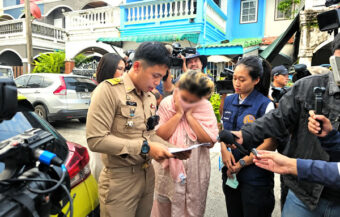
Police on Koh Samui give briefing on the death of Australian sports star Jemma Stapleton on June 10th
UK’s Tiger Duggan dies in Bangkok. Never regained consciousness after a motorbike crash on Koh Samui
Instead, the discussions concentrated on exchanging experience and promoting existing initiatives. Community checkpoints occupied much of the conversation. Helmet use also featured prominently.
Meanwhile, Britain’s own travel advice to its citizens remains unchanged. It continues to caution that motorcycles present one of the greatest risks facing British visitors travelling in Thailand.
For Thailand, the challenge remains stark. The country already understands the principal causes of motorcycle deaths. It also possesses years of accident data identifying the highest risks. Successive governments have introduced enforcement campaigns and public safety initiatives. Nevertheless, more than 14,000 people still died in motorcycle crashes during 2024 alone. That continuing toll provides the clearest measure of the scale of the problem.
Join the Thai News forum, follow Thai Examiner on Facebook here
Receive all our stories as they come out on Telegram here
Follow Thai Examiner here
Further reading:
UK’s Tiger Duggan dies in Bangkok. Never regained consciousness after a motorbike crash on Koh Samui
Outpouring of love for UK man fighting for life after horrific Koh Samui motorbike smash last Sunday
Deadly danger of motorbikes in Thailand, 2 dead in 1 day while an Australian’s dreams are smashed
Canadian the latest foreigner killed in a motorbike accident in Thailand early on Friday in Pattaya
Harrowing scene as Canadian cries for his dead wife at early morning accident in Kanchanaburi