Thailand’s ruling coalition faces a tough test as the Election Commission weighs action against 229 people in the Senate collusion case. Anutin projects unity, but three major investigations and a no-confidence debate are closing in.
Less than four months after sweeping to power with one of Thailand’s strongest parliamentary majorities, Prime Minister Anutin Charnvirakul’s coalition faces its first defining political test as an explosive Senate election investigation involving 229 figures nears a pivotal Election Commission ruling, while a massive local government recruitment scandal, a controversial ฿1.62 billion procurement project and growing opposition pressure threaten to overshadow the government’s commanding position in Parliament. Even as Mr Anutin publicly dismisses rumours of division and insists his ministers remain united, the outcome of August’s Election Commission decision and the coming no-confidence debate could shape the coalition’s political future.
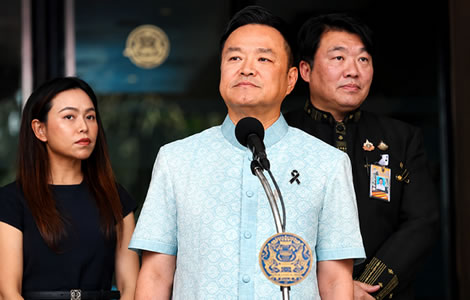
Prime Minister Anutin Charnvirakul sought on Thursday to draw a line under mounting political speculation, telling Cabinet colleagues he was unconcerned by rumours of a power shift and remained fully confident in every minister.
His message came during the weekly Cabinet meeting as questions continue to swirl over the stability of the coalition government.
Instead of addressing political intrigue, Mr Anutin urged ministers to concentrate on their work. He also warned them not to be distracted by reports or questions designed to create divisions within the government.
Government dismisses coalition rumours as Anutin urges ministers to ignore division and stay focused
Later, Government Spokesperson Ms Rachada Thanadirek repeated the Prime Minister’s remarks while briefing reporters. She said Mr Anutin stressed that the government did not belong to any single political faction.
Rather, it was a government serving the people. Consequently, every coalition party remained committed to implementing the policies presented to Parliament after taking office.
According to Ms Rachada, the Prime Minister said those policies provided clear objectives and direction. Therefore, ministers should continue carrying out their duties without becoming distracted by speculation over political manoeuvring.
“The Prime Minister has confidence in all ministers and urges all parties to perform their duties to the best of their abilities without worrying or being swayed by news reports or questions intended to create division,” Ms Rachada said, repeating his statement to Cabinet.
She added that ministers should perform their duties with peace of mind while acting in the interests of the people and the nation.
Coalition’s stout majority faces pressure as corruption probes replace confidence after election win
The reassurance came at a sensitive moment for the coalition. Less than four months have passed since the February 8 general election produced one of Thailand’s strongest parliamentary majorities in years.
Yet the political conversation has shifted rapidly away from legislative strength and towards allegations of corruption, internal tensions and growing legal scrutiny.
When Bhumjaithai joined forces with Pheu Thai after the election, the coalition appeared unusually secure. Bhumjaithai controls 191 seats in the House of Representatives, giving the government a commanding majority. Moreover, many analysts believed the party exercised considerable influence within the Senate and across parts of the state apparatus.
Opposition politicians soon labelled the coalition the “blue regime.” The phrase reflected their belief that Bhumjaithai had become the country’s dominant political force. At the time, many observers predicted the government could complete a full four-year term unless it undermined itself.
That assessment has become increasingly relevant.
Senate election scandal emerges as coalition’s biggest political threat ahead of no-confidence debate
Rather than facing major defeats in Parliament, the coalition now finds itself confronting pressure from several investigations. Meanwhile, opposition parties are preparing a no-confidence debate later this year. Even so, the government’s most immediate challenge appears to lie within its own political ranks rather than across the opposition benches.
No issue better illustrates that pressure than the continuing investigation into alleged collusion during the 2024 Senate election.
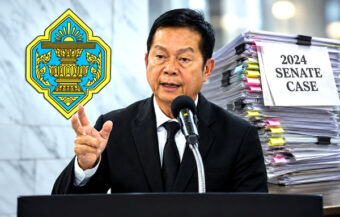
The inquiry is being conducted jointly by the Election Commission and the Department of Special Investigation (DSI). It covers complaints involving 229 individuals, including senior Bhumjaithai figures. Although investigators have reached no legal conclusions, the case has steadily become one of Thailand’s most politically significant investigations.
Opposition parties argue that senators aligned with Bhumjaithai dominate the upper house. As a result, they claim the party has exercised substantial influence over appointments to independent constitutional bodies. They also argue that such influence has weakened the system of institutional oversight.
Those allegations remain strongly disputed. Nevertheless, the investigation has become a political issue in its own right. Increasingly, attention has shifted towards how the Election Commission will handle one of the most sensitive cases in its recent history.
That scrutiny intensified on Thursday.
Election Commission faces August decision as 90,000 pages of Senate election evidence raise stakes
The Election Commission announced it expects to decide during August whether criminal proceedings should be initiated against those under investigation.
Previously, there had been suggestions the decision might be delayed until September. Consequently, the announcement immediately focused political attention on the Commission’s next move.
The timing is especially significant because opposition parties have begun presenting evidence publicly from what they describe as almost 90,000 pages of investigative material. The documents were gathered jointly by the DSI and an Election Commission investigation panel. As more information enters the public domain, pressure on the Commission continues to increase.
The Commission also faces questions over its own internal process.
Earlier, its 26th Committee examined the evidence and recommended referring all 229 cases to the Constitutional Court. However, that recommendation was later overturned by the Commission’s 36th Committee. Consequently, two separate Commission panels reached sharply different conclusions after reviewing the same investigation.
Constitutional Court dispute piles pressure over Election Commission handling of Senate case
That reversal has become a political issue itself.
Opposition politicians have questioned why the earlier recommendation was abandoned. Meanwhile, the Commission now faces intense scrutiny over how it will explain its final decision. Whatever conclusion it reaches is expected to carry significant political consequences.
The inquiry extends well beyond possible criminal proceedings.
Even if commissioners conclude there is insufficient evidence to prosecute, the issue is unlikely to disappear. Instead, it would almost certainly move into Parliament, where opposition parties are preparing to challenge the government during the coming no-confidence debate.
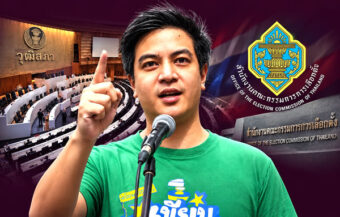
Former justice minister and Prachachart Party leader Thawee Sodsong has already urged the Commission not to decide the legal merits itself. Instead, he argues the cases should be referred directly to the Constitutional Court.
Mr Thawee also points to previous Constitutional Court rulings which, he says, suggest credible evidence alone is sufficient for referral. In his view, the Commission should not act as a court by deciding whether the evidence ultimately proves guilt. Rather, it should allow the Constitutional Court to make that determination.
Senate inquiry as Interior Ministry recruitment scandal presents another crisis for coalition government
His intervention has added another layer of pressure to an already sensitive process.
For the Election Commission, the coming decision now extends beyond legal procedure. It has become a test of institutional credibility. At the same time, it represents a significant political challenge for a coalition already facing questions over transparency and accountability.
Notably, the Senate investigation is only one of several controversies confronting the government.
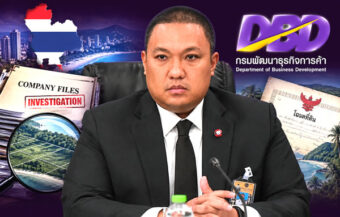
Another major inquiry centres on recruitment examinations for local government officials under the Interior Ministry. Prime Minister Anutin also serves as Interior Minister, placing the issue close to the centre of government.
Investigators believe widespread cheating took place throughout the recruitment process. They are examining allegations involving organised answer-sheet manipulation, bribery and examination fraud. According to investigators, illicit payments generated by the operation may have reached approximately ฿4.5 billion.
If confirmed, the affair would rank among Thailand’s largest alleged public-sector recruitment scandals.
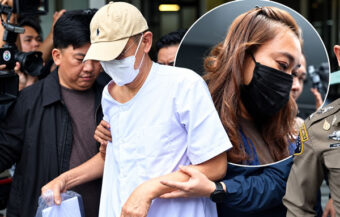
Authorities are now preparing to revoke the appointments of almost 6,000 successful candidates after uncovering what investigators describe as systematic irregularities. Those findings have transformed what initially appeared to be an examination dispute into a major criminal investigation.
In parallel, police have expanded the financial investigation.
Financial trail expands as police trace political links beyond examination fraud and civil servants
Officers tracing money transfers have identified links to influential provincial political networks in Buri Ram, Satun and Phetchabun. All three provinces are regarded as important Bhumjaithai political strongholds. Consequently, attention has widened beyond examination officials towards possible political connections.
Several groups have already been prosecuted.
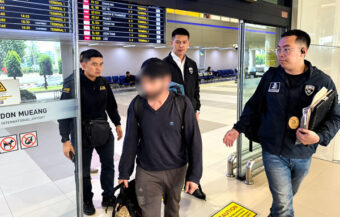
Those charged include former senior officials from the Department of Local Administration, examination administrators and individuals accused of manipulating answer sheets. Even so, public attention has increasingly focused on whether investigators will pursue politicians should the evidence justify further action.
Mr Anutin has repeatedly insisted investigators should simply follow the evidence wherever it leads.
However, critics argue the government risks creating the impression that accountability could stop with civil servants while politically connected figures avoid prosecution. Given the alleged scale of the operation, they argue the investigation will inevitably attract continued political scrutiny.
On another front, opposition parties are preparing to broaden their criticism beyond the recruitment scandal.
Three investigations set to dominate no-confidence debate as Parliament prepares for political confrontation
The coming no-confidence debate is expected to combine the Senate investigation, the recruitment inquiry and other procurement controversies into a broader attack on the government’s record. As Parliament prepares to reconvene later this month, those issues are increasingly becoming intertwined rather than remaining separate investigations.
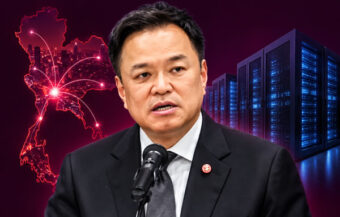
Separately, another politically sensitive controversy surrounds the TH-AI Passport project under the Ministry of Digital Economy and Society. The project carries a reported value of ฿1.62 billion. Opposition lawmakers have questioned the procurement process. Specifically, they allege bidding conditions favoured companies linked to influential figures within Bhumjaithai.
The ministry falls under the supervision of Digital Economy and Society Minister Chaichanok Chidchob. He is the son of Bhumjaithai patriarch Newin Chidchob. Accordingly, the project has acquired significance beyond its financial value. Opposition parties are expected to place the procurement process under intense scrutiny during the coming no-confidence debate.
Collectively, the three investigations have altered Thailand’s political landscape in less than four months. Instead of debating legislative achievements, political attention has centred on corruption allegations, procurement questions and the Senate election inquiry. Consequently, the government’s parliamentary strength no longer dominates the political discussion.
Coalition unity questioned as leadership rumours persist despite repeated denials from Bhumjaithai
Against that backdrop, speculation has continued over possible tensions inside Bhumjaithai’s senior leadership. Prime Minister Anutin, Newin Chidchob and Deputy Prime Minister Phiphat Ratchakitprakarn have all publicly denied any disagreements.
Nevertheless, rumours have persisted over appointments within the Interior Ministry, particularly the influential post of permanent secretary.
Such disputes are hardly unusual in coalition governments. However, they attract greater attention because Bhumjaithai has long projected an image of unity among its senior leaders and provincial power bases. For that reason, even routine appointment discussions have become subjects of political speculation.
In recent weeks, those rumours have broadened beyond ministerial appointments. Attention has increasingly turned towards the coalition itself and whether alternative political alignments could emerge if pressure continues to build.
At the same time, reports have circulated suggesting an alternative coalition involving Pheu Thai, the People’s Party and Kla Tham Party. The speculation gathered momentum following reports of an alleged overseas meeting between former prime minister Thaksin Shinawatra and Kla Tham Party leader Capt Thamanat Prompow. However, every party connected with those reports has denied that such discussions took place.
Even so, most political observers regard that scenario as remote.
People’s Party rejects new coalition talk as analysts dismiss alternative government as unrealistic
The People’s Party has consistently rejected cooperation with parties associated with traditional patronage politics, including the Kla Tham Party. Likewise, senior party leaders have denied holding coalition negotiations with either party.
Former Move Forward Party leader Pita Limjaroenrat has taken the same position. Instead of pursuing parliamentary deal-making, he argues the opposition should concentrate on exposing corruption through parliamentary scrutiny. That position leaves little room for immediate coalition negotiations.
Similarly, political scientist Stithorn Thananithichot of Chulalongkorn University believes ideological differences make cooperation between the People’s Party and the Kla Tham Party highly unlikely. He also notes that Pheu Thai has little incentive to abandon a coalition that allows it to remain in government.
As a result, many analysts view the coalition rumours primarily as political messaging. They believe the speculation places additional pressure on Bhumjaithai while simultaneously strengthening Kla Tham’s bargaining position. Even so, few expect those discussions to produce an alternative government in the near future.
The more immediate political battleground lies elsewhere.
Parliament braces for showdown as Senate inquiry and corruption allegations dominate political agenda
Parliament is due to reconvene later this month. The People’s Party has already confirmed it will seek a no-confidence debate targeting Prime Minister Anutin and his Cabinet. Corruption, governance and transparency are expected to dominate those proceedings.
Notably, the opposition now has several major investigations from which to build its case. The Senate election inquiry remains the most politically significant because it reaches into the structure of Parliament itself. Moreover, the Election Commission’s forthcoming decision will inevitably shape the debate before MPs even enter the chamber.
Should the Commission approve criminal proceedings, the political consequences could extend well beyond the investigation itself. Conversely, a decision not to prosecute is unlikely to end the controversy. Instead, opposition parties have already indicated they will continue pressing the issue inside Parliament.
The volume of evidence has also become part of the political contest.
Conflicting Election Commission findings intensify scrutiny ahead of decisive August Senate ruling
Opposition politicians continue releasing material from almost 90,000 pages compiled by the Department of Special Investigation and the Election Commission’s investigation panel. As more information emerges, both the Commission and the government face increasing pressure to explain how the investigation has been handled.
Equally significant is the disagreement between the Commission’s own investigative panels. The 26th Committee recommended referring all 229 cases to the Constitutional Court. By contrast, the 36th Committee later reversed that recommendation. Consequently, the Commission must now explain why two internal bodies reached different conclusions from the same body of evidence.
Former justice minister Thawee Sodsong has sought to sharpen that debate. He argues the Commission should not assume the role of a court by deciding whether the evidence proves the allegations. Instead, he says the Constitutional Court should determine that question. He also maintains that previous Constitutional Court rulings indicate credible evidence alone is sufficient for referral.
That argument has increased the political importance of the Commission’s August decision.
August decision expected to shape Parliament as Senate case becomes defining political battleground
Whatever commissioners decide, the outcome is likely to become an immediate parliamentary issue. Consequently, the Senate election investigation has evolved into far more than a legal inquiry. It now sits at the centre of Thailand’s political debate.
Meanwhile, the recruitment examination investigation continues to widen. Financial investigators remain focused on alleged money trails linked to influential provincial networks. At the same time, authorities continue preparing to revoke almost 6,000 appointments following the alleged examination fraud.
Likewise, opposition parties continue examining procurement questions surrounding the TH-AI Passport project. Together, the three investigations provide a broad platform for challenging the government when Parliament reconvenes.
In response, Prime Minister Anutin has sought to project confidence rather than concern.
His message to Cabinet was clear. Ministers should ignore rumours, disregard attempts to create political division and concentrate on carrying out government policy. He also insisted the coalition remained united behind the programme it presented to Parliament after taking office.
“The Prime Minister has confidence in all ministers and urges all parties to perform their duties to the best of their abilities without worrying or being swayed by news reports or questions intended to create division,” Ms Rachada said, repeating his comments after the Cabinet meeting.
August Senate ruling and no-confidence debate set to define coalition’s toughest political test to date
Looking ahead, the political timetable leaves little room for delay.
The Election Commission has indicated it expects to decide the Senate election case during August. Shortly afterwards, Parliament will reconvene for what promises to be a highly charged no-confidence debate.
Ex Justice Minister says credible evidence is all that is needed to refer 229 cases for Senate collusion
Ex PM and Democrat Party leader urges politicians implicated in Senate Collusion files to come clean
By then, the Senate investigation, the local government recruitment inquiry and the TH-AI Passport controversy are all expected to dominate proceedings.
For now, the coalition retains one of the strongest parliamentary majorities in Thailand. Yet its greatest political challenge no longer comes from parliamentary arithmetic. Instead, it comes from investigations that continue gathering momentum and from decisions that now rest with the Election Commission, investigators and, potentially, the Constitutional Court.
Join the Thai News forum, follow Thai Examiner on Facebook here
Receive all our stories as they come out on Telegram here
Follow Thai Examiner here
Further reading:
Ex PM and Democrat Party leader urges politicians implicated in Senate Collusion files to come clean
Opposition and People’s Party leader attacks ‘blue regime’ on the 12th anniversary of the 2014 coup
Thammasat University legal scholar and 1992 protest leader warns another coup cannot be ruled out