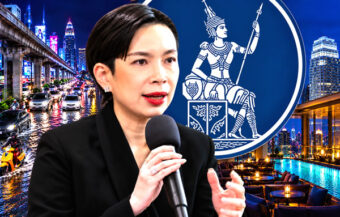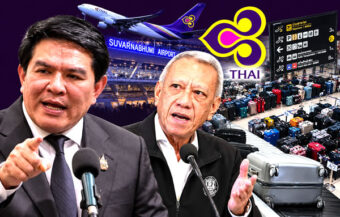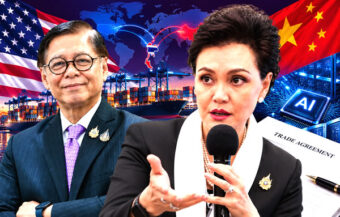
A bombshell Senate collusion ruling lands Friday with seven charges potentially threatening Bhumjaithai and Anutin’s government. As whitewash claims fly, Thaksin and Pheu Thai are linked to a powerful lineup between Kla Tham and the People’s Party in a powerful coalition with more than 300 House seats.
Thailand faces a political reckoning on Friday as the Election Commission rules on seven potential Senate collusion charges that could send key Bhumjaithai figures to the Constitutional Court. Opposition fears of a whitewash are already mounting as corruption concerns, an election scandal and economic decline close around Prime Minister Anutin Charnvirakul’s government. Meanwhile, speculation is intensifying that Thaksin Shinawatra could join forces with Thamanat Prompow’s Kla Tham Party, abandon Bhumjaithai and strike a historic deal with the People’s Party. Such an alliance could command more than 300 House seats and completely redraw Thailand’s political map to combat an emerging crisis of confidence.
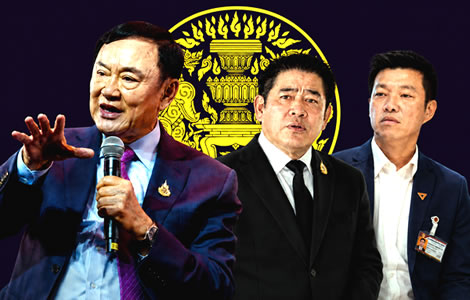
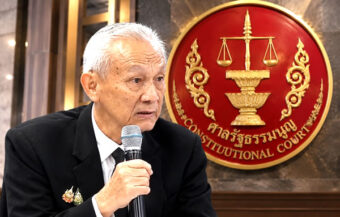
Thailand’s Election Commission said Monday that its long-awaited Senate collusion decision will be announced this Friday, August 28. The agency identified seven potential charges arising from the affair. However, it has not disclosed its findings or named anyone facing those charges. The ruling could trigger the government’s most severe political crisis since taking office.
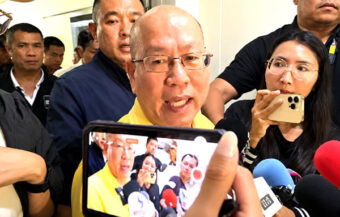
Already, opposition parties are challenging Election Commission Secretary-General Sawaeng Boonmee over his public comments. A Democrat Party deputy leader described Mr Sawaeng’s remarks as “misinformation”. In particular, opponents fear the case could be narrowed before the final decision. They suspect senior Bhumjaithai Party figures could be protected from the committee’s full findings.
Previously, a 26-member Election Commission committee investigated claimed collusion during the Senate election. The panel included election agency officials and Department of Special Investigation officers. Crucially, its conclusions could provide the basis for referrals to the Constitutional Court. Such action would place key government figures under immediate legal and political pressure.
Election Commission retreat could deepen whitewash claims as pressure now builds around Bhumjaithai
Conversely, any retreat from that committee’s conclusions would provoke opposition claims of a whitewash. Every abandoned charge or omitted name would receive intense examination. Likewise, the commission would face demands to explain any significant departure from the committee’s work. Mr Sawaeng’s contested comments have already sharpened suspicion surrounding that process.
Either outcome will increase political tension. A forceful ruling could throw Prime Minister Anutin Charnvirakul’s government into survival mode. Alternatively, a limited decision could open another confrontation between opposition parties and the commission. The government would then face accusations that powerful figures had escaped proper scrutiny.
Meanwhile, other problems are closing around the ruling coalition. These include the local government election scandal and Thailand’s deteriorating economic performance. Moreover, public perceptions of rising corruption are strengthening opposition attacks. Together, these pressures have created ideal conditions for aggressive parliamentary manoeuvring.
Against this background, former Prime Minister Thaksin Shinawatra remains central to speculation about the next political realignment. He remains the dominant figurehead behind the Pheu Thai Party’s wider strategy. Alongside him, Kla Tham Party leader Thamanat Prompow controls a separate parliamentary network. His sidelined party is presently sitting in opposition.
Pheu Thai weighs Kla Tham alliance before a possible break with Bhumjaithai and orange camp deal
Significantly, political reports published Saturday described a radical alternative government arrangement. The plan would begin with Pheu Thai joining forces with Kla Tham. Afterwards, the enlarged bloc could abruptly cut ties with the “Blue” Bhumjaithai faction. It could then pursue a government agreement with the “Orange Party”, meaning the People’s Party.
No party has confirmed that formal negotiations are underway. Nor has any proposed agreement been placed before party executives or members. Nevertheless, the reports have intensified doubts surrounding the coalition’s stability. They have also warned Bhumjaithai that alternative parliamentary numbers may be available.
Initially, the reported strategy would combine Pheu Thai’s strength with Kla Tham’s organisation. That would bring Mr Thamanat’s members and political base into a larger bloc. Importantly, the move would involve more than increasing parliamentary numbers. It would combine political personnel, resources, regional influence and negotiating strength.
As part of this, Pheu Thai would accumulate enough power to challenge Bhumjaithai inside parliament. It could also reduce its dependence upon Prime Minister Anutin’s party. Presently, Bhumjaithai occupies the leading position within the government. Mr Anutin also controls the powerful Interior Ministry portfolio.
Extra votes could let Pheu Thai end its strained coalition partnership with Bhumjaithai in Bangkok
Once those additional votes were secured, the internal balance could shift rapidly. Pheu Thai could then negotiate from a far stronger position. Thereafter, coalition partners considered unnecessary could be removed. The “Blue” faction from Buriram would face the greatest danger.
Relations between Pheu Thai and Bhumjaithai never rested upon shared ideology. Instead, parliamentary arithmetic forced both parties into the same government arrangement. Furthermore, policy disputes repeatedly complicated their working relationship. Cannabis regulation and casino proposals became two prominent sources of disagreement.
On another front, the parties carry a long history of personal and political rivalry. Former Bhumjaithai powerbroker Newin Chidchob remains closely associated with its Buriram organisation. He also shares an extensive political history with Thaksin. Therefore, an abrupt rupture would carry significance far beyond current policy disputes.
The supplied material described such a split as killing two birds with one stone. First, Pheu Thai would escape continuing disagreements over cannabis and casinos. Second, it could settle an old political score with the Buriram power centre. The bulletin characterised that reckoning as an “it’s over, sir” moment.
Bhumjaithai faces isolation as Pheu Thai seeks Kla Tham votes and a commanding orange party alliance
At the same time, Bhumjaithai could lose its central bargaining position. Its members would have little leverage if an alternative majority was already assembled. Consequently, isolating the party would become the most effective method of weakening it. The strategy would also prevent Bhumjaithai dominating negotiations over another government.
Yet Pheu Thai cannot safely break with Bhumjaithai without replacement votes. Doing so prematurely could weaken Pheu Thai while leaving Mr Anutin in control. For this reason, Kla Tham occupies a critical place in the reported calculations. Mr Thamanat could provide part of the strength required for a realignment.
Even so, Kla Tham alone could not deliver the reported commanding majority. A substantially larger partner would still be required. Hence, the People’s Party forms the most striking element of the scenario. It is Thailand’s largest opposition force and Pheu Thai’s leading electoral competitor.
A red-orange agreement would dismantle the existing parliamentary divide. It would also require both parties to cross substantial political and strategic barriers. Besides, they would need to settle control of the premiership and cabinet. Government portfolios and parliamentary priorities would require equally difficult negotiations.
Despite those obstacles, the proposed numbers would be formidable. Reports suggest the new government could command more than 300 House seats. Adding Kla Tham’s members would further strengthen that majority. Smaller parties would consequently lose much of their present negotiating power.
Three-party majority could dominate House votes and leave Bhumjaithai as its principal political casualty
In practical terms, major House votes could pass without constant bargaining among minor coalition partners. The government could also withstand individual defections more easily. Similarly, larger parties would control negotiations over legislation and ministerial positions. Parliamentary power would become concentrated inside the new three-party arrangement.
The original bulletin described the plan as a political “M&A” operation. Under that description, parties would merge resources before restructuring the existing distribution of power. The first target would be Kla Tham and Mr Thamanat’s political base. Bhumjaithai would then become the operation’s principal casualty.
The same account also referred to a final “boss’s” strategy. That phrase described a last-ditch effort to rebuild parliamentary power through political consolidation. Rather than defending the existing coalition, Pheu Thai would assemble a stronger alternative. It could then dictate terms instead of accepting Bhumjaithai’s bargaining demands.
In parallel, a 300-seat majority would pressure institutions outside the House. These include the Senate, independent agencies and established conservative political blocs. Nevertheless, each organisation would retain its existing constitutional and statutory powers. A commanding House majority would not automatically remove those legal checks.
Pheu Thai and People’s Party alliance offers power but carries electoral risks for both rival camps
For Pheu Thai, cooperation with the People’s Party could restore links with the broader democratic camp. Those links weakened after Pheu Thai joined parties connected with the previous government. However, such an agreement would require detailed explanations to supporters. Both parties have spent years competing directly for many of the same voters.
By comparison, the People’s Party would face a particularly difficult strategic decision. Entering government with Pheu Thai could provide immediate executive power. Yet it would also transform the party’s opposition identity. Its leaders would need to defend every concession made during coalition talks.
Pheu Thai would face comparable risks among its traditional supporters. Some could reject substantial concessions to the orange camp. Equally, conservative groups could react strongly against a red-orange government. The reported plan would therefore require careful control of public and parliamentary reactions.
Notably, no evidence supplied confirms that detailed talks have started. The proposal could instead be testing public sentiment and party resistance. It could also serve as a warning to Bhumjaithai and other coalition partners. Public discussion of replacement coalitions can itself increase negotiating pressure.
Smaller parties face loyalty test as Thaksin returns to television amid mounting coalition threats
Separately, the reports could force smaller parties to reconsider their loyalties. Members would need to assess whether the present government can survive. They would also examine possible roles inside a replacement coalition. That calculation could accelerate quickly following the Election Commission’s ruling.
Within this setting, Thaksin’s return to television carries additional political weight. Its timing coincides with widening speculation about Pheu Thai’s direction. His return gives him a direct communications channel with party supporters. It also allows him to address political developments without relying solely upon formal party structures.
Through television and online media, Thaksin can respond quickly to rival political messages. He can also present his position before opponents shape the discussion. The bulletin said his return appeared almost perfectly timed. Still, no supplied evidence directly links the broadcasts with coalition negotiations.
Behind the coalition’s public silence, several serious threats are now developing together. First, the Senate collusion ruling could produce severe legal consequences. Its seven potential charges could reach senior figures linked to Bhumjaithai. Referrals to the Constitutional Court could then destabilise the government immediately.
Second, the local government election scandal has opened another political front. Concerns surrounding that affair are adding to pressure upon coalition leaders. Third, Thailand’s weakening economic performance is supplying opposition parties with further ammunition. Economic deterioration also makes internal government disputes more dangerous.
Corruption concerns and Senate ruling leave Bhumjaithai exposed to scrutiny and political isolation
Beyond this, perceptions of rising corruption are becoming another major political liability. The combination leaves the coalition exposed legally, economically and politically. Bhumjaithai stands at the centre of those converging pressures. Its leaders now face both official scrutiny and possible parliamentary isolation.
The Election Commission’s decision could determine how quickly the realignment develops. A hard ruling might force parties to accelerate talks over replacement numbers. In response, Bhumjaithai’s partners would need to reassess their positions. Some could begin looking for protection inside another parliamentary bloc.
By contrast, a limited decision would produce a different confrontation. Opposition parties would intensify claims of political protection. They would also challenge the commission’s reasoning and treatment of the committee’s findings. The Democrat Party’s “misinformation” accusation has already established that line of attack.
Every reference to Bhumjaithai-linked figures will therefore receive particular attention. So will decisions to reduce, divide or abandon potential charges. In turn, the commission must explain how closely it followed the 26-member committee. Any major departure could become a political issue immediately.
Pheu Thai, Kla Tham and People’s Party face decisive choices as new pressure builds on Bhumjaithai
Simultaneously, Pheu Thai must decide how long it remains tied to Bhumjaithai. The alternatives carry substantial risks but offer greater parliamentary power. Mr Thamanat must also decide how long Kla Tham remains sidelined. His party could become indispensable to the construction of another government.
Most importantly, the People’s Party faces the hardest strategic choice. Cooperation with Pheu Thai could deliver government and an overwhelming House majority. On the other hand, it could damage the party’s carefully established opposition position. Its leadership would need to weigh immediate power against electoral consequences.
Bhumjaithai, meanwhile, faces danger from several directions. The Senate case threatens senior figures connected with the blue faction. Coalition speculation threatens its control of government. Continuing policy disputes also weaken its relationship with Pheu Thai.
For now, the reported realignment remains unconfirmed. It could represent genuine intent, political signalling or a bargaining weapon. Even so, the underlying parliamentary calculation is clear. Pheu Thai requires substantial additional support before it can safely remove Bhumjaithai.
Election Commission ruling may decide whether a 300-seat coalition moves beyond political pressure
Kla Tham could provide the first block of replacement votes. However, only cooperation with the People’s Party could produce the reported 300-seat majority. Such an agreement would create a new parliamentary powerhouse. It would also end the present government structure led by Bhumjaithai.
Ultimately, the next decisive signal will come from the Election Commission. Its ruling could severely weaken Bhumjaithai or trigger another opposition confrontation. Following that, attention will turn to Thaksin, Mr Thamanat and the People’s Party leadership. Their actions will reveal whether the reported plan extends beyond political pressure.
Bangkok buzz of an unlikely Traffic Lights coalition which may emerge from a rising political corruption crisis
Deputy Prime Minister Yotsanan Wongsawat leads flood recovery efforts in Nan as PM flies to province
Either way, the coalition has entered a dangerous period. Legal exposure, economic deterioration, corruption concerns and parliamentary manoeuvring are now converging. The Senate decision could provide the trigger for rapid movement. Once it lands, Thailand’s major political factions will have to show their hands.
Join the Thai News forum, follow Thai Examiner on Facebook here
Receive all our stories as they come out on Telegram here
Follow Thai Examiner here
Further reading:
Ex PM and Democrat Party leader urges politicians implicated in Senate Collusion files to come clean
Opposition and People’s Party leader attacks ‘blue regime’ on the 12th anniversary of the 2014 coup
Thammasat University legal scholar and 1992 protest leader warns another coup cannot be ruled out