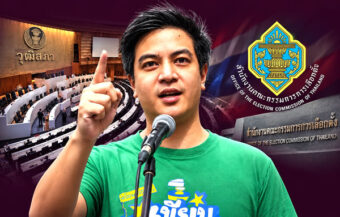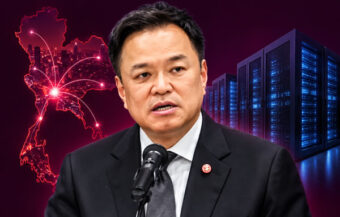
Woraphak Thanyawong faces a US sanctions investigation after two powerful congressional chairmen name him among 28 scam-network targets. The former Anutin minister denies all links.
Former Deputy Finance Minister Woraphak Thanyawong has been thrust into Washington’s crackdown on Southeast Asia’s vast scam industry. Two powerful US congressional chairmen named the former Anutin Cabinet member among 28 targets for investigation and possible sanctions. State and Treasury officials have 180 days to examine the case. Woraphak categorically denies links to scam centres, money laundering, human trafficking or cybercrime and has contacted OFAC to submit evidence. He has neither been sanctioned nor found responsible for wrongdoing. However, the move revives the controversy that forced his resignation as Washington targets an industry blamed for over $10 billion in American losses.
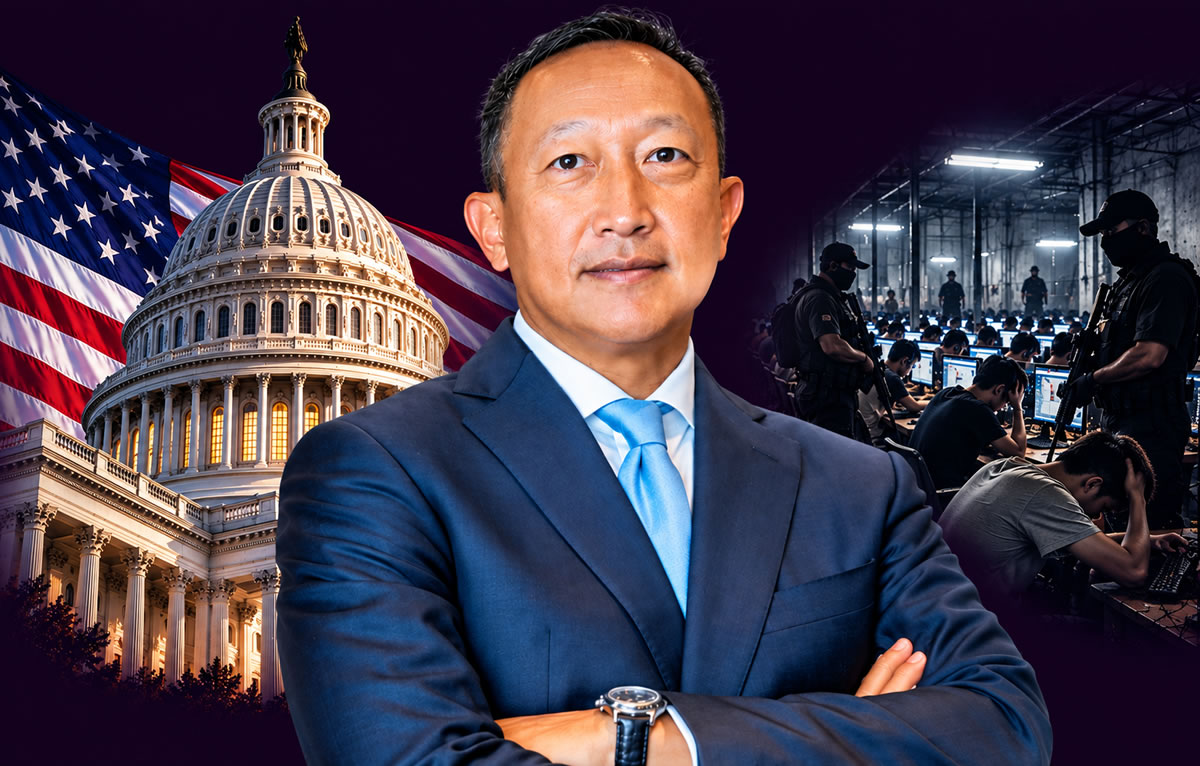
A former member of Prime Minister Anutin Charnvirakul’s first Cabinet has categorically denied links with transnational scam networks. His denial follows a major development this week in the United States Congress. Former Deputy Finance Minister Woraphak Thanyawong has been formally named for investigation and possible US sanctions.
However, Woraphak has not been sanctioned by the United States. Neither Congress nor any US government agency has found that he committed an offence. Instead, two powerful House committee chairmen have placed his name before Washington’s sanctions machinery. The action significantly raises the stakes in a controversy which forced his resignation last year.
On September 15, House Foreign Affairs Committee chairman Brian Mast joined House Select Committee on China chairman John Moolenaar. Together, they wrote to Secretary of State Marco Rubio and Treasury Secretary Scott Bessent. Their letter identifies 26 individuals and two companies for investigation. It seeks a determination within 180 days on whether those targets meet US sanctions criteria.
US congressional action reaches top departments as Woraphak denies wrongdoing and sanctions threat
Notably, copies also went to Attorney General Todd Blanche and Homeland Security Secretary Markwayne Mullin. The move therefore reaches several of Washington’s most powerful departments. It comes as the United States intensifies its campaign against Southeast Asia’s vast cyber-fraud industry.
In response, Woraphak issued an unequivocal denial. “I have never participated in, supported, or been aware of scam-centre activities, he said. His denial covered money laundering, human trafficking, cybercrime and transnational organised crime.
Crucially, Woraphak also stressed the precise status of the congressional action. The letter was a request for investigation, he said. It was not an investigative finding, criminal judgment or American sanctions designation.
That distinction is confirmed by the congressional document. Mr Mast and Mr Moolenaar want the executive branch to investigate the named targets. Only afterwards would Washington determine whether legal grounds existed for sanctions.
Accordingly, the September 15 action has not frozen Woraphak’s assets. Nor has it placed him on an Office of Foreign Assets Control sanctions list. The committee says sanctions should follow only where statutory criteria are established.
Woraphak contacts US officials and fights Thai court cases as Washington examines possible sanctions
Even so, Woraphak has moved quickly to engage directly with Washington. He said he contacted the US Treasury’s Office of Foreign Assets Control, known as OFAC. He asked how he could submit facts and supporting documents for consideration.
In parallel, the former minister has sought contact with the two congressional committee chairmen. He wants an opportunity to explain his position. He also wants to know what information concerning him has been submitted. Woraphak says he is ready to cooperate fully with any examination.
On another front, he continues to pursue defamation proceedings in Thailand. According to Woraphak, one case has now been accepted for trial. A second has completed its preliminary examination. The court has yet to decide whether that case should proceed.
The result is an unusual two-track battle. In Thailand, Woraphak is challenging publications linking him with the purported network. In Washington, federal departments are being asked to examine whether sanctions criteria apply.
Neither process presently establishes wrongdoing by Woraphak. Yet the American intervention takes the controversy far beyond the political storm which ended his Cabinet career. His name now appears in an official congressional sanctions-investigation request.
US lawmakers name 28 targets as Magnitsky and cyber sanctions powers enter the regional scam crackdown
Alongside him are figures linked by lawmakers with Southeast Asia’s sprawling scam-centre economy. Benjamin Mauerberger, also known as Ben Smith, is among them. So is Cambodian businessman Yim Leak.
The list also includes Eugene Tang, Hun To and Zhong Baojia, also known as Wang Qiang. Chou Bun Eng, Deng Pibing, Dy Vichea, Edward Lee and Gabriel Tan are included. Honn Sorachna, Kuoch Chamrouen, Li Xiong, Long Dimanche and Ma Dongli are also named.
Additionally, the lawmakers identify Michael Chiam, Mote Thun, Neth Savoeun, Sar Sokha and Su Zhongkian. Wang Liduan, Yan Borith, Yan Narong, Yan Sathya and Yu Lingxiong complete the individual names supplied. The two organisations are Fully Light Group of Companies Ltd and White Sands Palace Casino.
Altogether, 26 individuals and two entities face the requested examination. The lawmakers want US officials to examine them under four separate areas of sanctions law.
Among them is the Global Magnitsky framework. Washington uses it against qualifying serious human-rights abuses and significant corruption. Cyber-related sanctions powers are also cited. Measures covering transnational criminal organisations and Burma provide two further legal routes.
As part of this, Mr Mast and Mr Moolenaar want determinations within 180 days. That timetable puts the matter directly before the State and Treasury departments. It also creates a clear next stage for the investigation.
Washington widens its attack on Southeast Asia’s scam economy after Americans lose more than $10 billion
The congressional intervention carries additional weight because Washington has already used these sanctions powers across Southeast Asia. OFAC has repeatedly targeted people and businesses connected with regional scam operations. Consequently, the latest letter forms part of a much wider American offensive.
At its centre is a criminal economy operating across several Southeast Asian countries. The lawmakers say Chinese transnational criminal organisations drive much of the activity. They describe industrial-scale compounds built specifically for sophisticated online fraud.
Inside those centres, thousands of workers can target victims around the world. Americans are among their principal targets. Cryptocurrency investment fraud has become particularly lucrative.
For example, so-called pig-butchering schemes can cultivate victims for weeks or months. Fraudsters establish trust, friendship or romantic relationships. They later introduce apparently lucrative cryptocurrency or investment opportunities. Eventually, victims can transfer substantial savings into fraudulent platforms.
The losses have become enormous. US Treasury figures put American losses to Southeast Asia-based scams above $10 billion during 2024. Those losses have helped drive increasingly aggressive enforcement from Washington.
Congress focuses on trafficking and vast scam profits as Cambodia’s illicit economy draws US scrutiny
Beyond the financial damage, the congressional letter focuses heavily on human trafficking. Many workers inside scam compounds are themselves victims. Some travel to Southeast Asia after accepting apparently legitimate employment.
Once there, circumstances can change dramatically. Victims may be transported into guarded compounds and prevented from leaving. They can then be forced to conduct online fraud against people overseas.
Those refusing can face severe physical abuse. Reports cited by the lawmakers also describe torture and unlawful confinement. Around 400,000 people may have been trafficked into regional scam centres, according to estimates cited in Washington. Those victims reportedly come from more than 70 countries.
Equally striking is the estimated size of the illicit economy. Experts cited by the lawmakers put cyber-scam profits near 40% of Greater Mekong Subregion GDP during 2024. Cambodia receives particularly close attention.
There, scam profits could equal as much as 60% of formal GDP, according to estimates cited by the lawmakers. The congressional document also references reports claiming links between government figures and scam operations.
Reports cite Cambodian protection and new Myanmar scam compounds as Washington targets wider networks
A May 2025 report cited corruption and government protection as factors sustaining Cambodia’s scam industry. It also referred to alleged involvement by political elites. Those claims remain findings from reports cited by the congressional chairmen.
Separately, another report examined Cambodian investigations into scam compounds during June 2025. It found enforcement inadequate to prevent widespread reported abuses. These included human trafficking, forced labour, child labour, torture and unlawful detention.
Myanmar presents another major problem for Washington. Some large scam compounds have been dismantled there. Yet new operations have continued appearing along the Myanmar-Thailand border.
Indeed, the congressional letter cites an Associated Press report published in June 2026. It identified at least 25 new scam areas since the previous autumn. That expansion came despite highly publicised action against established compounds.
For Washington, the pattern has shifted attention towards the systems behind individual scam centres. Physical raids can close compounds. However, financial networks and organisers can survive and rebuild elsewhere.
US lawmakers target financial networks and protection structures while Woraphak faces no sanctions yet
Mr Mast and Mr Moolenaar acknowledge that some regional governments have increased enforcement pressure. At the same time, they say key financial networks remain largely intact. Organisers and political protection structures also continue operating, according to their letter.
In some cases, scam operations have simply moved. New compounds have also continued being built. The lawmakers therefore want enforcement directed further up the chain.
Another concern involves trafficking victims who escape the compounds. Some are imprisoned or deported as illegal immigrants, according to material cited by Congress. That treatment can remove potentially important witnesses from investigations.
Against this backdrop, sanctions provide Washington with a powerful financial weapon. OFAC can block property and financial interests under applicable programmes. Restrictions can also affect transactions involving US persons and the American financial system.
For Woraphak, however, those consequences remain hypothetical. They would require an actual US designation under an applicable sanctions programme. The congressional letter itself imposes no financial punishment.
Previous US sanctions reached Thailand before Congress put Woraphak among its latest regional targets
Still, Washington’s recent record gives the request substantial significance. In September 2025, OFAC sanctioned a large network of Southeast Asian scam-centre targets. Treasury simultaneously highlighted the scale of American financial losses.
Two months later, Washington widened its campaign. Treasury sanctioned the Democratic Karen Benevolent Army and associated businesses. That action extended directly into Thailand.
Specifically, Trans Asia International Holding Group Thailand Company Limited was included. Thai national Chamu Sawang was also sanctioned. Thailand was therefore already within the reach of Washington’s regional enforcement drive.
More recently, another major action came on June 23, 2026. Treasury imposed sanctions connected with the Prince Group network. Nine individuals and 26 entities were targeted.
Taken together, those actions provide the backdrop to this week’s congressional intervention. Washington has already moved from warnings towards financial sanctions. Congress is now pressing the executive branch to examine another group of regional targets.
For Thailand, Woraphak’s inclusion carries an added political dimension. Less than one year ago, he was Deputy Finance Minister in Mr Anutin’s first Cabinet. He entered government in September 2025.
Woraphak quit Anutin’s first Cabinet after reports linked him to Cambodian financiers he strongly denied
Within weeks, however, reports began linking his name with figures operating in Cambodia’s financial world. On October 22, he resigned. His Cabinet tenure had lasted only about one month.
At the time, reports connected Woraphak with Yim Leak, BIC Group and BIC Bank Cambodia. Questions also emerged over his acquaintance with Benjamin Mauerberger. Woraphak rejected those reports emphatically.
He acknowledged knowing Mr Yim and confirmed meeting him. Nonetheless, he denied serving as a director, executive or adviser to BIC Bank Cambodia. He also denied receiving remuneration from the organisation.
Woraphak said his photograph and name had appeared on its website without his knowledge. Subsequently, archived BIC Group material reportedly identified him as part of its “board advisory”. Woraphak maintained his denial.
Regarding Mr Mauerberger, Woraphak offered another explanation. He said he essentially knew the businessman because their children attended the same school. He denied knowledge of Mr Mauerberger’s business activities.
More importantly, he categorically denied involvement with scam operations. Reports concerning financial transactions involving his wife were also rejected. Woraphak said she never maintained the cryptocurrency account described in reports.
Woraphak took accusers to court after resigning and denied illicit transactions involving his wife
Likewise, he denied that his wife received benefits connected with the purported network. Ultimately, he stepped down from government. Woraphak said he did not want the controversy to burden Mr Anutin’s Cabinet.
His resignation did not end the dispute. Instead, the former minister turned to Thailand’s courts. In November 2025, he filed a criminal defamation case against financial analyst Sarinee Achavanuntakul.
Woraphak sought ฿50 million in damages. The case concerned publications linking him with the wider scam-network controversy. His case also addressed financial transactions involving his wife.
According to Woraphak, those transactions concerned legitimate investments and redemption of investment units. He rejected suggestions that they represented illicit payments.
In a separate legal action, he targeted people behind the Whale Hunting investigative project. Whale Hunting said Woraphak filed a criminal defamation action seeking approximately US$1.5 million.
The publication has investigated Mr Mauerberger and the wider network for several years. Its account of the lawsuit is therefore the position of a party to that litigation.
Thai asset seizures top ฿20 billion as Woraphak’s court battles return amid deeper US cooperation
Now, those proceedings have returned to the foreground. Woraphak says one defamation case has been accepted by a Thai court for trial. Another has completed preliminary examination.
Meanwhile, the broader network surrounding the controversy has come under increasing enforcement pressure. The affair has involved Mr Mauerberger, Mr Yim and financial structures associated with Finansia and Capital Asia Investments. Some claims surrounding those relationships remain disputed.
Thai enforcement activity, however, has become substantial. In April, Mr Anutin’s government announced asset freezes and seizures exceeding ฿20 billion. Two operations involved cases concerning Tangthai, Yim Leak, Wirinya, Ben Smith and Katriya and associates.
The first operation involved approximately ฿12 billion in assets. A second involved another ฿8.2 billion. Thailand has therefore targeted significant assets during its wider transnational scam crackdown.
At the diplomatic level, cooperation with Washington has also deepened. Mr Anutin met FBI Director Kash Patel in July. According to the Thai government, they agreed to strengthen cooperation against transnational crime and scam networks.
Then came the September 15 congressional letter. Within hours, it began generating political reaction in Bangkok.
Korn attacks slow Thai action after US lawmakers put former Anutin Cabinet member under sanctions review
Democrat Party deputy leader Korn Chatikavanij highlighted the development on September 16. The former Finance Minister focused particularly on the inclusion of a former member of Mr Anutin’s first Cabinet.
Mr Korn has previously pressed Thai regulators over the wider financial controversy. He said his party and a House committee had already submitted evidence to the Securities and Exchange Commission.
Specifically, he referred to the House Finance and Banking Committee. Mr Korn criticised what he considered insufficient progress by Thai regulators.
This week, he argued that foreign governments were acting because Thailand had moved too slowly. That remains Mr Korn’s political assessment. It is not a judicial or regulatory finding against Woraphak.
Elsewhere, Mr Korn has raised questions about other figures connected with Mr Anutin’s governments. They include Prasert Jantararuangtong and Suriya Juangroongruangkit.
Finance Minister Ekniti Nitithanprapas has also faced questions from Mr Korn concerning the Securities and Exchange Commission. Those questions concerned financial structures which Mr Korn associated with the wider network.
Other Anutin government figures faced questions but no findings as Woraphak occupies a different position
Yet none amounts to a finding against the ministers. Nor does the September 15 congressional action identify them alongside Woraphak as former Thai ministers under examination.
Photographs have also circulated showing Mr Mauerberger with prominent Thai political figures. They have included Mr Anutin himself, Mr Ekniti and Capt Thammanat Prompao.
Those pictured have disputed suggestions that photographs establish substantive business relationships or wrongdoing. A photograph, by itself, establishes neither.
In another strand, Mr Prasert faced claims concerning a purported ฿40 million monthly bribe. The claims related to illegal online businesses. He denied receiving or being offered such benefits while serving as Digital Economy and Society Minister.
Woraphak therefore occupies a different position following this week’s Washington action. He is the former Thai Cabinet member explicitly named in the September 15 congressional request.
His name now sits before the State and Treasury departments for examination. It appears alongside prominent Cambodian figures and businesspeople identified by the lawmakers.
Yet his legal position remains unchanged. Woraphak has not been sanctioned by the United States. Nor has the congressional letter found him responsible for scam centres or money laundering.
Similarly, no finding against him has been made concerning cybercrime or human trafficking through this process. Instead, two senior House committee chairmen want American agencies to investigate him.
Woraphak denies wrongdoing as Washington begins the 180-day examination that could determine sanctions
Woraphak has answered with a categorical denial. He has also contacted OFAC and offered to submit evidence. At home, his defamation litigation continues.
From here, the next substantive move belongs to Washington. The State and Treasury departments have been asked to examine the available information within 180 days.
If statutory requirements are not established, the congressional request itself imposes no sanction. An eventual designation, by contrast, would move the matter into a fundamentally different phase.
Police hunt DJ in Nakhon Si Thammarat after body is found with baffling evidence as to cause of death
Work on city centre temple halted as red coffin of a female is found buried beneath an image of Buddha
For now, that point has not been reached. Woraphak continues to deny every suggestion of involvement in the criminal activities described by lawmakers.
Nearly a year after his resignation, however, the controversy has moved decisively beyond Bangkok. It has reached Capitol Hill and two influential congressional committees.
More significantly, Woraphak’s name is now before the US departments controlling Washington’s sanctions machinery. The 180-day examination requested by Congress will determine what comes next.
Join the Thai News forum, follow Thai Examiner on Facebook here
Follow Thai Examiner on Google here
Receive all our stories as they come out on Telegram here
Follow Thai Examiner here
Further reading:
New Zealand man who was stabbed by father-in-law forgives the older man and helps post bail for him
Road rage caused a marijuana dealer to fatally stab a Burmese painter in Bangkok on Sunday night
Marijuana use is linked to a tragic murder-suicide case in Nakhon Si Thammarat on Monday morning