Parliament in uproar as Speaker Sophon Saram defies opposition fury over new rules for 35 House committees. He rejects claims of protecting Anutin’s government, dares critics to go to court and warns that harsh personal attacks have crossed the line.
Thailand’s parliamentary power struggle intensified on Tuesday as House of Representatives Speaker and Parliament President Sophon Saram threatened opposition politicians with court action. Accused of protecting Prime Minister Anutin Charnvirakul’s government, Sophon fiercely defended restrictions on 35 parliamentary committees, curbing chairmen’s powers to summon witnesses and launch investigations independently. He challenged Democrat Party leader and former Prime Minister Abhisit Vejjajiva to pursue constitutional objections in court. Furthermore, he warned that accusations branding him a government lackey had crossed the line. Meanwhile, the House Secretariat defended the restrictions as existing law. The bitter confrontation also threatens to overshadow December’s no-confidence debate amid accusations of deliberate delays.
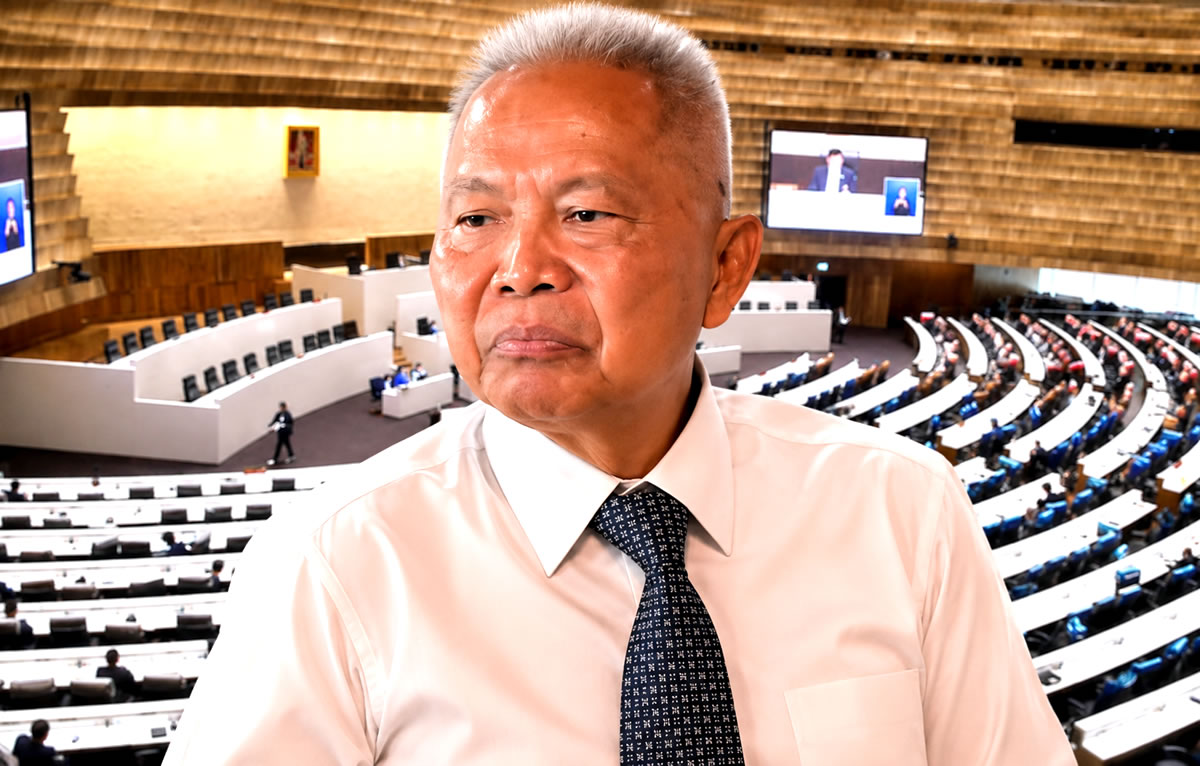
House of Representatives Speaker and Parliament President Sophon Saram launched a furious counterattack against opposition politicians on Tuesday, November 3. He accused them of making baseless allegations and challenged them to pursue their complaints through the courts.
The confrontation follows his approval of controversial operating guidelines for Thailand’s 35 parliamentary committees. Opposition critics accuse him of curbing investigations and serving Prime Minister Anutin Charnvirakul’s government.
However, Sophon insists he is enforcing existing laws and preventing committee chairmen from exceeding their authority. He warned that accusations of being a government lackey had repeatedly crossed the line. Meanwhile, the House Secretariat issued a detailed defence of the restrictions, rejecting claims that they would obstruct parliamentary scrutiny.
Sophon threatens court action as opposition attacks his impartiality and new parliamentary controls
Speaking at Parliament at 3.20 pm, Sophon angrily rejected accusations that he was protecting the executive branch. Instead, he accused opposition politicians of attacking his credibility without producing evidence.
The Speaker was particularly incensed by claims that he was a government lackey. He also condemned suggestions that his conduct had brought Parliament into disrepute. Furthermore, he accused opponents of deliberately misrepresenting his actions and damaging the institution’s public standing.
“The opposition has crossed the line multiple times,” Sophon declared, warning that further attacks could trigger court proceedings. He challenged critics to submit formal complaints if they believed he had broken the law.
However, he insisted that political accusations were no substitute for evidence. Serious misconduct complaints could be referred to the National Anti-Corruption Commission (NACC). Lesser ethical breaches, meanwhile, could be examined through Parliament’s own procedures.
The Speaker also challenged Democrat Party leader and former Prime Minister Abhisit Vejjajiva over suggestions of a constitutional complaint. If his actions breached the constitution, Sophon said, opponents should pursue the appropriate legal proceedings. Equally, he warned that he possessed legal rights and could challenge accusations he considered defamatory.
Speaker faces fierce criticism over rules limiting the independence of 35 parliamentary committees
He said opposition politicians had repeatedly attacked his reputation through inflammatory language. Such criticism, he argued, had gone far beyond legitimate scrutiny of his decisions.
At the centre of the confrontation are new operating guidelines governing the House’s 35 standing committees. These bodies examine government administration, investigate complaints and scrutinise matters within their assigned responsibilities.
Crucially, they can request documents and call individuals to provide information. Under Sophon’s guidelines, however, committee chairmen cannot independently exercise powers reserved for collective committee decisions. Investigations requiring witnesses or documents must instead follow established approval procedures.
The guidelines also regulate meeting agendas, special sessions and investigations involving overlapping committee responsibilities. Opposition critics argue that the restrictions weaken chairmen and place obstacles before investigations.
By contrast, Sophon insists the measures merely enforce existing laws. He said complaints about committee operations had been mounting before the controversy. Some concerned overlapping investigations, while others involved accusations that chairmen had exceeded their authority.
Sophon cites repeated hearings and complaints of abuse as reasons for tighter committee procedures
Sophon identified the administrative burden imposed by parliamentary investigations as another major problem. The House has 35 standing committees alongside numerous subcommittees. Consequently, government officials can face repeated demands to attend hearings covering similar subjects.
Civil servants must then divide their time between parliamentary appearances and normal administrative responsibilities. Sophon said he had encountered these difficulties during his previous service as a minister. He argued that clearer procedures were needed to prevent duplication.
Against that background, Sophon convened a meeting with standing committee chairmen on October 21. Participants discussed complaints about committee operations and procedures for inviting witnesses.
According to the Speaker, a majority supported requiring committees to discuss matters before investigations proceeded. Members would determine which individuals should attend and what subjects required examination. Only then would the chairman issue invitations or requests for information under the committee’s decision.
Following the meeting, Sophon instructed Parliament’s legal department to prepare operating guidelines. The proposals were subsequently submitted through the parliamentary administration and approved by the Speaker.
Speaker rejects claims of silencing opposition and disputes accusations over no-confidence debate
Yet he rejected accusations that the exercise was designed to silence opposition politicians. He questioned how such suppression could exist when opposition MPs continued chairing parliamentary committees. Moreover, he challenged the suggestion that every committee decision should be determined solely by majority voting.
Sophon argued that parliamentary democracy required deliberation alongside formal votes. Committee members should discuss matters before reaching decisions, he maintained. Nevertheless, opposition criticism intensified after the guidelines were approved.
Critics portrayed the restrictions as an attempt to weaken parliamentary scrutiny. Sophon responded by accusing opponents of exaggerating administrative changes and attacking his motives. He also rejected suggestions that the Speaker’s office was being used to protect the government.
The confrontation widened further when Sophon addressed accusations concerning a forthcoming no-confidence debate. He said opposition representatives had previously thanked him for facilitating parliamentary proceedings.
According to Sophon, they praised his intervention as strengthening the dignity of the House. He also referred to discussions about rescheduling the debate for early December. Subsequently, however, his involvement was portrayed as a delaying tactic favouring the executive branch.
Sophon condemns personal attacks and warns opposition politicians against further damaging accusations
The Speaker rejected that account and questioned why his earlier assistance had become grounds for criticism. He said opposition politicians had welcomed his intervention before attacking his motives.
In response, he accused critics of distorting events and undermining his work. Sophon insisted that his responsibility was to facilitate parliamentary proceedings under the law. He also urged government and opposition politicians to fulfil their respective duties.
His strongest criticism concerned the language used against him. Sophon condemned personal insults, sarcasm and accusations that he was serving the government. He said such attacks had repeatedly damaged his reputation.
More pointedly, he questioned whether politicians were making accusations simply for their own satisfaction. He insisted that Parliament should not become a forum for hostility and distorted claims.
Sophon also disclosed that an opposition politician had made an especially offensive statement directly to him. However, he declined to identify the individual or reveal the remark. He claimed disclosure could cause significant damage.
The Speaker warned opponents against assuming they alone possessed intelligence, integrity and sound judgement. Instead, he argued that public officials should be judged by their actions rather than political accusations.
Speaker defends his record and challenges critics to pursue misconduct complaints through legal channels
Defending his personal record, Sophon said he had served in major government ministries without facing criminal proceedings. He maintained that his work demonstrated his commitment to the country and its people.
Nevertheless, he warned that continued attacks could prompt legal action. He said he had tolerated repeated accusations but could no longer accept claims he considered baseless. The Speaker also insisted that legal standards applied equally to politicians and parliamentary officials.
He identified specific procedures available to anyone alleging misconduct. Minor ethical breaches could be examined through Parliament’s internal mechanisms. Serious violations, however, could be referred to the National Anti-Corruption Commission.
Constitutional complaints should likewise follow the appropriate legal process. Sophon challenged opponents to use those channels rather than continue making public accusations. He also warned that anyone exceeding legally defined parliamentary responsibilities could face consequences.
House Secretariat denies restrictions on committee powers and explains origins of controversial rules
Meanwhile, the Secretariat of the House of Representatives issued a detailed statement defending the controversial guidelines. Released on Tuesday, November 3, it addressed accusations that Sophon had curtailed committee chairmen’s powers. The Secretariat rejected that interpretation.
Instead, it said the measures clarified existing legal requirements and standardised procedures across all 35 standing committees. It also denied that the changes were intended to delay investigations.
The statement traced the guidelines to complaints raised about committee operations. These were discussed during the October 21 meeting between Sophon and committee chairmen. Following that meeting, the Secretariat’s legal department was assigned to prepare standardised procedures.
The proposals were developed through Committee Office 1, Committee Office 2 and Committee Office 3. These offices provide administrative support to the standing committees. Sophon subsequently approved the recommendations submitted through the parliamentary administration.
The Secretariat maintained that the constitution and parliamentary rules did not address every aspect of committee meetings. Consequently, provisions from the House’s Rules of Procedure sometimes had to be applied by analogy.
Previously, committee practices had developed without detailed operational guidance. Few formal objections had been raised against those arrangements. Recent disputes, however, exposed disagreements over procedures and inconsistencies in committee administration.
Secretariat sets out meeting procedures and four agenda sections governing committee investigations
According to the Secretariat, those problems created confusion among officials responsible for supporting committee meetings. The guidelines were therefore intended to establish consistent interpretations of existing legal requirements. Importantly, the statement denied that chairmen had lost powers granted by law.
It described the measures as practical explanations rather than new restrictions. The Secretariat also rejected claims that compliance would make committee operations unnecessarily difficult or slow.
The clarification addressed the authority of chairmen to schedule meetings. Normally, committees establish their regular meeting dates through formal resolutions. A committee might agree to meet every Wednesday morning or Thursday morning.
However, chairmen retain authority to arrange special meetings when necessary. The Secretariat cited periods when regular meetings had been suspended as one example. Accordingly, the guidelines do not prohibit additional meetings in appropriate circumstances.
More significantly, the statement explained the four sections normally used for committee agendas. The first covers announcements by the chairman. The second concerns approval of previous meeting minutes.
The third deals with substantive matters requiring consideration. Finally, the fourth covers other business within the committee’s responsibilities. The Secretariat stressed that these distinctions determine how committees exercise their investigative powers.
Committee chairmen face strict approval requirements before inviting witnesses or seeking documents
Matters involving witnesses or requests for information must proceed through the appropriate consideration process. Consequently, they belong under the third agenda section and require committee decisions.
Chairmen cannot independently authorise such action through routine announcements or other business. However, they retain authority to introduce matters specifically prescribed by law. The Secretariat cited completed subcommittee reports as an example.
Under Rule 96 of the House’s Rules of Procedure, completed subcommittee reports must be submitted to their parent committees. Therefore, chairmen may place those reports on the appropriate agenda.
Other matters can also be introduced through announcements or other business. These include complaints requiring an initial assessment of the committee’s jurisdiction. Similarly, members may discuss operating procedures and decide how particular matters should proceed.
The restrictions become decisive when witnesses or organisational representatives are involved. The Secretariat said chairmen cannot independently summon individuals through the announcements or other-business sections.
Nor can they unilaterally invite representatives to provide information during those proceedings. Instead, the committee must first approve the proposed action. The Secretariat maintained that the relevant investigative powers belong to the committee collectively, not its chairman.
Constitutional Court ruling shapes summons rules as Secretariat tackles overlapping investigations
The statement also addressed attempts to distinguish formal summonses from invitations. It cited Constitutional Court ruling No. 17/2563, concerning requests for individuals to provide information.
According to the Secretariat, the ruling established that summonses constitute invitations or requests for cooperation. Crucially, the wording of a letter does not change the legal character of the request. A chairman therefore cannot bypass committee approval by describing a summons as an invitation.
The Secretariat applied the same reasoning to requests for documents and information. Such powers must be exercised through committee resolutions.
Consequently, chairmen cannot act unilaterally simply by changing the terminology used in correspondence. The statement maintained that this requirement reflected existing law. It was not, the Secretariat insisted, a new attempt to weaken committee investigations.
Separately, the clarification examined investigations involving overlapping parliamentary responsibilities. The Secretariat cited constitutional provisions restricting committees from examining overlapping subjects.
However, related matters may be considered under procedures established by the Speaker. It referred specifically to parliamentary regulations introduced in 2019. These govern investigations, fact-finding exercises and studies involving related subjects across multiple committees.
Parliamentary officials defend coordination rules while Sophon threatens opponents with legal action
The regulations provide procedures for resolving disputes between committees examining similar matters.
They encourage discussions between the Speaker and the relevant chairmen. As part of this process, committees can coordinate their work and avoid unnecessary duplication. The Secretariat said these arrangements were designed to preserve scrutiny while improving administrative efficiency. It also highlighted repeated demands for civil servants to attend several committee hearings during the same week.
Such appearances can interfere with officials’ normal responsibilities, according to the statement. Better coordination would reduce that burden without preventing committees from examining government conduct.
The Secretariat therefore rejected accusations that the guidelines were intended to obstruct investigations. It maintained that the procedures were already established under parliamentary law and regulations. Their application, it said, should not create unnecessary delays.
The formal clarification followed an expected press conference by the Secretary-General of the House of Representatives. Reporters had been informed that a briefing would take place on Tuesday afternoon.
However, the press conference was not held. Instead, the Secretariat issued its written statement. The document provided a detailed defence of Sophon’s decision and explained the procedures governing committee operations.
By Tuesday evening, the confrontation had produced two distinct responses from Parliament’s leadership. Sophon personally rejected accusations of political interference and threatened legal action against his critics.
In parallel, the House Secretariat defended the legal basis of the guidelines. Both maintained that committee chairmen must operate within established procedures. Neither accepted claims that the measures were intended to silence investigations.
Opposition dispute remains unresolved as Speaker defends committee restrictions and warns of lawsuits
The dispute remains focused on who can authorise investigations, request documents and invite witnesses. It also concerns the procedures governing related inquiries across multiple committees.
Opposition politicians accuse Sophon of restricting scrutiny and favouring the government. The Speaker rejects those accusations and insists that committee decisions must comply with existing laws. Furthermore, he has challenged opponents to substantiate their complaints through formal legal channels.
Sophon has refused to retreat from his defence of the guidelines. He has also warned that repeated personal accusations could lead to court proceedings. However, the supplied reports do not establish that a constitutional complaint has been filed.
Bhumjaithai House Speaker moves to curb the powers of committees after Rangsiman Rome’s recent moves
House Committee chair Rome to call Bhumjaithai MP and Australian husband on Wednesday over wealth
Nor do they confirm that Sophon has initiated legal action against an opposition politician. The House Secretariat, meanwhile, has formally endorsed the operating procedures.
The confrontation therefore remains unresolved following Tuesday’s exchanges. Sophon insists he is enforcing existing parliamentary rules and addressing complaints about committee operations.
Opposition critics continue challenging the restrictions and questioning his impartiality. For his part, the Speaker has made his position clear. His opponents can pursue their complaints through the appropriate authorities, but further personal accusations may bring legal consequences.
Join the Thai News forum, follow Thai Examiner on Facebook here
Follow Thai Examiner on Google here
Receive all our stories as they come out on Telegram here
Follow Thai Examiner here
Further reading:
Bhumjaithai House Speaker moves to curb the powers of committees after Rangsiman Rome’s recent moves
House Committee chair Rome to call Bhumjaithai MP and Australian husband on Wednesday over wealth
Bhumjaithai MP files police report against People’s Party’s Rangsiman Rome over scammer link remarks
Former cabinet minister and Pheu Thai highflyer clarifies Ben Smith and luxury Gulfstream jet story
PM Paetongtarn suspended from duties while Deputy Prime Minister Suriya Jungrungruangkit takes power