Thailand slams the brakes on cheap imported EVs with a proposed 30% tax, demanding foreign carmakers build locally as Chinese price wars squeeze its huge Japanese-led auto industry.
Thailand is preparing to hit fully imported electric cars with a 30% excise tax as Bangkok fights to protect its automotive powerhouse. Deputy Prime Minister and Minister of Finance Ekniti Nitithanprapas says the new order is clear: build in Thailand, use Thai parts and invest locally. The policy shift follows a flood of cheap Chinese EVs, brutal price wars and mounting consumer complaints. Meanwhile, Japanese manufacturers are pressing Bangkok over competitiveness as Indonesia openly courts Toyota. More than 800,000 automotive jobs sit behind the industry. Thailand still wants electric vehicles, but it wants far more of them built at home.
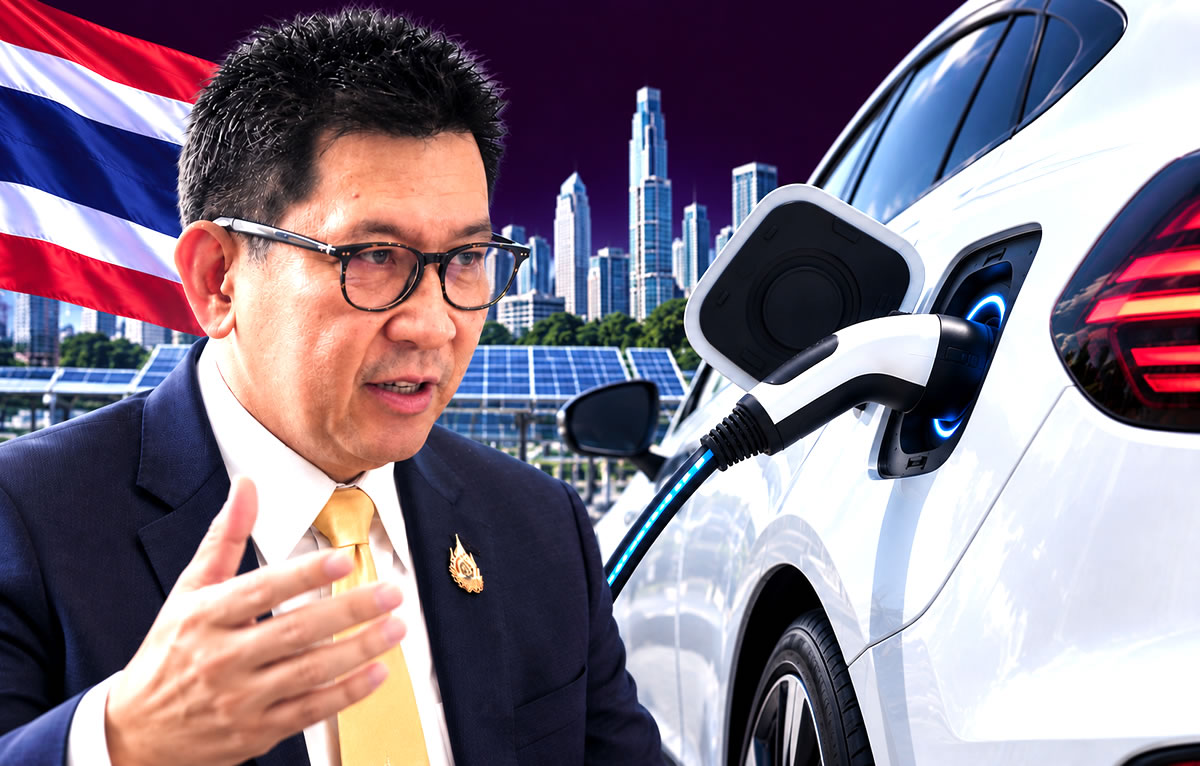
Thailand is preparing a steep tax increase on imported electric vehicles to defend its vast automotive manufacturing base. Deputy Prime Minister and Minister of Finance Ekniti Nitithanprapas revealed the proposed change this week. Fully imported electric vehicles could face an excise tax of around 30%. The comparable rate currently stands at approximately 10%.
However, the 30% rate has not yet been formally adopted. The Ministry of Finance is discussing the final structure with automotive manufacturers. A decision and formal announcement are expected before the end of September. Still, the direction of government policy is already clear.
Mr Ekniti disclosed the potential rate during a Bloomberg Television interview on Tuesday, September 15. Notably, it was the first public indication of how high the new tax could go. Asked whether it could reach 31% or 32%, Mr Ekniti said the rate would probably be around 30%.
Free-trade limits push Bangkok towards excise taxes as Chinese electric vehicle imports reshape market
At the same time, the Finance Minister explained why the government was changing its approach. Thailand needs to protect domestic automotive investment. Yet it cannot simply raise customs tariffs against imported vehicles. The kingdom has free-trade agreements covering major trading partners, including China. As a result, excise taxation offers Bangkok another route to favour domestic manufacturing.
The planned change follows years of aggressive government support for electric vehicles. Previously, Bangkok concentrated heavily on accelerating electric vehicle adoption and attracting new manufacturers. Subsidies and favourable taxation consequently helped create one of Southeast Asia’s fastest-growing electric vehicle markets.
In turn, large numbers of competitively priced Chinese electric vehicles entered Thailand. Fierce competition followed as manufacturers fought for market share. Chinese brands repeatedly cut prices. Meanwhile, Thailand’s established automotive manufacturers faced a rapidly changing competitive environment.
In response, Bangkok is shifting its emphasis towards manufacturing, investment and Thai-made components. Crucially, the policy distinguishes between selling cars in Thailand and making them here. The National Electric Vehicle Policy Committee approved the restructuring in principle on September 10. Mr Ekniti chairs the committee, widely known as the EV Board.
Three-tier electric vehicle tax plan rewards Thai production while finished imports face highest rate
Under the plan, Thailand would introduce a three-tier excise tax structure. The lowest rate would cover manufacturers with substantial domestic production and Thai content. A middle rate would cover importers simultaneously developing Thai manufacturing operations. Finally, the highest rate would hit companies importing finished vehicles without substantial local manufacturing plans.
That highest rate is expected to reach approximately 30%. Accordingly, completely built imported electric vehicles would carry the heaviest tax burden. The structure would also reduce Thailand’s previous reliance on direct government subsidies. Instead, taxation would increasingly reward investment, production and use of Thai supply chains.
For manufacturers, the financial distinction could become substantial. Companies producing vehicles and important components inside Thailand would receive the most favourable treatment. In addition, manufacturers using higher levels of locally produced parts could qualify for further advantages. Domestic production of key electric vehicle components would also strengthen their position.
The second tier would provide a transitional route for foreign manufacturers. Companies could initially import vehicles while testing the Thai market. Nevertheless, those imports would need to accompany investment and domestic production plans. The structure would therefore provide a route from imported vehicles towards Thai manufacturing.
Imported electric vehicles face 30% rate as Bangkok presses manufacturers to invest and produce locally
By contrast, the third tier would target companies importing complete vehicles solely for resale. Such companies would face the proposed rate of approximately 30%. Previously, the corresponding rate was around 10%. Bangkok is therefore preparing a powerful financial incentive for manufacturers to establish production inside Thailand.
Already, Mr Ekniti said foreign automotive companies were showing interest in the new approach. Some manufacturers importing vehicles from China and Europe have contacted the government. They have discussed investing in Thailand to obtain lower excise rates. Those benefits, though, would carry significant conditions.
Manufacturers would need to increase Thai investment and make greater use of domestic supply chains. Separately, nine electric vehicle manufacturers are already producing vehicles in Thailand. Some have also started exporting Thai-produced vehicles overseas. The government now wants that manufacturing base to expand.
Chinese automotive groups have invested billions of dollars in Thai electric vehicle factories during recent years. Thus, Thailand remains committed to attracting Chinese and other electric vehicle investment. The latest move changes the terms of that commitment. Bangkok increasingly wants factories rather than a growing stream of imported finished vehicles.
Beyond that, electric vehicles remain among seven future industries targeted for government promotion. The policy change therefore does not end support for electric vehicle development. Rather, it places domestic manufacturing at the centre of the next phase. That distinction matters because Thailand already possesses an enormous automotive industrial base.
Japanese carmakers press Bangkok over costs as Thailand moves to protect its vast automotive supply chain
For decades, Japanese manufacturers transformed the kingdom into Southeast Asia’s leading vehicle manufacturing centre. Toyota, Honda and other Japanese companies established large factories across Thailand. Subsequently, thousands of supporting businesses developed around those operations. Automotive parts manufacturers became an essential part of the industrial network.
Alongside them, engineering, electronics, logistics and materials businesses expanded around vehicle manufacturing. The automotive sector now supports more than 800,000 jobs, according to industry estimates. Consequently, the electric vehicle transition reaches far beyond car dealerships and vehicle prices. It extends deeply into Thailand’s manufacturing economy.
More recently, established manufacturers and industry groups have pressed the government over competitive conditions. Ten automotive associations have raised concerns about the changing market. The Thai Automotive Industry Association has joined those calls. Likewise, the Federation of Thai Industries’ Automotive Industry Club has pressed for action.
Toyota has been particularly outspoken about competitive pressures. Suphakorn Rattanawaraha, executive vice-president of Toyota Motor Thailand, raised concerns about Chinese vehicle cost advantages. Industry representatives estimate Chinese manufacturing costs can be 30% to 40% below Thai levels. Some locally assembled electric vehicles also receive favourable treatment despite relatively limited domestic value being created.
Toyota’s exposure to Thailand remains enormous. Its three principal Thai plants have combined production capacity of approximately 770,000 vehicles annually. Furthermore, Toyota directly employs more than 13,000 people in Thailand. Its factories also sit at the centre of a much larger supplier network.
Toyota’s huge Thai production base faces regional pressure as Honda also raises competitiveness concerns
The company’s Thai plants produce a broad range of passenger and commercial vehicles. These include the Camry, Corolla, Corolla Cross, Yaris Ativ and Yaris. Toyota also produces the Yaris Cross, Hilux, Fortuner and Hilux Champ in Thailand. In parallel, Thailand houses important Toyota regional operations supporting Asian production and vehicle development.
Honda has also pressed Bangkok over competitive conditions. Koji Iwanami, president and chief executive of Honda Automobile Thailand, has raised concerns over duties affecting Japanese imports. Honda wants to introduce additional Japanese models into Thailand. Existing duties, however, make some imported models difficult to price competitively.
Neither Toyota nor Honda has announced plans to abandon Thai manufacturing. Even so, future investment decisions have become increasingly important as regional competition intensifies. That pressure became particularly visible in neighbouring Indonesia last month.
On August 4, Indonesian Finance Minister Purbaya Yudhi Sadewa publicly invited Toyota to shift major manufacturing operations from Thailand. Jakarta offered support if Toyota expanded its Indonesian production base. More significantly, Indonesia wants the wider industrial ecosystem surrounding Toyota. Mr Purbaya specifically mentioned steel, chemicals, electronics, logistics and financial services.
Indonesia already possesses substantial Toyota manufacturing operations. Toyota Motor Manufacturing Indonesia also exports vehicles and components to more than 99 countries. Thailand, however, retains a powerful advantage through its mature supplier network and decades of accumulated automotive expertise.
Indonesia courts Toyota manufacturing as Thailand defends its established automotive supplier ecosystem
Toyota’s Indonesian management acknowledged that advantage after Jakarta made its invitation. Thailand has spent decades building its commercial vehicle ecosystem. Hence, specialist suppliers and supporting industries remain heavily concentrated inside the kingdom. Nonetheless, Toyota has studied commercial vehicle production in Indonesia.
Its Indonesian management said there was no fundamental technical barrier to such manufacturing. On another front, Indonesia continues developing its own automotive production and export operations. Regional competition for future automotive investment is therefore intensifying.
Thailand is no longer competing merely for individual assembly plants. It is also defending the enormous industrial network surrounding those factories. That includes suppliers, workers, engineers, logistics operators and component manufacturers.
Against this backdrop, Thailand’s domestic electric vehicle market has changed dramatically. Government support helped drive battery electric vehicle sales sharply higher. Under the EV 3.0 programme, qualifying vehicles received subsidies reaching ฿150,000. Later, EV 3.5 continued support with revised incentives and production requirements.
Importantly, the programme did not simply subsidise consumers. Manufacturers benefiting from imported vehicles also accepted later domestic production obligations. Under EV 3.5, companies could import qualifying electric vehicles during 2024 and 2025. They subsequently had to compensate through Thai production.
Electric vehicle subsidies drive Thai sales higher while manufacturers face domestic production targets
During 2026, manufacturers must produce two vehicles domestically for each qualifying imported vehicle. Alternatively, companies delaying compensation until 2027 face a three-to-one domestic production requirement. Those obligations were designed to convert early imports into later Thai manufacturing.
Meanwhile, the domestic electric vehicle market expanded at extraordinary speed. During the first half of 2026, passenger electric and electrified vehicle registrations reached 203,629. Battery electric registrations alone reached 103,347. That represented an increase of 85.2% from the same period last year.
Hybrid registrations also reached 90,031 vehicles during the period. That represented growth of 26%. In contrast, plug-in hybrid registrations fell 9.4% to 10,251 vehicles. The market is consequently becoming increasingly divided between full battery vehicles and conventional hybrids.
Chinese manufacturers became central players in that transformation. They introduced expanding ranges of electric vehicles at highly competitive prices. Predictably, competition became increasingly aggressive. Repeated price reductions followed as manufacturers fought for market share.
For new buyers, those reductions made electric vehicles increasingly affordable. Existing owners, however, sometimes faced sharp falls in their vehicles’ market value. Cars bought shortly beforehand could suddenly compete against heavily discounted new versions. Resale values consequently became another concern for some owners.
Electric vehicle price wars cut new-car costs but leave existing owners facing weaker resale values
Consumer complaints also increased. Between 2024 and 2026, the Office of the Consumer Protection Board recorded 556 electric vehicle complaints. Over the same period, the Thailand Consumers Council received another 792 complaints. Together, the two organisations recorded 1,348 cases.
Vehicle defects accounted for 47.3% of complaints recorded by the consumer protection office. Meanwhile, failure to refund deposits accounted for 18.2%. Another 14.7% concerned price reductions after consumers had already bought vehicles. Problems involving promised extras represented 13.1%.
In addition, accidents or delayed repairs accounted for another 2.9%. After-sales service produced the largest broad category, involving 288 cases. Another 183 cases concerned the purchasing process. Elsewhere, 85 complaints involved vehicle delivery.
Consumers also raised concerns about service centres closing. Others complained about unavailable parts and lengthy repair periods. As the market expanded, after-sales support therefore became another important issue for owners. New brands were expanding rapidly while service networks also had to grow.
Charging infrastructure has become another pressure point. Thailand had about 4,600 public charging locations earlier this year. At that stage, more than 424,000 battery electric and plug-in hybrid vehicles were using Thai roads.
Consumer complaints mount over defects, service and repairs as Thailand’s electric vehicle fleet expands
Drivers able to charge at home can avoid much of the pressure on public infrastructure. By comparison, motorists dependent on public chargers face different conditions. Charging takes considerably longer than filling a petrol or diesel vehicle. Charging spaces can also be occupied when motorists arrive.
Long-distance journeys can therefore require additional planning. Outside Bangkok, charging availability becomes more important across less densely served routes. As a consequence, access to reliable charging remains a practical consideration for prospective electric vehicle buyers.
Hybrid vehicles, meanwhile, continue attracting Thai motorists. Their strong 2026 registration growth illustrates that demand. Hybrids offer improved fuel economy while retaining conventional refuelling. Japanese manufacturers have accordingly expanded their hybrid offerings.
Battery electric vehicles are nevertheless continuing to record rapid growth. New models offer longer ranges, extensive equipment and increasingly competitive prices. Thailand’s automotive market is therefore not returning to its previous structure. Several technologies are now competing simultaneously for buyers and investment.
In parallel, the government’s industrial challenge has changed. Earlier policy concentrated heavily on creating an electric vehicle market. Officials are now placing greater weight on where those vehicles are manufactured. The proposed excise structure makes that distinction explicit.
Charging limits sustain hybrid demand as Thailand’s changing vehicle market embraces new technologies
A finished electric vehicle arriving from overseas would face the highest tax. Conversely, a company building vehicles substantially inside Thailand would receive the lowest rate. Importers establishing Thai factories would occupy the middle ground. Local component sourcing would also become increasingly important.
As part of this shift, the approach extends beyond battery electric vehicles. The government wants manufacturers producing internal combustion engine vehicles to continue investing. Hybrids and plug-in hybrids also remain part of the manufacturing strategy. Battery electric vehicles will continue receiving support where manufacturers invest domestically.
The industrial objective therefore extends beyond one propulsion technology. Thailand wants automotive factories, suppliers, employment and exports to remain inside the kingdom. The tax structure is designed to make domestic manufacturing more attractive than importing finished vehicles.
At the same time, the government is considering another major electric vehicle programme. A proposed ฿24 billion scheme could replace as many as 80,000 older vehicles with electric models. That programme is also expected to favour domestically manufactured vehicles and Thai components.
Government support for electrification therefore continues. What has changed is the weight placed on domestic economic activity. That adjustment comes as Thailand faces pressure from several directions at once.
New tax policy favours Thai vehicle production across electric, hybrid and combustion engine technologies
Chinese electric vehicle manufacturers are expanding rapidly. Japanese manufacturers are defending long-established Thai investments. Simultaneously, Indonesia is openly courting automotive production and the industries surrounding it. Thai component manufacturers also need new business as vehicle technologies change.
For consumers, the market presents another set of pressures. Buyers want competitive prices, reliable servicing and adequate charging facilities. Price cuts have brought cheaper vehicles but unsettled some existing owners. Rapid growth has also increased demands on service networks and charging infrastructure.
The proposed 30% excise rate now sits at the centre of that changing market. The precise rate and final conditions remain under discussion. The Ministry of Finance is expected to settle the details before September ends.
Once adopted, the structure could sharply change the economics of importing finished electric vehicles into Thailand. Manufacturers relying predominantly on imports would face the greatest increase. In comparison, companies investing in Thai factories and suppliers would gain a significant tax advantage.
For Chinese and European manufacturers currently importing vehicles, the commercial calculation would consequently change. They could continue importing and face the highest excise rate. Alternatively, they could deepen Thai investment and move towards lower taxation.
Thailand faces pressure from Chinese electric vehicles, Japanese manufacturers and regional competition
Some manufacturers have already approached the government about doing exactly that. At present, Thailand’s nine existing electric vehicle manufacturers have established a local production presence. Several are also exporting Thai-made vehicles.
The government now wants that manufacturing and export activity to expand. More importantly, it wants greater domestic value within vehicles produced in Thailand. That means deeper use of Thai factories, components and suppliers.
Thailand spent decades building its automotive industry around Japanese investment and global exports. More recently, it spent heavily to accelerate the electric vehicle market. Bangkok is now moving to bind those two objectives more closely together.
Electric vehicle sales will remain important. From now on, domestic production, Thai components and long-term investment will increasingly determine tax treatment. The proposed 30% rate is the clearest signal of that change so far.
It also arrives while Thailand’s position as Southeast Asia’s automotive centre faces increasingly direct competition. Indonesia wants Toyota and the industries surrounding it. Chinese manufacturers are rapidly expanding their regional presence. Established Japanese manufacturers are also watching costs, competitiveness and future investment conditions.
Manufacturers weigh Thai investment as Bangkok prepares to penalise finished electric vehicle imports
Against that backdrop, Bangkok is preparing to make importing finished electric cars considerably more expensive. The final decision is expected before the end of September. If adopted, the highest excise rate would rise from about 10% to approximately 30%.
At the other end, manufacturers producing vehicles and components inside Thailand would receive substantially better treatment. Importers investing alongside their sales operations would fall between those extremes. The tax system would therefore directly link treatment to domestic manufacturing commitments.
Panic in government as Japanese auto firms hit back at years of neglect in favour of Chinese EV makers
Thailand recalibrates policy as data shows Chinese EVS gaining with many not made in the kingdom
The planned structure marks a significant change from Thailand’s first phase of electric vehicle promotion. Initially, rapid adoption and market growth were central priorities. Now, domestic manufacturing, local components, employment and export capacity are moving firmly to the centre.
Thailand will continue promoting electric vehicles and future automotive technology. This time, however, the strongest tax advantages will follow factories, investment and Thai supply chains rather than imported finished cars.
Join the Thai News forum, follow Thai Examiner on Facebook here
Follow Thai Examiner on Google here
Receive all our stories as they come out on Telegram here
Follow Thai Examiner here
Further reading:
Thailand recalibrates policy as data shows Chinese EVS gaining with many not made in the kingdom
Khon Kaen Police probing a pre dawn blaze caused by a charging EV that burned down a family home
Government sends strong warning to EV industry after a dramatic surge in consumer complaints
Thaksin wants higher excise duties on EV cars that are simply assembled in Thailand by Chinese firms