US tech groups push back as Thailand drafts tough AI rules covering liability, local data processing and overseas providers. Bangkok is courting American AI investments while negotiating trusted cross-border digital trade commitments with Washington.
Thailand is racing towards binding AI regulation as US technology interests push back against rules that could hit American tech giants. The proposed law targets high-risk AI, liability, local processing and overseas providers. Meanwhile, Bangkok is courting huge US investment in AI, cloud computing and data centres. Yet Thailand has also committed to trusted cross-border data flows with Washington. US business groups are already challenging localisation and liability provisions. Digital Economy and Society Minister Chaichanok Chidchob now sits at the centre of a regulatory battle with major implications for Thailand’s digital economy and US trade ties.

Thailand is pushing towards binding artificial intelligence regulation as US technology interests challenge important provisions in its proposed regime. The emerging rules could directly affect major American AI, cloud and technology companies operating in Thailand.
At the same time, Bangkok is courting huge foreign investment in cloud computing, data centres and AI. The result is a sensitive intersection between regulation, investment and Thailand’s expanding digital trade relationship with Washington.
At the centre is Thailand’s Draft Artificial Intelligence Act, published for consultation in July 2026. The Electronic Transactions Development Agency (ETDA) is developing the legislation under the Digital Economy and Society Ministry.
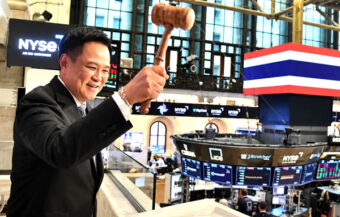
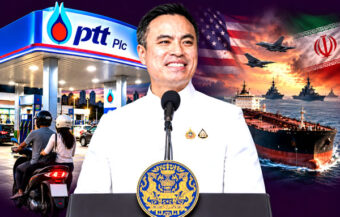
Accordingly, Digital Economy and Society Minister Chaichanok Chidchob is the senior Cabinet figure overseeing the emerging framework. Deputy Digital Economy and Society Minister Nan Boontida Somchai is also directly involved in the process.
Thailand’s draft AI law advances as ministers oversee a shift towards binding risk-based regulation
On July 17, Ms Nan chaired discussions with ETDA director Chai Chana Mitrpant on the proposed AI legislation. Those talks also covered the proposed Digital Platform Economy Act. For now, however, Thailand does not have an enacted AI Act.
The consultation closed on August 14, while officials are now processing submissions. The supplied material shows no Cabinet or parliamentary enactment by late September.
Still, the draft marks a significant change in Thailand’s approach towards artificial intelligence. Until now, the country has relied heavily on voluntary AI-governance guidelines. ETDA is instead developing a binding, risk-based regulatory system influenced substantially by the European Union. Even so, the proposed Thai system is not simply a copy of the EU AI Act. ETDA says it seeks to protect rights and public safety without obstructing technological development.
Notably, the proposed law could reach far beyond companies incorporated in Thailand. An overseas provider could fall under the legislation when its AI systems affect people inside Thailand. That potentially brings major US technology companies within its reach when supplying products into the Thai market. These could include OpenAI, Google, Microsoft, Meta and Amazon Web Services.
Draft AI rules reach US technology firms with risk controls, transparency and local processing demands
Under the draft, artificial intelligence would be divided according to risk. Certain uses could be prohibited, while high-risk systems would face substantially heavier requirements. Elsewhere, other AI activities could require registration, notification or licensing. Generative AI, chatbots and deepfakes could also face specific transparency requirements.
As part of this, the proposed system reaches AI-generated and AI-modified material. Prescribed content could require machine-readable indicators showing that artificial intelligence was involved. Digital platforms could then face obligations concerning detection of those indicators. Separately, overseas providers supplying high-risk AI could be required to appoint local representatives or coordinators.
More significantly, data localisation presents one of the draft’s most important commercial issues. Government and critical-information-infrastructure AI could become subject to localisation requirements.
Regulators could designate information or activities requiring AI processing inside Thailand. In addition, contracts involving providers serving government bodies or critical infrastructure could face mandatory terms.
For international cloud providers, those provisions could carry substantial operational consequences. Modern hyperscale systems routinely distribute processing and storage across countries and regional data-centre networks. As a result, mandatory local processing could require changes to established infrastructure arrangements. It could also raise operating costs for providers serving Thai customers.
AI sandboxes sit beside tough enforcement powers as strict and joint liability raises industry concerns
In parallel, the proposed framework offers regulatory sandboxes rather than relying entirely on restrictions. These could allow controlled AI experimentation and potentially provide access to datasets. A national data-sharing mechanism is also envisaged. ETDA has presented these measures as part of Thailand’s developing AI-governance system.
Enforcement, however, could carry considerable force. Regulators could ultimately order the suspension of non-compliant AI deployments. They could also order recalls. In serious cases, non-compliant AI systems could potentially be blocked inside Thailand. Thus, enforcement could move well beyond conventional financial penalties.
Another major commercial issue involves liability. Legal analyses cited in the supplied material say the draft creates strict and joint liability. Strict liability could apply without the conventional requirement to establish negligence. Joint liability could also expose several participants in an AI supply chain to the same claim.
That matters because modern AI services frequently involve several companies performing different functions. One company may develop the foundation model, while another supplies cloud infrastructure. An application developer could then build a product using that model. A platform could distribute it, followed by an enterprise customer and final user.
US technology groups challenge liability and localisation as direct engagement with Thai regulators grows
In practice, responsibility for one AI service can therefore be spread across numerous businesses. The model developer might never deal directly with the final customer. Likewise, a cloud company might supply computing capacity without controlling the finished application. Yet joint liability could potentially expose participants to damage arising elsewhere within that chain.
In response, the Business Software Alliance filed recommendations with Thailand on August 14. The organisation represents major international software and cloud interests. Importantly, it supported risk-based AI regulation. It nevertheless sought substantial changes to several provisions in Thailand’s proposed framework.
Specifically, the group urged Thailand to remove strict and joint liability. It also opposed data-localisation requirements and government control over contractual provisions. Furthermore, it sought clearer responsibility between different companies participating in AI supply chains. International technology industry concerns are therefore already formally before Thai regulators.
US business engagement in Bangkok has also intensified. On August 18, the American Chamber of Commerce in Thailand met a US Chamber of Commerce AI delegation. The proposed Thai AI Act formed part of those discussions. The proposed Platform Economy Act and cybersecurity amendments were also considered.
US business talks intensify as Thailand’s AI rules meet new digital trade commitments with Washington
Six days before September’s end, that dialogue remained active. On September 22, ETDA legal officer Hattapong Hirunrat briefed AMCHAM’s Digital Governance Council. The meeting covered high-risk AI, developers and service providers. Certification, standards and regulatory sandboxes were also discussed. AMCHAM members considered areas where they could contribute to development of the legislation.
By then, the issue had moved beyond an internal Thai regulatory exercise. American business organisations were directly discussing key provisions with the agency developing them. Meanwhile, the legislation remained unfinished. That left several commercially important provisions open while submissions were still being processed.
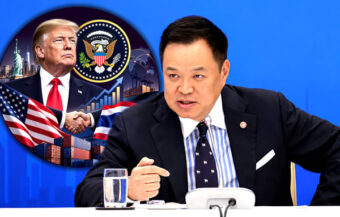
On another front, Thailand’s emerging AI regime intersects with its developing trade relationship with Washington. The United States and Thailand have announced a Framework for an Agreement on Reciprocal Trade. Under that framework, both sides committed to finalising provisions addressing barriers affecting digital trade.
Crucially, one stated objective concerns the free transfer of data across trusted borders for conducting business. Thailand also agreed to refrain from measures discriminating against US digital services and products. Those commitments sit alongside the proposed Thai powers to require certain AI processing inside the country.
Thailand must balance localisation powers with cross-border data commitments under its US trade framework
This does not automatically place the draft AI law in breach of the trade framework. Government information, national security and critical infrastructure can require specialised safeguards. Moreover, the final obligations, definitions and exemptions remain important. Nonetheless, Thailand is developing two policies which will ultimately have to operate together.
On one hand, Bangkok has committed to facilitating trusted cross-border commercial data transfers. On the other, its proposed AI regime could require designated processing inside Thailand. Consequently, the final reach of localisation provisions could carry major consequences for international technology companies.
US trade policy has traditionally treated unjustified data localisation as a potential trade barrier. It also challenges requirements forcing companies to provide services through local facilities or infrastructure. Against that backdrop, the eventual breadth of Thailand’s localisation rules could determine the scale of US industry concerns.
A narrowly drafted requirement could principally cover sensitive government or critical-infrastructure information. By contrast, broader powers could reach ordinary cloud computing and commercial AI services. That distinction matters because global providers organise infrastructure regionally rather than separately for every national market.
Thai data-centre rules widen regulatory pressure as localisation could reshape regional cloud operations
Large AI platforms depend heavily on that regional infrastructure. Data can move between facilities while computing workloads are allocated across multiple locations. Hence, compulsory processing inside Thailand could alter established operating models. It could also require additional investment specifically for the Thai market.
Separately, Thailand is opening another regulatory front involving data centres. Prime Minister Anutin Charnvirakul has pushed a new framework covering registration and operating standards. Meanwhile, the country is seeking to establish itself as a regional digital hub.
A September draft proposal would introduce new licensing, environmental and resource requirements for data centres. Those proposals cover electricity and water consumption. They also address cloud security and data storage. Some localisation proposals have reportedly extended to Thai data.
Taken together, the regulatory questions confronting international technology companies therefore extend well beyond the proposed AI Act. Thailand is simultaneously developing rules covering artificial intelligence, digital platforms and cybersecurity. Data centres and data sovereignty are also part of the wider push. Collectively, those measures could change operating conditions for major international technology providers.
Liability, sector regulation and AI labelling add further compliance pressure for global technology firms
Within the AI legislation itself, data localisation represents only one pressure point. Liability presents another. Foundation-model development involves businesses performing sharply different roles. Yet joint liability could expose one participant to damage originating elsewhere within that chain. The Business Software Alliance specifically challenged that feature.
Regulatory fragmentation creates a further issue. Thailand intends sector regulators to play substantial roles in identifying and supervising high-risk AI applications. This approach gives specialist regulators oversight within their existing fields. Multinational providers could, however, face differing interpretations across several industries.
Those industries could include finance, telecommunications, healthcare and consumer services. Accordingly, companies could face central AI requirements alongside separate sector rules. The exact boundaries would therefore become important for providers operating across several parts of the economy.
Generative-AI labelling creates another potential regulatory pressure point. International work is already advancing on technical methods for identifying AI-generated content. Here, the technical standard eventually adopted by Thailand could matter significantly.
US industry backs global standards as Thailand weighs blocking powers while still courting tech investment
The Business Software Alliance has previously warned Thailand against creating a unique national authentication standard. Instead, it supported interoperable international mechanisms such as C2PA. A Thailand-only requirement could therefore force global platforms to develop additional functionality for one national market.
Extraterritorial enforcement adds further weight to the proposed regime. Thailand wants to regulate overseas providers when their AI systems affect Thai users. Such provisions are increasingly common internationally. Even so, proposed blocking powers would give Thai regulators considerable enforcement leverage.
A dispute involving a major US provider could therefore move beyond a conventional regulatory fine. Ultimately, service availability inside Thailand could become involved. That would make compliance questions materially different from a system relying mainly on financial penalties.
Despite the tighter rules, Bangkok continues courting international technology investment. Digital Economy and Society officials participated in the Thailand-US Trade and Investment Summit in August. There, officials stressed innovation and investment alongside AI safety and governance.
Chaichanok promotes interoperable AI rules as key provisions remain unsettled after industry consultation
Mr Chaichanok has also taken Thailand’s AI policy onto the international stage. In Geneva during July, he promoted Thailand as a possible real-world “AI Governance Sandbox”. Significantly, he also argued for internationally interoperable AI rules rather than fragmented regulatory systems.
ETDA has adopted a similar position on technological development. It says it does not want a one-size-fits-all system obstructing innovation. As a result, its programme combines proposed statutory controls with voluntary governance measures. These include regulatory sandboxes, ethical-impact assessments and red-team testing.
Even so, major details of the binding legislation remain under discussion. Thailand has established the broad architecture, but final obligations for international companies remain unsettled. The July-August consultation has finished. US technology interests have already used that process to challenge several important provisions.
Since then, direct engagement has continued. The September 22 AMCHAM meeting showed discussions were still active late this month. Data localisation remains one of the most significant issues. Strict and joint liability provides another major point of contention.
Foreign AI and cloud providers face Thai obligations as Bangkok moves towards binding statutory controls
Beyond those questions, foreign foundation-model developers face uncertainty over their responsibilities inside Thailand. Cloud providers could also face localisation requirements. Technical standards and AI-content labelling remain significant. Sector regulators could additionally gain substantial responsibility for defining and supervising high-risk applications.
At the same time, Thailand must develop these rules alongside its digital-trade commitments with Washington. Bangkok is also seeking major American investment in AI, cloud infrastructure and data centres. Some companies being courted as investors could therefore face substantial new Thai regulatory requirements.
For now, Thailand has a serious Draft Artificial Intelligence Act rather than an enacted AI law. Still, the policy direction contained in the supplied material is clear. Bangkok is moving away from predominantly voluntary AI governance towards binding statutory controls.
US technology groups seek changes as data localisation emerges as a key issue in Thailand’s unfinished law
Meanwhile, US technology interests are seeking changes before that framework becomes law. Thailand is also developing separate rules for platforms, cybersecurity and data centres. In combination, those initiatives amount to a much wider digital regulatory programme.
Above all, the final scope of data localisation could carry particular importance. Thailand has committed to trusted cross-border data transfers for conducting business. Yet the proposed AI framework could empower regulators to require designated processing inside Thailand.
TH AI plan runs into problems and bottlenecks. New AIS deal offering cheap 29 baht per month internet
Substantial US Thai trade deal ready to be finalised by a call between Anutin and Trump says Minister
Ultimately, the final wording, definitions and exemptions will determine how those two approaches operate together. The legislation remains unfinished. Nevertheless, negotiations over its most commercially significant provisions are already well underway.
Join the Thai News forum, follow Thai Examiner on Facebook here
Follow Thai Examiner on Google here
Receive all our stories as they come out on Telegram here
Follow Thai Examiner here
Further reading:
Paying AI users in Thailand had a nightmare week online just as the government waded into the market