Senate probe rocked by two razor-thin EC votes as Sitthichot reveals fresh DSI evidence was rejected 4–3 before political figures were cleared 5–2. Meanwhile, 77 people, including 26 serving senators, faced proceedings.
A serving Election Commissioner has delivered a powerful insider account of Thailand’s 2024 Senate election investigation, exposing two crucial divided votes. Sitthichot Intrawises says the EC voted 4–3 against obtaining additional DSI financial, telephone and photographic evidence involving eight accused persons. It later voted 5–2 against proceedings involving 21 political figures. Mr Sitthichot was in the minority both times. His account details suspected voting lists matching successful candidates, financial trails towards Surat Thani and political connections across several provinces. He also revealed suspicious documents found at Muang Thong Thani and a 45-day delay before Committee 36 met. The investigation once covered 229 people. Ultimately, the EC proceeded against just 77, including 26 serving senators, while key political figures escaped referral.
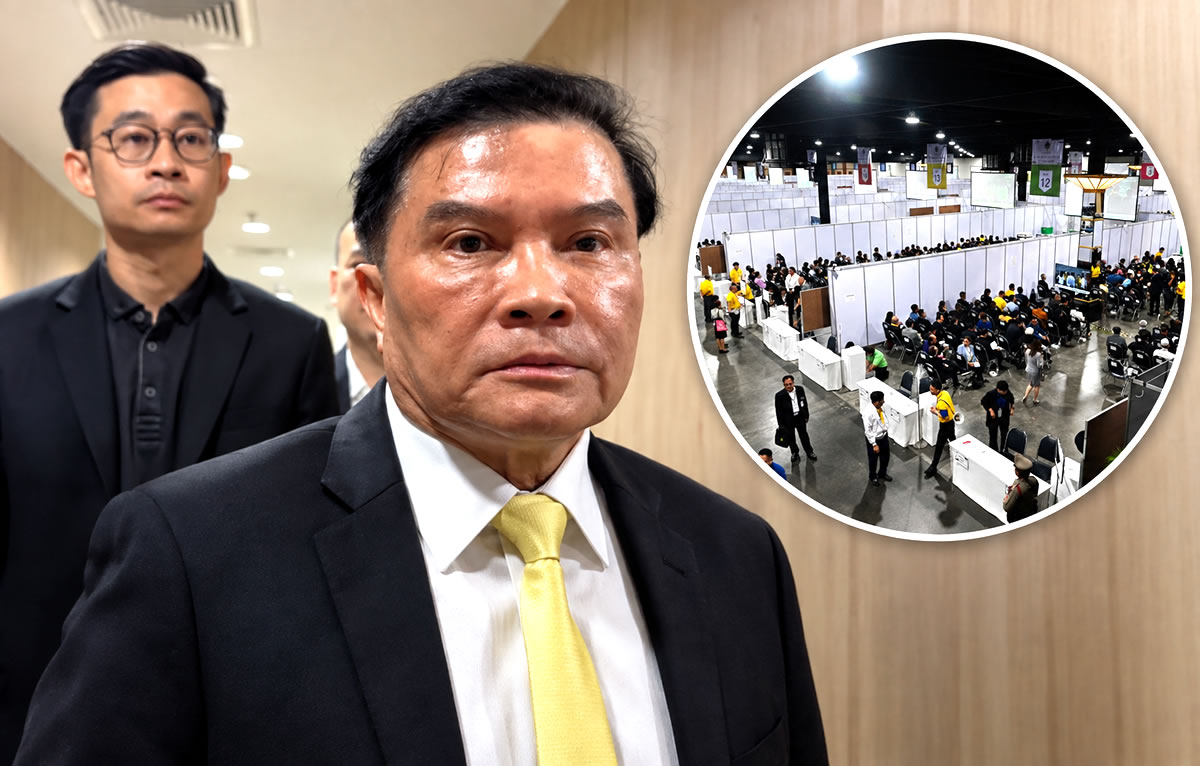
Election Commissioner Sitthichot Intrawises has delivered an extraordinary insider account of Thailand’s investigation into the controversial 2024 Senate election. On Wednesday, he detailed internal votes, investigative roadblocks, financial trails and disputes over evidence.
Crucially, he revealed another deeply divided vote among the country’s seven election commissioners. The EC voted 4–3 against obtaining additional evidence held by the Department of Special Investigation (DSI).
The material included photographs, financial records and telephone data concerning eight accused persons. Mr Sitthichot wanted the evidence brought into the EC investigation. Two other commissioners supported him. Yet four commissioners voted against obtaining it. Consequently, that additional material was not brought into that part of the EC inquiry.
EC split widens as Sitthichot details political figures, Senate proceedings and his minority vote
The disclosure adds another dimension to the investigation into possible collusion during the 2024 Senate selection. Earlier this month, the EC voted 5–2 against pursuing 21 political figures under two accusations. Mr Sitthichot and Election Commissioner Chai Nakornchai formed the minority. Meanwhile, the commission proceeded against 77 other people, including 26 serving senators.
Mr Sitthichot spoke at a high-profile seminar organised by the Office of the Royal Society of Thailand. The event was titled “The Senate Collusion Case: The Truth Every Thai Must Know”. Former Constitutional Court judge Charan Pakdithanakul also participated. Former Supreme Court judge Was Tingsamitr and former anti-corruption commissioner Vicha Mahakun joined the event.
Notably, Mr Sitthichot brought a unique perspective to Wednesday’s gathering. He is a serving commissioner who examined the evidence from inside the EC. Moreover, he voted against the majority on crucial parts of the case. His account detailed how the investigation developed and where investigators encountered obstacles.
The 2024 Senate selection was unprecedented in scale and complexity. More than 40,000 people applied through 928 districts nationwide. Candidates were divided into professional groups. The selection then moved through district, provincial and national stages. However, the EC lacked enough personnel to administer the entire operation directly.
Officials find suspicious voting documents as complaints trigger a nationwide Senate investigation
As a result, administrative officials played a substantial role during district and provincial stages. Problems subsequently emerged over the classification of applicants into professional groups. At the same time, complaints began arriving from different parts of Thailand. Those complaints eventually produced a sprawling nationwide investigation.
Mr Sitthichot also revealed events at Muang Thong Thani during the national Senate selection. Officials discovered large quantities of suspicious documents discarded inside toilets on the morning of the vote. The documents resembled voting lists or voting instructions. Their discovery immediately concerned officials supervising the process.
In response, officials called an emergency meeting. They then printed three new sets of candidate introduction documents. According to Mr Sitthichot, the measure sought to prevent further information leaking from the process. The incident occurred before the national-level selection had been completed.
Elsewhere, complaints concerning possible organised voting continued emerging across Thailand. Initially, 25 separate investigative committees examined complaints arising from different areas. However, those inquiries encountered a serious structural problem. They could investigate local witnesses and events, but following money across provincial boundaries proved more difficult.
Committee 26 brings police, DSI and money-laundering specialists into the widening Senate inquiry
Against that background, Mr Sitthichot proposed creating a stronger central investigation. He sought to use provisions of the Election Commission Act allowing specialists from other agencies. Accordingly, Central Investigation and Inquiry Committee 26 was established. It subsequently became central to the widening Senate investigation.
Committee 26 brought together specialists from several powerful investigative bodies. Police officers participated alongside officials from the Department of Special Investigation. In addition, the Anti-Money Laundering Office provided expertise. Three DSI specialists joined the inquiry. Their work included examining telephone records and financial transactions.
As part of this, investigators could begin connecting evidence uncovered in different provinces. They could examine communications and financial movements alongside witness testimony. Committee 26 therefore possessed capabilities unavailable to many original provincial investigations. This became increasingly important as the inquiry expanded beyond local complaints.
Even so, Mr Sitthichot wanted the investigation to remain firmly under EC control. The DSI had previously informed the commission that it possessed evidence concerning the Senate case. However, he opposed simply transferring the DSI investigation into the EC process.
Sitthichot backs an independent EC inquiry before Committee 36 brings a 45-day delay to the case
Instead, Mr Sitthichot favoured an independent EC inquiry using specialists from other state agencies. He feared accepting the DSI case wholesale could raise questions about the commission’s political neutrality. Therefore, DSI specialists participated inside Committee 26 rather than simply handing over an existing investigation.
In parallel, witnesses previously interviewed by DSI were summoned again. They were questioned separately under the Election Commission’s process. Thus, the EC did not simply inherit conclusions reached by another agency. Committee 26 assembled and examined evidence through the commission’s own statutory investigation.
Later, another layer was inserted into the process. The Election Commission established Committee 36 as a special screening body for the Senate case. Mr Sitthichot stressed that it was not created to contradict Committee 26. Nevertheless, he disclosed a substantial delay after Committee 36 was appointed.
According to Mr Sitthichot, its chairman did not convene a meeting for approximately 45 days. Hence, consideration of the investigation was delayed during a critical period. The committee would later reach conclusions sharply different from Committee 26.
EC votes 4–3 against obtaining additional DSI evidence as investigators examine financial trails
On another front, DSI was conducting its own money-laundering investigation. During Committee 36’s consideration, the department contacted the Election Commission concerning additional evidence. According to Mr Sitthichot, the material concerned eight accused persons.
Specifically, DSI held photographs, financial transaction records and telephone information. Mr Sitthichot wanted the Election Commission to obtain and examine that evidence. The issue was therefore placed before all seven commissioners. The resulting vote was extremely close.
Four commissioners opposed obtaining the additional DSI material. Three supported bringing it into the investigation. Mr Sitthichot was among those three. Accordingly, the additional evidence was not obtained for that part of the EC inquiry.
That decision becomes more significant alongside an earlier dispute over money trails. Mr Sitthichot had already described financial movements uncovered during the Senate investigation. In particular, he discussed transfers worth hundreds of thousands of baht towards southern Thailand. Surat Thani featured prominently in that evidence.
Sitthichot seeks the original source of funds as the EC blocks a deeper investigation of money trails
Mr Sitthichot identified Worapoj Tangphanphian while explaining what investigators considered a money-distribution trail. Mr Worapoj was subsequently among the 77 people against whom the EC decided to proceed. Still, Mr Sitthichot wanted investigators to work further backwards through the financial chain.
His question was straightforward. Where had the person making the payments originally obtained the money? For Mr Sitthichot, identifying recipients did not complete the financial investigation. Rather, he wanted investigators to establish the original source of the funds.
Yet he said investigators could not continue that particular line. He linked that obstacle to the EC’s 4–3 decision concerning further financial evidence. As a consequence, the financial trail was not pursued as far as Mr Sitthichot wanted.
The financial material examined during the investigation involved several individuals. They included Subin Sakda, Worapoj Tangphanphian and Nisita Manchai. Mr Subin was identified as an assistant to Bhumjaithai Surat Thani MP Pichai Chomphuphon.
Importantly, the existence of an investigated financial trail does not establish where the money ultimately originated. Nor does it constitute a judicial finding against political figures. Nonetheless, financial evidence became a major point of disagreement inside the Election Commission.
Suspected voting lists match leading Senate results as investigators examine evidence across provinces
For its part, the EC subsequently explained the 4–3 decision. It said the vote concerned obtaining DSI documents and evidence from the department’s separate investigation. The majority decided against obtaining that material at that stage. Mr Sitthichot’s account now places that decision within the broader investigative dispute.
Separately, financial evidence represented only one strand of the Senate case. Investigators also uncovered 12 suspected voting lists connected with meetings in several provinces. Mr Sitthichot previously identified Nakhon Si Thammarat, Phuket and Nong Bua Lamphu among those locations. Uthai Thani, Nakhon Sawan and Sukhothai were also identified.
Crucially, investigators compared candidate numbers appearing on those lists with subsequent Senate results. According to Mr Sitthichot, numbers on suspected lists corresponded with candidates later securing leading positions. Some candidates subsequently finished between first and seventh place.
Beyond those lists, investigators examined meetings involving people connected with the selection. They also considered telephone contacts, witness testimony and financial information. Mr Sitthichot argued that these strands should be examined collectively. He opposed treating individual provincial incidents as separate events.
Investigators examine political links and Bangkok hotel meeting as the EC approaches its decisive split
Previously, he described that investigative approach as looking at the “whole elephant”. In effect, investigators examined possible connections between activities occurring hundreds of kilometres apart. The inquiry therefore moved beyond individual complaints towards examining possible patterns across several provinces.
Furthermore, investigators examined links involving party members, political personnel and MPs. Mr Sitthichot said activities detected in different areas repeatedly involved people associated with the same political party. Those connections formed part of the investigation and his minority assessment.
However, they were not judicial findings against the party or its leadership. Even so, those links became important when commissioners considered whether the political side should proceed. That question eventually produced the commission’s decisive 5–2 split.
Another strand concerned a Bangkok hotel meeting after the Senate selection. Mr Sitthichot previously described witness evidence surrounding that gathering. According to the evidence, senators met concerning the selection of the Senate president and deputy presidents.
Committee 36 clears all 229 people after investigators recommend proceedings against the entire group
During the gathering, mobile telephones were collected. Mr Sitthichot also said an important political party figure was observed leaving the location. Additionally, information suggested another senior figure may have been inside a separate room.
Around the same period, investigators examined telephone contacts involving political figures. Again, those matters formed part of investigative evidence considered by commissioners. They were not judicial findings against the political figures concerned.
Even so, the evidence became central when commissioners considered extending proceedings beyond senators and candidates. The dispute ultimately produced the 5–2 vote earlier this month. That decision effectively separated the political figures from those against whom proceedings would continue.
At one stage, the investigation covered 229 people. They included 138 senators and 91 political figures or other individuals. Committee 26 and DSI investigators recommended proceedings against all 229.
By contrast, Committee 36 subsequently reached a dramatically different conclusion. Its members voted 5–2 to clear all 229. The case then moved to the seven election commissioners themselves for consideration.
EC proceeds against 77 people as Sitthichot challenges the majority decision on political figures
Ultimately, the EC decided to proceed against 77 people. They included 26 serving senators and 36 eligible Senate candidates. Another 15 people were also included.
However, political figures considered under the first two accusations were not referred. The vote concerning them was 5–2. Mr Sitthichot and Mr Chai opposed the majority decision.
Afterwards, Mr Sitthichot publicly explained the evidence underpinning his minority position. His account cited suspected voting lists, provincial meetings and telephone connections. It also cited witness statements and financial trails.
In addition, he pointed to similarities between suspected lists and final candidate rankings. The commissioner cited political connections identified during investigations across several provinces. He argued that those different elements should be considered together.
A further element concerned the July 21, 2024 meeting at the Pullman Bangkok hotel. Evidence placed at least 40 senators at the location. Mr Sitthichot also discussed the collection of mobile phones during the gathering.
At the same time, investigators examined who entered and left the location. That evidence formed another part of the broader case considered by investigators. Yet the commission’s majority did not accept that proceedings against the political figures should follow.
Committee 26 evidence and Committee 36 screening produce sharply different outcomes in Senate inquiry
Mr Sitthichot and Mr Chai reached a different conclusion. Wednesday’s seminar therefore gave Mr Sitthichot a public platform to explain how that disagreement developed. More importantly, he provided details about decisions made before the final 5–2 vote.
Taken together, his account describes an investigation that changed substantially as it progressed. Initially, 25 committees examined complaints scattered across Thailand. Those investigations struggled to follow money and communications beyond individual provinces.
Subsequently, Committee 26 was created. Police, DSI and anti-money laundering specialists joined the inquiry. Witnesses were recalled and questioned under the EC process. Investigators also examined financial transactions and telephone records.
At the same time, suspected voting lists were compared with actual candidate results. Meetings across several provinces were investigated. Political connections were examined alongside witness evidence. Investigators also attempted to trace money between individuals and locations.
Then Committee 36 entered the process as a screening layer. According to Mr Sitthichot, approximately 45 days passed before its chairman convened a meeting. Committee 36 subsequently reached conclusions sharply different from the central investigation.
Two divided EC votes leave Sitthichot in the minority as three further Senate cases remain in process
During that process, DSI informed the EC about additional material from its money-laundering investigation. The evidence concerned eight accused persons. It included photographs, financial information and telephone data.
Despite that offer, the Election Commission voted 4–3 against obtaining the material. Mr Sitthichot was among the three seeking it. Later, commissioners divided again over political figures investigated in the case.
This time, the vote was 5–2 against proceeding. Once again, Mr Sitthichot was in the minority. Mr Chai joined him in opposing the majority decision.
Despite those divisions, Mr Sitthichot has rejected suggestions of an institutional breakdown inside the Election Commission. He said commissioners could disagree over cases while continuing to work together. He has also avoided publicly questioning the personal motives of fellow commissioners.
Instead, his account has concentrated on evidence, procedure and investigative decisions. He has detailed which material investigators examined and where he wanted inquiries extended. He has also identified votes that prevented particular investigative steps.
Further Senate cases remain active as Sitthichot details the evidence and sharply divided EC decisions
Meanwhile, the September decisions have not ended every case arising from the 2024 Senate selection. Three further Senate cases remain inside the Election Commission process. Mr Sitthichot confirmed their existence on Wednesday.
One concerns a group which gathered in the Jupiter room at Muang Thong Thani. Another concerns the Progressive Movement. All three investigations have already passed through Committee 26.
Therefore, those cases have undergone examination by the central investigative body used in the wider Senate inquiry. Mr Sitthichot said they could reach the full Election Commission around early October. However, he did not know whether Committee 36 had completed screening them.
In the meantime, proceedings involving the 77 people already approved by the Election Commission are moving separately. Twenty-six serving senators are among that group. The political figures cleared following the 5–2 vote are not.
Wednesday’s intervention therefore provided a detailed account of what happened before those sharply different outcomes. Mr Sitthichot described suspicious voting documents found on the morning of the national selection. He also detailed difficulties tracing financial evidence between provinces.
From there, the investigation was expanded through Committee 26. Police, DSI and anti-money laundering specialists joined the inquiry. Investigators examined telephone records, financial transactions, witnesses, provincial meetings and suspected voting lists.
Suspected voting lists, Committee 36 delays and divided EC votes define the continuing Senate inquiry
More significantly, those suspected lists were compared with actual Senate results. Mr Sitthichot said numbers on them corresponded with candidates who later secured leading positions. Investigators also examined financial movements and political connections across different provinces.
Thereafter, Committee 36 was inserted into the process. Its chairman did not convene the body for approximately 45 days, according to Mr Sitthichot. The committee later recommended clearing all 229 people under consideration.
Legal heavyweights plan seminar to review Election Commission’s move to let top politicians off the hook
Bombshell Supreme Court ruling links Bhumjaithai Party figure with orchestrated Senate poll collusion
Meanwhile, DSI offered additional evidence involving eight accused persons. The material included photographs, telephone information and financial records. Four Election Commissioners voted against obtaining it. Three wanted it brought into the inquiry.
Finally, the full commission divided over the political figures. Five commissioners voted against proceedings. Mr Sitthichot and Mr Chai voted in favour.
Thus, two crucial internal votes ended with Mr Sitthichot on the minority side. The first was 4–3 over additional DSI evidence. The second was 5–2 over proceedings involving political figures.
Both votes now form part of his public account of how the 2024 Senate investigation unfolded.
Join the Thai News forum, follow Thai Examiner on Facebook here
Follow Thai Examiner on Google here
Receive all our stories as they come out on Telegram here
Follow Thai Examiner here
Further reading:
Election Commission exposed based on Monday’s sweeping decisions and judgments warns opposition
Election Commission creates more questions than answers as it refers 77 people to the Supreme Court
Ex Pheu Thai minister warns Commission members that soon they could be judged as crunch vote looms
Opposition and People’s Party leader attacks ‘blue regime’ on the 12th anniversary of the 2014 coup