Phuket’s skies could open to driverless flying taxis in 2027. Sky ICT is planning eight-minute airport trips for ฿2,000 per seat, while officials examine routes to Patong and Karon. But CAAT approval and new landing stations are still required.
Thailand is preparing to launch pilotless flying taxis in Phuket in 2027, slashing hour-long airport transfers to just eight minutes. Thai technology company Sky ICT, led by Chief Executive Officer Sithej Malayara, is developing two-passenger electric aircraft with projected fares of ฿2,000. Meanwhile, the Civil Aviation Authority of Thailand (CAAT), headed by Air Chief Marshal Manat Chavanaprayoon, is drafting regulations to authorise commercial flights. Phuket Governor Chotnarin Kerdsom has chaired talks examining routes to Patong, Karon Beach and Promthep Cape. Separately, Chinese manufacturer EHang plans to deploy 25 autonomous aircraft in Thailand. However, the Phuket launch still requires aircraft certification, landing facilities and final regulatory approval.
Thailand is preparing to launch pilotless flying taxis in Phuket in 2027, with electric aircraft carrying passengers across the island. Thai technology company Sky ICT is developing the service, targeting airport transfers lasting just eight minutes.
The same journey currently takes approximately one hour by road. Meanwhile, the Civil Aviation Authority of Thailand (CAAT) is drafting regulations to authorise commercial passenger flights. Fares are projected at ฿2,000 per passenger, with each aircraft carrying two people.
The project would introduce autonomous passenger aviation to one of Thailand’s busiest international tourism destinations. Sky ICT Public Company Limited Chief Executive Officer Sithej Malayara is leading the development programme.
Sky ICT targets 2027 Phuket flying taxi launch with eight-minute airport transfers and ฿2,000 fares
He has outlined a two-year strategy covering passenger drones, airport automation and new aviation services. Crucially, the company expects to complete its feasibility studies and business models before the end of 2026. Commercial operations are being targeted for 2027, subject to regulatory approval.
Initially, the proposed service would connect Phuket International Airport with the island’s urban centre. The aircraft would use electric vertical take-off and landing technology, known as eVTOL. Consequently, they would not require conventional airport runways.
Each aircraft would accommodate two paying passengers and operate without an onboard pilot. The service is aimed at wealthy tourists, business executives and luxury resort customers. Furthermore, the proposed ฿2,000 fare would place the operation firmly in Phuket’s premium transport market.
However, the projected journey times and ticket prices remain commercial estimates rather than approved operating arrangements. Sky ICT has not announced a confirmed passenger timetable.
At the same time, CAAT is preparing the regulatory framework needed to permit autonomous aircraft to carry paying passengers. On November 9, the authority confirmed further preparations under its advanced air mobility programme. The work covers aircraft certification, passenger safety, operating licences and aviation infrastructure.
CAAT sets aircraft safety and licensing requirements before pilotless passenger flights can begin
CAAT Director General Air Chief Marshal Manat Chavanaprayoon is overseeing preparations for the emerging aviation industry. Significantly, the authority has identified three essential requirements covering aviation personnel, aircraft certification and commercial flight operations.
Aircraft must demonstrate airworthiness before carrying passengers, including reliable propulsion systems, flight controls and maintenance arrangements. In addition, operators must obtain the necessary licences, establish safety management systems and comply with airspace restrictions.
The regulations must also establish how pilotless passenger aircraft can operate alongside conventional commercial flights. Separately, CAAT is examining communications systems, ground infrastructure and coordination with existing aviation activities.
Unlike ordinary drones, the proposed aircraft would carry paying passengers, requiring additional safety arrangements. The authority’s November 9 announcement confirmed that further operational standards remain under development. Consequently, commercial flying taxis cannot begin operating until the necessary approvals have been granted.
Phuket officials examine airport, beach and tourist pier routes for new electric flying taxi network
The regulatory preparations follow a major aviation development meeting in Phuket on September 23. Air Chief Marshal Manat Chavanaprayoon attended the discussions at Phuket Provincial Hall.
Phuket Governor Chotnarin Kerdsom chaired the meeting, which brought together government agencies, provincial authorities and private companies. Officials examined passenger transport, drone deliveries, emergency medical operations and new aviation infrastructure.
Notably, they considered how existing transport facilities could accommodate electric aircraft operating without conventional runways.
The proposed network would require dedicated landing facilities known as vertiports. These would provide designated locations for passenger boarding, aircraft departures and landings.
Among the routes examined were flights connecting Phuket International Airport with Patong and Karon Beach. Another proposal involved passenger services between Patong and Promthep Cape, on the island’s southern coast.
In parallel, officials examined Phuket International Airport, the old bus terminal and tourist piers as potential aviation hubs. None of these proposed routes has received final commercial approval.
Chinese manufacturer EHang plans 25 pilotless aircraft as Thailand prepares further Bangkok trials
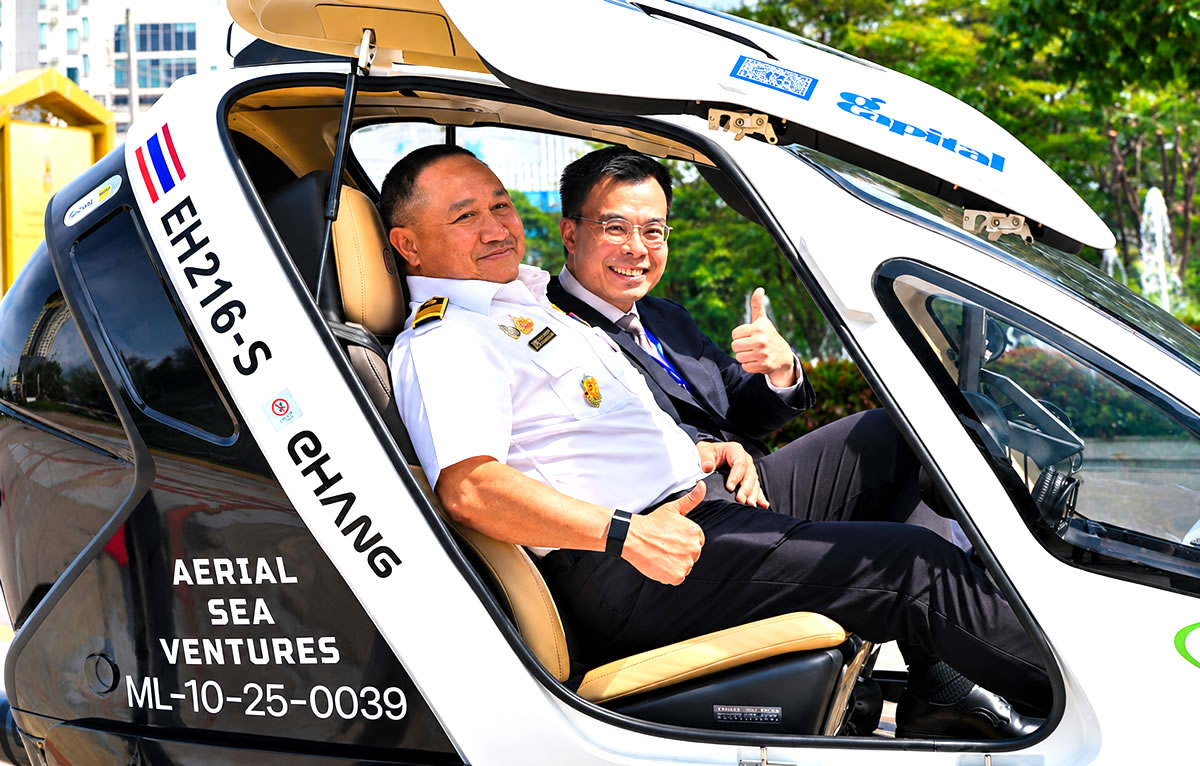
Thailand has already hosted demonstrations of autonomous passenger aircraft developed by Chinese aviation manufacturer EHang Holdings. The company has developed the EH216-S, a two-seat electric aircraft designed to operate without an onboard pilot.
Its technology has undergone demonstrations in Thailand through partnerships involving TAO AAM and other private-sector participants. Moreover, EHang has announced plans to establish a regional advanced air mobility hub in Thailand. The initiative represents another commercial development in the country’s emerging passenger drone industry.
On October 30, EHang outlined plans for an initial deployment of 25 EH216-S aircraft. Further demonstrations are planned around an international advanced air mobility event scheduled for Bangkok in December.
These developments follow earlier trials of autonomous passenger aviation technology in Thailand. Nevertheless, EHang’s proposed deployment and Sky ICT’s Phuket project remain separate commercial initiatives. No partnership between the companies has been confirmed.
On another front, Sky ICT is expanding its aviation technology ambitions beyond passenger transport. Chief Executive Officer Sithej Malayara has identified automated service robots as another potential business opportunity.
Sky ICT examines airport robots while Phuket flying taxi plans face infrastructure and weather tests
The company is examining their introduction at Suvarnabhumi, Don Mueang and Phuket international airports. These proposals form part of its wider development strategy covering airport services, aviation technology and autonomous transport. As part of this programme, the company is preparing its proposed commercial flying taxi operation.
The Phuket project requires substantial infrastructure before passenger flights can begin. Dedicated landing stations must be established alongside electrical charging facilities and aircraft maintenance arrangements.
Operators must also develop emergency response procedures and reliable communications systems. Additionally, Phuket’s tropical weather presents operational challenges, particularly during heavy rainfall and strong winds. These conditions must be considered when establishing flight procedures and operating restrictions.
Commercial viability will depend on operating costs and demand for a two-seat premium passenger service. The proposed ฿2,000 fare targets affluent travellers rather than conventional mass transport customers.
Even so, its competitiveness against existing airport transfers remains untested. Sky ICT has not announced approved ticket prices, confirmed operating schedules or final commercial routes. Therefore, the company’s feasibility studies remain an important part of its preparations for a possible 2027 launch.
Phuket flying taxi launch remains conditional on CAAT approval as Sky ICT prepares for 2027 operations
Industry projections currently suggest commercial flying taxi operations could begin within 12 to 24 months. That would place the proposed introduction during 2027, provided the necessary regulatory and operational requirements are completed.
Importantly, CAAT has not issued a final commercial operating licence for the Phuket service. Nor has the authority confirmed an official launch date. The proposed aircraft must first satisfy certification requirements, while operators must establish approved landing facilities and safety procedures.
For Sky ICT, the immediate programme involves completing feasibility studies, developing its business model and preparing commercial operations. CAAT must finalise the regulations governing aircraft certification, operator licensing, passenger safety and commercial flights.
The September meeting in Phuket established potential routes and infrastructure requirements. Subsequently, CAAT’s November announcement confirmed that national regulatory preparations were continuing.
Eight-minute airport flights could transform Phuket premium travel as proposed beach routes await approval
The proposed service would introduce a new form of premium airport transport to Phuket. Eight-minute electric flights could replace road transfers currently estimated at approximately one hour.
Beyond the initial airport connection, potential routes could extend the network to Patong, Karon Beach and Promthep Cape. These connections remain proposals rather than authorised passenger services.
Phuket mototaxi driver viciously attacked with a blade just moments after offering to help motorcyclist
German family members injured in Phuket after app-based taxi driver lost control of car looking at GPS
Sky ICT is targeting 2027 for the commercial introduction of its pilotless flying taxis. At the same time, CAAT is preparing the aviation rules needed to permit the aircraft to carry paying passengers.
The project would bring autonomous electric passenger transport into Thailand’s commercial aviation sector. Its launch remains dependent on aircraft certification, operating licences, approved infrastructure and final regulatory clearance.
Join the Thai News forum, follow Thai Examiner on Facebook here
Follow Thai Examiner on Google here
Receive all our stories as they come out on Telegram here
Follow Thai Examiner here
Further reading:
Body of crazed German man who refused to take his meds but instead smoked cannabis, found at home