Thailand launches a sweeping probe into three Chinese delivery apps amid fears of nominee shareholdings, foreign control and licensing breaches. Investigators trace ownership, funding and management links as scrutiny of Chinese business networks intensifies.
Thailand has widened a major investigation into three fast-growing Chinese delivery platforms amid concerns over nominee shareholding, foreign business compliance and who really controls the companies behind the apps. Investigators are tracing investment funds, shareholder links and management authority after uncovering Thai-controlled firms tied to foreign joint ventures and a third platform largely owned by Cambodian entities. With prison terms and million-baht fines possible, the probe comes weeks after police exposed an alleged Chinese nominee property network in Bangkok, bringing another corner of Thailand’s Chinese-language economy under intense scrutiny.
Thailand’s Ministry of Commerce has intensified an investigation into three Chinese delivery platforms operating in the kingdom, widening scrutiny of their ownership structures, shareholder links and business permissions.
Officials are tracing investment sources and management authority while examining whether Thai nationals were used as nominees to circumvent foreign business restrictions.
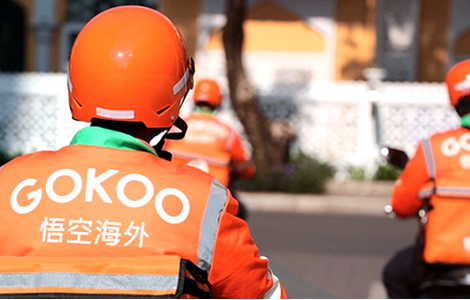
The probe centres on Gokoo, Feixiang and E-Gets, three Chinese-language applications serving tourists and Chinese residents in Thailand. According to officials, the platforms emerged after identifying a gap in the market.
Chinese-language delivery platforms grew by serving tourists and residents unable to use Thai apps
Many Chinese visitors and residents reportedly struggle to use Thai-language delivery applications. In response, operators launched services tailored specifically to Chinese-speaking customers.
On June 23, Department of Business Development Director-General Mr Poonpong Naiyanapakorn outlined the latest findings. He said investigators were working closely with relevant agencies to conduct in-depth inspections. The review covers compliance with the Foreign Business Act and other applicable legislation. At the same time, officials are examining who ultimately controls the businesses behind the applications.
Preliminary findings show that all three platforms operate through registered companies in Thailand. However, their ownership structures differ substantially. As a result, investigators have divided the inquiry into separate categories covering Thai and foreign legal entities.
Commerce officials split inquiry between Thai and foreign entities as ownership questions emerge
The first company under review is Goku Online Co., Ltd., the operator of the Gokoo application. The platform uses the Chinese name 悟空外面, or Wukong Waimai. The company was registered on September 21, 2020, with a registered capital of ฿30 million. Investigators found that Thai shareholders hold 80% of the shares. Therefore, the company is classified as a Thai legal entity.
The second company is The Fly Holdings (Thailand) Co., Ltd., operator of the Feixiang platform. It was registered on September 1, 2021, with a registered capital of ฿25 million. Officials found that Thai shareholders control 51% of the shares. Consequently, the business also qualifies as a Thai legal entity under existing regulations.
Both companies operate marketplace services through electronic systems and internet-based platforms. Customers use the applications to purchase goods and services online. Notably, investigators discovered that Thai shareholders connected to both companies also hold positions in other businesses. Department records show that some serve as directors and shareholders in four additional companies. Those firms operate as joint ventures with foreign investors.
Separately, investigators are examining those relationships in greater detail. The review will determine whether the shareholding structures reflect genuine ownership. Authorities are also seeking to establish whether any shareholders are acting on behalf of foreign interests.
Investigators probe shareholder links and joint venture connections behind two Thai entities
The third company, E-Gets Technology (Thailand) Co., Ltd., presents a different ownership profile. Registered on August 3, 2023, the company has a capital of ฿20 million. Unlike the other platforms, E-Gets is predominantly foreign-owned.
Investigators found that Cambodian legal entities hold 90% of its shares. Accordingly, the company is classified as a foreign legal entity under the Foreign Business Act B.E. 2542 (1999).
E-Gets operates an e-commerce and digital platform business focused on ordering, selling and delivering consumer goods. As part of the investigation, officials reviewed the company’s regulatory status. They found that E-Gets had secured a Board of Investment promotion certificate covering digital platform development services. The company has also obtained a foreign business registration certificate.
The inquiry has now moved beyond basic ownership records. Investigators are tracing the source of investment funds and examining shareholder relationships. In parallel, they are reviewing management authority and company signing powers. Particular attention is being paid to who exercises effective control over business operations. Officials are also analysing corporate documents and governance arrangements.
E-Gets faces scrutiny over ownership, funding sources and effective management control structures
For Thai legal entities, the investigation focuses on nominee issues. Authorities are examining whether Thai nationals agreed to hold shares for foreign investors. They are also reviewing whether Thai citizens lent their names to companies in order to bypass legal restrictions. Such arrangements are prohibited under the Foreign Business Act.
If violations are discovered, penalties are significant. Offenders face imprisonment of up to three years. In addition, fines range from ฿100,000 to ฿1 million. Daily penalties of between ฿10,000 and ฿50,000 may also apply until violations cease.
On another front, investigators are examining foreign legal entities for licensing compliance. The key question is whether businesses possess the required permissions to operate in restricted sectors. Companies found operating without proper authorisation face fines ranging from ฿100,000 to ฿1 million. Daily penalties may likewise be imposed.
Nominee findings or licensing breaches could bring jail terms and fines reaching one million baht
Mr Poonpong said investigators have already established the target market for the applications. The platforms primarily serve Chinese customers living in or visiting Thailand.
Their services include food delivery, consumer goods distribution and related commercial activities. Most operate entirely in Chinese. They are also integrated with electronic payment systems commonly used by Chinese consumers.
As a result, the applications offer a familiar digital environment for users who may encounter difficulties with Thai-language services. That business model has helped the platforms attract attention in Thailand’s increasingly competitive delivery sector.
Meanwhile, the Department of Business Development said it would continue monitoring the platforms closely. Officials are assessing whether any business practices affect fair competition. They are also evaluating potential impacts on Thai businesses and the broader economy. The review is being conducted alongside other regulatory agencies.
Chinese-focused services draw scrutiny as regulators assess competition and market impact
Importantly, the department stressed that the companies remain under investigation. No findings of wrongdoing have been made. Until the process concludes, the businesses are considered not to have engaged in illegal activities.
Mr Poonpong said the inspections form part of a broader government effort to combat nominee shareholding arrangements and unlawful foreign business activities. He said authorities would continue enforcing the Foreign Business Act while protecting legitimate commercial activity.
Police smash Chinese property empire using nominee shareholdings run by 35 year old Mr Hao on Sunday
Huai Khwang raid shows nominee shareholdings being used by Chinese infiltrating the economy
“This inspection is part of the government and Ministry of Commerce’s policy to prevent and suppress the use of Thai nationals as nominees for foreigners, as well as to prevent business activities that may violate the Foreign Business Act B.E. 2542 (1999). The Department prioritises creating fair competition in business and protecting the interests of Thai entrepreneurs. If the inspection reveals that the operations are in accordance with the law, it will be beneficial as it supports employment, especially for delivery riders. However, if any actions are found to be in violation of the law, whether it be using Thai nationals as nominees, conducting business without permission, or other related offences, the Department of Business Development will take strict legal action and coordinate with relevant agencies to expand the investigation,” Mr Poonpong said.
Join the Thai News forum, follow Thai Examiner on Facebook here
Receive all our stories as they come out on Telegram here
Follow Thai Examiner here
Further reading:
Huai Khwang raid shows nominee shareholdings being used by Chinese infiltrating the economy
Sweep of nominee firms and business networks on Koh Phangan. 22 arrested, 200 million in land seized
Anutin visits Koh Phangan as nominee crackdown shows 68% of firms with foreign ownership links
Blitzkrieg on foreign firms and enterprises on Koh Phangan continues with French owned resort busted
Russian-Chinese Koh Phangan alliance to sell drugs to foreigners. Accused entered Thailand illegally
Crackdown aimed at upending foreign business trade moves from Koh Phangan to Phuket. Four arrested