Five Phuket hotel managers arrested as Deputy Interior Minister Polpeera raids illegal resorts. Probe widens into suspected Russian and Chinese nominee ownership, finances and business networks in a sweeping tourism crackdown.
Managers of five Phuket hotels have been arrested after Deputy Interior Minister Polpeera Suwannachawi led a sweeping crackdown on unlicensed accommodation that has now expanded into investigations of suspected foreign nominee ownership, financial transactions and linked business networks. The operation marks a significant escalation in the government’s campaign against illegal hotels on Thailand’s premier tourist island, where an estimated 30% of properties remain outside the licensing system, exposing what authorities believe is a far wider problem involving unlawful business structures and unfair competition in one of the country’s most valuable tourism markets.
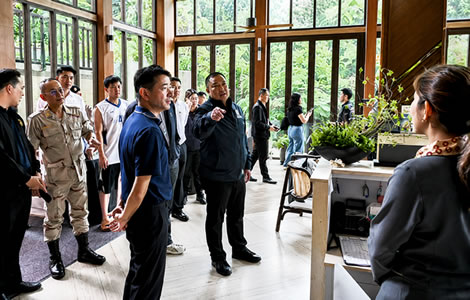
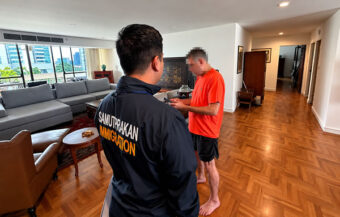
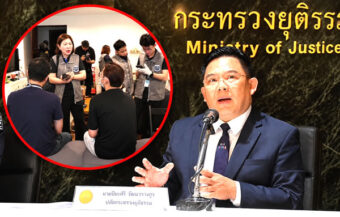
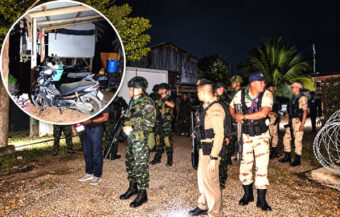
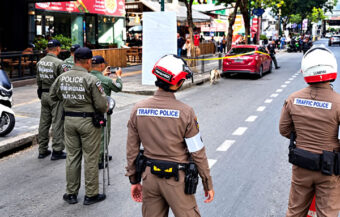
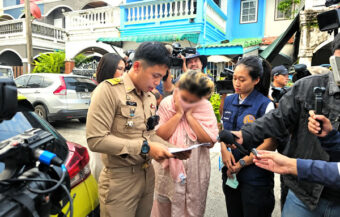
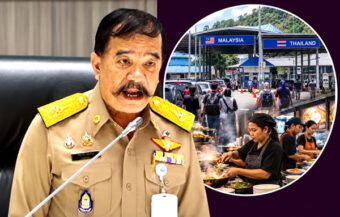
Deputy Interior Minister Polpeera Suwannachawi led a major crackdown on illegal hotels in Phuket on Thursday, targeting five properties operating without licences as investigators widened inquiries into foreign ownership, suspected nominee arrangements and financial transactions.
The July 23 operation formed part of an intensified campaign against illegal accommodation on Thailand’s largest tourism island. Mr Polpeera led the operation as head of the special task force for social order enforcement.
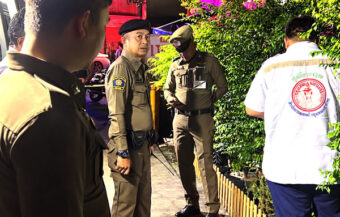
Officers from the Department of Provincial Administration joined the raids alongside Phuket Governor Chotinrin Kerdsum. Officials from the Investigation and Legal Affairs Office also participated.
Local administrative officers from Mueang Phuket, Kathu and Thalang districts supported the inspections. The operation sought to enforce the Hotel Act while protecting licensed businesses from illegal competition.
Phuket hotel crackdown targets illegal operators as police probe ownership and finances
Authorities inspected five hotels during the coordinated operation. The targets included The Proud Karon and Phuket Moonlit in Phuket Town. Officers also searched The Charm Resort and Citygate Kamala Resort in Kathu.
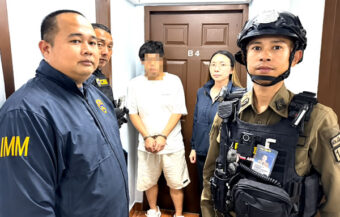
The Wood Terrace in Thalang completed the list. Investigators found that every property was operating without a hotel licence. As a result, authorities arrested the managers and operators responsible for all five businesses.
Notably, investigators immediately focused on ownership structures at two of the hotels. The Proud Karon was found to have 49% Russian ownership and 51% Thai ownership. Officials are now examining whether the Thai shareholders acted as nominees.
Phuket Moonlit also attracted scrutiny. Its registered shareholding consists of 26% Chinese investors and 74% Thai shareholders. That structure is likewise under investigation. By comparison, The Charm Resort has entirely Thai shareholders. However, officials said it was still operating without the required licence. Citygate Kamala Resort and The Wood Terrace were also found to be operating illegally.
Hotel Act charges filed as detectives delve into nominee ownership and linked business activities
Each manager now faces prosecution under the Hotel Act (2004). The offence carries a maximum prison sentence of one year. Alternatively, offenders may receive a fine of up to 20,000 baht. Courts may also impose both penalties.
In addition, the law permits a further fine of up to 10,000 baht for every day an illegal hotel continues operating. Investigators also seized company records and business documents from each property as evidence.
Separately, the inquiry has expanded beyond licensing offences. Investigators are analysing shareholding structures in greater detail. They are also tracing financial transactions linked to the businesses.
Related companies will also come under examination. Authorities are coordinating with other government agencies throughout the investigation. The objective is to identify additional offences connected to the hotel operations. Investigators will also determine whether nominee arrangements concealed foreign control of businesses operating in restricted sectors.
The Phuket operation reflects a broader shift in enforcement strategy. Authorities are no longer focusing solely on unlicensed hotels. Instead, investigators are following ownership, financing and commercial networks behind the businesses.
Phuket expands enforcement with wider scrutiny of foreign investment structures and hotel operations
That approach significantly broadens the scope of each investigation. It also increases scrutiny of foreign investment structures operating in the tourism sector.
Across 2026, the Ministry of Interior and the Department of Provincial Administration have steadily increased enforcement activity throughout Phuket. Particular attention has centred on tourism hotspots including Karon and Rawai.
Officials say many illegal hotels continue advertising through major online booking platforms despite lacking approval under Thailand’s Hotel Act. Those businesses remain readily accessible to tourists while operating outside the licensing system.
Illegal hotels remain one of the biggest structural problems facing Thailand’s tourism industry. The issue is especially acute in Phuket, where decades of rapid tourism growth have outpaced regulation and planning.
Industry groups have consistently argued that illegal accommodation distorts competition, reduces government revenue and creates potential risks for visitors. Licensed operators have therefore continued pressing for stronger enforcement against unlawful businesses.
Illegal hotels remain widespread in Phuket despite years of enforcement and repeated warnings
The true scale of the problem remains difficult to quantify. Thailand has no official national figure covering illegal hotels. Estimates also vary depending on how accommodation is classified. Some surveys include guesthouses and villas.
Others count short-term condominium rentals marketed to tourists. Even so, independent research indicates the problem remains widespread across Phuket.
A recent assessment by the Global Sustainable Tourism Council estimated that around 900 of Phuket’s 3,000 hotels remain unregistered. That suggests roughly 30% continue operating outside the licensing system.
Earlier industry estimates painted a far more serious picture. The Thai Hotels Association Southern Chapter estimated in 2015 that around 70% of Phuket’s 92,000 hotel rooms were operating illegally. Later, a 2017 C9 Hotelworks report found fewer than one-quarter of Phuket’s hotels then held licences. Although many operators have since obtained licences, enforcement agencies believe substantial numbers remain outside the legal framework.
Nationally, no official estimate exists. Nevertheless, hospitality industry assessments generally place unlicensed accommodation between 20% and 40% of the market. The proportion is believed to be considerably higher in major tourist destinations.
Apartments, villas and boutique properties have expanded rapidly in those areas. Consequently, enforcement remains particularly challenging.
Illegal hotels undercut licensed operators while raising safety concerns across the tourism industry
Licensed hotel operators argue that illegal competitors enjoy substantial commercial advantages. They avoid licensing costs and expensive building modifications. Fire safety upgrades can also be bypassed.
Accessibility improvements add further costs for licensed operators. Insurance obligations and regulatory compliance increase operating expenses. Some illegal businesses may also avoid certain tax liabilities.
As a consequence, they can often offer lower room rates while competing directly with licensed hotels. Industry groups argue that creates fundamentally unfair competition.
Safety remains another significant concern. Licensed hotels must comply with regulations covering fire escapes, emergency lighting, structural integrity and sanitation. Disability access standards must also be met.
Staff training forms part of the regulatory framework. Properties operating without licences may never undergo equivalent inspections. Therefore, regulators cannot verify whether minimum public safety standards have been maintained.
In parallel, online booking platforms have accelerated the growth of illegal accommodation. Apartments, condominiums and villas are routinely marketed for short-term stays. Many do not hold hotel licences.
Online bookings fuel illegal hotel growth as police look at finances and ownership structures
Under Thai law, most commercial accommodation offered for fewer than 30 days requires a hotel licence unless a specific exemption applies. Even so, thousands of properties continue targeting tourists through digital platforms.
Officials also argue that illegal accommodation damages Thailand’s reputation as a premium tourism destination. Visitors experiencing safety failures or misleading advertising may associate those problems with the country rather than individual operators.
Meanwhile, governments lose tax revenue generated by businesses operating outside the formal economy. Licensed operators also continue facing competitors that avoid many regulatory obligations.
90 Day cannabis shop crackdown launched by deputy minister in Phuket as concerns about Pot sales spiral
Brit online tour operator in Thailand arrested by police and charged with running an illegal business
On another front, investigators are placing growing emphasis on financial evidence rather than licensing breaches alone. Ownership records, shareholder structures and transaction histories now form a central part of major enforcement operations. That reflects increasing efforts to identify nominee arrangements and broader commercial networks linked to illegal businesses.
Authorities said investigations into the five Phuket hotels will continue. Officers will examine the seized documents alongside financial records and shareholder information. Additional agencies will assist where necessary.
The operation therefore marks another step in the government’s campaign against illegal accommodation, suspected nominee structures and unlawful commercial activity in one of Thailand’s most valuable tourism provinces.
Join the Thai News forum, follow Thai Examiner on Facebook here
Receive all our stories as they come out on Telegram here
Follow Thai Examiner here
Further reading:
Top Bhumjaithai Party figure defends the party’s position on cannabis. Only supported medical use