
Hundreds of billions pour into Thailand’s AI and data centre boom, led by global tech giants. Federation of Thai Industries (FTI) warns the emerging industry could compete with factories and families for water and power while delivering comparatively few permanent jobs.
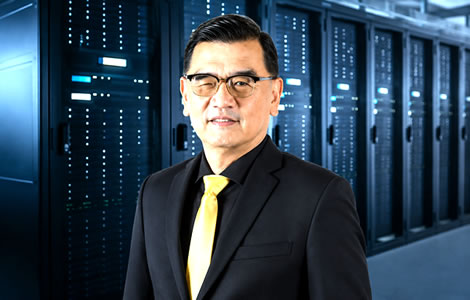
Federation of Thai Industries Vice Chairman Montri Mahaplerkpong has warned that Thailand’s massive data centre boom could trigger competition for water between traditional industries, local communities and the country’s emerging digital economy. The warning comes as AWS, Google, Microsoft and TikTok pour hundreds of billions of baht into cloud and AI infrastructure, bringing huge new demands for water and electricity while creating relatively limited permanent employment.
Thailand’s data centre boom is accelerating rapidly, drawing hundreds of billions of baht into a new digital infrastructure industry. However, the expansion is bringing heavy demands for water and electricity. Questions are also mounting over how many permanent Thai jobs these investments will create.
The investment wave gathered momentum in 2022 with a landmark commitment from Amazon Web Services. AWS announced plans to invest more than US$5 billion, approximately ฿190 billion, in Thailand over 15 years. The programme covers cloud computing, data storage, artificial intelligence and machine learning infrastructure.
At the time, the announcement represented a significant shift in Thailand’s technology ambitions. The country was moving beyond conventional hosting towards large-scale cloud and computing infrastructure. Subsequently, several of the world’s biggest technology groups followed AWS into the market.
AWS launches Thai cloud region as global technology giants accelerate investment in data centres
In January 2025, AWS launched its Asia Pacific (Thailand) Region. The infrastructure allows companies to store information and operate computing workloads inside Thailand. Previously, many such operations depended on infrastructure located overseas.
AWS estimates its investment will eventually contribute around US$10 billion to Thailand’s gross domestic product. In addition, it expects the programme to support more than 11,000 full-time equivalent jobs annually. Yet that employment figure covers economic activity supported throughout the wider economy.
Crucially, it does not represent 11,000 permanent workers employed inside AWS data centres. That distinction is becoming important as investment climbs into extraordinary territory. Data centres are hugely capital-intensive, but finished facilities can operate with comparatively small permanent workforces.
Meanwhile, AWS was only the opening move. Google subsequently committed US$1 billion to Thai data centre and cloud infrastructure. Microsoft also announced plans for its first data centre region in Thailand. Chinese and Singaporean operators entered the market as international interest accelerated.
Data centre investment surges as AI transforms Thailand’s market for computing power and storage
As a result, investment applications began climbing sharply. During 2024, Thai data centre investment applications reached approximately ฿98.5 billion. One year later, that figure had multiplied dramatically.
During 2025, the Board of Investment received applications for 36 data centre projects worth more than ฿728 billion. The surge transformed digital infrastructure into one of Thailand’s largest emerging investment sectors. Moreover, individual developments began reaching enormous industrial proportions.
Beijing Haoyang Cloud & Data Technology proposed a 300-megawatt facility costing ฿72.7 billion. Elsewhere, GSA Data Centre proposed another facility involving approximately ฿13.5 billion. Singapore-based Empyrion Digital also entered Thailand as international operators expanded their presence.
These projects are far removed from traditional server rooms hosting websites and corporate email. Increasingly, the product is computing capacity itself. Modern data centres provide storage, databases, cloud computing, cybersecurity and enormous processing power.
At the same time, artificial intelligence is changing the scale of that business. New-generation centres can house powerful processors required for sophisticated AI systems. Those machines can process huge quantities of information at extraordinary speeds.
Water scarcity tops business concerns as data centres consume growing supplies for cooling systems
However, the computing comes at a substantial physical cost. Servers operate continuously and consume enormous amounts of electricity. In turn, they generate substantial heat and require powerful cooling systems.
Consequently, modern data centres have become industrial-scale consumers of resources. Electricity powers servers, communications networks and cooling equipment. Water can also play an important role in cooling those systems.
Against that backdrop, Thailand’s business community is beginning to examine the resource demands more closely. The Federation of Thai Industries surveyed 160 executives about the rapidly expanding sector. Significantly, insufficient water supplies emerged as their biggest concern.
Some 68.8% of respondents identified water availability as the leading problem. Montri Mahaplerkpong, deputy chairman of the FTI, disclosed the findings. He warned that growing demand could eventually put different users in competition for supplies.
“We fear rising water demand could spark competition between industries and communities for limited supplies in the future,” Mr Montri said.
Electricity demand rises sharply as 300MW data centres increase pressure on Thailand’s power system
On another front, electricity emerged as the next major pressure point. Some 61.3% expressed concern about rising power demand. Data centres require electricity around the clock because their servers operate continuously.
Furthermore, AI computing can increase those requirements. Advanced processors consume substantial amounts of electricity while performing intensive workloads. Cooling equipment then requires additional power to remove the heat they generate.
The proposed Haoyang development demonstrates the scale involved. Its planned capacity is 300MW. Increasingly, major data centres are measured by electrical capacity rather than simply floor space or server numbers.
In response, Mr Montri warned that uncontrolled demand could affect Thailand’s wider energy position. “If there are no measures to manage electricity demand and supply, the nation’s energy security will be affected,” he said.
Separately, regulation emerged as another concern. Some 61.3% worried about whether new laws could keep pace with rapidly developing digital technology. The concern comes as increasingly sophisticated infrastructure enters Thailand.
Thai businesses fear limited gains as foreign technology and talent dominate data centre investment
Beyond resources, another issue goes directly to the economic return for Thai businesses. Some 51.2% expressed concern about limited gains for domestic entrepreneurs. In particular, respondents pointed towards dependence on foreign technology and overseas talent.
The concern reflects the unusual economics of data centre investment. Vast sums can be committed without creating factory-sized workforces. Instead, much of the capital goes into sophisticated infrastructure and imported technology.
For example, billions of baht can be spent on land and specialised buildings. Additionally, operators require electrical substations, fibre connections, cooling systems and communications infrastructure. Servers and advanced processors then add substantially to the investment bill.
Increasingly, those machines include powerful processors capable of supporting demanding artificial intelligence workloads. Therefore, investment can rise dramatically without producing a similar increase in permanent employment.
During construction, large projects generate work across numerous sectors. Buildings must be constructed and electrical infrastructure installed. Cooling, communications and security systems must also be fitted before operations begin.
Highly automated data centres create skilled jobs but require far fewer workers than major factories
Once completed, however, the employment equation changes. Data centres require engineers, technicians, maintenance specialists and security personnel. Nevertheless, the facilities are highly automated and can operate with relatively small teams.
By comparison, Thailand’s traditional manufacturing model is considerably more labour-intensive. Large automotive or electronics plants can employ thousands of production workers. A data centre can absorb tens of billions of baht without creating comparable direct employment.
Notably, the AWS employment estimate illustrates this distinction. Its projected 11,000-plus full-time equivalent jobs cover activity supported across the wider economy. They do not represent thousands of employees staffing AWS server buildings.
Even so, Thai entrepreneurs remain broadly positive about the sector’s economic potential. Some 48.1% expect data centre investment to play a significant role in developing Thai industries. Only 5% said the server farm industry offered little advantage to the economy.
In parallel, 48.8% believe Thailand has the potential to become a regional data centre hub. However, respondents stressed that important limitations must first be addressed. Water availability and electricity capacity now sit prominently among those constraints.
Thailand targets wider economic gains as cloud computing and AI reshape the data centre industry
The government expects wider economic gains through skilled technology employment and domestic supply chains. These could include infrastructure, hardware, facility management, e-commerce, fintech and artificial intelligence. Accordingly, economic benefits could extend beyond direct employment inside data centres.
The underlying product has also changed substantially. Traditional data centres were associated largely with website hosting and corporate information storage. Those functions remain important, but cloud computing has greatly expanded their role.
Today, companies can effectively rent computing capacity instead of purchasing their own server infrastructure. They can buy processing power, storage, databases and cybersecurity remotely. Large corporate workloads can therefore operate inside specialised facilities.
Artificial intelligence pushes that model much further. Advanced processors can perform intensive AI workloads beyond the requirements of ordinary corporate applications. Consequently, Thailand is assembling infrastructure capable of supporting a much larger AI and cloud economy.
TikTok takes Thai data investment to ฿842 billion as infrastructure spending reaches a new scale
Yet that transformation requires substantial physical resources. The digital product may be invisible, but the infrastructure supporting it is not. Server buildings require land, electricity, cooling, water, fibre networks and expensive computing equipment.
For Thailand, the scale of incoming investment is already exceptional. Investment applications rose from approximately ฿98.5 billion during 2024 to more than ฿728 billion during 2025. That growth occurred in only one year.
Then came TikTok.
In 2025, TikTok’s Singapore-based operation initially secured approval for a ฿126.8 billion Thai data-hosting investment. Even at that level, the development ranked among Thailand’s largest digital infrastructure projects.
Soon afterwards, the numbers moved to an entirely different scale. In May 2026, Thailand approved a huge expansion of TikTok’s planned data infrastructure investment. The total planned commitment reached approximately ฿842 billion.
Thailand joins global data centre race as investment surges but water and power pressures now mount
That single investment dwarfs many traditional industrial projects. It also shows how rapidly Thailand’s investment landscape has changed since AWS arrived. Within four years, global technology groups had committed extraordinary sums to Thai computing infrastructure.
From AWS came the original US$5 billion commitment. Next, Google committed US$1 billion, while Microsoft announced its first Thai data centre region. Chinese and Singaporean operators then expanded the international presence.
By 2025, applications for 36 data centre projects exceeded ฿728 billion. By 2026, TikTok’s planned investment alone had reached approximately ฿842 billion. Thailand had moved firmly into the global competition for large-scale computing infrastructure.
At the same time, the FTI survey exposes the physical pressures behind those headline numbers. Water scarcity concerns 68.8% of surveyed executives. Electricity demand and regulatory readiness each concern 61.3%.
Meanwhile, 51.2% worry that Thai entrepreneurs could receive limited benefits from the expansion. Heavy reliance on foreign technology and talent remains central to that concern.
Data centre boom brings vast capital investment without the huge payrolls of traditional factories
Nevertheless, almost half of respondents believe Thailand can become a regional data centre hub. Nearly half also expect the investments to contribute significantly to Thai industrial development.
The country is therefore building a huge new infrastructure industry around cloud computing, data processing and artificial intelligence. Its economic model differs sharply from previous waves of foreign industrial investment.
Instead of production lines, these facilities contain servers and processors. Instead of manufactured goods, they produce storage, processing and computing capacity. Increasingly, that computing capacity will support artificial intelligence.
Yet the numbers reveal a striking investment equation. Hundreds of billions of baht can enter Thailand without producing similarly enormous permanent payrolls. Much of the capital instead goes into buildings, equipment, electricity systems and sophisticated computing technology.
At the same time, those facilities place significant demands on water and electricity. Their servers operate continuously, while their cooling systems must remove heat continuously. AI processing can push those requirements higher.
Thailand’s AI infrastructure expands rapidly as resource demands and limited employment draw scrutiny
From AWS in 2022 to TikTok’s ฿842 billion commitment in 2026, Thailand’s data centre landscape has changed dramatically. The country is becoming a significant Asian base for cloud computing, data processing and AI infrastructure.
The investment numbers are already enormous. The FTI survey now puts another set of numbers alongside them.
CP boss says Thailand must engage US and become Southeast Asia’s top data centre with cheap energy
Google invests $1 billion in Thailand as the Pheu Thai-led government’s digital economy dream takes shape
Water, electricity and regulation are becoming significant constraints. Dependence on foreign technology and talent is another concern. Meanwhile, permanent employment remains modest compared with the enormous capital being deployed.
Thailand has attracted the infrastructure needed to become a major regional computing and AI centre. The emerging economic picture is more complex.
Billions are flowing into servers, processors, buildings, cooling systems and power infrastructure. Thai businesses are now watching how much of that investment flows into domestic industry and employment.
Join the Thai News forum, follow Thai Examiner on Facebook here
Follow Thai Examiner on Google here
Receive all our stories as they come out on Telegram here
Follow Thai Examiner here
Further reading:
CP boss says Thailand must engage US and become Southeast Asia’s top data centre with cheap energy
Thailand’s obscure negotiation strategy with United States an outlier as PM promises a ‘secret deal’
Thaksin does not rule out joining talks in US as Thai team finalises plans. They fly out on Thursday
Trump’s remaking of World trade, if it works, will force Thailand to decide between the US and China