Thailand’s Senate scandal deepens as authentic investigation files reach the public. Police hunt officials and outsiders behind the leak while the Election Commission weighs cases against 229 people, including Prime Minister Anutin Charnvirakul.
Thailand’s 2024 Senate election scandal has entered a dangerous new phase after investigators confirmed that genuine case material was leaked. Police are pursuing officials and outsiders who circulated the files, while the Election Commission faces conflicting findings over 229 people, including 138 senators. Prime Minister Anutin Charnvirakul is reportedly among those recommended for legal action, as the People’s Party and iLaw director Yingcheep Atchanont intensify pressure over a case now threatening government stability.
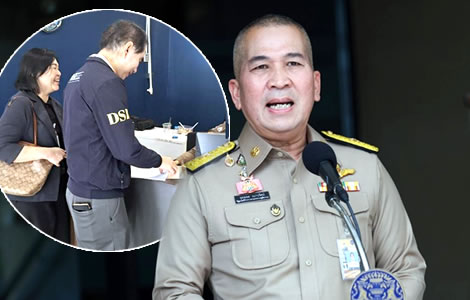
Thailand’s Senate election scandal opened a second criminal front on Tuesday, August 25, 2026. The new case concerns leaked Department of Special Investigation files. Justice Minister Rutthaphon Naowarat confirmed the action at Government House. In response, the department filed a complaint with the Crime Suppression Division.
The complaint covers confidential material from the “Senate collusion case.” It targets those who leaked, obtained, used or circulated the records. Separately, police will investigate whether department officials facilitated the disclosure. Outside recipients and distributors could also face prosecution.
Rutthaphon said the conduct may breach criminal law and special case legislation. The records concern suspected organised collusion during Thailand’s 2024 Senate election. Notably, their publication followed a sustained campaign by the People’s Party and iLaw director Yingcheep Atchanont. Their disclosures returned the disputed election to the centre of national politics.
Leaked Senate files increase pressure on Election Commission as Justice Ministry opens dual inquiries
The campaign also increased pressure on the Election Commission. Its seven members must decide whether the original cases should reach court. Against this backdrop, the leaked files added another layer to the dispute. They also triggered separate inquiries into their source and dissemination.
Rutthaphon addressed the leak at 9:45 AM on August 25. Reporters questioned him about information disclosed by Yingcheep and iLaw. According to the minister, the documents appeared to originate from a specialised investigative division. He identified the Financial and Banking Crimes and Money Laundering Division.
That unit operates within the Department of Special Investigation. However, Rutthaphon questioned how its confidential material reached outside groups. The records came from work conducted before he became justice minister. In that context, the original investigation began during his predecessor’s tenure.
The Permanent Secretary of the Ministry of Justice has established a fact-finding committee. Its inquiry will identify who accessed and leaked the files. As part of this, the panel will examine whether other officials or outsiders participated. The department’s Director-General must then explain how the material escaped official control.
Rutthaphon described the planned process in detail. He said: “The Permanent Secretary of the Ministry of Justice has now established a fact-finding committee to investigate who leaked the documents or who else was involved.”
Department chief orders criminal action as police widen inquiry into confidential Senate case files
He then set out the Director-General’s responsibility. “Once the investigation is complete, the Director-General of the Department of Special Investigation will explain to me how the information was leaked to external parties.”
The minister also confirmed plans for criminal action. “I also understand that the Director-General of the Department of Special Investigation will file a complaint with the Crime Suppression Division to find the perpetrators and prosecute those involved.”
Rutthaphon then clarified the possible scope of that action. “‘Those involved’ refers to those who used the documents and case files in the investigation, who may be liable for both criminal offences and offences under special laws.”
Thus, the inquiry will not stop with the original source. Police will examine those who received, used or distributed the material. On another front, investigators will assess whether different offences apply to different participants. Liability will depend on each person’s actions and the available evidence.
Reporters asked whether officials who disclosed the files could face prosecution. They also asked about outsiders who later disseminated the material. In reply, Rutthaphon said police would examine the evidence against everyone involved. Both internal and external parties could therefore fall within the investigation.
Police complaint targets officials and outsiders linked to disclosure of confidential investigation files
The minister did not identify any suspected source. Nor did he accuse any named official of releasing the records. Instead, he referred the question to the ministry’s committee and police investigators. Their work must establish how the documents left the department.
Later that morning, the department formally approached the Crime Suppression Division. At 11:00 AM, Legal Division officers visited the Central Investigation Bureau’s complaint centre. There, they met Crime Suppression Division investigators and filed a complaint. The department said the leak had harmed its special investigation.
At that stage, officials released no detailed account of the complaint. Subsequently, Police Lieutenant Colonel Woranan Srilam confirmed the disclosed information was genuine. Woranan directs the Consumer Protection Division. He also serves as spokesperson for the Department of Special Investigation.
Woranan said the Director-General ordered an internal examination after documents appeared in media reports. The review compared that material with records held by the department. Crucially, it found genuine content from the official investigation file. The disclosure therefore included authentic internal information.
DSI confirms genuine Senate investigation material appeared publicly as police investigate the source
The confirmation did not authenticate every published document. Likewise, it did not verify every claim made about the records. For that reason, investigators must examine each item individually. They must establish its authenticity, source and route into public circulation.
Woranan also outlined the department’s position on disclosure. Criminal investigation principles restrict access to case files before trial. Under those rules, their contents become disclosable when court proceedings begin. Furthermore, disclosure should occur in court and before the defendant.
The department said earlier publication could severely damage the proceedings. Consequently, the Director-General instructed its Legal Division to seek criminal action. Crime Suppression Division investigators were also asked to widen the inquiry. They must collect and examine all relevant evidence.
Initially, investigators will determine which circulated documents are authentic. They will then establish how genuine records left the department. Beyond that, police will trace how the information reached outside individuals or groups. The inquiry will examine access to the files inside the organisation.
Investigators must identify anyone who copied, removed or transferred the documents. In parallel, they will examine whether government officials participated in the release. Officials may have supplied the records directly. Alternatively, they may have helped outsiders obtain or circulate them.
Police trace leaked files inside and outside DSI while examining possible direct official involvement
Police will also examine those who received the leaked material. Their inquiry will cover how each person acquired, used or distributed it. Even so, the evidence must establish each person’s conduct. Investigators will then determine which offences may apply.
Meanwhile, the Justice Ministry’s committee will focus on internal responsibility. Its inquiry will examine access, handling and disclosure within the department. Accordingly, two investigative processes now surround the leaked records. The ministry inquiry will establish the internal sequence.
By comparison, the Crime Suppression Division will assess criminal liability. Its investigation may extend to everyone connected with the files. In addition, police will determine whether dissemination damaged the special investigation. Their findings will guide any prosecutions.
The leak emerged during intense scrutiny of the 2024 Senate selection. Unlike a general election, citizens did not directly choose the senators. Instead, candidates voted among themselves within professional and social groups. The process involved district, provincial and national rounds during June 2024.
Questions later emerged over coordinated voting and prepared candidate lists. Other concerns involved organised networks operating across the selection stages. From there, the dispute developed into official investigations. The Election Commission and Department of Special Investigation both became involved.
Yingcheep and People’s Party campaign drives disputed 2024 Senate election back into national focus
Yingcheep carried the issue directly into Parliament on July 21, 2026. He submitted information to the opposition People’s Party. At the same time, he requested a parliamentary investigation. The material linked senior political figures with suspected efforts to influence the contest.
Yingcheep named nine figures associated with the Bhumjaithai Party. They included Prime Minister Anutin Charnvirakul and several cabinet ministers. The group also included parliamentarians and other senior political figures. In turn, Anutin and the party rejected the claims.
Bhumjaithai figures then announced legal action against Yingcheep. Nevertheless, those legal threats brought greater attention to his disclosures. They also sharpened scrutiny of the underlying Senate investigation. The People’s Party subsequently carried the case deeper into Parliament.
Its MPs demanded that the Election Commission act on the investigation. They also warned against closing the case without court proceedings. For his part, Yingcheep continued releasing information connected with the inquiry. He challenged the named political figures to answer the evidence.
People’s Party demands court action as Yingcheep disclosures draw legal threats from Bhumjaithai
Together, those actions kept the 2024 election under sustained examination. They also focused attention on conflicting findings inside the Election Commission. At issue are conclusions reached by Inquiry Committees No. 26 and No. 36. The two panels reached opposing positions on the same 229 people.
The latest leaked documents are believed to include material examined by Committee No. 26. Yet that specific link has not received official confirmation. Committee No. 26 was a joint Election Commission and Department of Special Investigation panel. It examined suspected collusion during the Senate selection.
After reviewing the case, the committee found grounds to proceed against 229 people. That group included 138 serving senators. It also covered 91 politicians, party figures and other network members. Significantly, its findings extended well beyond the upper house.
Committee No. 36 later reviewed the disputed case. By contrast, its majority rejected the earlier findings. It concluded that all 229 people had no case to answer. That decision directly reversed Committee No. 26’s position.
The reversal intensified scrutiny of the Election Commission. It also left the full seven-member commission with the final decision. Ultimately, the commissioners must determine whether any cases should proceed to court. Until then, the position of all 229 people remains unresolved.
Conflicting Election Commission panels still leave cases against 229 Senate-linked figures unresolved
Now, the leaked records have increased pressure surrounding that decision. The department has confirmed that media reports contained genuine investigative information. At the same time, it has not authenticated every document in circulation. Nor has it confirmed that all leaked material went before Committee No. 26.
Accordingly, the precise connection between the leaks and Committee No. 26 remains unconfirmed. Crime Suppression Division investigators must examine that relationship. They will compare the circulated records with the department’s official files. They must also establish who first accessed or copied the information.
Afterwards, police will trace every stage of its distribution. The inquiry could reach officials, outside recipients and public distributors. Still, any charges will depend on evidence against each individual. Investigators must establish separate responsibility for separate actions.
The department maintains that premature disclosure could damage continuing legal proceedings. Hence, its complaint seeks action over the unauthorised release. Yet the leak inquiry remains distinct from the Senate election case. The two investigations concern different conduct and potentially different suspects.
Police compare leaked documents with files as DSI warns premature disclosure could harm case
The original case concerns suspected collusion during the June 2024 selection. Conversely, the new inquiry concerns confidential files generated during that investigation. Despite that distinction, both cases now operate alongside each other. The leaked material comes from the disputed election inquiry.
The People’s Party continues pressing the Election Commission for a ruling. Yingcheep has also maintained attention on the disclosed evidence. As a result, the campaign has kept the 2024 election before Parliament. It has also sustained scrutiny of the 229 people.
Another key issue concerns the opposing committee findings. Committee No. 26 found grounds for proceedings against all 229 people. Committee No. 36 found that none had a case to answer. The full Election Commission must now resolve that direct conflict.
Elsewhere, the Crime Suppression Division must establish how the files escaped official control. The Justice Ministry committee must identify any internal involvement. Rutthaphon said evidence would determine the applicable offences. Officials and outsiders could face different charges based on their conduct.
Senate collusion and document leak investigations run together as Election Commission faces pressure
Investigators will examine who accessed and supplied the documents. Next, they will examine who received, used and circulated them. More broadly, police must establish whether the disclosure harmed the special investigation. The department says its records should remain restricted before trial.
On that basis, the Director-General ordered legal action after confirming genuine content. The result is a twin investigation surrounding Thailand’s disputed Senate election. One concerns suspected collusion and possible cases against 229 people. The other concerns authentic departmental information that reached the public.
For now, the Election Commission faces continued pressure to settle the original case. Simultaneously, police must identify those responsible for the leaked records. Both processes involve evidence gathered during the same Senate election investigation. However, each will produce its own legal findings.
Political pressure building ahead of the expected August 31 decision in the controversial Senate collusion case
As pressure mounts, Prime Minister Anutin says he will fight Senate election collusion allegations in court
The dispute now covers the election process, the gathered evidence and the handling of that evidence. It also covers the sharp conflict between two official investigative panels. In the final analysis, the Election Commission will determine the future of the 229 cases. Before that, police will pursue those responsible for leaking and disseminating the files.
The move adds further to the growing controversy over the 2024 Senate election, which now threatens the government’s stability and Prime Minister Anutin Charnvirakul. He is reported to be among the 229 individuals against whom legal action was recommended by the Election Commission’s 26th committee, comprising Election Commission officials and Department of Special Investigation (DSI) investigators.
Join the Thai News forum, follow Thai Examiner on Facebook here
Receive all our stories as they come out on Telegram here
Follow Thai Examiner here
Further reading:
Ex PM and Democrat Party leader urges politicians implicated in Senate Collusion files to come clean
Opposition and People’s Party leader attacks ‘blue regime’ on the 12th anniversary of the 2014 coup
Thammasat University legal scholar and 1992 protest leader warns another coup cannot be ruled out