Anutin tells iLaw director Yingcheep Atchanon to fight him in court as Senate evidence implicates Bhumjaithai figures. A police complaint has been filed, while the Election Commission scrapped the expected August 28 decision affecting 229 people nationwide.
Pressure closed in on Prime Minister Anutin Charnvirakul on Tuesday as leaked investigative material linked him and other Bhumjaithai figures to the Senate collusion scandal. A police complaint was filed, Yingcheep Atchanon promised further disclosures and Anutin declared: “Let’s fight it out in court.” Meanwhile, the Election Commission denied an August 28 ruling but offered no replacement date, despite promising action before September. Its decision could determine the fate of 138 serving senators and 91 political figures, while conflicting panels recommend either prosecuting all 229 people or closing every case.
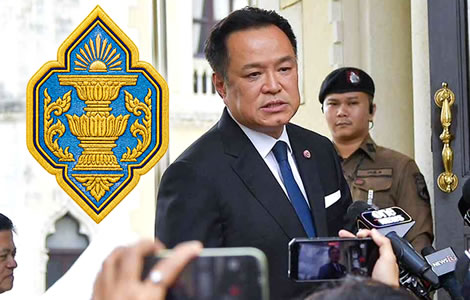
Pressure mounted on Prime Minister Anutin Charnvirakul on Tuesday as Thailand’s Senate election scandal moved further. Fresh iLaw disclosures implicated Bhumjaithai ministers and MPs, including Anutin. In parallel, a police complaint concerning those disclosures was filed. The Prime Minister responded by challenging iLaw director Yingcheep Atchanon to fight the matter in court.
Separately, the Election Commission denied reports that it would rule on Friday, August 28. The agency said commissioners were still examining the extensive case file. Yet it had previously promised a decision before September. No replacement date was announced.
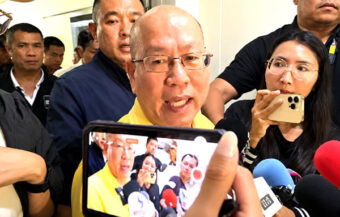
Anutin spoke at Government House at 1.50 pm on Tuesday. He is also Minister of the Interior and Bhumjaithai Party leader. Yingcheep claims investigative evidence connects senior party figures with coordinated voting during the 2024 Senate selection. In response, Anutin delivered a blunt answer: “Let’s fight it out in court.”
Anutin turns to courts as police complaint and opposition pressure deepen over Senate election evidence
The Prime Minister said a police complaint had been filed that day. Other people implicated by Yingcheep would probably lodge their own complaints, he added. Moreover, Anutin insisted that every accusation must pass through established legal procedures. He rejected accepting Yingcheep’s account without judicial examination.
“Everything has a legal process,” Anutin said. “We cannot rely on the opinion of just one person.” According to Anutin, investigations and other proceedings had already taken place. “We can do nothing but cooperate fully.”
Notably, Anutin did not address the individual documents released by Yingcheep. Instead, he placed his response within the courts and investigative system. His immediate strategy combines police complaints, defamation proceedings and cooperation with formal inquiries. Meanwhile, the underlying Senate case remains unresolved.
On another front, Anutin faced questions about a possible opposition no-confidence debate. Opposition MPs could use those proceedings to challenge him over the Senate investigation. The Prime Minister said he would answer only matters within his knowledge. However, he would not explain events in which he claimed no involvement.
“I reiterate that we will answer what we know,” Anutin said. “As for what we don’t know, we are not involved, and we don’t know what to answer.” Consequently, opposition MPs could press Anutin directly about the evidence and named party figures. The dispute may therefore move from investigative files into Parliament.
Conflicting panels leave 229 people facing an uncertain fate in disputed 2024 Senate election case
The scandal concerns the election of Thailand’s current Senate in 2024. Candidates from professional and social groups voted among themselves through several selection stages. From the outset, complaints focused on organised voting, prepared lists and political coordination. Investigators then examined whether selected candidates received systematic network support.
As part of this inquiry, Election Commission officials worked with Department of Special Investigation officers. Their joint panel recommended proceedings against 229 people connected with the selection. The group included 138 serving senators and 91 political figures or network members. Thus, the investigation extended beyond candidates and campaign workers.
By contrast, a later seven-member panel reached the opposite recommendation. It reportedly voted 5–2 to close all 229 cases. Accordingly, commissioners must assess two sharply conflicting conclusions. One supports proceedings against every named person, while the other would end the case.
At stake is the legal position of more than two-thirds of the serving Senate. The investigation also reaches political figures associated with Thailand’s governing party. In addition, the Senate exercises substantial legislative and institutional powers. The Commission’s eventual ruling could decide whether any cases advance through the election-law process.
Yingcheep names Anutin and eight Bhumjaithai figures as their defamation battle moves towards court
Earlier, Yingcheep brought investigative material to Parliament in July. He presented it to People’s Party deputy leader Parit Wacharasindhu. Parit is a party-list MP and coordinates opposition parties in Parliament. Through that step, the documents entered the parliamentary arena.
Yingcheep identified Anutin and eight other Bhumjaithai figures. He said their names appeared in evidence connected with the Senate inquiry. The group reportedly included ministers, MPs and other senior party figures. Nonetheless, no court has found Anutin or the others guilty of wrongdoing.
Following the disclosure, Anutin and other Bhumjaithai figures rejected the claims. They also announced plans to pursue defamation proceedings against Yingcheep. The Prime Minister said public accusations against identifiable people required clear supporting evidence. Furthermore, he objected to being named before any court had examined the documents.
Bhumjaithai figures said Yingcheep’s statements had damaged their reputations. As a result, the Senate investigation became linked with a separate legal confrontation. Anutin said there would be no settlement. His statement on Tuesday confirmed that the dispute was moving forward.
Fresh investigative extracts raise pressure as media reports point to an imminent Commission vote
This week, Yingcheep released further extracts reportedly taken from the enormous investigative file. He said operational officials involved with the inquiry supplied the material. In his account, those officials were uncomfortable with the direction of the case. They wanted evidence collected during the investigation placed before the public.
More specifically, Yingcheep said those officials feared important evidence might never reach court. He argued that the disclosures reflected concerns inside the investigative process. At the same time, he acknowledged that iLaw did not possess the complete case file. The organisation had not published everything available to it.
Despite that limitation, Yingcheep indicated that further disclosures could follow. He said additional information would emerge if senior figures escaped proceedings. In turn, that warning increased pressure before the expected Election Commission ruling. It also returned Anutin and Bhumjaithai’s leadership to the centre of the case.
Against this backdrop, detailed reports emerged about an imminent Commission decision. On Monday, August 24, Matichon said commissioners had completed their consideration of the file. The newspaper reported that a decisive vote would occur on Friday, August 28. Other Thai media organisations subsequently repeated that timetable.
Election Commission denies August 28 vote despite detailed media reports and its pre-September pledge
Crucially, the report contained detailed procedural information. Commissioners had reportedly been asked to prepare individual written opinions. Those opinions covered seven possible charges arising from the investigation. Each implicated person would then face a separate vote.
The reported timetable appeared consistent with the Commission’s earlier commitment. Officials had promised a decision before September. Besides, August 28 was the final Friday of that month. The date quickly became accepted as the expected moment of decision.
Until then, the Commission had not publicly rejected the timetable. Nor had it formally announced August 28 as the voting date. Even so, the specificity of the reports gave them substantial prominence. The account covered written opinions, seven charges and individual voting.
Then, at 3.10 pm on Tuesday, the Election Commission issued a formal denial. It described reports of an August 28 meeting and vote as false. Rather, commissioners were still reviewing the Senate case file. A vote would take place later, the agency said.
Significantly, the statement provided no replacement date. It also offered no timetable for completing the review. Likewise, the agency did not explain the detailed reports about seven charges and prepared opinions. Its earlier promise of a decision before September therefore remains central.
Commission leaves 229 cases unresolved as previous deadline approaches without another date
Only a narrow period remains before that deadline. Still, the Commission has not identified another meeting to determine the case. Its next procedural step remains undisclosed. Friday is no longer an officially recognised decision date.
In its statement, the Commission said the review was careful and transparent. It also said commissioners were proceeding under the law. According to the agency, that approach would protect confidence in Thailand’s election process. The statement also referred to upholding the purpose of election legislation.
For further information, the Commission directed the public to its official website. It also provided its public hotline for enquiries. Yet the statement contained no substantive update on the 229 individual cases. Neither panel’s recommendation received formal endorsement.
The clarification created a direct conflict with the published timetable. One account described a completed review and an August 28 vote. Conversely, the Commission said its examination remained active. No confirmed ruling date therefore exists.
Even so, the Commission’s earlier deadline has not formally expired. A decision before September remains possible despite Tuesday’s denial. Yet no alternative date has been disclosed. The case continues without a confirmed endpoint.
Anutin faces pressure from leaked evidence while Commission postpones expected Senate ruling
The eventual ruling carries direct consequences for 138 serving senators. It also affects 91 political figures and network members identified by investigators. Beyond that, Yingcheep’s disclosures have placed Anutin personally inside the dispute. His name appeared among nine Bhumjaithai figures presented to the opposition.
For his part, Anutin maintains that he had no involvement in Senate collusion. He insists that accusations must be examined through legal proceedings. He has also promised full cooperation with the investigative and judicial processes. Nevertheless, he has declined to answer matters he says fall outside his knowledge.
Yingcheep takes a different position. He says investigative extracts identify political connections requiring further examination. He also says insiders released material because they feared evidence could be withheld from court. However, he accepts that iLaw lacks the complete file.
For now, the Election Commission has not endorsed Yingcheep’s interpretation. It has announced no findings against Anutin or the other Bhumjaithai figures. Similarly, the supplied material contains no court ruling against the Prime Minister. The accusations remain disputed.
Tuesday therefore produced escalation without resolution. A police complaint was filed as Anutin declared his readiness for a court battle. Other named figures are expected to lodge further complaints. Simultaneously, the Election Commission removed Friday’s widely reported ruling date.
Senate scandal spreads across courts and Parliament as Commission weighs two opposing resolutions
The scandal now operates across several connected fronts. First, commissioners must determine the future of cases involving 229 people. Second, Yingcheep continues releasing extracts from the investigative material. Third, Anutin and other Bhumjaithai figures are pursuing legal action over those disclosures.
Added to this, opposition MPs can raise the allegations during a no-confidence debate. Anutin says he will answer matters within his knowledge. Questions about the evidence, named politicians and investigative findings remain available for parliamentary scrutiny. His response will centre on his claimed lack of involvement.
The Election Commission must meanwhile choose between opposing internal recommendations. The joint panel sought proceedings against all 229 people. Alternatively, the later panel reportedly recommended closing every case by a 5–2 vote. Commissioners have not disclosed which conclusion they favour.
Political pressure building up in advance of expected August 31st decision on the controversial Senate collusion case
People’s Party to release new evidence amid tensions over Election Commission’s Senate collusion cases
Compounding the pressure, Yingcheep has promised further disclosures if senior figures are excluded. His latest material has renewed attention on Bhumjaithai’s reported connections with the investigation. Anutin has responded with legal complaints and a pledge to fight in court. Both sides are preparing for further proceedings.
Ultimately, the Commission’s Tuesday statement confirmed that the investigation remains active. It also removed August 28 as an official decision date. Yet its previous commitment to rule before September still stands. Pressure now bears on Anutin, Bhumjaithai and the Election Commission as that deadline approaches.
Join the Thai News forum, follow Thai Examiner on Facebook here
Receive all our stories as they come out on Telegram here
Follow Thai Examiner here
Further reading:
Ex PM and Democrat Party leader urges politicians implicated in Senate Collusion files to come clean
Opposition and People’s Party leader attacks ‘blue regime’ on the 12th anniversary of the 2014 coup
Thammasat University legal scholar and 1992 protest leader warns another coup cannot be ruled out