Yotsanan brings OpenAI’s first official Asian accelerator to Thailand, placing ten healthcare and education startups on the road to market. Meanwhile, TH-AI Passport draws 1.3 million registrations as its ฿1.621 billion budget faces growing scrutiny.
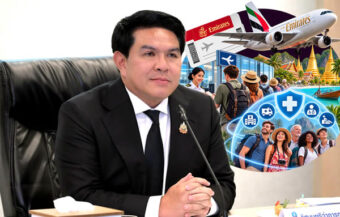
Thailand has launched a two-front artificial intelligence offensive targeting startups and millions of citizens. Deputy Prime Minister Yotsanan Wongsawat secured OpenAI’s first official Asian accelerator, giving ten Thai companies advanced models, specialists and development support. The eight-week drive targets healthcare, wellness and education, with trials planned across 200 hospitals and childhood centres. Meanwhile, Digital Economy and Society Minister Chaichanok Chidchob is driving the separate ฿1.621 billion TH-AI Passport. It has drawn 1.3 million registrations towards a five-million-user target, offering over 30 models and 96 courses. However, opposition scrutiny is mounting over procurement, performance, data protection and taxpayer value.
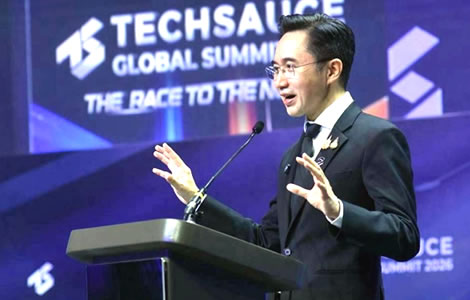
Deputy Prime Minister Yotsanan Wongsawat has secured a direct partnership with OpenAI to develop ten Thai technology startups. The agreement establishes the “OpenAI x MHESI AI Accelerator” for healthcare, wellness and education companies. Significantly, the ministry described it as OpenAI’s first official accelerator programme in Asia. The initiative will run for eight weeks and prepare existing prototypes for commercial deployment.
Mr Yotsanan launched the accelerator in Bangkok on Friday, August 28, 2026. The ceremony took place during the Techsauce Global Summit 2026. It was held at the Queen Sirikit National Convention Centre. In attendance were representatives from government, universities, technology companies and Thailand’s startup sector.
Mr Yotsanan is also Minister of Higher Education, Science, Research and Innovation. Accordingly, his ministry will lead the government’s involvement. OpenAI will supply technical support, advanced models, specialist mentors and development credits. Thai partners will provide research links, testing locations, investment connections and access to potential customers.
OpenAI joins Thai agencies and universities to develop ten healthcare and education startups in Asia
The programme also involves the National Innovation Agency, Mahidol University and Techsauce. Collectively, the partners will support ten companies with existing artificial intelligence products. Five operate within healthcare and wellness. The remaining five concentrate on education and learning.
The selected companies are CARIVA, Wello Food, Dietz, Precisionize and FitSloth. Separately, Curico, insKru, Floaino, EasyKids Robotics and Globish complete the first group. Each business will receive eight weeks of structured product development. The programme will then end with a Demo Day in Bangkok on November 6, 2026.
At that event, founders will present their products, testing results and commercial plans. Crucially, they must provide evidence gathered from users and operational settings. Representatives from hospitals, schools, universities and government agencies will examine the results. Investors and potential customers will also attend.
OpenAI specialists will work directly with the founders throughout the accelerator. As part of this, every company will receive one-to-one technical mentoring. Each startup will also receive $2,000 in application programming interface credits. Those credits will support development, system connections and operational trials.
Ten selected startups receive OpenAI mentoring, development credits and access to advanced models
Participants will gain access to OpenAI’s latest advanced models. Beyond that, mentors will advise them on product design, reliability and cost control. Founders will also receive guidance covering safeguards, testing and fundraising. The programme therefore combines technical development with commercial preparation.
However, the accelerator will demand more than access to powerful artificial intelligence systems. Companies must turn working demonstrations into dependable products. They must test performance under normal operating pressures. They must also collect feedback, correct weaknesses and establish viable business models.
CARIVA is developing an artificial intelligence voice agent for hospital call centres. Its system is intended to manage communications between hospitals and patients. In practice, the product must handle large numbers of enquiries accurately. It must also operate reliably within busy medical facilities.
Curico, by comparison, operates an artificial intelligence platform supporting learning among young children. The company plans testing through early childhood development centres in Bangkok. Together, CARIVA and Curico expect trials across more than 200 pilot locations. These will include hospitals and early childhood centres.
CARIVA and Curico prepare artificial intelligence trials across more than 200 Bangkok pilot sites
Those trials will take place before the November Demo Day. Consequently, both companies can present evidence from working environments. Their results will cover product performance and responses from intended users. They will also show whether the systems are ready for wider deployment.
Healthcare and education were selected because both remain government priorities. Thailand is moving towards becoming a fully ageing society. Against that background, demand for healthcare, prevention and wellness services is expected to increase. The country’s senior economy is projected to reach ฿3.5 trillion by 2033.
That market includes treatment, nutrition, monitoring, communications and independent living support. Already, artificial intelligence developers are targeting several of those services. Hospital call centres face high volumes of enquiries from patients and relatives. Medical providers also need faster communications without sacrificing accuracy.
On the education side, Thailand needs workers prepared for an increasingly digital labour market. Schools and universities face pressure to develop relevant skills. Likewise, companies require employees capable of using artificial intelligence systems productively. The accelerator will support businesses building tools for children, teachers and other learners.
Ageing society and digital workforce needs drive artificial intelligence investment in two key sectors
Mr Yotsanan said access to advanced technology alone would not determine Thailand’s competitiveness. Instead, the decisive factor would be its ability to create reliable products. Those products must use world-class technology to address practical public needs. Furthermore, Thai businesses must be prepared to compete internationally.
The accelerator links founders with government resources, universities, investors and OpenAI specialists. In turn, Thai research capacity will support the development of practical applications. OpenAI will contribute advanced models, technical experience and international knowledge. The programme will then push selected products from prototypes towards commercial use.
Mr Yotsanan called the agreement an important first step for Thailand. Specifically, he said it could propel the country towards becoming a regional startup hub. The government also wants Thailand to become an artificial intelligence centre within Southeast Asia. Healthcare and education will provide the programme’s first commercial testing grounds.
OpenAI developed ChatGPT, a widely used generative artificial intelligence system. It also operates Codex, which assists with software development and related technical work. Notably, Thailand already has a substantial user base for both services. OpenAI places the country among its 20 largest markets for weekly active ChatGPT users.
Yotsanan targets regional startup leadership as Thai use of ChatGPT and Codex systems climbs sharply
Codex usage has grown even faster. Since January 2026, weekly active usage in Thailand has increased more than 350-fold. As a result, Thailand also ranks among the world’s top 20 Codex markets. The growth reflects strong adoption among developers, businesses and individual users.
Yet widespread use does not automatically create successful Thai technology companies. The accelerator is designed to address that commercial gap. Rather than training millions, it concentrates resources on ten selected businesses. Each already has an identified product and intended market.
Sandy Kunvatanagarn, OpenAI’s head of policy for Southeast Asia, welcomed the partnership. She said OpenAI would help Thai startups build solutions capable of wider expansion. Initially, those companies will concentrate on needs inside Thailand. Eventually, successful products could move from national use into international markets.
The programme also marks OpenAI’s first Thai public-private partnership focused on local startup development. For its part, the ministry will connect founders with Thailand’s research and investment networks. Mahidol University will contribute academic and specialist knowledge. Techsauce will provide links within the technology and startup sectors.
Surging Codex use supports OpenAI partnership aimed at building commercial technology firms
The National Innovation Agency will support the commercial development of participating companies. Through this arrangement, founders can reach researchers, investors and government agencies. They can also establish contact with hospitals, schools and other possible customers. These connections will continue throughout the accelerator.
In parallel, Digital Economy and Society Minister Chaichanok Chidchob has launched the separate “TH-AI Passport” programme. The initiative emerged during the same period as Mr Yotsanan’s OpenAI deal. Both projects promote wider artificial intelligence use. Nevertheless, they operate on different scales and serve different groups.
The OpenAI accelerator supports ten selected companies. In contrast, TH-AI Passport targets as many as five million people. Its users will include students, workers, officials, business operators and members of the public. Registration is open to people aged 15 and above.
TH-AI Passport provides a single gateway to more than 30 artificial intelligence models. Those systems come from over 14 international developers. Alongside them, the programme provides more than 96 artificial intelligence training courses. The AiPASS platform will deliver the models and learning materials.
The Office of the National Digital Economy and Society Commission oversees the programme. That agency operates under Mr Chaichanok’s ministry. Before the formal August 31 opening, more than 1.3 million people reportedly registered. Earlier, registrations passed one million within days.
National Innovation Agency backs startups as separate TH-AI Passport targets five million Thai users
Mr Chaichanok said the figures demonstrated strong public interest in artificial intelligence. At the same time, the scheme targets cost barriers surrounding professional-level services. Many advanced systems normally require monthly subscriptions. TH-AI Passport will give participants limited access through a government-supported platform.
Access will not remain unrestricted after registration. Instead, users must take part in training and platform activities. They can complete courses, test different models and collect points. Subsequently, those points can unlock higher service levels for limited periods.
Under the programme’s “Learn, Earn, Plern” structure, training is linked directly with access. “Plern” is a Thai term connected with enjoyment or play. In effect, the platform combines learning, experimentation and rewards. The ministry wants users to compare models before purchasing separate services.
On another front, TH-AI Passport has faced questions over its ฿1.621 billion budget. Opposition politicians challenged its procurement conditions and projected value. They also raised concerns about technical performance and data protection. Some critics questioned whether tender requirements favoured large technology companies.
Additional concerns involved overseas processing and the handling of users’ prompts. In response, Mr Chaichanok defended the programme’s contractual safeguards. He said providers could not retain participants’ information. They were also barred from using that information to train their models.
Budget, procurement and data concerns draw scrutiny as Chaichanok defends TH-AI Passport safeguards
Some artificial intelligence processing could still occur outside Thailand. Even so, Mr Chaichanok said the contracts imposed strict restrictions on providers. He contrasted those conditions with publicly available artificial intelligence services. Such platforms may retain information unless users change their settings.
Financial arrangements were also revised after concerns about unused access rights. Under the revised structure, government payments will be linked more directly with actual usage. Hence, the state will not simply pay for five million inactive accounts. Services failing to meet professional-level conditions will not qualify for payment.
The change also reduced the financial risk if participation remained below five million. Since then, reported registrations have reached 1.3 million. Even so, registrations and continuing usage remain separate measurements. Platform activity will determine payments under the revised approach.
The two projects now provide separate routes into Thailand’s artificial intelligence economy. On one level, TH-AI Passport concentrates on public access and general competence. On another, the OpenAI accelerator targets product development and startup expansion. One seeks millions of users, while the other supports ten companies.
Revised payments link state spending to actual use as Thailand pursues two artificial intelligence paths
Their sponsoring ministries also carry different responsibilities. The Digital Economy and Society Ministry oversees national digital policy and public technology systems. Conversely, Mr Yotsanan’s ministry oversees universities, research, science and innovation. Startup development falls directly within that portfolio.
Mr Yotsanan represents the Pheu Thai Party inside Prime Minister Anutin Charnvirakul’s coalition. Mr Chaichanok is secretary-general of Mr Anutin’s Bhumjaithai Party. He also holds the government’s principal digital economy portfolio. Thus, two senior coalition figures are advancing artificial intelligence programmes through separate ministries.
No conflict between the programmes was disclosed during either launch. Indeed, their participants, structures and immediate targets differ substantially. TH-AI Passport seeks broader public exposure to commercial artificial intelligence systems. The accelerator seeks deployable products from a small group of companies.
For the startups, the timetable is already fixed. OpenAI mentors will work with founders throughout the eight-week development period. Meanwhile, Thai partners will provide testing links and commercial contacts. The first formal results will be presented on November 6.
Separate ministerial programmes divide public access and commercial development across government
Before then, CARIVA and Curico plan trials across more than 200 pilot locations. The remaining businesses will continue development within healthcare, wellness and education. At Demo Day, each company must present its progress and evidence. Investors, agencies and possible customers will then examine those results.
TH-AI Passport follows a different schedule. Following its formal opening, registered users will access models and training through AiPASS. Their participation will generate data covering actual use and completed courses. Payment decisions will then reflect activity rather than registrations alone.
TH AI Passport artificial intelligence to go live on August 28th with strong public demand says Minister
Thailand navigates clash of world powers in AI tech arena. Dr Cheng to hold talks with Foreign Minister
Taken together, the launches represent two major government moves during the same week. First, OpenAI specialists will work directly beside selected Thai founders. Elsewhere, millions of citizens can register for subsidised artificial intelligence access. Both projects connect technology with structured training and practical use.
The accelerator begins with ten businesses, eight weeks and a November presentation deadline. TH-AI Passport begins with 1.3 million registrations and a five-million-user ceiling. Ultimately, one programme targets commercial products for hospitals, schools and children. The other targets artificial intelligence use across Thailand’s workforce, classrooms and public services.
Join the Thai News forum, follow Thai Examiner on Facebook here
Receive all our stories as they come out on Telegram here
Follow Thai Examiner here
Further reading:
Ministry fails to halt ฿25.4 billion payment order to Hong Kong based firm linked to 1990 contract
Microsoft accepts charges of corrupt payments in Thailand as it makes a deal with US investigators
Provincial agency boss arrested in Mukdahan after trying to extort ฿2 million from a businessman
Parliamentary vote on constitutional reform is questioned, court says referendum may be needed
Bangkok MP on Phuket mission to investigate controversial local condo project before the courts
Drinks giant Thai Beverage to resume expansion with Singapore IPO for Asean regional beer operation