Thaksin battles to stop a ฿17.6 billion tax collection drive as five luxury cars and Chiang Mai land face enforcement. His bulletproof vehicles are at stake, while his Chan Song La mansion draws attention ahead of a crucial November court ruling.
Former Prime Minister Thaksin Shinawatra faces a November court showdown over ฿17.6 billion in unpaid taxes. Five luxury cars, including two bulletproof vehicles, bank deposits and Chiang Mai land face enforcement. Meanwhile, his famous Chan Song La mansion could become a target. Thaksin seeks an injunction, citing an earlier ฿46.37 billion confiscation. However, former corruption investigator Kaewsarn Atipothi rejects his defence, citing separate Supreme Court judgments. With just ฿90 million frozen in bank accounts, the Revenue Department could pursue further assets unless Thaksin secures court protection or pays up.
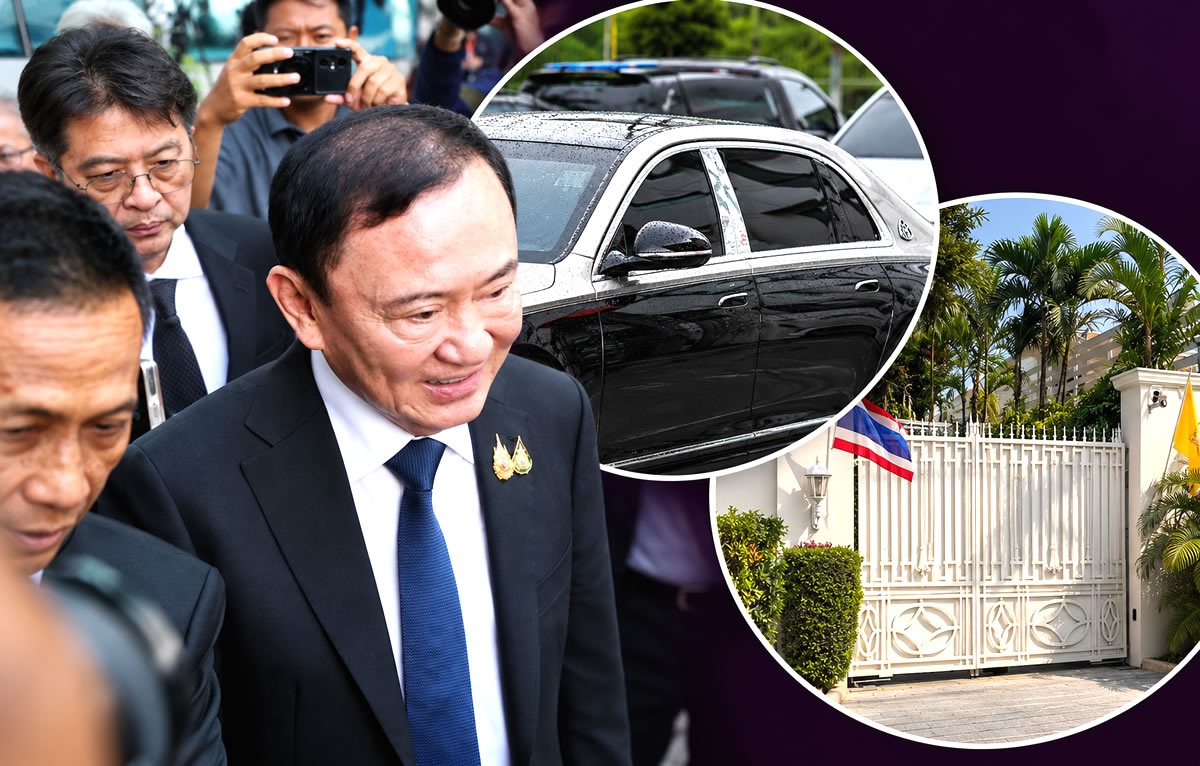
Former Prime Minister Thaksin Shinawatra faces a critical November court ruling as Thailand’s Revenue Department pursues ฿17.6 billion in unpaid taxes. His bank accounts have been frozen, five luxury vehicles face enforcement, and land in Chiang Mai has been targeted.
Meanwhile, speculation is mounting over the fate of his famous Chan Song La mansion in Bangkok. Thaksin wants an injunction to halt further asset seizures. However, a former corruption investigator has challenged his defence, citing two separate Supreme Court judgments. Unless Thaksin secures protection or settles the debt, more of his remaining fortune could face enforcement action.
The Central Tax Court heard Thaksin’s injunction application on Wednesday, October 7. The former prime minister appeared personally and gave evidence for approximately two hours. He warned that continued enforcement could cause serious damage before his latest legal challenge concludes.
Thaksin seeks court protection for bulletproof cars as tax officials pursue frozen accounts and land
In particular, he raised concerns about losing two bulletproof vehicles used for personal security. Both are among five luxury cars already subjected to collection measures.
The Revenue Department has also frozen approximately ฿90 million in bank deposits. Separately, it has targeted land jointly owned by Thaksin and his sister in Chiang Mai. These measures follow a final Supreme Court ruling in 2025 upholding the substantial tax assessment.
Consequently, the dispute has moved beyond the original assessment. The immediate question is whether collection can continue while Thaksin challenges the enforcement process.
The court is expected to rule on his injunction in November. Several Thai reports identify November 16, although others give November 26. Meanwhile, the Revenue Department has opposed the application.
Alternatively, it wants financial security if the court grants temporary protection. Its formal defence is due by November 9, following an extension. Further proceedings are scheduled for December 21, including mediation and consideration of disputed issues and evidence.
Chan Song La mansion draws attention as Kaewsarn rejects claims of duplicate seizure over Shin shares
For Thaksin, the financial exposure extends far beyond the money already frozen. His luxury vehicles, bank deposits and Chiang Mai land are caught up in enforcement. Moreover, the Revenue Department could pursue additional legally available assets if existing recoveries prove insufficient.
That possibility has intensified speculation about his remaining fortune, particularly the Chan Song La residence in Bangkok’s Thonburi area. However, no confirmed seizure or attachment against the mansion has emerged from the available court reports.
The former prime minister’s lawyers are challenging the state’s attempt to recover money connected with the Shin Corporation share transaction. They maintain that the government previously confiscated proceeds associated with the same deal.
Therefore, they question whether the Revenue Department can now demand another substantial payment. Their argument has revived controversy surrounding investigations launched after the September 2006 military coup.
However, former corruption investigator Kaewsarn Atipothi has rejected that interpretation. Kaewsarn served on the Committee for the Examination of Actions Causing Damage to the State. The committee was established following Thaksin’s removal from office in the 2006 coup.
He maintains that the original confiscation and the present tax debt concern separate legal obligations. The first involved benefits obtained through abuse of political office. By contrast, the current case concerns personal income tax arising from the share transaction.
Supreme Court confiscation of ฿46.37 billion followed judicial findings despite the coup-era inquiry
Accordingly, Kaewsarn argues that the earlier confiscation cannot automatically discharge the subsequent tax liability. On February 26, 2010, the Supreme Court ordered the confiscation of ฿46,373,687,454.70 connected with Thaksin’s Shin Corporation holdings.
The ruling followed investigations into his financial interests and government decisions during his premiership. The court examined benefits connected with the telecommunications company and decisions affecting its commercial interests.
Importantly, the military-appointed investigative committee did not issue the confiscation order. Instead, the Supreme Court’s Criminal Division for Holders of Political Positions decided the case. The judges considered the evidence before delivering their ruling.
Consequently, Kaewsarn argues that the investigation’s military origins do not automatically invalidate the subsequent judgment. The committee gathered evidence, but the court determined the legal consequences.
Thaksin’s lawyers have invoked the principle commonly known as the fruit of the poisonous tree. This argument challenges evidence or proceedings arising from an unlawful source. In this case, the objection concerns investigations initiated under the military government following Thaksin’s removal from office.
His legal team questions the legitimacy of proceedings originating from the coup. However, Kaewsarn maintains that the investigative committee neither determined guilt nor ordered the final confiscation.
Kaewsarn points to separate tax judgment as Thaksin challenges the legal origins of confiscation
Instead, the evidence passed through the judicial process before the Supreme Court decided the case. Therefore, Kaewsarn disputes suggestions that the investigation’s origins invalidate the confiscation. Nevertheless, Thaksin’s lawyers continue to distinguish the original proceedings from enforcement of the subsequent tax judgment. That distinction remains central to the latest legal contest over his assets.
The former investigator has also highlighted the precise amount confiscated in 2010. The Supreme Court did not seize every baht associated with the Shin Corporation transaction.
Rather, it identified approximately ฿46.37 billion as benefits connected with wrongdoing. Meanwhile, approximately ฿27 billion was returned to the family under the court’s ruling. Other assets remained outside the confiscation order, including the Chan Song La residence.
Consequently, the earlier proceedings did not strip Thaksin of all his property. The present case concerns a separate tax liability arising from the Shin Corporation share sale. The Revenue Department assessed approximately ฿17.6 billion in personal income tax. Subsequently, the Supreme Court’s Tax Division upheld that assessment in 2025. The judgment provided the legal foundation for the department’s current collection efforts.
Thaksin is therefore facing enforcement of a final judgment rather than an unresolved administrative assessment. Kaewsarn argues that this changes the taxpayer’s legal position. Once a debt becomes enforceable, collection is not necessarily restricted to assets connected with the original transaction.
Revenue Department can pursue other assets to recover tax debt, former corruption investigator argues
Instead, the Revenue Department can pursue other property legally available to satisfy the outstanding amount. That includes valuable assets unrelated to the transaction that generated the tax liability.
The former investigator illustrated his argument using a hypothetical land transaction. A person might sell land for millions of baht while failing to declare the proceeds. If the unpaid tax becomes enforceable, the Revenue Department could pursue the debtor’s vehicle.
It would not necessarily have to recover the money from the original land sale. Similarly, Kaewsarn argues that Thaksin’s luxury cars and other property can become targets for tax enforcement.
He maintains that the latest measures differ fundamentally from the 2010 confiscation. The earlier ruling concerned assets identified as benefits from wrongdoing.
By comparison, the current measures seek payment of an outstanding tax debt upheld by the Supreme Court. Furthermore, confiscation of improperly obtained benefits does not necessarily constitute payment of personal income tax. The two judgments arose through separate proceedings and imposed different legal consequences.
The timing also matters. The 2025 tax ruling came approximately 15 years after the original confiscation. Therefore, the earlier judgment was already part of the legal history when the tax dispute concluded. Nevertheless, Thaksin’s lawyers maintain that the present proceedings concern enforcement rather than the tax assessment’s validity. Their immediate application seeks temporary protection against further collection measures.
Thaksin warns loss of bulletproof vehicles threatens his security as Revenue Department opposes relief
In parallel, Thaksin has placed considerable emphasis on his specially protected vehicles. During the October 7 hearing, he told the court that two of the five affected cars were bulletproof. The vehicles were specially constructed with bullet-resistant glass.
He cited previous assassination attempts and continuing concerns for his personal safety. Furthermore, Thaksin argued that replacing the vehicles would take considerable time, potentially leaving him exposed to danger.
The claim forms part of his application for temporary protection. However, the Revenue Department is resisting any suspension of enforcement. Alternatively, it wants financial security before the court grants an injunction. That could introduce another substantial requirement for Thaksin.
His lawyer, Winyat Chatmontri, presented a former Revenue Department official as a witness. Meanwhile, two tax collection officers testified for the department.
The hearing examined the consequences of continued enforcement before the latest challenge concludes. Thaksin expressed concern that affected assets could be auctioned before the court reaches a final decision. Consequently, the injunction could determine whether the Revenue Department advances towards selling property already under enforcement measures. The precise legal status of each asset remains important, particularly the luxury vehicles.
Rolls-Royce and two-tone Maybach attract attention as questions surround five cars facing enforcement
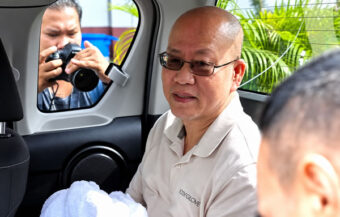
Thaksin arrived at the October 7 hearing in a black Rolls-Royce bearing Bangkok registration PJ 195. He is also associated with a distinctive two-tone Mercedes-Maybach luxury limousine.
However, the available court reports do not conclusively identify which two vehicles are bulletproof. Nor do they establish whether the Rolls-Royce used for the hearing is among the five affected cars. Similarly, the enforcement status of the two-tone Maybach has not been confirmed.
What is established is that five luxury vehicles have been subjected to collection measures. Two are fitted with special ballistic protection. Nevertheless, attachment or seizure does not necessarily mean an immediate auction can proceed. Further legal steps may be required before the Revenue Department can sell the vehicles. The injunction decision could therefore have immediate consequences for their future.
On another front, attention has turned towards other valuable property associated with the former prime minister. Chief among them is Chan Song La, his famous Bangkok residence. The mansion in the Thonburi area has long served as a family home and political gathering place. It remains one of the properties most closely identified with Thaksin. Consequently, speculation about its possible seizure has intensified as the tax collection campaign advances.
No confirmed seizure of Chan Song La mansion as tax officials assess assets and outstanding liabilities
However, the available reporting does not establish that the Revenue Department has seized the mansion. There is also no confirmation of a registered attachment or scheduled auction involving the property. Its legal position therefore differs from the bank deposits, luxury vehicles and Chiang Mai land already affected. The crucial question is ownership and whether Thaksin holds an interest legally available for enforcement.
If Thaksin owns an identifiable interest, that interest could become relevant to future recovery proceedings. However, ownership by another family member or legal entity would create additional legal questions.
The Revenue Department would need an established basis for pursuing any such asset. Accordingly, speculation about the mansion cannot presently be treated as evidence of an impending seizure. Nevertheless, the outstanding debt makes Thaksin’s remaining property increasingly relevant.
The department has frozen approximately ฿90 million in bank deposits. That represents only a small proportion of the ฿17.6 billion being pursued. Even full recovery of those deposits would leave approximately ฿17.51 billion outstanding. Meanwhile, the combined value of the five vehicles and the Chiang Mai land has not been established. There is therefore no confirmed total for the assets currently available to satisfy the judgment.
Kaewsarn calls for wider tracing of Thaksin wealth, including property potentially held in England
If those assets prove insufficient, further recovery efforts may be necessary. Kaewsarn has urged the Revenue Department to investigate the former prime minister’s remaining wealth. He cited Forbes estimates placing Thaksin’s fortune above ฿72.5 billion. However, a published wealth estimate does not establish ownership of every asset included in the calculation. Nor does it demonstrate that all such property can be seized to satisfy a personal tax debt.
The legal ownership of individual assets remains decisive. Nevertheless, Kaewsarn argues that the department should pursue comprehensive asset tracing. He has identified overseas property as one possible area for investigation.
In particular, he referred to expensive residences in England. He suggested that legal cooperation arrangements could assist efforts to identify property potentially available for recovery.
However, such action would depend on applicable laws and cooperation between the relevant jurisdictions. The supplied material does not identify a confirmed overseas seizure linked to the current tax proceedings. Nor does it establish that specific British properties are legally available to satisfy Thaksin’s debt. Consequently, the suggestion concerns potential investigative action rather than a confirmed enforcement operation.
Possible family asset transfers and bulletproof vehicle auctions enter debate over tax debt enforcement
Kaewsarn has also raised the possibility of examining transfers to relatives. He referred to transactions involving promissory notes and other financial arrangements. Such instruments can record debts or financial obligations between parties.
However, their existence does not itself establish wrongdoing. Kaewsarn’s concern is whether any transfers were intended to place assets beyond creditors’ reach.
Where fraudulent transfers are established, he argues, the Revenue Department could consider legal proceedings to challenge them. That could involve seeking the cancellation of transactions intended to defeat recovery efforts. Nevertheless, no finding of fraudulent asset transfers by Thaksin is established in the supplied material. The suggestions concern possible investigative action rather than proven misconduct.
Separately, Kaewsarn has taken a firm position on the bulletproof vehicles. He argues that their protective equipment should not automatically exempt them from enforcement. Instead, he wants the Revenue Department to proceed against assets legally available to satisfy the judgment. He has even proposed selling the vehicles and directing the proceeds towards flood-control reservoirs. However, that proposal is his personal recommendation, not an announced government plan.
Any eventual auction would remain subject to the applicable enforcement procedures. The court must also decide whether Thaksin qualifies for temporary protection. That decision is now the immediate focus of the dispute. The Revenue Department has a final Supreme Court judgment supporting its claim. Thaksin, meanwhile, is attempting to suspend collection while challenging the enforcement process.
Court weighs injunction and possible financial security as two Supreme Court rulings shape the dispute
The court could grant the injunction, reject it or impose conditions. One possible condition would be financial security. Given the size of the debt, such a requirement could itself become significant. However, an injunction would not cancel the underlying tax liability.
It would only restrict enforcement within the terms established by the court. Conversely, rejection would not automatically permit the seizure of every property associated with Thaksin.
The Revenue Department would still have to comply with the relevant legal procedures. Ownership and enforceability would remain important for each asset. Meanwhile, the earlier confiscation continues to dominate the legal arguments. Thaksin’s lawyers maintain that the government previously took proceeds connected with the same transaction. They also question the origins of the investigation following the 2006 coup.
However, Kaewsarn points to the Supreme Court’s subsequent role in deciding the confiscation case. He argues that the original investigation and the eventual judicial ruling cannot simply be treated as identical acts. The 2010 judgment confiscated approximately ฿46.37 billion following findings concerning benefits obtained through political office. Separately, the 2025 judgment upheld a personal income tax assessment of approximately ฿17.6 billion.
Thaksin faces further recovery action as Revenue Department seeks payment under final tax judgment
The two rulings therefore concern different legal consequences. Moreover, the earlier confiscation did not eliminate Thaksin’s remaining wealth. Approximately ฿27 billion was returned to the family, while other property remained untouched.
That included Chan Song La, now the subject of renewed speculation. The Revenue Department’s present task is to recover the outstanding tax debt through legally available assets.
However, the amount already frozen in bank accounts falls far short of the sum demanded. The department has consequently moved against vehicles and land. Further enforcement could follow if the existing assets do not satisfy the liability. For Thaksin, the consequences are increasingly direct. He faces a multibillion-baht debt, frozen deposits and enforcement against valuable personal property.
His two bulletproof vehicles have also become central to his request for protection. Meanwhile, the legal status of his famous Bangkok residence remains unconfirmed. There is no established seizure against Chan Song La, despite speculation about its future. Nevertheless, any property legally owned by Thaksin could become relevant if further recovery action is pursued.
The former prime minister must now await the Central Tax Court’s decision on his injunction. The Revenue Department is due to file its formal defence by November 9. The ruling is reported for November 16 in several accounts, although November 26 appears in others. Further substantive proceedings are scheduled for December 21.
November injunction decision could determine whether enforcement proceeds against Thaksin assets
Until then, Thaksin’s latest legal challenge remains unresolved. However, the Supreme Court’s 2025 tax judgment continues to stand. The Revenue Department has already taken action against bank deposits, five luxury vehicles and Chiang Mai land. The immediate question is whether the court will order that enforcement to stop temporarily.
If Thaksin fails to secure protection, the department could continue recovery measures against legally available assets. If he cannot satisfy the judgment, further property could come under examination.
Thaksin comes to Tax Court in Bangkok seeking temporary injunction to halt Revenue Department’s enforcement
Thaksin seeks injunctive relief from Revenue efforts to collect 17 billion tax judgment in August 2025
For now, his luxury vehicles and existing asset attachments represent the immediate financial danger. Meanwhile, Chan Song La remains outside the confirmed enforcement measures, despite speculation about its future.
The former prime minister’s next court ruling will therefore carry consequences far beyond the original Shin Corporation transaction. His ฿17.6 billion tax debt remains enforceable unless the court intervenes. With only ฿90 million in bank deposits frozen so far, the Revenue Department still faces a substantial recovery task. Thaksin, meanwhile, must secure temporary protection or face continuing enforcement against his remaining legally available assets.