Foreign tourist mocks a Phuket motorcycle rider and walks off without paying a ฿40 fare after an hour-long row, as mounting disputes involving Middle Eastern and Israeli visitors fuel anger across Thailand’s resorts that is testing the patience of locals.
A foreign tourist’s refusal to pay a ฿40 Phuket motorcycle fare has become a flashpoint in Thailand’s growing backlash over visitor behaviour. Video shows the man mocking the rider, sticking out his tongue and walking away after an hour-long payment row. The incident comes amid a string of disputes involving Saudi, Moroccan, Jordanian, Kuwaiti and Israeli visitors in Phuket and Pattaya. Recent cases have included unpaid bills, fights, assaults, transport rows and clashes over services. At the same time, anger over Israeli conduct has spread from resort towns to Bangkok, drawing protests, diplomatic intervention and closer scrutiny of foreign businesses, nominee structures and property holdings. Tougher deportation rules are now in force as pressure grows for harder enforcement.
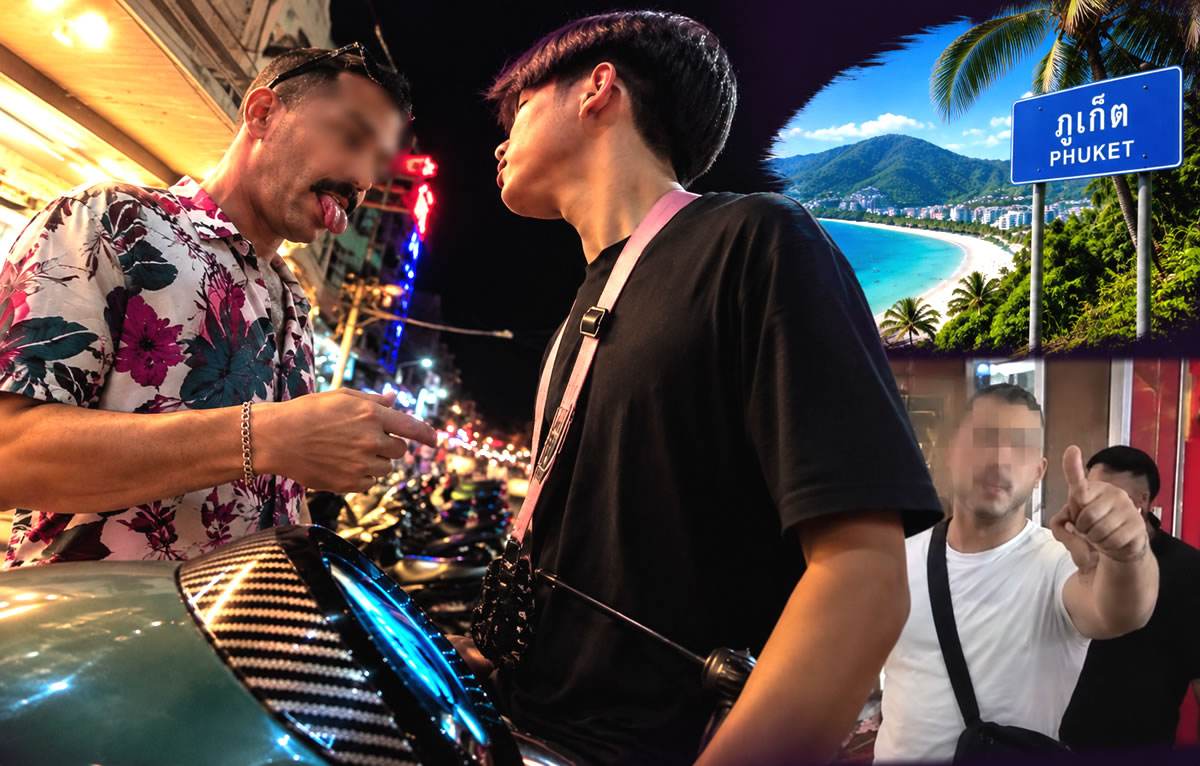
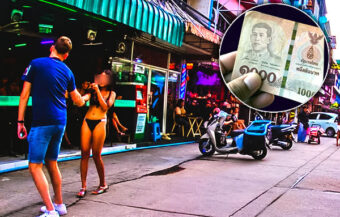
A foreign tourist has sparked fresh anger in Phuket after refusing to pay a ฿40 motorcycle fare. He then mocked the rider who spent about an hour seeking payment. Video circulating on Thai social media shows the man sticking out his tongue during the dispute. The journey had been booked through a ride-hailing application. Initially, the rider took his passenger to the destination without incident.
Yet the foreigner refused to pay when they arrived. According to the Facebook post carrying the footage, the rider repeatedly sought the ฿40 fare. He also tried to reason with the passenger. Instead, the tourist continued refusing payment. During the confrontation, he stuck out his tongue at the motorcycle rider. Finally, he walked away without paying.
Another section shows the foreigner walking down the street as the rider watches him leave. Thai subtitles added to the footage contain swearing directed at the tourist. At one point, a subtitle questions what he intended to do over just ฿40. Notably, the argument reportedly continued for about an hour over the small sum, just over $1.20.
Foreign tourist’s ฿40 fare refusal in Phuket fuels anger as wider visitor tensions grow across resorts
Neither man has been publicly identified. Nor has the foreign tourist’s nationality been established. Separately, the social media post did not identify the ride-hailing application. It also failed to pinpoint where in Phuket the confrontation occurred. In addition, there was no confirmation that the rider subsequently complained to police.
Still, the footage quickly angered Thai social media users and Phuket residents. The original poster stressed that ฿40 was significant for someone earning a living on a motorcycle. For a rider, the post said, the money could contribute towards fuel or a meal.
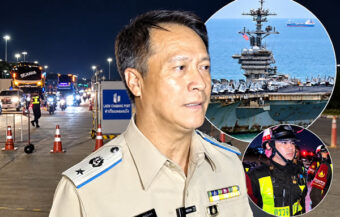
More broadly, the incident comes during rising tensions over foreign visitors in Thailand’s leading resorts. Phuket and Pattaya have seen a succession of confrontations involving tourists. In particular, several prominent recent cases have involved visitors from the Middle East and North Africa.
Saudi, Moroccan, Jordanian and Kuwaiti visitors have all featured in recent Phuket disputes. At the same time, Israeli tourists face a wider backlash across several Thai destinations. That campaign has already moved beyond angry online posts. Residents have demonstrated, government officials have intervened and Israeli diplomats have responded.
Patong payment row blamed on Israelis involved Saudi and Moroccan visitors as tensions spread in Phuket
Against that backdrop, separate disputes are increasingly feeding the same heated atmosphere. One striking example came in Patong during August. Reports initially claimed Israeli tourists had refused to pay an ฿8,000 restaurant bill. The accusation spread rapidly and immediately generated anger. Yet Patong Police subsequently established that none of the four customers was Israeli.
Instead, police identified one Saudi Arabian man and three Moroccan women. The group had reportedly ordered food and drinks before a payment dispute developed. Restaurant staff contacted police after the customers refused to settle the bill. Officers then attempted to resolve the disagreement. When mediation failed, those involved were taken to Patong Police Station.
In response, the Israeli Embassy stepped into the controversy. It stressed that police had identified the customers as Saudi and Moroccan nationals. Thus, a dispute widely blamed on Israelis involved four visitors from other countries. The episode came as resentment towards Israeli visitors was already increasing.
Only weeks later, another Middle Eastern confrontation unfolded in the heart of Patong. A Saudi Arabian tourist and a Moroccan tourist fought at Cafe Dubai Phuket on Bangla Road. The incident occurred at about 5.30 am on September 7. This time, police established the nationalities from the outset.
Saudi and Moroccan tourists fight in Patong as Jordanian payment dispute adds to Phuket tensions
Police identified the Moroccan as Mourad Abid. The Saudi visitor was identified as Alqahtani Omar Mohammed A. According to Patong Police, the Saudi tourist was heavily intoxicated. At first, the Moroccan reportedly attempted to persuade him to leave the establishment. Police said the Saudi then kicked him in the leg.
Subsequently, the confrontation continued after the men reached the ground floor. Police said the Saudi tourist insulted the Moroccan. The Moroccan then punched him in the face. Cafe staff called police as the confrontation intensified. Officers took both men to Patong Police Station. Both were also sent to Patong Hospital for examination and treatment.
As part of the inquiry, investigators began examining CCTV footage from the premises. The early-morning fight added another Middle Eastern visitor dispute to Patong’s recent police workload. It also followed separate confrontations involving Jordanian and Kuwaiti tourists.
On another front, a Jordanian tourist became involved in a dispute at a Patong barber shop. The argument again centred on payment for services. The Jordanian reportedly agreed initially to a ฿700 service. Additional services were then provided. A disagreement subsequently developed over what the tourist should pay.
Eventually, the dispute became physical and police intervened. The tourist later compensated an employee whose glasses were damaged. Once again, payment for services sat at the centre of a confrontation involving a foreign visitor.
Kuwaiti pharmacy case and Israeli tuk-tuk dispute add to mounting concern over foreign conduct in Phuket
Another Patong case involved a Kuwaiti tourist and a pharmacist. The Kuwaiti visitor was accused of spraying liquid from a perfume bottle towards the pharmacist. Afterwards, the pharmacist reported chest tightness and a racing heartbeat. He also said he felt close to fainting.
For his part, the Kuwaiti tourist had his own complaint. He said he had earlier been involved in a confrontation with a taxi driver. The incident therefore contained competing complaints. Even so, it added another confrontation involving a Middle Eastern visitor to Patong’s recent record.
Israeli visitors have separately featured in several disputes. During August, one confrontation involved an Israeli tourist and a Patong tuk-tuk driver. The incident reportedly began during an argument over transport. The driver said the Israeli attempted to force Australian passengers from his tuk-tuk.
Additionally, the Israeli tourist was accused of spitting at the Thai driver. During the confrontation, he also appeared to try lifting a concrete barrier. The footage subsequently attracted considerable attention online. By then, complaints about foreign behaviour were already building across Phuket.
Phuket protests over foreign conduct grow as Pattaya sees disputes involving Middle Eastern visitors
In parallel, residents began organising against what they saw as worsening foreign misconduct. In August, Protect Phuket approached Patong Police seeking permission to demonstrate. The group called for foreign visitors to obey Thai law. Later that month, residents gathered in Patong amid mounting anger over repeated incidents.
Israeli tourists became a major focus of those complaints. Yet recent police cases showed a wider mix of Middle Eastern nationalities. Saudi, Moroccan, Jordanian and Kuwaiti visitors had all featured in separate Phuket disputes.
Beyond Phuket, similar friction has repeatedly surfaced in Pattaya. The Chonburi resort attracts large numbers of Middle Eastern visitors during Gulf summer holidays. Young visitors riding rented motorcycles become particularly visible during those months. Consequently, motorcycles have repeatedly become a source of complaints.
Residents and businesses have complained about noise, speeding and dangerous riding. Police have periodically responded with operations targeting traffic offences involving rented motorcycles. In June, however, another Pattaya dispute turned violent near Tree Town.
A 51-year-old Thai motorcycle taxi driver reported being attacked by two foreign men. The pair were described as appearing Middle Eastern. According to the rider, the confrontation began over an improperly parked motorcycle. He said the motorcycle was obstructing an entrance. He therefore asked the two men to move it.
Thai motorcycle taxi rider injured in Pattaya as further tourist confrontations fuel growing complaints
Instead, a confrontation followed and the Thai rider suffered significant injuries. Emergency workers subsequently took him to Pattaya City Hospital. The incident added a violent dimension to complaints surrounding foreign motorcycle users in the resort.
Earlier, another widely circulated confrontation occurred on Walking Street during Songkran. Video showed three men fighting with an older European tourist. The three were described as appearing Middle Eastern. Reportedly, trouble began after Songkran water was sprayed into the European man’s face.
A fight then developed on Pattaya’s famous nightlife street. However, the nationalities of the three men were never established. There was also no confirmation that the European tourist filed a police complaint. Nonetheless, the footage added to complaints surrounding visitor behaviour.
On the enforcement side, motorcycle problems involving Middle Eastern visitors continued to attract police attention. Large groups of Gulf visitors on rented motorcycles have become particularly visible during holiday periods. Yet one subsequent case put Pattaya police themselves under scrutiny.
In July, Kuwaiti tourists complained about the handling of traffic fines by Pattaya police officers. The visitors acknowledged committing traffic offences. They also said they were prepared to pay legitimate fines. However, they questioned the amounts demanded and the receipts issued.
Kuwaiti tourists challenge Pattaya traffic fines as wider concerns over foreign visitors spread nationwide
As a result, three Pattaya police officers were moved to administrative duties. A fact-finding investigation was then launched. The case differed sharply from incidents where Middle Eastern tourists faced misconduct accusations. Nevertheless, it involved the same recurring combination of visitors, motorcycles, money and enforcement.
Back in Phuket, public pressure over foreign behaviour continued building. At the same time, the larger controversy surrounding Israeli visitors spread beyond the island. Complaints involving Israelis have emerged in Phuket, Koh Samui, Koh Phangan and Pai. The issues have ranged from public confrontations to suspected illegal business operations.
Increasingly, nominee businesses and foreign-controlled property have also entered the debate. The issue has therefore moved beyond arguments involving individual tourists. Instead, it has developed into a broader political and enforcement controversy.
In Bangkok, the dispute reached the Israeli Embassy. On August 24, representatives of the Thai Mai Thon group approached the mission. The group’s name translates as Thais Won’t Tolerate It. Representatives submitted a letter concerning Israeli visitors and residents.
They cited complaints from several important tourist destinations. Those locations included Phuket, Koh Samui, Koh Phangan and Pai. Specifically, representatives referred to reports involving intimidation, harassment and business disputes.
Save Phuket protest grows as Israeli visitor concerns reach Foreign Ministry and business ownership probes
Back on the island, the controversy continued gathering momentum. Between 150 and 200 people subsequently attended a Save Phuket demonstration in Patong. Participants complained about violence, disrespect towards businesses and breaches of Thai law. They also raised complaints about foreigners refusing to pay for services.
Again, Israeli behaviour became a central focus. But the recent record also showed repeated incidents involving other Middle Eastern visitors. The ฿8,000 restaurant dispute demonstrated the overlap particularly clearly. Israelis were initially blamed. Police later identified one Saudi man and three Moroccan women.
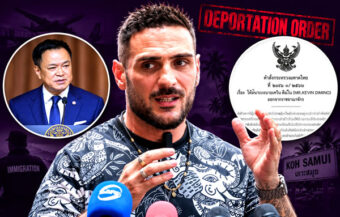
At government level, the Israeli controversy has now reached the Foreign Ministry. Foreign Minister Sihasak Phuangketkaew met Israeli Ambassador Alona Fisher-Kamm. During the meeting, Mr Sihasak raised concerns about the behaviour of some Israeli nationals.
Crucially, he also separated tourist conduct from suspected illegal foreign business activity. That second issue has become increasingly significant. Thailand is intensifying investigations into foreign-controlled companies, nominee shareholders and property holdings.
Israeli-linked businesses face scrutiny as deportation rules tighten and Bangkok protests target influence
Israeli-linked businesses are among those under examination. Yet the wider crackdown extends to foreign interests from numerous countries. Immigration enforcement has also tightened.
From August 28, new deportation procedures took effect nationally. The measures strengthened procedures for removing foreigners considered threats to public order. At the same time, enforcement increased in major tourist centres.
The Israeli controversy has since moved firmly onto Bangkok’s streets. On Thursday, veteran protest leader Sondhi Limthongkul led demonstrators outside the Israeli Embassy. The protest focused heavily on Israeli activities and foreign influence in Thailand.
By this stage, the campaign had expanded well beyond individual tourist confrontations. Foreign business control, nominee companies and land ownership had become prominent issues. These concerns now sit alongside complaints about foreign behaviour in Thailand’s resort areas.
Yet the recent police record presents a wider picture than the Israeli controversy alone. Several high-profile confrontations have involved visitors from other Middle Eastern countries. The Patong restaurant dispute remains the clearest example. Israelis were initially blamed, but police identified Saudi and Moroccan visitors.
Middle Eastern disputes in Phuket and Pattaya widen as latest ฿40 fare row draws fresh attention
Elsewhere in Patong, police dealt with the Jordanian barber-shop confrontation. Officers also handled the Kuwaiti pharmacist case. Then, on September 7, Saudi and Moroccan tourists fought at Cafe Dubai Phuket.
Similarly, Pattaya has faced repeated complaints involving Middle Eastern visitors and rented motorcycles. A Thai motorcycle taxi rider was injured after confronting two foreign men over a parked motorcycle. Separately, three men described as Middle Eastern fought an older European visitor on Walking Street.
Taken together, the disputes have become increasingly visible across Thailand’s busiest seaside resorts. Payment, transport, motorcycles, alcohol and nightlife have featured prominently. Phuket and Pattaya have consequently become the main centres of the controversy.
Now, the latest ฿40 Phuket confrontation has landed directly inside that charged atmosphere. The foreign tourist in the video has not been identified by nationality. Yet the footage shows another ugly payment dispute involving a visitor and a Thai service worker.
The sequence itself is simple. First, the motorcycle rider completed a journey booked through a ride-hailing application. The agreed fare was ฿40. When they arrived, the passenger refused to pay.
Phuket rider spends an hour seeking ฿40 fare as foreign visitor tensions spread from resorts to Bangkok
For about an hour, according to the post, the rider attempted to obtain his money. The tourist still refused. During the argument, he stuck out his tongue at the rider. Afterwards, he walked down the street without paying.
So far, there is no confirmed police complaint. Neither man has been named. The ride-hailing company also remains unidentified. Likewise, the precise location and date of the confrontation have not been disclosed.
Even so, the video surfaced at a sensitive moment for Phuket. Residents are already demanding firmer enforcement against troublesome foreign visitors. Police have also handled repeated disputes involving several Middle Eastern nationalities.
At the same time, Israeli tourists face a larger and increasingly organised backlash. That campaign has spread from Phuket and other resorts to Bangkok. It has also reached Thailand’s Foreign Ministry and the Israeli Embassy.
Foreign business and property probes widen as tougher enforcement follows disputes involving visitors
Separately, investigations into foreign businesses, nominee arrangements and property holdings are widening. The government has also strengthened procedures for removing foreign offenders. Police, immigration officers and other agencies are increasing scrutiny.
Serious foreign offenders can face prosecution. In addition, immigration permission can be revoked before deportation proceedings begin. The government’s enforcement drive therefore extends well beyond individual viral incidents.
Israeli Embassy urges the media to be accurate about reporting nationalities after Phuket dine and dash
Nationalist group meets Minister urging probes into illegal activity linked to foreigners on Koh Samui
For Phuket, however, the latest video reduces the growing dispute to its simplest form. A rider completed a journey for a foreign passenger. The fare was just ฿40.
The rider reportedly spent about an hour seeking payment. The passenger refused. Then he mocked the rider, stuck out his tongue and walked away.
Join the Thai News forum, follow Thai Examiner on Facebook here
Follow Thai Examiner on Google here
Receive all our stories as they come out on Telegram here
Follow Thai Examiner here
Further reading:
Community tensions rise between locals and Israelis in southern Thailand particularly on Koh Phangan
Anutin visits Koh Phangan as nominee crackdown shows 68% of firms with foreign ownership links
Blitzkrieg on foreign firms and enterprises on Koh Phangan continues with French owned resort busted
Russian-Chinese Koh Phangan alliance to sell drugs to foreigners. Accused entered Thailand illegally
Crackdown aimed at upending foreign business trade moves from Koh Phangan to Phuket. Four arrested
Crackdown to wipe out foreign business abuses and ownership on Koh Phangan & Koh Samui intensifies