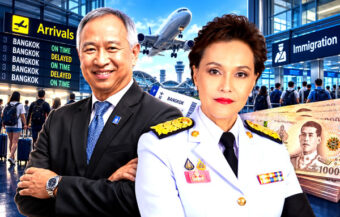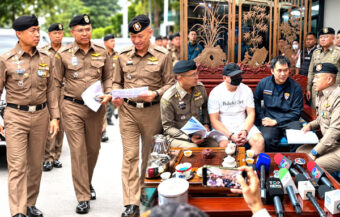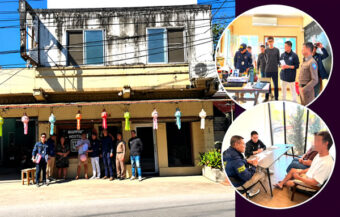
Israel’s embassy demands false reports be removed after Israelis were blamed for an ฿8,000 Patong restaurant walkout. Police say the diners were Saudi and Moroccan as hostility now grows over tourists, threats and foreign-run businesses in the south.
Israel’s embassy has intervened after Saudi Arabian and Moroccan tourists were falsely identified as Israelis in an ฿8,000 Patong restaurant dispute. The damaging error spread as Palestinian flag confrontations, the escalating Samui Exotic Park affair and foreign-business complaints fuelled hostility across southern Thailand. With threats, boycotts, police protection, nationalist protests and nominee-company inspections widening the row, the embassy demanded accurate reporting and removal of the false claims. Meanwhile, Tourism and Sports Minister Surasak Phancharoenworakul warned that foreign visitors who break Thai law or cause serious disruption could lose their visas.
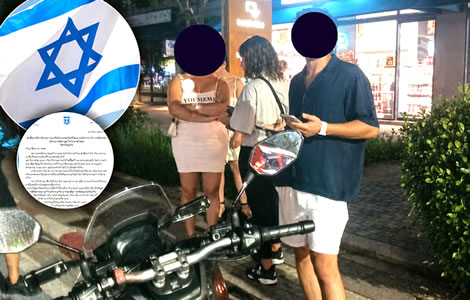
The Israeli Embassy has intervened after media reports falsely blamed Israeli tourists for an unpaid Phuket restaurant bill. The reports claimed Israelis ordered approximately ฿8,000 in food and drinks before attempting to leave. However, police identified the customers as one Saudi Arabian man and three Moroccan women.
No Israeli nationals were involved. Even so, the claim spread rapidly through social media and attracted widespread attention. It appeared amid growing hostility towards Israeli tourists across southern Thailand.
In response, the embassy issued a firm correction and challenged the reporting behind the story. It warned that inaccurate coverage was fuelling prejudice against Israeli visitors and the wider Israeli community. The embassy also asked digital platforms to remove reports still identifying the customers as Israeli.
Patong restaurant dispute ends before investigators after four tourists refuse to pay an ฿8,000 bill
The original incident occurred at a restaurant in Patong on August 19. Four tourists ordered food and drinks costing approximately ฿8,000. Staff later presented the group with the account.
At that point, the customers reportedly refused payment and attempted to leave the premises. A Thai woman working at the restaurant contacted Patong Police Station. Patrol officers arrived shortly afterwards and intervened.
Initially, police sought an agreement between the restaurant representative and the four customers. Neither party accepted the proposed settlement. Consequently, officers took both sides to an investigating officer for formal legal proceedings.
Police have not disclosed why the customers withheld payment. Nor have officers said whether they challenged prices, particular items or the service. The restaurant’s final receipt of payment also remains unconfirmed.
Likewise, police have announced no final decision concerning criminal charges or other proceedings. The available reports end after both parties reached the investigating officer. Therefore, the eventual outcome remains undisclosed.
False reports identify Saudi and Moroccan tourists as Israelis before police finally issue a correction
Meanwhile, video and written accounts of the confrontation appeared online. Several posts described all four customers as Israeli tourists. Crucially, those reports had not correctly established their nationalities.
The claim then moved rapidly across Thai social media and digital news platforms. As a result, Israeli tourists became publicly associated with the dispute. Yet no Israeli had entered the restaurant case.
Patong Police Station subsequently established the identities of the customers. The group’s only man was a Saudi Arabian national. By contrast, the three women were Moroccan nationals.
Notably, the Israeli Embassy said Patong police issued a formal clarification on August 23. By that stage, the inaccurate identification had already reached a large audience. The embassy therefore released its own statement addressing the reports.
“The Embassy of Israel in Thailand wishes to clarify a report circulating on social media on August 19, 2026,” it said. The statement referred directly to the Patong restaurant incident. It described reports concerning tourists and an approximately ฿8,000 meal.
Embassy confirms no Israelis were involved as false Patong reports spread rapidly across social media
According to those reports, the customers consumed the meal before leaving without payment. More significantly, the reports identified them as Israeli tourists. That detail quickly became central to the story’s online circulation.
The embassy then cited the clarification from Patong Police Station. Police had identified those involved as Saudi Arabian and Moroccan. Accordingly, the embassy stated that none of the four was Israeli.
The statement described the police correction as extremely important. Earlier coverage had blamed nationals from a country completely unconnected with the incident. Furthermore, the false identification emerged during intense scrutiny of Israeli visitors.
The embassy said inaccurate information caused serious misunderstanding and damage. It also said such reporting fuelled prejudice and hostility towards Israeli tourists. Beyond that, it warned of harm to the wider Israeli community.
For that reason, the embassy called upon news organisations to verify tourist reports before publication. It placed particular emphasis on claims concerning nationality. Those details should be checked with police and other relevant agencies, it said.
Israeli Embassy demands nationality checks as false reports fuel prejudice against Israeli tourists
In addition, the request covered social media users and members of the public. “The rapid spread of unverified information on social media has an unfair and exaggerated impact on uninvolved individuals and communities,” it said. The embassy urged greater caution before reports were published or shared.
As part of its response, the embassy asked digital publishers to review their existing coverage. It requested the removal of reports that continued to identify the four customers as Israeli. Finally, it thanked recipients for their understanding and cooperation.
The intervention came during an expanding controversy involving Israeli visitors in southern Thailand. Several disputes have already generated hostile commentary and demands for official action. In parallel, Middle East politics has spilt over into encounters between tourists and local businesses.
In March, a dispute involving a Palestinian flag occurred inside a Phuket restaurant. The owner said an Israeli visitor demanded its removal. Video later showed the owner ordering the tourist outside while shouting pro-Palestinian slogans.
Subsequently, the footage spread widely across Thai social media. It became one of several confrontations linking local businesses with political arguments about Gaza. The circumstances surrounding each incident have differed.
Palestinian flag disputes sharpen tensions between Israeli visitors and Phuket business operators
Separately, an Israeli couple entered a mobile telephone shop in Bang Tao, Choeng Thale. They noticed a “Free Palestine” flag displayed at the premises. CCTV footage later showed a heated exchange with the owner.
According to the owner, the couple questioned the display and demanded its removal. He maintained that the flag had occupied his private property for over one year. The available footage did not establish everything said before the confrontation.
On another front, a similar argument developed at a tour seller’s counter in Patong. The seller had displayed a Palestinian flag at his workplace. He said Israeli tourists asked whether he supported Palestine.
During that exchange, one person reportedly shouted “Free Israel”. The argument then intensified. Nonetheless, the seller stressed that he regularly served Israeli customers.
He also said he never refused customers because of nationality. Thus, his account separated the flag dispute from his normal dealings with Israeli visitors. The episode still gained substantial attention online.
More seriously, the confrontation at Samui Exotic Park developed into a major and continuing dispute. An Israeli family said the Koh Samui attraction refused them entry because of their nationality. They also claimed that the husband was assaulted.
Samui Exotic Park row widens into threats, boycotts, police action and urgent demands for protection
The park’s operators rejected that version of events. Instead, they cited repeated problems involving admission charges, park rules and animal treatment. Their account referred to difficulties involving some previous visitors.
Thereafter, the dispute moved far beyond the original encounter. It produced claims involving threats, boycott activity, hostile online reviews and intimidation. The case also drew police, civic groups and political campaigners into the conflict.
In one related development, an Israeli man faced prosecution over threats. A court fined him and imposed a suspended prison sentence. Thai officials treated his conduct as an individual legal case.
At the same time, park owner Jindarat and her French husband, Kevin, sought police protection. Their request followed reported threats and claims concerning a ฿500,000 bounty. The reported danger substantially raised the seriousness of the dispute.
Adding to this, the politically connected Siam Asa group supported the park’s operators. It helped Jindarat and Kevin approach police over their security concerns. That involvement brought another organised group into the widening affair.
Thai Mai Thon takes Samui dispute to Israeli Embassy as its nationalist campaign gathers momentum
The Samui case also became central to Thai Mai Thon, or “Thais Won’t Tolerate It”. On August 24, the group took its “Thailand First” campaign to the Israeli Embassy. Its activists carried a letter containing complaints from several tourist destinations.
Specifically, the letter cited reported threats, harassment and business disputes involving Israelis. The complaints came from Phuket, Koh Samui, Koh Phangan and Pai. Embassy staff refused to receive the document directly.
Instead, staff instructed the activists to leave the letter outside the embassy. Thai Mai Thon said it did not intend to generalise about Israeli people. Still, it demanded respect for Thai laws, customs and property rules.
The group also demanded compliance with foreign-business and employment restrictions. Moreover, it connected the Samui controversy with a wider nationalist campaign. That campaign targets nominee companies, illegal foreign workers and undocumented migrants.
Within that campaign, Thai Mai Thon also opposes foreign control of occupations reserved for Thais. The Samui dispute consequently acquired a much broader political and commercial dimension. It no longer concerned only entry to an animal park.
Alongside these developments, local operators raised complaints about foreign-controlled businesses in Phuket and Surat Thani. The complaints concerned suspected nominee ownership and unlicensed operations. Some also concerned companies serving narrow foreign customer groups.
Phuket inspections examine Israeli-linked firms, Thai nominee ownership and closed business networks
Following those complaints, Phuket officials inspected businesses described as Israeli-operated. Claims included assertions that certain premises had refused service to Thai customers. Those claims remained subject to individual investigation.
The inspections covered a tour company and retail outlets in Patong. Officials examined ownership structures, management arrangements and foreign work authorisations. They also checked for Thai nominees concealing foreign control.
Elsewhere in the inspections, officials examined businesses serving mainly Israeli customers. Some premises used Hebrew-language signs or advertising. Their customer base alone did not establish a legal breach.
Importantly, the complaints remained under investigation. No violation had been established against every company inspected. Nor could findings involving one operator automatically apply to another business.
Another strand concerned claims about closed foreign-linked commercial networks. These networks reportedly directed customers towards connected accommodation, tours, transport and other services. Each claim required examination of particular companies, shareholders and managers.
Tourism minister warns visas may be revoked as Israeli Embassy stresses individual responsibility
Against this backdrop, Tourism and Sports Minister Surasak Phancharoenworakul addressed the tension. He said Thailand welcomed visitors from every country. At the same time, tourists were required to obey Thai law.
The minister said visas could be revoked when individuals broke the law or caused serious disruption. His position treated misconduct as the responsibility of each offender. The Israeli Embassy separately reminded its nationals to respect Thai laws and customs.
By comparison, the embassy’s latest intervention concerned Israelis who had no involvement in the reported misconduct. Four tourists reportedly refused to settle an approximately ฿8,000 restaurant account. Police then intervened and attempted mediation.
When those efforts failed, officers referred both sides to an investigating officer. The four customers were one Saudi Arabian man and three Moroccan women. Yet early reports publicly identified them as Israelis.
Embassy demands removal of false reports as hostility towards Israeli tourists keeps growing
The reporting error then entered an already bitter dispute surrounding Israeli visitors. In turn, the embassy demanded verification of nationality before publication. It also requested the removal of inaccurate reports still available online.
Ultimately, the central correction was direct and undisputed. No Israeli national took part in the Patong restaurant dispute. Despite that fact, Israeli tourists were blamed as hostility towards them continued to grow.
Koh Samui zoo dispute morphs into wider protest at Israelis and foreigners misbehaving in Thailand
Tourists to be briefed on Thai laws before departure. Minister says Israeli man’s visa has been revoked
Certainly, the incidents highlight the present public and media environment in Phuket and southern Thailand, where Middle Eastern politics has impacted local policing and the tourism industry.
Notably, it also highlights a growing problem in Thailand with customers refusing to pay bar and hospitality sector bills after availing of goods and services. This speaks to a wider disrespect for those operating in the commercial sector fostered by a social media-driven zeitgeist.
Join the Thai News forum, follow Thai Examiner on Facebook here
Follow Thai Examiner on Google here
Receive all our stories as they come out on Telegram here
Follow Thai Examiner here
Further reading:
Koh Samui zoo dispute morphs into wider protest at Israelis and foreigners misbehaving in Thailand
Community tensions rise between locals and Israelis in southern Thailand particularly on Koh Phangan
Anutin visits Koh Phangan as nominee crackdown shows 68% of firms with foreign ownership links
Blitzkrieg on foreign firms and enterprises on Koh Phangan continues with French owned resort busted
Russian-Chinese Koh Phangan alliance to sell drugs to foreigners. Accused entered Thailand illegally
Crackdown aimed at upending foreign business trade moves from Koh Phangan to Phuket. Four arrested
Crackdown to wipe out foreign business abuses and ownership on Koh Phangan & Koh Samui intensifies