Anutin tells governors to use new deportation powers without hesitation as Thailand targets troublesome foreigners, illegal businesses, nominee firms and landholding while warning: “If you’re going to die, go die back home.”
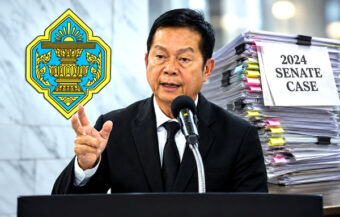
Prime Minister Anutin Charnvirakul has ordered governors across Thailand to move swiftly against troublesome foreigners and use new deportation procedures without hesitation. His nationwide directive targets aggressive behaviour, illegal businesses, nominee companies, landholding, unauthorised work and foreign religious premises. Crucially, deportation can proceed through a separate public-order route without always waiting for criminal proceedings. Mr Anutin ordered officials into “fifth gear”, told them not to fear appeals and said provinces could advance airfares to remove foreigners. Then came his bluntest warning. “If you’re going to die, go die back home,” he said while targeting foreign private cemeteries. The crackdown is already underway, with an Israeli and Frenchman on Koh Samui fighting the first deportation orders issued under the new framework.
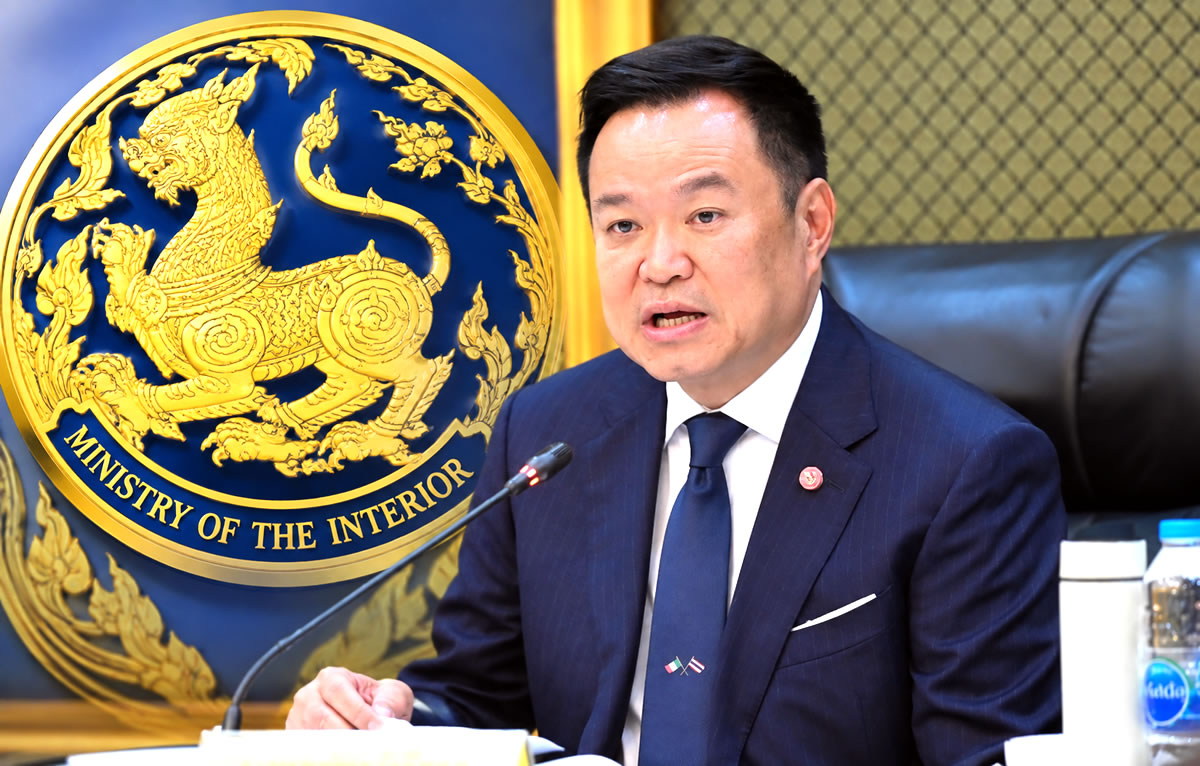
Prime Minister Anutin Charnvirakul has ordered governors to move quickly against foreigners who cause trouble or exploit Thai people. Crucially, officials need not always await criminal proceedings before examining deportation. Thailand’s new rules provide a separate public-order route for removal. Mr Anutin also questioned spending national resources on foreign offenders who could lawfully be sent home.
The directive came during a nationwide Interior Ministry video conference on Thursday, September 17. Mr Anutin addressed governors in his concurrent role as Minister of the Interior. District chiefs and administrative officials nationwide also joined the meeting. Its wider agenda covered ministry policies during the final quarter of 2026. However, enforcement against errant foreigners became a major focus.
Mr Anutin drew a clear distinction between law-abiding foreigners and those causing problems. Foreigners living honestly and not exploiting Thai people could continue living alongside them, he said.
Governors ordered to use new deportation machinery as Anutin demands decisive action against foreigners
By contrast, aggressive foreigners and those intimidating local people should face action. The same applied to foreigners exploiting Thais through money, businesses or other arrangements. He also targeted what he termed “undesirable behaviour”.
Accordingly, governors and district chiefs were ordered to act decisively when legal requirements were satisfied. “The new deportation regulation of the Prime Minister’s Office has already taken effect. Please take action,” Mr Anutin said. His message was that provincial officials already possessed the necessary legal machinery.
“I have signed the Interior Ministry notice on the deportation of individuals. You have all the mechanisms necessary to take this action. Enforce the law strictly if their behaviour meets the criteria.”
Notably, the intervention follows a significant overhaul of procedures surrounding Thailand’s longstanding deportation powers. The Prime Minister’s Office Regulation on Deportation B.E. 2569 took effect on August 28. Mr Anutin signed it two days earlier, on August 26. Yet the regulation did not create Thailand’s underlying power to deport foreigners.
That power principally rests on the Deportation Act B.E. 2499, enacted in 1956. Instead, the August regulation created clearer procedures for applying the existing law. It identifies how cases can move through the Interior Ministry. It also establishes procedures involving convicted foreigners approaching release. Separately, it covers foreigners whose conduct creates public-order concerns.
New rules separate criminal prosecution from deportation as governors are told to identify cases quickly
As a result, criminal prosecution and administrative deportation are not necessarily the same process. That distinction lies at the centre of Thursday’s order. The Department of Provincial Administration has already explained the new framework. It said the regulation fills procedural gaps surrounding powers contained in the 1956 law.
At the same time, the rules establish clearer criteria for officials preparing deportation cases. The department says this should produce faster and more consistent enforcement. Thursday’s intervention now pushes that machinery directly into provincial government. Governors have effectively been told to identify qualifying cases and start using it.
Mr Anutin made clear that bureaucratic hesitation would no longer be acceptable. Indeed, he said officials already possessed the mechanisms necessary to act. His instruction also went considerably beyond troublesome tourists involved in fights or public disturbances. Instead, the drive extends into businesses, employment, landholding, licensing and foreign-controlled activities.
In parallel, foreigners illegally occupying land are among those facing closer scrutiny. Foreigners operating businesses without permission are another target. Those working without permits are also covered. Foreign nominee arrangements involving Thai nationals have meanwhile become another major enforcement priority.
Such structures have already become the subject of extensive government investigations. Officials have examined thousands of foreign-linked businesses across Thailand’s main tourism and investment centres. Against this background, Mr Anutin told provincial officials to enforce existing laws strictly. He also addressed foreigners who fail to respect Thai traditions and culture.
Phuket and Surat Thani put in focus as foreign businesses, landholding and employment face scrutiny
The order applies to tourists, expatriates and longer-term foreign residents. Nevertheless, several southern tourism centres received particular attention. Phuket was specifically identified. So was Surat Thani, including Koh Samui and Koh Phangan. Both provinces have substantial foreign populations and large international tourism industries.
More recently, both provinces have faced operations involving foreign businesses, employment and property. Koh Samui has already become a testing ground for the new deportation procedures. Koh Phangan has faced separate investigations involving foreign-linked companies and land. Phuket has likewise seen extensive inspections of foreign-controlled businesses.
As part of this, Mr Anutin praised Deputy Interior Minister Polapee Suwunchwee for leading recent enforcement efforts. He said the measures had received a strongly positive response. He also demanded closer coordination between governors, district chiefs and the Department of Provincial Administration.
Police remain involved where suspected criminal offences require investigation. Even so, Mr Anutin made clear that provincial officials should not simply pass responsibility elsewhere. Governors are expected to use the procedures available to them. The Interior Ministry, he stressed, has already provided the necessary mechanism.
Governors told to examine foreign religious premises and cemeteries amid recent local controversies
On another front, Mr Anutin turned to foreign religious facilities. He instructed governors to examine religious premises established within their jurisdictions. Foreign groups could not simply create such facilities without complying with Thai requirements, he said. Premises approved for one purpose could not automatically be converted for another use.
Private cemeteries were also raised. Mr Anutin instructed governors to examine such developments while protecting Thai interests. His comments followed controversy surrounding a Jewish cemetery in Chachoengsao. The facility had already attracted official scrutiny over its operating status and burials.
Its licence expired in 2023. Subsequently, inspections identified problems involving required distances from surrounding areas. Officials also found three unlawful burials. Removal of those burials was ordered.
Elsewhere, another controversy recently developed in Phuket. A planned Jewish New Year observance was cancelled after Thai protesters gathered near the venue. However, Mr Anutin did not confine Thursday’s instruction to Israelis or any other nationality. He said problems involved foreigners from several countries and regions.
Anutin questions cost of jailing foreign offenders as separate deportation routes come into sharper focus
Nor was the order restricted to any particular religion. Rather, the government demanded compliance with Thai rules covering businesses, property, employment and premises. The most consequential part of Thursday’s intervention, however, concerned deportation itself.
Mr Anutin told officials not to assume criminal punishment must always come before removal. Senior officials had discussed the question one day earlier. In particular, they considered whether certain foreigners first had to serve criminal sentences before leaving Thailand.
In response, Mr Anutin questioned the value of imprisoning such offenders where another lawful route existed. Thailand then had to provide their food, water and accommodation, he said. Those costs ultimately consumed national resources. He therefore urged officials to examine faster lawful removal where circumstances permitted.
His instruction did not cancel sentences imposed by Thai courts. Nor does the new regulation automatically allow every foreign suspect to leave before prosecution. Instead, it establishes separate procedures applying to different circumstances. That legal distinction is important.
Clause 5 specifically deals with foreigners convicted of designated criminal offences. Under this route, a final criminal judgment is relevant. The offences include illegal entry or residence. Illegal employment and illegal business operations are also covered. Furthermore, document offences can trigger the procedure.
Public-order route allows separate deportation process while final decisions remain with Interior Ministry
Serious criminal offences and participation in specified offences are included as well. In such cases, information can reach the Interior Ministry before a foreign prisoner’s release. Officials can therefore prepare deportation proceedings while the individual remains imprisoned. Removal can then proceed promptly once the sentence has been completed.
Clause 4, however, establishes another route. It concerns a foreigner’s behaviour or circumstances. Specifically, it covers conduct contrary to public order, good morals or the welfare of the people. This provision is particularly relevant to Thursday’s nationwide directive.
Under Clause 4, the Interior Ministry permanent secretary can report a case to the Interior Minister. An official authorised by the permanent secretary can also make that referral. The Interior Minister can then consider issuing a deportation order. The provision additionally encompasses people who instigate or support such conduct.
Consequently, public-order deportation is not simply another form of criminal punishment. Neither must every case necessarily await the completion of criminal proceedings. The administrative process can operate separately where its legal requirements are satisfied. That gives officials another route for dealing with qualifying foreign conduct.
Importantly, provincial governors do not personally acquire unrestricted deportation powers. A governor cannot simply remove somebody because that person is considered troublesome. Provincial officials instead identify the conduct, gather information and develop the case. The matter then moves through the Interior Ministry system.
Ultimately, the formal deportation decision remains governed by the relevant legislation and procedures. Thursday’s directive nevertheless changes the enforcement emphasis. Officials previously could treat deportation mainly as something following prosecution, conviction and punishment. Now, the Interior Ministry has provided a clearer parallel administrative process.
Anutin tells provinces to fund airfares if needed and uses blunt language on foreign private cemeteries
Beyond that, Mr Anutin personally ordered governors to use it. His intervention therefore combines the August regulatory change with a direct political instruction. The rules provide the mechanism. Thursday’s order demands its application.
Mr Anutin also tackled another obstacle raised by provincial officials. The issue concerned the cost of physically removing foreigners from Thailand. In particular, officials had questioned who should pay airline fares. The Prime Minister said such arguments should not obstruct a lawful deportation.
Instead, provincial authorities could advance the necessary money. Afterwards, they could seek repayment through the appropriate process. The immediate priority was getting the foreigner out of Thailand. Disputes over tickets should not hold up removal.
Mr Anutin used particularly blunt language while discussing foreigners establishing private cemeteries in Thailand. “If you come here, come and earn a living honestly. If you’re going to die, go die back home. You don’t need to come and die here,” he said. The remark came as he ordered governors to examine foreign religious premises and cemeteries more closely.
There was no immediate public response from major Western embassies in Bangkok following Thursday’s remarks. However, the language came as Thailand continues courting foreign tourists, investors, retirees and long-stay residents. Mr Anutin’s wider instruction to governors was equally firm. “If the behaviour meets the criteria, take action immediately,” he told provincial officials.
Governors told not to fear appeals as first deportation cases test Thailand’s new public-order machinery
Likewise, Mr Anutin told governors not to be intimidated by possible appeals. Foreigners subject to deportation retain access to the prescribed appeal process. Yet the prospect of an appeal should not prevent officials from taking initial action. The deportation order can be issued before the foreigner exercises that right.
Recent cases already demonstrate how the machinery works. Thailand has issued its first two deportation orders under the new framework. Both cases arose on Koh Samui. They involve Israeli national Yaacov Ohayon and French national Kevin Dimino.
Mr Ohayon’s case followed a dispute involving Mr Dimino’s Samui Exotic Park. Mr Ohayon visited the attraction with his family before a confrontation developed. His family was subsequently barred from the attraction. Afterwards, Mr Ohayon was accused of sending threatening messages.
Eventually, the case reached Koh Samui Provincial Court. Mr Ohayon was convicted in connection with the threats. The court fined him ฿5,000. He also received a 15-day prison sentence, which was suspended. Yet the criminal judgment did not end the matter.
On September 5, Mr Anutin signed a separate deportation order against Mr Ohayon. The order cited conduct contrary to public order, good morals or public welfare. Mr Ohayon was then taken into custody while challenging the decision. He was given seven days to appeal.
French national becomes second target as Koh Samui cases show new deportation framework now operating
In practice, the case demonstrates the separation between criminal punishment and administrative deportation. A suspended prison sentence did not prevent the Interior Ministry from pursuing removal. The public-order framework supplied a separate basis for that action.
Mr Dimino became the second foreigner targeted under the new procedures. The French national operated Samui Exotic Park. Officials cited complaints involving violence, knife threats and public nuisance. Another cited incident was connected with a flight.
Separately, officials cited conduct they said stirred religious division and conflict. Mr Dimino has publicly supported the Palestinian cause. The deportation action, however, concerned conduct cited by officials. He was informed of the order on September 8.
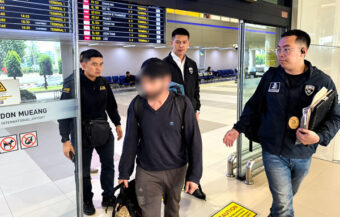
Mr Dimino was subsequently held at Bo Phut Police Station. Both foreigners challenged their deportation orders. As of Thursday, both remained in Thailand while their appeals were considered. Police confirmed that neither had yet departed.
Those cases show that the August framework is already operating. Thursday’s meeting therefore did not merely announce a future policy. Instead, Mr Anutin ordered governors nationwide to expand an enforcement mechanism already being used.
Governors take larger role as nationwide probes target foreign-linked firms, land and condominium units
For provincial government, that significantly increases the operational focus on foreigner cases. Previously, many such cases could fall primarily to police or immigration officers. Now, governors and district chiefs have been placed firmly inside the enforcement structure. They are expected to identify foreign conduct affecting their communities.
In turn, provincial officials must coordinate evidence and the administrative response. That includes commercial activities alongside individual behaviour. Illegal foreign landholding remains one prominent area. Thailand generally restricts direct foreign ownership of land.
Nationwide, the Department of Business Development has reviewed 36,277 companies involving foreign participation. Those businesses were connected with 305,838 plots. Together, the properties covered 1,064,265.38 rai.
Meanwhile, a narrower investigation covered about 14,000 companies. Approximately 5,800 plots worth around ฿60 billion came under examination. Investigators identified roughly 1,500 companies linked with illegal landholding.
In the condominium sector, officials identified 7,082 foreign-linked companies. Those companies were connected with 76,840 units. Altogether, the properties covered more than 4.1 million square metres.
Tourist centres face widening enforcement on foreign businesses, landholding and unauthorised employment
Regionally, Phuket, Koh Samui, Koh Phangan and Pattaya have featured prominently in recent operations. On Koh Samui alone, officials reviewed 12,906 companies. Of these, 8,254 had foreign shareholders. Another 875 were flagged for closer scrutiny.
Investigators identified 60 cases during the Koh Samui work. They also examined 37 plots valued at approximately ฿1.2 billion. The figures show the scale of the commercial enforcement already underway in the island province.
Nearby, Koh Phangan has faced a separate examination of foreign-linked landholding. Officials flagged 112 entities. The investigation covered 124 plots totalling approximately 86 rai. Eight cases have already been decided. Nine plots were subsequently sold.
Phuket has experienced another major enforcement operation. More than 100 companies were examined during an August crackdown. Those businesses generated more than ฿5 billion in revenue. Sixteen were prosecuted.
Foreign employment has come under similar scrutiny. On August 20, six foreign diving instructors were arrested on Koh Tao. Officials also checked 110 entities during that operation. Pattaya has separately faced raids involving a suspected Israeli nominee network.
Taken together, those operations show the wider enforcement setting behind Thursday’s order. Officials were already examining businesses, land, employment and foreign-controlled commercial structures. Deportation now sits alongside those existing measures where individual foreigners meet the relevant criteria.
Anutin demands fifth-gear enforcement as deportation operates separately from Thailand’s criminal courts
At the administrative level, Mr Anutin made clear that he expects faster action. The necessary legal machinery was already available, he said. The Interior Ministry had also issued rules following recommendations from officials. He therefore expected provincial officers to use those powers.
To underline the point, Mr Anutin contrasted slow administrative handling with the pace now required. He urged officials to move from “neutral” into “fifth gear”. The Department of Provincial Administration was also instructed to support governors and drive implementation.
Thailand’s criminal courts will continue operating independently of that process. Foreigners accused of offences can still be arrested and prosecuted. Those convicted can still receive fines and prison sentences. Deportation, however, can create a separate administrative consequence.
Under the August framework, officials now have clearer procedures for pursuing that outcome. The public-order route also extends beyond cases involving completed criminal convictions. Its wording covers behaviour or circumstances affecting public order, good morals or public welfare.
At the same time, cases remain subject to Thai law and applicable regulations. The framework also refers to relevant Cabinet resolutions and Thailand’s international obligations. Foreigners can challenge deportation orders through the prescribed appeal process.
Even then, the existence of an appeal does not stop officials from initially preparing a case. Mr Anutin made that position explicit on Thursday. Governors should not be deterred by the prospect of a challenge. They should act when the legal criteria are satisfied.
Anutin holds both top roles as governors are told to use deportation powers wherever legal criteria apply
There is also an unusual concentration of responsibility at the top. Mr Anutin holds the posts of Prime Minister and Minister of the Interior. He signed the regulation as Prime Minister. Now, as Interior Minister, he is directing provincial officials to implement it.
For governors, Thursday’s instruction was unequivocal. Aggressive foreigners should face action where their conduct violates the law. Foreigners intimidating or exploiting Thai people should similarly be investigated for possible removal.
Alongside this, illegal employment, unauthorised businesses and unlawful landholding remain major targets. Foreign-controlled premises must comply with their licences and Thai law. Religious sites and private cemeteries will also face provincial scrutiny where regulatory questions arise.
Koh Samui Israeli expat the first to be deported under Prime Minister Anutin’s new deportation regime
Anutin as Interior Minister assigns himself sweeping powers to deport foreigners under new regulations
Operational obstacles are no longer accepted as reasons for delay. Airline fares should not prevent removal. Appeals should not discourage officials from beginning proceedings. Nor should criminal prosecution automatically postpone a separate public-order deportation process where the law permits one.
The first orders have already been signed. The first foreigners targeted under the new system are already challenging them. Mr Anutin now wants the same machinery available across every province.
Thursday’s directive therefore moves responsibility squarely onto governors and district chiefs. They must identify cases, enforce existing laws and refer qualifying foreigners into the deportation process. Where the legal criteria are met, Mr Anutin’s instruction was direct.
“Please take action.”
Join the Thai News forum, follow Thai Examiner on Facebook here
Follow Thai Examiner on Google here
Receive all our stories as they come out on Telegram here
Follow Thai Examiner here
Further reading:
Frenchman’s Koh Samui business empire enmeshed in knotty police probe of nominee firms and pot farm
Drive against foreign owned property and business on Koh Samui and Koh Phangan now targets leases
International reservations system used by hotels targeted in latest Koh Phangan swoop by ministers
Anutin visits Koh Phangan as nominee crackdown shows 68% of firms with foreign ownership links
Blitzkrieg on foreign firms and enterprises on Koh Phangan continues with French owned resort busted
Russian-Chinese Koh Phangan alliance to sell drugs to foreigners. Accused entered Thailand illegally