Tourism Minister Surasak rushes to Suvarnabhumi as the baggage crisis hits its third day. Passengers wait six long hours, flooding leaves Thai Airways short of staff and broken carts worsen delays as military personnel deploy to help clear stranded bags.
Tourism and Sports Minister Surasak Phancharoenworakul rushed to Suvarnabhumi Airport on Monday as a crippling baggage crisis entered its third day. Passengers waited up to six hours while exhausted Thai Airways crews battled mountains of stranded luggage after flooding stopped replacement workers reaching the airport. Broken baggage carts deepened the breakdown, forcing office staff and managers into ground operations as military personnel were deployed. Officials warned the backlog could take another two to three days to clear. Meanwhile, Mr Surasak demanded passengers be warned before landing and pushed QR registration with luggage delivered later to homes and hotels. The crisis struck on Suvarnabhumi’s 20th anniversary, as Thailand’s main international gateway marked almost 900 million passengers while fighting to restore normal operations.
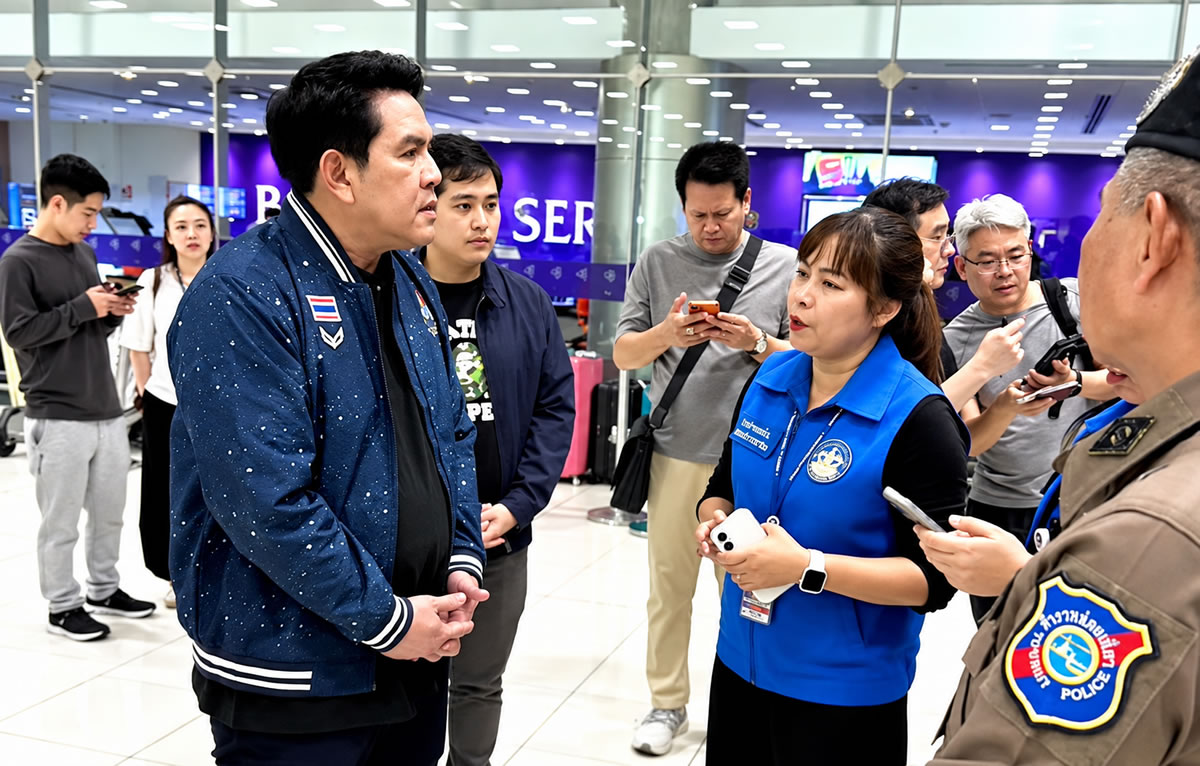
Tourism and Sports Minister Surasak Phancharoenworakul made an urgent inspection of Suvarnabhumi Airport on Monday morning as its baggage crisis continued. Passengers had waited four to six hours as Thai Airways struggled with a mounting luggage backlog.
Flooding had prevented ground workers reaching the airport, while baggage-cart failures compounded the disruption. In response, Thai Airways drafted office and management staff into baggage operations. Military personnel were also being deployed to reinforce exhausted workers. Officials warned the backlog could take another two to three days to clear.
Mr Surasak arrived at Thailand’s principal international gateway immediately after returning from Japan. He was accompanied by Pasakorn Rangsiwattanasak, secretary to the minister and Tourism and Sports Ministry spokesman. Notably, his visit followed direct instructions from Prime Minister and Interior Minister Anutin Charnvirakul. The Prime Minister wanted Mr Surasak to follow developments personally and ensure passengers received assistance.
Surasak orders urgent airport intervention as baggage delays leave passengers waiting up to six hours
The minister had already intervened before reaching Thailand. On Sunday, he remained on his return journey from Japan as the baggage disruption intensified. Consequently, he ordered Tourism and Sports Ministry Permanent Secretary Natthriya Thaweevong to inspect Suvarnabhumi. She was instructed to assess conditions and coordinate assistance for affected tourists. Mr Surasak also pledged to visit the airport immediately after returning.
By Monday morning, he was at Suvarnabhumi examining the operation himself. The disruption had already entered its third day. Thai and foreign passengers had endured waits reaching four to six hours. In parallel, large quantities of delayed baggage remained inside the airport handling system. Some passengers had already left without their checked luggage.
Thai Airways was arranging deliveries to homes and hotels for those passengers. Separately, officials warned that restoring normal baggage operations would take time. Initial estimates suggested another two to three days could be required. However, the timetable depended heavily on flood conditions improving across Bangkok and surrounding provinces.
The central problem was manpower. Mr Surasak spoke directly with Thai Airways personnel during his inspection. They told him flooding had prevented baggage-handling employees from reaching Suvarnabhumi. As a result, workers completing earlier shifts had remained at their posts. Some continued working because replacement staff simply could not reach the airport.
Exhausted Thai Airways crews battle growing baggage backlog as replacement workers fail to arrive
That created another operational problem. Staff already dealing with the backlog became increasingly exhausted as their working hours stretched. At the same time, scheduled aircraft continued arriving with fresh passengers and luggage. Therefore, workers were clearing delayed baggage while additional bags continued entering the system.
Equipment problems then intensified the pressure. Thai Airways was also dealing with baggage carts that were unavailable or out of service. Thus, fewer workers were attempting to move increasing quantities of luggage with reduced equipment. The combination slowed baggage movement further.
Suvarnabhumi Airport had already ordered urgent coordination with Thai Airways. Specifically, the airline was instructed to increase ground-handling manpower. It was also directed to repair defective baggage carts and secure replacement equipment. Those measures were aimed at restoring capacity while normal flight operations continued.
The disruption affected both sides of the airport operation. Incoming aircraft faced difficulties unloading luggage. Departing services were also affected as baggage moved slowly through the system. In turn, the ground-handling problems contributed to flight delays and growing quantities of stranded luggage.
Flooding and failed baggage carts hit arriving and departing flights as delays spread at Suvarnabhumi
The crisis began on Saturday, September 26. Severe flooding across Bangkok and neighbouring provinces had disrupted roads and journeys throughout the capital region. Yet Suvarnabhumi itself remained open. Flights continued operating despite worsening transport conditions outside the airport.
Access became the critical weakness. Ground employees needed to travel through flooded areas before reaching their workplaces. Many could not complete those journeys. Accordingly, Suvarnabhumi remained operational while a crucial part of its workforce became severely stretched.
The consequences soon became visible inside the terminal. Passengers reached baggage reclaim but waited hours for luggage. Behind the scenes, bags accumulated as ground workers struggled to unload aircraft. Meanwhile, fresh flights continued feeding passengers and baggage into the same strained operation.
Mr Surasak focused closely on that passenger experience during Monday’s visit. Above all, he raised concerns about how travellers were being informed. He accepted that the flood emergency had caused serious operational difficulties. Nevertheless, passengers needed information before finding themselves stranded at baggage reclaim.
The minister said travellers should not leave their aircraft and then face uncertainty about their luggage. Instead, he wanted warnings delivered before landing whenever substantial baggage delays were expected. That would give passengers time to change their onward arrangements.
Surasak demands advance warnings for passengers facing hours of uncertainty at airport baggage reclaim
The measure could be particularly important for international arrivals. Many foreign passengers reach Suvarnabhumi with hotel transfers or onward transport already arranged. A four-to-six-hour baggage wait can disrupt those arrangements immediately. Hence, advance information would allow travellers to make alternative plans before entering the terminal.
Mr Surasak also proposed a QR-code registration system for delayed luggage. Under that proposal, passengers could electronically provide their contact details and destination. Crucially, registration could potentially begin while travellers remained aboard their aircraft. They could then leave Suvarnabhumi instead of waiting several hours.
Their bags would follow separately after processing. Once located and cleared, luggage could be delivered to passengers’ homes or hotels. As part of this, the system would reduce the number of travellers waiting around baggage reclaim. It could also ease pressure on passenger service counters.
Thai Airways had already started using a similar emergency arrangement. Registration points were opened for passengers unable or unwilling to continue waiting. Travellers could provide delivery information before leaving the airport. Afterwards, Thai Airways would arrange delivery of their delayed baggage.
The airline was also moving employees into unfamiliar operational roles. Office staff were drafted into the baggage operation as the backlog grew. Management personnel were mobilised as well. In effect, Thai Airways was drawing manpower from across the company to reinforce its depleted ground crews.
Even that was insufficient. On another front, the military was being brought into the recovery effort. Thai Airways and the Tourism and Sports Ministry coordinated assistance from the Royal Thai Air Force. Defence Minister Lt Gen Adul Bunthamcharoen was also involved in deploying military personnel.
QR baggage delivery plan lets delayed passengers leave airport as military manpower joins operation
Those personnel were being sent to help move accumulated baggage. Accordingly, the recovery effort now involved ground workers, office employees, managers and military personnel. Each group was being used to increase manpower while regular staff struggled to reach work.
The task remained substantial. Delayed bags had to be processed while normal flights continued operating. Every incoming aircraft could add another load of luggage. For that reason, additional manpower was needed both to reduce the backlog and handle current arrivals.
Flooding remained at the centre of the staffing problem. Employees living across affected areas faced difficult journeys to Suvarnabhumi. Some roads were inundated, preventing workers from reaching scheduled shifts. Meanwhile, employees already inside the airport were required to continue working.
That extended the pressure beyond simple absenteeism. Previous-shift employees remained because replacement personnel could not arrive. Consequently, fatigue became another constraint on baggage operations. Staff were working extended hours while handling an abnormal volume of luggage.
Baggage-cart failures added another bottleneck. Ground handling depends on carts moving luggage between aircraft and terminal systems. Yet some Thai Airways equipment was unavailable or out of service. As such, additional workers alone could not immediately restore full capacity.
Military and airline staff reinforce exhausted ground crews as flooding blocks replacement workers
Airport officials therefore pursued manpower and equipment solutions simultaneously. Defective carts needed repairs, while replacements were also required. At the same time, Thai Airways needed more people on the ground. Military reinforcements and reassigned airline employees addressed the immediate staffing shortage.
Despite the disruption, Suvarnabhumi remained open throughout the crisis. General airport operations were not suspended. Aircraft continued arriving and departing. Still, individual flights and passenger journeys were affected by the ground-handling breakdown.
That created a difficult recovery environment. Workers were not clearing a fixed stockpile after operations had stopped. Rather, the airport remained active while they attacked the backlog. Fresh baggage kept entering the system as delayed luggage awaited processing.
The two streams placed continuing pressure on workers and equipment. Furthermore, passengers who had already departed still needed their luggage delivered. Thai Airways was therefore managing baggage inside Suvarnabhumi while organising deliveries outside the airport.
Mr Surasak’s Monday intervention broadened official attention towards the passenger impact. Suvarnabhumi is Thailand’s principal international gateway and a major entry point for foreign tourists. Many visitors begin their trips to Thailand inside its arrival halls.
Suvarnabhumi stays open as workers tackle fresh arrivals and a growing backlog of stranded luggage
During the disruption, some instead spent four to six hours waiting for baggage. The minister therefore concentrated on reducing unnecessary waiting inside the terminal. His proposals targeted communication, registration and subsequent luggage delivery.
Advance warnings were the first element. Passengers would know about expected baggage delays before their aircraft landed. Next, QR registration could allow them to provide delivery information electronically. Finally, home or hotel delivery would allow their journeys to continue without their luggage.
The approach would not eliminate the operational backlog. Ground workers would still need to locate, move and process every delayed bag. However, passengers would no longer necessarily need to remain inside Suvarnabhumi throughout that process.
Existing Thai Airways registration counters were already moving in that direction. Passengers could leave their details and depart without their baggage. Subsequently, the airline would deliver their luggage when it became available.
The underlying recovery still depended on manpower and equipment. More workers were needed to reach Suvarnabhumi as flood conditions improved. Functioning baggage carts were also required. In addition, the existing stockpile had to be cleared while scheduled flights continued.
Advance warnings and baggage delivery aim to move passengers through Suvarnabhumi without long waits
Officials consequently remained cautious about the recovery timetable. The working estimate on Monday was another two to three days. Better road conditions could allow more employees to return to their posts. Even then, however, accumulated luggage would still require processing and delivery.
The chronology shows how rapidly the disruption escalated. Problems began on Saturday, September 26, as flooding interfered with airport access. By Sunday, serious baggage delays were affecting passengers and ground operations. Mr Surasak was still returning from Japan as the situation worsened.
At that point, he dispatched Permanent Secretary Natthriya to the airport. She was ordered to inspect conditions and coordinate assistance for tourists. Subsequently, Mr Surasak returned to Thailand and headed to Suvarnabhumi himself on Monday morning.
His appearance was therefore the promised direct ministerial intervention. It followed two days of mounting disruption and severe passenger delays. By then, Thai Airways had already taken exceptional staffing measures to keep baggage moving.
Office personnel were working outside their normal duties. Senior staff had also been mobilised. In addition, military assistance was being coordinated to reinforce the operation. Passengers were simultaneously being offered baggage delivery rather than indefinite waits inside the terminal.
Officials warn baggage recovery may take three days as Surasak completes promised airport intervention
Monday also carried unusual significance for Suvarnabhumi. September 28 marked exactly 20 years since the airport began commercial operations. Suvarnabhumi opened on September 28, 2006, becoming Thailand’s principal international gateway.
The airport separately marked that anniversary on Monday. It said almost 900 million passengers had travelled through Suvarnabhumi during those two decades. At the same time, officials reiterated ambitions to strengthen its role as a global aviation hub.
The milestone coincided directly with the baggage recovery operation. Ground crews were tackling a substantial accumulation of delayed luggage. Airline office staff and managers had joined the effort. Military personnel were also being deployed to assist.
At the ministerial level, attention centred on passengers and restoring smoother movement through the airport. Mr Surasak wanted travellers warned before landing when lengthy baggage delays were expected. He also wanted electronic registration to allow passengers to leave sooner.
For Thai Airways, the operational challenge remained broader. It needed to strengthen ground staffing while repairing or replacing baggage carts. Furthermore, delayed luggage had to reach passengers who had already left Suvarnabhumi.
Suvarnabhumi marks 20 years and nearly 900 million passengers amid major baggage recovery operation
The airline was consequently handling several tasks at once. It had to process the existing baggage backlog. It also had to manage luggage arriving on current flights. Beyond that, delayed bags required delivery to homes and hotels.
Military reinforcements were intended to provide immediate additional manpower. Reassigned office and management employees offered another temporary resource. Separately, improving flood conditions were expected to allow regular workers to return.
Until then, extended shifts and emergency staffing measures remained necessary. The airport also needed enough functioning carts to move baggage efficiently. Accordingly, officials expected recovery to be gradual rather than immediate.
By Monday, the disruption had entered its third day. Passengers had faced waits reaching six hours. Ground workers had remained beyond scheduled shifts because replacements could not reach Suvarnabhumi. Equipment failures had further restricted baggage movement.
Thai Airways tackles backlog, new arrivals and home deliveries while military reinforces ground crews
Meanwhile, Thai Airways had drafted office staff and managers into the operation. Military personnel were being deployed to reinforce them. Passengers were also leaving the airport without luggage under delivery arrangements.
Suvarnabhumi nevertheless remained open, and flights continued operating. Behind those continuing services, however, a large baggage recovery operation was underway. Workers were clearing delayed luggage while handling bags from newly arriving aircraft.
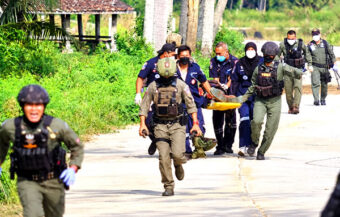
Royal Thai Army deployed to Suvarnabhumi Airport after baggage chaos gets the better of exhausted staff
Bangkok airports open and flights running but there are delays and baggage issues at Suvarnabhumi
On Suvarnabhumi’s 20th anniversary, that operation remained far from complete. Officials estimated another two to three days could be needed. For Mr Surasak, the immediate priorities were passenger information, faster movement and alternative baggage delivery.
For Thai Airways and airport workers, the task was more physical. They had to restore manpower, secure working equipment and move the accumulated luggage. At the same time, Thailand’s busiest international gateway had to keep its flights moving.
Join the Thai News forum, follow Thai Examiner on Facebook here
Follow Thai Examiner on Google here
Receive all our stories as they come out on Telegram here
Follow Thai Examiner here
Further reading:
Bangkok airports open and flights running but there are delays and baggage issues at Suvarnabhumi
Engineers work through night after Sunday’s fire on Bangkok’s Blue Line saw more damage than thought
Italian Thai boss and 16 others arrested on Thursday charged with Auditor General building deaths
Arrested man linked with Chatuchak building collapse now tells police he is a Chinese state employee