Foreign tourists face a ฿450 Thai entry charge from early 2027 under a plan now heading towards Cabinet. Air arrivals would pay first, with medical and death insurance included as the scheme targets at least ฿8bn yearly for tourism development.
Thailand’s long-delayed tourist tax moved closer to reality Tuesday as government and industry leaders backed a ฿450 charge on foreign visitors. Cabinet is now the critical hurdle, with officials targeting early 2027. Eligible air arrivals would pay first, while land and sea collection waits a year. Crucially, the fee brings insurance covering medical expenses and death benefits. After insurance and collection costs, it could still raise at least ฿8 billion annually for tourism development. The plan also targets unpaid foreign healthcare bills, estimated at about ฿7 billion across several categories of foreigners who visit Thailand.
Thailand is pushing ahead with a ฿450 foreign tourist tax after government and industry representatives backed the plan on Tuesday. Cabinet approval, however, remains the crucial next step before Thailand can start collecting the charge. Officials are targeting the first quarter of 2027. Importantly, paying tourists would receive insurance covering medical expenses and death, subject to final policy terms.
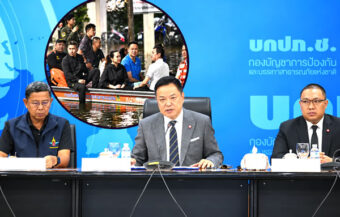
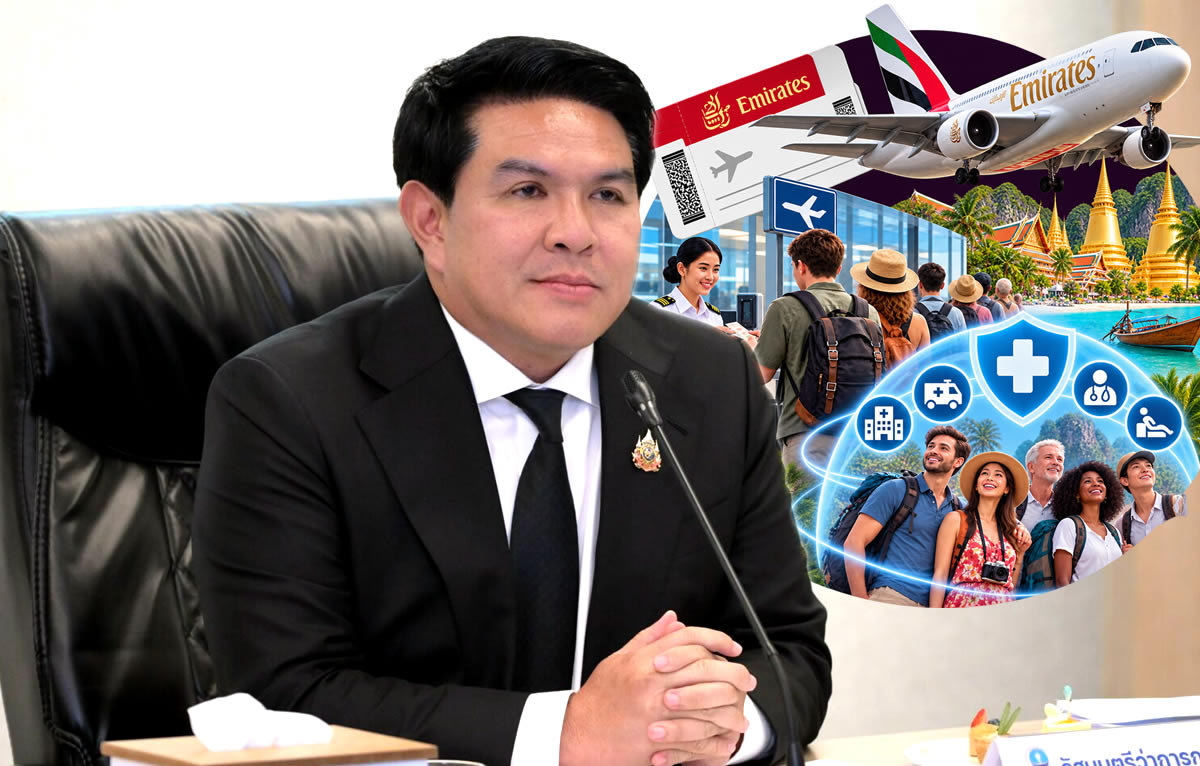
Tourism and Sports Minister Surasak Phancharoenworakul chaired Tuesday’s meeting at Bangkok’s Government Complex. Public Health Minister Pattana Promphat also attended. Alongside them were representatives from tourism, aviation, hotels, retail, transport and civil society. The gathering examined the proposed charge and results from an earlier public consultation.
That consultation attracted 5,954 responses before closing on September 28. Overall, 80.50% supported the draft announcement establishing the tourist fee. Separately, 78.30% backed the proposed ฿450 charge per person. The ministry will use those findings when completing its collection guidelines.
Cabinet approval comes next as Thailand targets early 2027 launch for its ฿450 tourist entry charge
Yet Tuesday’s meeting did not authorise collection. The proposal must first go before the National Tourism Policy Committee. After that, Cabinet must approve the measure. Publication in the Royal Gazette would then follow before implementation.
Tourism and Sports Permanent Secretary Natthriya Thaweewong said officials are aiming for the first quarter of 2027. For now, that remains a target rather than a confirmed launch date. The measure would take effect within 180 days following Royal Gazette publication.
Under the current draft, the initial rollout would cover eligible foreign tourists arriving by air. By contrast, collection from land and sea arrivals would be suspended for one year. That would leave air travel as the first testing ground for the new system.
The collection mechanism itself remains unfinished. One option would incorporate the ฿450 charge directly into airline tickets. Other possibilities include an application, website or payment kiosk. In response, businesses stressed that collection must not create queues or immigration delays.
Private-sector representatives also raised concerns about frequent cross-border travellers. Border traders were another group identified for possible special treatment. Accordingly, exemptions remain among the issues requiring further work.
Tourist insurance takes centre stage with medical and death cover funded by Thailand’s new ฿450 charge
Beyond collection, insurance forms a central part of the proposal. A portion of every qualifying tourist’s payment would finance insurance under the scheme. Cover would include medical expenses and death benefits, subject to the eventual policy conditions.
Notably, the ministry is also considering whether that insurance protection should be widened. Visitors paying the charge would therefore receive defined insurance rights alongside their entry payment. The precise limits and conditions have yet to be settled.
Tuesday’s meeting specifically addressed that insurance component. The ministry said insurance could reduce unpaid healthcare expenses involving foreigners. As part of this, hospitals would need a system for verifying whether patients qualified for cover.
Eligible hospitals could then seek reimbursement under the insurance arrangements. That mechanism would link the tourist payment directly with financial protection during a visitor’s stay.
Industry representatives also addressed how that protection should work. They called for clear explanations of insurance rights and policy conditions. At the same time, participants estimated that more than 80% of tourists already carry travel insurance. That is particularly common among European and American visitors.
Unpaid foreign medical bills enter the debate as tourism revenue tops ฿1 trillion through September
Nevertheless, the proposed Thai cover would be linked directly to payment of the ฿450 fee. It would therefore operate separately from insurance visitors purchased before travelling. Officials are still designing the precise policy and reimbursement arrangements.
On another front, Tuesday’s discussions examined unpaid medical bills involving foreigners. Public hospitals near Thailand’s borders face significant uncollectible expenses. A figure of approximately ฿7 billion annually was cited during the discussions.
That figure, though, covers several categories of foreigners rather than tourists alone. Consequently, officials are checking its scope with relevant public health agencies. They are also verifying the baseline years used to calculate the total.
The Public Health Ministry’s involvement is significant to that work. Minister Pattana attended alongside Surasak as the government examined insurance and healthcare costs. The final scheme must establish how hospitals verify eligibility and obtain reimbursement.
Meanwhile, the proposed charge also carries a much larger tourism funding component. Surasak said more than 22 million foreigners visited Thailand through September 2026. Those visitors generated more than ฿1 trillion in tourism revenue.
Despite that income, Surasak said national budget limits constrain resources available for tourism development. The ministry sometimes depends on resources from other government departments. These include the Culture Ministry and Transport Ministry.
New tourism fund could retain at least ฿8 billion yearly after insurance and collection costs are paid
The proposed fund would create a separate stream of tourism revenue outside the annual budget. Money collected from foreign visitors would flow into that fund. Insurance and collection expenses would be deducted first.
Even after those deductions, Surasak expects at least ฿8 billion annually to remain. That money would finance tourism projects across the country. In particular, the ministry identified attraction development, restoration and natural-resource conservation.
Funds could also support tourism promotion, communities and relevant government agencies. The structure would therefore connect visitor insurance with a new tourism development fund. Both would be financed from the same ฿450 payment.
Surasak set out the financial case during Tuesday’s meeting.
“After deducting fees for collection and insurance, the expected revenue is at least 8 billion baht,” he said. The money would support attractions, natural resources and tourism promotion.
“This discussion yielded valuable suggestions on how the fund should comprehensively support relevant areas, communities, and agencies,” Surasak said. He also cited proposals for transparent guidelines governing expenditure.
Private sector demands transparent fund rules as Thailand points to tourist charges across 80 countries
“I can confidently say that the establishment of this fund today will inevitably lead to it being managed by a new agency, the Ministry of Culture and Tourism,” he said. “While I won’t be using it myself, I believe it’s necessary for the future of the Thai tourism industry.”
For its part, the private sector demanded visibility over where the money goes. Businesses called for disclosure of revenue, disbursements and insurance costs. They also sought publication of results from projects financed through the fund.
In parallel, officials are considering transparent and auditable rules governing its operation. Those controls remain part of the design process before the scheme reaches implementation.
Surasak also compared the proposal with charges imposed overseas. He said more than 80 countries and destinations collect tourism taxes or fees. Examples cited included European countries, Japan, Australia, New Zealand and Bali.
Thailand’s proposed model would direct part of the proceeds towards visitor protection. Another portion would finance attractions, conservation and tourism promotion. Collection and insurance costs would be removed before the remaining money entered development spending.
The private sector, however, raised practical concerns alongside its support. Businesses called for a rate that would not affect tourists’ travel decisions. They also pressed for collection methods that would not slow travellers at airports.
Airline ticket collection leads public options as major tourism and retail groups join fee discussions
Likewise, representatives requested special consideration for border traders and frequent cross-border travellers. The one-year delay for land and sea collection provides additional time to address those issues.
The public consultation also examined possible payment methods. Collection through airline tickets attracted the strongest support among the options, at 36.26%. Still, the government has not formally chosen that method.
Further discussions must therefore take place with airlines, immigration officials and other parties. These talks will cover collection methods, exemptions and insurance procurement. Fund management and expenditure rules also remain on the agenda.
Tuesday’s meeting brought several major private-sector groups into those discussions. Participants included the Tourism Council of Thailand and Thai Hotels Association. Central Group, The Mall Group, Siam Piwat, King Power and Platinum Group also attended.
International airlines were represented at the meeting. GrabTaxi (Thailand) also participated. The gathering consequently brought together businesses handling tourists from arrival through accommodation, shopping and transport.
Cabinet remains the decisive hurdle before ฿450 charge and insurance scheme can begin for air arrivals
Even so, the meeting remained a consultation rather than final government approval. The proposal still faces several formal steps before any tourist pays ฿450.
First comes consideration by the National Tourism Policy Committee. Cabinet must then approve the measure. Only afterwards can the process move towards Royal Gazette publication and implementation.
In the meantime, officials must complete crucial operational details. Those include the payment system, exemptions, insurance procurement and hospital reimbursement procedures. Rules governing expenditure from the fund must also be settled.
Air arrivals would then form the first phase if Cabinet approves the current proposal. Eligible foreign visitors arriving by air would pay ฿450. Their payment would also secure insurance protection under the scheme.
Land and sea visitors would initially remain outside collection. Their inclusion would be postponed for one year under the present draft. Officials would therefore have longer to establish systems covering ports and land crossings.
Insurance and tourism funding drive the ฿450 plan but Cabinet approval remains the immediate hurdle
The insurance component gives the proposed charge a second function beyond raising tourism revenue. Paying visitors would receive cover for medical expenses and death benefits. Hospitals would also gain a mechanism for checking eligibility and seeking reimbursement.
At the same time, the financial scale could be substantial. At least ฿8 billion could remain annually after collection and insurance costs, according to the ministry. That money would be available for tourism development and related projects.
End of 2026 or early 2027 for tourist levy which has risen to 450 baht and will apply to incoming air passengers
6th Minister of Tourism and Sports in 3 years promises a tourist levy, a policy first proposed in 2015
The immediate hurdle, though, is Cabinet. Tuesday’s meeting advanced the proposal but did not approve collection. Nor did it establish a guaranteed starting date.
For that reason, early 2027 remains the government’s target rather than a certainty. Cabinet approval and Royal Gazette publication must come first. Only then can Thailand move towards collecting the ฿450 charge from qualifying foreign air arrivals.
Join the Thai News forum, follow Thai Examiner on Facebook here
Follow Thai Examiner on Google here
Receive all our stories as they come out on Telegram here
Follow Thai Examiner here
Further reading:
60-day visa regime to be ended confirms Minister responding to rising industry security concerns
Tourism boss warns Thailand it is facing a Chinese blacklist if another security controversy erupts
Visa waiver scheme questioned with another China Crisis for foreign tourism driven by security fears
Tourism cryptocurrency sandbox payment plan is bound to face stiff opposition from the central bank