House power struggle. Speaker Sophon Saram tightens rules for 35 committees after Bhumjaithai MPs clash with Rangsiman Rome over Shuffle.com. Seven government-aligned MPs storm out. Gambling and money laundering questions remain unresolved in the crisis.
House of Representatives Speaker and President of Parliament Sophon Saram has sharply curtailed the powers of Thailand’s 35 parliamentary committees. The crackdown follows a bitter clash over gambling and money laundering investigations reaching into Prime Minister Anutin Charnvirakul’s Bhumjaithai Party. People’s Party firebrand Rangsiman Rome is probing Shuffle.com and businessman Taiyang Zhang, husband of Bhumjaithai MP Suchada Sangtan-sap. Meanwhile, Bhumjaithai MP Supachai Jaismut challenged Rangsiman’s authority, prompting seven government-aligned MPs to walk out. Now, committee chairmen cannot independently launch investigations or summon witnesses without approval. Sophon can also suspend overlapping inquiries. The gambling probe remains open but faces tougher parliamentary controls.
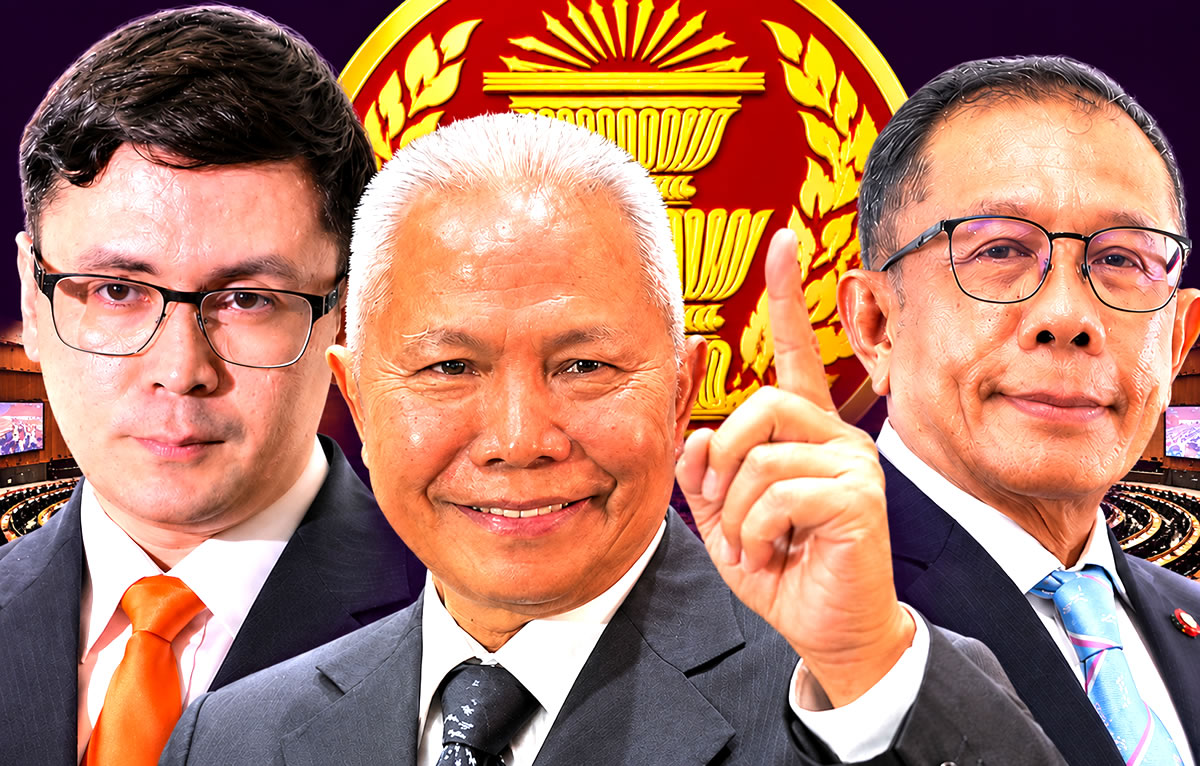
House of Representatives Speaker and President of Parliament Sophon Saram has imposed sweeping restrictions on Thailand’s 35 standing parliamentary committees. The move follows a fierce confrontation over investigations involving Prime Minister Anutin Charnvirakul and his Bhumjaithai Party.
At the centre is an online gambling inquiry involving suspected money laundering and a Chinese-born businessman’s financial interests. His wife is a Bhumjaithai MP. Under the new rules, committee chairmen cannot independently launch substantive investigations or summon witnesses without committee approval.
Consequently, opposition-led inquiries face tighter controls, while Sophon gains greater authority over parliamentary investigations.
Sophon tightens committee powers after disputes over witness summons and parliamentary probes
The restrictions were reported on Monday, November 2, following consultations between Sophon and all 35 committee chairmen. Their October 21 meeting addressed growing disputes over investigative powers, witness summonses and the authority of individual chairmen.
Under the approved guidelines, chairmen must obtain committee resolutions before initiating substantive inquiries or inviting witnesses. They also face restrictions on changing agreed agendas or introducing new matters without approval.
Furthermore, Sophon gains authority to intervene when investigations overlap between two or more parliamentary committees. He can temporarily suspend proceedings, convene discussions and determine which committee should continue if agreement fails.
The guidelines invoke Section 129 of Thailand’s Constitution and existing parliamentary regulations. They also address legislation governing the formal summoning of witnesses and documents.
Sophon maintains that parliamentary committees must operate strictly within their legal responsibilities. However, his intervention follows repeated confrontations between Bhumjaithai MPs and opposition committee chairman Rangsiman Rome.
Rome probes Shuffle.com links to Bhumjaithai MP and her Chinese-born businessman husband
The People’s Party deputy leader and firebrand party-list MP chairs the House Committee on Law, Justice and Human Rights. His investigations have examined online gambling networks, suspected money laundering and financial transactions involving politically connected individuals.
The confrontation intensified when Rangsiman’s committee began examining the online gambling platform Shuffle.com. The inquiry involved Chaiyaphum Bhumjaithai MP Suchada Sangtan-sap and her Chinese-born, Australian-Chinese husband Taiyang Zhang.
Investigators were examining Zhang’s business interests and companies reportedly associated with the foreign-registered gambling operation. Questions concerned ownership arrangements, shareholdings, financial transactions and the timing of corporate disclosures.
Suchada and Zhang have denied wrongdoing. Moreover, the parliamentary proceedings have not established criminal liability against either individual. Nevertheless, the investigation brought the financial interests of a governing-party MP’s husband under direct parliamentary examination. It also drew senior government figures into the inquiry.
The gambling investigation developed from an earlier controversy involving claims of a ฿40 million bribery offer connected with gambling enforcement. Subsequently, Rangsiman’s committee expanded its examination to thousands of gambling websites, cryptocurrency transactions and suspected money laundering. Investigators also examined financial intermediaries and digital asset trading platforms associated with relevant transactions.
Anutin and senior officials invited as gambling inquiry examines cryptocurrency and corporate dealings
On October 4, reports confirmed that the committee had invited ten individuals to attend its October 7 meeting. They included Prime Minister Anutin Charnvirakul and Digital Economy and Society Minister Chaichanok Chidchob. Senior police officers, financial regulators, Suchada and Zhang were also invited to provide information. As a result, the investigation reached directly into Anutin’s administration and the governing Bhumjaithai Party.
The committee sought information concerning corporate structures, financial movements and possible breaches of Thai gambling legislation. In parallel, investigators examined whether cryptocurrency transactions raised questions under Thailand’s anti-money laundering laws.
Former Democrat Party MP Sirichoke Sopha supplied information concerning the ownership arrangements and financial transactions under scrutiny. His involvement subsequently became a central issue in the confrontation over Rangsiman’s authority.
By late October, Rangsiman was pressing authorities to examine cryptocurrency transactions connected with the gambling platform. Reports identified Bitkub and Maxbit as platforms through which relevant financial transactions had passed. Separately, information was being sought from Binance Thailand concerning transactions relevant to the inquiry. The central question concerned whether activities involving a foreign-registered gambling business breached Thai law.
Bhumjaithai deputy chairman challenges witness invitation as Shuffle.com investigation sparks row
However, those matters remained under investigation. The parliamentary proceedings had not established criminal wrongdoing by the individuals involved. The inquiry nevertheless continued examining the ownership structures and financial transactions associated with Shuffle.com. Meanwhile, a separate battle was developing over the committee chairman’s authority to pursue those questions.
That confrontation reached a critical stage on October 22. Bhumjaithai MP Supachai Jaismut, the committee’s deputy chairman, challenged Rangsiman’s handling of the investigation.
Specifically, Supachai objected to former Democrat Party MP Sirichoke Sopha appearing before the committee. Sirichoke had been invited to provide information concerning Zhang’s business interests and financial arrangements.
Supachai argued that the committee had not formally approved the inquiry or the witness invitation. Therefore, he maintained that Rangsiman could not proceed through a unilateral decision by the chairman. The dispute centred on whether committee approval was required before introducing substantive matters or inviting individuals to testify. Rangsiman’s supporters rejected Supachai’s interpretation.
Committee members defend ongoing gambling inquiry before government-aligned MPs stage walkout
People’s Party MP Piyarat Chongthep pointed out that the relevant meeting notice had already been circulated on October 9. Meanwhile, Prachachat Party leader and former Justice Minister Pol Col Thawee Sodsong challenged the procedural objections.
Thawee argued that the committee had already examined related gambling matters during eight previous meetings. Accordingly, he maintained that the Shuffle.com inquiry was a continuation of existing business.
Under that interpretation, the investigation did not constitute a completely new matter requiring another committee resolution. Supachai disputed the chairman’s authority to proceed without formal approval. The disagreement quickly developed into a confrontation over the committee’s investigative powers and the procedures governing witness invitations.
Supachai then announced that he had lodged a complaint with the National Anti-Corruption Commission concerning Rangsiman’s conduct. The complaint questioned whether the chairman had exercised his authority correctly during committee proceedings. Shortly afterwards, seven government-aligned committee members walked out of the meeting. They included representatives of Bhumjaithai, Kla Tham and Pheu Thai.
Walkout fails to stop inquiry as earlier complaint against Rangsiman reveals deeper committee dispute
Despite the walkout, the remaining committee members continued their proceedings. Rangsiman questioned why procedural objections had intensified when investigations began involving figures associated with Bhumjaithai.
The confrontation exposed a serious division over the chairman’s powers and the authority of committee members acting collectively. It also brought the dispute into direct political conflict.
Notably, the disagreement between Rangsiman and Supachai had begun before the latest Shuffle.com controversy. According to Nation TV’s November 2 report, Supachai submitted an earlier complaint to Sophon on August 17.
That complaint challenged Rangsiman’s exercise of committee authority, including jurisdiction, meeting arrangements and witness invitations. It also concerned a separate investigation into alleged irregularities involving local government examinations.
Prime Minister Anutin had been invited to provide information in connection with that earlier inquiry. Thus, the dispute over parliamentary investigative powers preceded the October confrontation concerning Shuffle.com. The gambling investigation subsequently intensified the disagreement and brought additional Bhumjaithai-linked figures into the proceedings.
Supachai rejects claims of protecting Bhumjaithai MP as Sophon prepares restrictions for 35 committees
On another front, People’s Party MP Rukchanok Srinork publicly suggested that Supachai’s intervention was intended to protect Suchada. Supachai rejected the accusation and denied any connection between his earlier complaint and the Chaiyaphum MP.
He also maintained that he had not requested a meeting involving all 35 committee chairmen. Subsequently, Supachai initiated legal complaints against Rukchanok and others over statements he considered defamatory.
The dispute therefore extended beyond parliamentary procedure into accusations concerning political motives and separate legal proceedings. Against this background, Sophon convened the October 21 meeting with the chairmen of all 35 standing committees.
Discussions covered jurisdiction, meeting schedules, agenda setting and the invitation or summoning of witnesses. They also addressed investigations involving matters falling within the responsibilities of several committees.
The resulting guidelines were approved and publicly reported on November 2. Their first major provision requires committees to interpret their powers strictly within their assigned responsibilities.
Under the new arrangements, committees cannot expand investigations beyond their jurisdiction or assume responsibilities belonging to other panels. They must also interpret the wording and intention of the relevant legislation strictly.
Speaker takes control of overlapping inquiries and restricts committee meeting schedules and jurisdiction
As part of these restrictions, committees cannot pursue overlapping investigations without resolving which panel should exercise responsibility. Where two or more committees become involved in the same matter, officials must report the dispute to Sophon.
Consideration can then be temporarily suspended while the Speaker convenes discussions with the relevant chairmen. Those discussions must establish which committee will take responsibility.
If the chairmen cannot agree, Sophon has authority to make the final decision. The guidelines also prohibit committees from conducting duplicate proceedings concerning the same issue. Consequently, the Speaker gains decisive control over unresolved jurisdictional disputes. His authority includes determining which parliamentary panel can proceed with an investigation when competing claims remain unresolved.
A second provision governs the scheduling of committee meetings. Each committee must establish its regular weekly meeting schedule through a resolution adopted at its first meeting. Chairmen retain authority to convene special meetings when necessary, particularly for urgent matters. However, they cannot use that authority to establish a separate, continuing weekly schedule.
New rules curb chairmen’s control of agendas and witness summons but preserve inquiry powers
A third provision imposes tighter restrictions on the chairman’s control over committee agendas. Although chairmen retain responsibility for setting agendas, they cannot disregard decisions already adopted by committee members.
They also cannot independently introduce substantive matters for consideration without the necessary approval. Likewise, restrictions apply when chairmen seek to invite individuals or organisations to provide explanations.
Where a committee resolution is required, the chairman cannot issue invitations solely through personal authority. The guidelines also regulate the formal summoning of witnesses and documents. Such summonses must comply with the 2025 legislation governing parliamentary committees’ summons powers. Importantly, inviting someone to cooperate differs from issuing a legally enforceable summons.
A request for information does not necessarily carry the same legal consequences as a formal summons. Even so, the new guidelines require greater reliance on collective decisions before investigative powers are exercised.
Sophon has not abolished the constitutional authority of parliamentary committees to investigate matters within their responsibilities. Instead, the restrictions govern how investigations begin, agendas are approved and witnesses are summoned.
Committee majorities gain control over investigations as opposition chairmen face new voting requirements
The guidelines also strengthen the Speaker’s authority over overlapping parliamentary investigations. Their immediate procedural effect is to transfer practical control from individual chairmen towards committee members acting collectively.
Previously, Rangsiman had exercised his chairmanship to advance inquiries and arrange appearances before his committee. Under the approved arrangements, substantive investigative steps require the necessary committee approval.
This distinction becomes significant when opposition chairmen lead committees containing government-aligned MPs. Those members can challenge proposed investigations, witness invitations or agenda items through formal committee procedures.
However, the government’s majority in the House does not automatically establish control over every parliamentary committee. Individual decisions depend on committee membership, attendance and voting arrangements.
The guidelines apply to all 35 standing committees, including those chaired by government representatives. Nevertheless, their immediate political significance arises from the confrontation involving Rangsiman and Bhumjaithai MPs.
Supachai and Rangsiman clash over legal powers while Shuffle.com investigation remains formally open
Supachai maintains that committee chairmen must respect constitutional limits and decisions made collectively by committee members. By contrast, Rangsiman argues that restrictions on chairmen’s authority could obstruct parliamentary investigations into the government.
Their competing positions concern the interpretation and exercise of existing parliamentary powers. At the same time, Sophon’s intervention gives the Speaker greater control over disputes involving committee jurisdiction.
He can temporarily halt proceedings while competing claims are examined. If discussions fail, he can determine which committee should continue. Jurisdictional disputes can therefore affect the timing and progress of politically sensitive investigations.
The immediate position of the Shuffle.com inquiry remains unchanged in one important respect. The November 2 guidelines do not automatically terminate Rangsiman’s investigation.
His committee can continue examining gambling networks, financial transactions and associated business interests through the required procedures. However, further witness invitations and substantive investigative decisions must comply with the approved committee rules.
Gambling and money laundering inquiries remain despite new restrictions on parliamentary panels
It remains unclear whether earlier invitations will face additional procedural challenges. Equally, the available reports do not establish that Sophon has ordered the gambling investigation to close.
Nor do they establish that Rangsiman’s committee has cancelled its examination of Zhang’s business interests. The Speaker’s guidelines also do not prevent criminal investigations by police or other competent authorities.
The Department of Special Investigation and anti-money laundering authorities retain their separate legal responsibilities. Parliamentary committees and criminal investigators exercise different powers under their respective legal frameworks.
Accordingly, restrictions on parliamentary procedures do not automatically halt inquiries into suspected gambling offences or money laundering. The parliamentary dispute remains separate from any criminal investigations.
For Suchada and Zhang, the inquiry concerns business interests, ownership arrangements and financial transactions. For Prime Minister Anutin, the controversy also involves questions surrounding his government’s response to online gambling enforcement.
His invitation to appear before Rangsiman’s committee placed the Prime Minister directly within the parliamentary dispute. Digital Economy and Society Minister Chaichanok Chidchob was also invited during the earlier proceedings.
Bribery claims and summons to Anutin fuel committee dispute before October confrontation and new rules
In addition, the earlier ฿40 million bribery controversy remains part of the investigation’s background. The dispute has consequently developed along two separate lines. One concerns gambling networks, financial transactions and possible breaches of Thai law.
The other concerns parliamentary committees’ authority to initiate inquiries and obtain information from witnesses.
Sophon’s decision addresses the second issue through restrictions applying across the House. Yet those restrictions emerged after repeated confrontations involving the committee investigating the gambling allegations. The chronology establishes how the dispute developed. Supachai submitted his complaint on August 17, before the October confrontation concerning Shuffle.com.
Subsequently, Rangsiman’s committee invited ten individuals to attend its October 7 meeting. Those invitations included Prime Minister Anutin, Digital Economy and Society Minister Chaichanok Chidchob, Suchada and Zhang. The examination of gambling networks and associated financial transactions continued during October. Meanwhile, the dispute over Rangsiman’s authority to invite witnesses intensified.
October walkout precedes Speaker’s new guidelines as gambling inquiry faces tighter procedural controls
Sophon met the chairmen of all 35 standing committees on October 21. The following day, the confrontation involving Rangsiman, Supachai and government-aligned committee members reached a critical stage. Seven government-aligned MPs walked out after the dispute over Sirichoke’s appearance. Nonetheless, the committee continued its proceedings.
Finally, the approved operational guidelines were reported on Monday, November 2. The sequence establishes an extended dispute over committee authority rather than a single disagreement concerning one witness. It also places the new restrictions within a confrontation between opposition investigators and government-aligned MPs.
The controversy has widened beyond the original questions concerning Shuffle.com and Zhang’s business interests. It now involves procedures governing all 35 standing committees and the Speaker’s authority to settle jurisdictional disputes.
For Rangsiman, further substantive investigative steps require committee approval. For Supachai, the central issue remains whether committee chairmen have complied with constitutional and parliamentary procedures.
Unresolved gambling questions remain as Sophon imposes stricter rules across all 35 House committees
Separately, the questions concerning Suchada’s husband remain unresolved. The business ownership arrangements, cryptocurrency transactions and possible breaches of Thai law remain matters for investigation. No parliamentary finding of criminal liability against Suchada or Zhang has been established in the supplied reporting. Similarly, the November 2 decision does not establish wrongdoing by Rangsiman.
The complaint concerning Rangsiman’s exercise of committee authority remains separate from the underlying gambling investigation. As of November 3, no formal termination of his Shuffle.com inquiry has been established. The committee’s ability to proceed depends on compliance with the approved procedures and any further jurisdictional decisions.
Meanwhile, Sophon’s intervention has changed the procedures governing investigations across all 35 House standing committees. It also gives the Speaker final authority in unresolved jurisdictional disputes. Committee chairmen consequently face tighter controls over agendas, witness invitations and the initiation of substantive inquiries.
House Committee chair Rome to call Bhumjaithai MP and Australian husband on Wednesday over wealth
Forex trading now in the sights of lawmakers as Bhumjaithai Party committee boss calls for change
The restrictions follow months of disputes involving Rangsiman, Supachai and investigations touching figures within Anutin’s Bhumjaithai Party. The government-aligned walkout on October 22 marked the sharpest confrontation before the guidelines were publicly reported. Nevertheless, the new procedures do not close the Shuffle.com investigation or determine the questions surrounding Zhang’s business interests.
The Speaker has approved the restrictions. Rangsiman’s investigation has not been formally closed. The financial questions remain unresolved, while all 35 standing committees face tighter procedural controls over their investigative work.
Join the Thai News forum, follow Thai Examiner on Facebook here
Follow Thai Examiner on Google here
Receive all our stories as they come out on Telegram here
Follow Thai Examiner here
Further reading:
House Committee chair Rome to call Bhumjaithai MP and Australian husband on Wednesday over wealth
Bhumjaithai MP files police report against People’s Party’s Rangsiman Rome over scammer link remarks
Former cabinet minister and Pheu Thai highflyer clarifies Ben Smith and luxury Gulfstream jet story
PM Paetongtarn suspended from duties while Deputy Prime Minister Suriya Jungrungruangkit takes power