Thailand axes an Israeli tourist’s visa as a Koh Samui zoo dispute triggers nationalist protests and reported death threats from Paris. Minister Surasak orders airline briefings while arrivals plunge and security crises again hit Chinese and Malaysian markets.
Thailand has revoked an Israeli tourist’s visa after a Koh Samui zoo dispute triggered nationalist protests and reported death threats from Paris. Tourism Minister Surasak Phancharoenworakul also ordered airlines to brief all Thailand-bound passengers on Thai laws and culture. The unprecedented move comes as weekly foreign arrivals plunge 9.18% and the 2026 total falls 2.96%. Meanwhile, a Chinese tourist’s kidnapping threatens Thailand’s largest market, while southern unrest places vital Malaysian arrivals at risk.
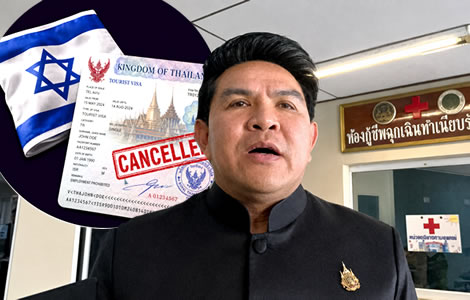
Thailand revoked an Israeli tourist’s visa on Tuesday after a zoo dispute on Koh Samui became an international incident. The confrontation has prompted Thai nationalist protests against Israeli tourists. Separately, reported death threats from Paris have widened the affair beyond the island.
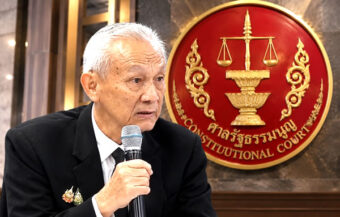
Tourism and Sports Minister Surasak Phancharoenworakul announced the revocation before Tuesday’s Cabinet meeting. He spoke to reporters at Government House at 10 am. According to Surasak, the Israeli tourist was accused of causing trouble and claiming influence in Thailand. The visitor was also accused of placing a bounty on the zoo’s owner.
In response, immigration officials cancelled the tourist’s visa. The measure prevents him from remaining legally in Thailand under that permission. Surasak said the government wanted to stop the confrontation from escalating. Even so, the supplied material did not identify the Israeli tourist.
Surasak warns foreign tourists against importing symbolic conflicts into Thailand after Samui dispute
“Thailand is ready to welcome all tourists who abide by Thai laws and respect Thai culture,” Surasak said.
At the same time, the minister issued a firm warning against importing international disputes into Thailand. He said visitors could not use the kingdom to stage symbolic conflicts unrelated to Thailand.
“Thailand will not allow anyone to use our country as a platform for creating symbolic conflicts that have nothing to do with our country. We welcome all tourists, but we do not welcome tourists who come here to cause problems or use Thailand to express conflicts.”
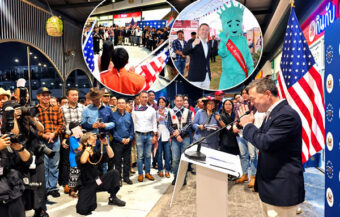
The dispute began with a disagreement over admission to an exotic animal zoo on Koh Samui. The attraction is owned by a Thai woman whose French partner became involved. Subsequently, the confrontation expanded far beyond the original entry dispute. It drew national attention, immigration action and protests by Thai nationalist movements.
Earlier, reports on Monday suggested that both foreign protagonists could lose their visas. Those reports appeared to include the zoo owner’s French partner. By Tuesday, Surasak had confirmed only the Israeli visitor’s revocation. The minister did not confirm a completed cancellation involving the French national.
Meanwhile, the original dispute has produced a broader security response. Reported death threats from Paris have added an overseas dimension. In parallel, protests against Israeli tourists have increased the domestic pressure surrounding the case. A local commercial disagreement has consequently become a national tourism issue.
Government orders rapid response to tourist incidents while rejecting nationality-based visa action
As part of the response, the government is monitoring problems involving foreign tourists. The Prime Minister has instructed provincial officials to act rapidly when incidents develop. Likewise, the Tourist Police and regional police have received orders to respond quickly. The government wants local agencies to prevent further escalation.
On visa policy, Surasak rejected blanket action against particular nationalities. Officials will instead examine each case on its specific facts. Reporters asked whether visas should be reviewed when nationals of certain countries repeatedly caused problems. Initially, the government will continue handling those cases individually.
“If there is a problem, we will expedite visa revocation,” Surasak said.
Crucially, the minister said one tourist’s conduct would not determine another visitor’s treatment. Visa enforcement will therefore remain focused on individual behaviour. Nationality alone will not trigger automatic cancellation. Nonetheless, officials can accelerate revocation when a particular visitor causes serious problems.
Beyond Koh Samui, Surasak announced a wider policy affecting every foreign tourist travelling to Thailand. Visitors would receive information about Thai culture and laws before boarding their flights. The guidance would explain permitted conduct and possible violations of Thai law. It would also cover Thai traditions and accepted cultural practices.
Airlines asked to brief all Thailand-bound passengers on Thai laws, traditions and cultural practices
To advance the plan, the Tourism Authority of Thailand has contacted foreign embassies. Airlines have also been asked to communicate the official information. Ideally, travellers would receive the material before boarding aircraft bound for Thailand. They would then understand key rules before arriving in the kingdom.
Under the proposal, international airlines would assume a new communication role. Carriers would help provide official guidance before their flights departed. Notably, the requirement would cover visitors from every country. It would not apply solely to Israelis or nationals linked to previous disputes.
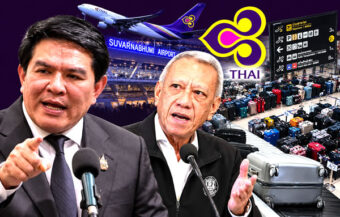
The plan represents an unprecedented step for Thailand’s international tourism sector. For airlines, it adds a pre-departure briefing responsibility. For passengers, it introduces legal and cultural guidance before their journeys begin. For the government, it extends tourism controls beyond Thailand’s borders.
More specifically, tourists would learn what Thai law permits. They would also receive warnings about conduct constituting a violation. In addition, the briefings would describe Thai traditions and cultural practices. Mutual respect would form part of the information provided to travellers.
Thailand’s foreign tourist arrivals fall below 2025 levels as latest weekly numbers drop sharply
The policy announcement comes during a difficult period for Thailand’s tourism industry. Foreign arrivals are already running below their 2025 level. From January 1 through August 22, Thailand received 20,316,055 international visitors. That represented a 2.96% decline from the corresponding period last year.
Despite the decline, those visitors generated an estimated ฿984.32 billion in spending. Yet the latest weekly figures showed a sharper slowdown. Thailand received 556,400 foreign tourists during the reporting week. The total fell by 56,243 visitors from the previous week.
As a result, weekly arrivals dropped by 9.18%. Thailand received an average of 79,486 foreign tourists each day. Short-haul and nearby markets supplied 384,778 visitors. That segment declined by 4.70% from the preceding week.
Across the market, both regional and long-haul arrivals weakened. Several leading source countries recorded particularly steep falls. China remained the largest weekly market with 110,271 visitors. Malaysia ranked second with 62,845 arrivals.
India supplied 37,307 tourists and occupied third place. Taiwan followed with 25,348 visitors. Japan completed the top five with 22,291 arrivals. Three of these five leading markets recorded substantial weekly declines.
China, India and Japan record steep falls as Taiwan climbs and southern unrest threatens Malaysia
China’s weekly total fell by 10.65%. India recorded a 9.11% decline. Most sharply, Japanese arrivals dropped by 27.31%. Conversely, Malaysia and Taiwan produced weekly increases.
Malaysian arrivals rose by 4.66%. Taiwanese numbers increased by 7.95%. Moreover, Taiwan has now recorded growth for two consecutive weeks. Additional airline capacity helped support that performance.
EVA Air operated up to 32 weekly services between Taipei and Bangkok. Accordingly, Taiwan climbed from sixth to fourth place among the weekly markets. Japan moved from fourth to fifth position. Its fall followed the end of the Mountain Day and Obon holidays.
Once those extended holidays ended, Japanese travel demand declined sharply. China faces a similar seasonal change as its summer holiday approaches completion. Consequently, the Chinese market weakened before the new school period. The ministry expects that pressure to continue into the coming week.
Malaysia initially benefited from several extended holidays. These included Melaka Governor’s Day in Melaka and Maulidur Rasul. On another front, unrest in Thailand’s southern border provinces now threatens that improvement. The violence flared over the weekend and received coverage in Malaysian media.
Chinese kidnapping and southern unrest place fresh pressure on Thailand’s two largest tourist markets
Given that coverage, some Malaysian tourists may reconsider their travel plans. The Tourism and Sports Ministry warned that the reports could influence travel decisions. Malaysia is Thailand’s second-largest cumulative foreign tourism market. Only China has supplied more visitors during 2026.
From January 1 through August 22, China produced 3,440,752 visitors. Malaysia supplied 2,559,676 tourists during the same period. India ranked third with 1,494,003 arrivals. Russia followed with 1,158,680 visitors.
South Korea occupied fifth place with 749,202 arrivals. Taken together, the figures show Thailand’s heavy dependence on regional Asian markets. Any decline from China or Malaysia quickly affects the national total. Both markets now face separate pressures connected to security concerns.
For China, another serious problem emerged this week. A Chinese tourist was kidnapped after deciding to spend time in Bangkok. She was travelling to Singapore and had stopped in the Thai capital. Instead, her visit became the subject of a major criminal case.
The kidnapping came as weekly Chinese arrivals had already fallen by 10.65%. Furthermore, the case is expected to spread across Chinese social media networks. Negative online commentary has severely damaged Thailand’s reputation, especially concerning safety and security. The new case risks feeding that existing criticism.
Tourism slowdown spreads across leading markets as major security cases threaten China and Malaysia
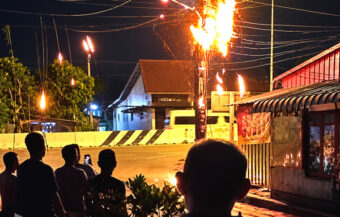
For Malaysia, the principal immediate concern is unrest in Thailand’s southern border provinces. Malaysian tourists frequently travel through southern Thailand. Therefore, news of violence can quickly influence their decisions. Reports have already circulated through Malaysian media.
The unrest occurred as Malaysian arrivals showed a 4.66% weekly increase. That rise followed the approach of extended Malaysian holidays. Still, the security situation could slow subsequent travel. The ministry identified the southern unrest as a threat to future Malaysian numbers.
Seasonal pressures are also building across several markets. Summer school holidays are ending in many countries. As these breaks conclude, international travel normally slows. Against this backdrop, Thailand expects another reduction in arrivals during the coming week.
The decline is no longer confined to one source country. China, India and Japan all recorded significant weekly falls. Nearby markets collectively dropped by 4.70%. Overall arrivals declined by 9.18%.
Within this weakening market, Thailand now faces three distinct problems. The Koh Samui affair has raised questions about foreign conduct and visa enforcement. The Chinese kidnapping threatens further reputational damage across Chinese networks. Southern unrest could also discourage travellers from Malaysia.
Government combines individual visa enforcement with airline briefings and faster police responses
In the Koh Samui case, the government has already taken direct immigration action. The Israeli tourist’s visa has been revoked. In contrast, any cancellation involving the zoo owner’s French partner remains unconfirmed. Monday’s reports had suggested that both men could face revocation.
The government has also separated individual enforcement from nationality-based action. Each case will be reviewed separately. Where problems arise, officials can accelerate cancellation. Where no violation exists, another tourist’s nationality will not determine the outcome.
Operationally, provincial officials now face instructions to act quickly. The same direction applies to regional police and the Tourist Police. Their task is to respond when incidents involving foreign visitors develop. Fast intervention is intended to prevent additional problems.
From a tourism perspective, the airline briefing plan is the broader change. Embassies and carriers would help distribute information before departure. The Tourism Authority of Thailand has already begun contacting them. Passengers would receive both legal and cultural guidance.
Under that approach, tourists would learn what Thailand permits before entering the country. They would also learn what could violate Thai law. Equally, the briefings would explain local traditions and cultural expectations. The proposed information would reach passengers before they boarded their flights.
Surasak combines visa enforcement with wider controls as Koh Samui case remains closely monitored
Surasak’s announcement therefore combines immediate enforcement with wider pre-arrival controls. One Israeli tourist has already lost his visa. Other foreign visitors could face the same action when individual cases justify it. At present, no collective action against any nationality has been announced.
The minister also reminded foreign tourists that assistance remains available inside Thailand. Visitors who experience problems or feel unsafe can contact the Tourist Police. Provincial officials and regional police remain under orders to respond rapidly. The Koh Samui case remains under close government monitoring.
Koh Samui dispute over a visit by Israelis to a zoo escalated to security checkpoints and plans to deport
Koh Samui Animal Park bans Israeli family including two young girls on the basis of their nationality
Ultimately, the dispute has moved well beyond an argument at an island zoo. It has produced protests, reported overseas threats and a confirmed visa revocation. It has also prompted proposed briefings for every foreign tourist flying to Thailand. Further individual immigration action remains possible if officials establish additional violations.
Join the Thai News forum, follow Thai Examiner on Facebook here
Receive all our stories as they come out on Telegram here
Follow Thai Examiner here
Further reading:
Community tensions rise between locals and Israelis in southern Thailand particularly on Koh Phangan
Anutin visits Koh Phangan as nominee crackdown shows 68% of firms with foreign ownership links
Blitzkrieg on foreign firms and enterprises on Koh Phangan continues with French owned resort busted
Russian-Chinese Koh Phangan alliance to sell drugs to foreigners. Accused entered Thailand illegally
Crackdown aimed at upending foreign business trade moves from Koh Phangan to Phuket. Four arrested
Crackdown to wipe out foreign business abuses and ownership on Koh Phangan & Koh Samui intensifies