Police probe a family nightmare as Mother Phat, 63, accuses her son of arranging her removal to a nursing home. She claims two years of captivity. Caged beds are uncovered, the facility is shut and two volunteers explain their ฿15,000 transport fees.
A 63-year-old Thai mother who claims her son and daughter-in-law arranged her abduction broke down on Friday while showing police the rooms where she says she was imprisoned for over two years. Mother Phat identified hidden cells and described terrifying mistreatment inside a Kanchanaburi nursing home where inspectors discovered patients confined in steel-caged beds. Meanwhile, two rescue volunteers admitted receiving ฿15,000 to remove her from home but denied assaulting her. Both were questioned as witnesses as police investigated a bitter family dispute involving business and property interests. The private institution, which housed 92 residents, has now been closed by government order. In a case gripping Thailand, Mother Phat is demanding prosecutions against everyone involved, including her own son. The scandal has also challenged the country’s deeply rooted tradition of respect and care for ageing parents.

A 63-year-old Thai mother allegedly abducted on her son’s orders broke down on Friday while showing police where she was imprisoned. Mother Phat returned to a Kanchanaburi nursing home where she claims she spent over two years in captivity.
There, she identified hidden rooms, prison-like cells and locations where she says she suffered terrifying mistreatment. Meanwhile, two rescue volunteers paid ฿15,000 to remove her from home, reported to Bangkok police.
Mother Phat accuses son and daughter-in-law of arranging her removal amid a dispute over family assets
They denied wrongdoing and were questioned as witnesses. The scandal has exposed steel-caged beds and disturbing conditions inside a private psychiatric care facility housing 92 residents. Government inspectors have since ordered the establishment closed. At the centre of the affair is a bitter family dispute involving Mother Phat’s son, daughter-in-law and property interests. The case has gripped Thailand, where respect for parents remains a deeply rooted family tradition.
The woman, identified as Ms Naphat, is widely known as Mother Phat. Her account has dominated public discussion following her appearance on the television programme Hone Krasae.
She claims her son, known as Benz, and his wife arranged her forcible removal from home. Subsequently, she was transported to Sothornchai Nursing Home in Tha Muang district, Kanchanaburi. There, she says, she was held against her will for approximately two and a half years. During that period, she claims she suffered assaults, threats, forced medication and degrading treatment.
The case has developed into a widening criminal investigation involving family members, rescue volunteers and a private nursing home. However, those involved have offered sharply conflicting accounts. Mother Phat maintains that her removal followed a dispute over control of her business and property.
Her son has apologised but insists he did not know the conditions inside the institution. Similarly, his wife has maintained that she was unaware of the full circumstances surrounding her mother-in-law’s treatment. Nevertheless, Mother Phat insists her family arranged the operation that deprived her of freedom.
Police return to Kanchanaburi nursing home as Mother Phat identifies hidden rooms and signs of confinement
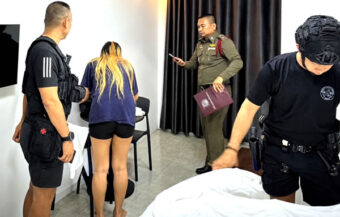
On Friday, October 9, the woman returned to the establishment accompanied by Crime Suppression Division officers. Kanchanaburi labour welfare officials and representatives of Tha Muang Subdistrict Municipality also attended. The visit quickly turned into a tense examination of the rooms where she claims she was imprisoned.
Mother Phat led investigators through the premises, identifying locations associated with her confinement. In addition, she pointed out markings she said she had made herself. Officers examined the areas while she described what happened inside.
One room attracted particular attention. Mother Phat identified a dark area towards the rear of the building, describing it as a hidden detention room. She called it the balloon room. According to her account, staff sometimes locked her there when outsiders visited the establishment.
She claimed the arrangement prevented inspectors from discovering her presence or hearing her appeals for assistance. Crucially, investigators have not yet established whether residents were deliberately concealed during previous inspections.
Mother Phat breaks down recalling confinement before nursing home owner approaches during inspection
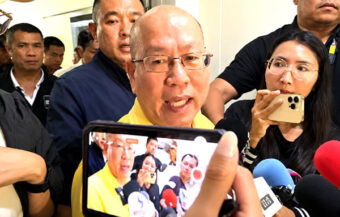
The return triggered a powerful reaction. Mother Phat became distressed as she recognised the rooms and remembered her experiences. “Today, I took officials to show them each room where I was held,” she told reporters. “When we saw some of the rooms, I burst into tears because it was so terrible.” She said officials accompanying her were also disturbed by the conditions. Furthermore, she explained that she had only been outside the institution for approximately two months.
“Old memories came flooding back. I tried to erase those images, but I only got out two months ago.” She struggled to continue speaking and cried while describing her confinement. Separately, she recalled an incident inside the hidden room.
Mother Phat claimed she suffered severe stomach pain before fainting. She also said another psychiatric patient had been placed inside with her. However, she refused to disclose everything that happened. She feared further details could interfere with the continuing investigation.
The inspection then descended into confrontation. The nursing home’s owner, widely known as Aunt Maew or Pa Maew, approached while Mother Phat was identifying the rooms. Her arrival immediately unsettled the former resident. Officers asked Mother Phat whether she was comfortable with the owner remaining nearby. She replied that the woman’s presence made her shake. Her heart raced, her hands turned cold and her face became pale. She said the encounter revived memories of previous mistreatment.
Police ask home owner to leave as her son apologises for confrontation with distressed Mother Phat
In response, police asked Aunt Maew to leave the area. However, the owner challenged Mother Phat’s account before departing. She urged the former resident to tell the truth about their previous dealings.
Aunt Maew referred to earlier conversations and arrangements for Mother Phat to speak with her son. She also appealed to their shared experience as mothers. Mother Phat, however, interpreted the intervention as intimidation. She said she was terrified because the woman she accused of mistreatment was standing beside her.
The confrontation was witnessed by the owner’s son, known as Japan. He approached Mother Phat, bowed respectfully and apologised for his mother’s intervention. Japan explained that he had intended to give her sufficient space to identify the relevant rooms.
However, he acknowledged that the two women had different feelings about their previous interactions. “I must apologise to Pat’s mother and everyone watching at home for your mother going inside,” he said. He also apologised for events that had occurred previously.
Mother Phat accepted that forgiveness was possible. Nevertheless, she refused to abandon the criminal proceedings. She insisted that the case must continue against everyone responsible. Japan subsequently repeated his apology and expressed regret over the confrontation.
Mother Phat demands prosecutions as two volunteers explain how her son arranged journey to Kanchanaburi
Mother Phat then appealed directly to reporters to maintain public attention. She said she had initially feared the affair would be suppressed. “We were afraid it would be hushed up,” she explained. However, she believed the publicity had already helped other vulnerable people receive assistance.
The woman confirmed that she intended to pursue legal action against everyone involved, including members of her own family. Meanwhile, a separate development unfolded at Wang Thonglang Police Station in Bangkok.
Two rescue volunteers involved in her original removal voluntarily reported to investigators. They were identified as Mr Thammanoon, 25, and Mr Theerapong, 46. Both men gave statements on Friday concerning the operation that took Mother Phat from her home to Kanchanaburi.
Theerapong, an ambulance driver associated with the Poh Teck Tung Foundation, described how the assignment began. He claimed Mother Phat’s son, Benz, contacted him requesting assistance. According to Theerapong, Benz said his mother was a psychiatric patient requiring transportation to a care facility.
The volunteers subsequently travelled to the family home. However, Theerapong claimed they encountered Mother Phat holding scissors. He said the situation required physical intervention. According to his account, he restrained her arm from behind while they removed the scissors.
Volunteers deny assault and explain ฿15,000 payment as police examine claims of a forced removal from home
Mother Phat struggled and resisted the operation. Theerapong acknowledged that physical restraint was used. Earlier accounts also referred to the use of rope. Nevertheless, he denied beating or deliberately injuring her.
He maintained that the volunteers were performing an assignment requested by her family. Notably, Theerapong said Benz and his girlfriend watched the entire operation. He claimed neither objected while the volunteers restrained Mother Phat and placed her in the vehicle.
The volunteers subsequently transported her to Sothornchai Nursing Home in Kanchanaburi. However, the payment for the assignment has become a major focus of the investigation. Theerapong confirmed that the team received ฿15,000.
He rejected suggestions that the money represented payment for an unlawful abduction. Instead, he described it as normal assistance towards fuel and transport expenses. He insisted that volunteers regularly help families transport psychiatric patients. According to his explanation, this assignment was no different.
Mother Phat describes the same incident very differently. She maintains that her son arranged for men to seize her and remove her against her will. The conflicting accounts now form a central part of the police investigation. Furthermore, the volunteers’ statements place Benz at the scene of the original operation. Investigators must establish what instructions were issued, what information was supplied and whether the removal was lawful.
Bangkok police question two volunteers as witnesses while examining the legality of Mother Phat’s removal
Police Colonel Jesada Yangnok, superintendent of Wang Thonglang Police Station, confirmed that both volunteers had been questioned. Importantly, investigators initially treated them as witnesses rather than suspects.
Police Colonel Jesada explained that volunteers sometimes assist in transporting mentally ill patients. He also confirmed that the men had attended voluntarily. According to their statements, Mother Phat’s son requested assistance and witnessed the operation. However, the superintendent stressed that investigators would continue gathering evidence.
At that stage, no criminal charges had been filed against anyone. Nevertheless, police could summon individuals to face charges if subsequent evidence established an offence. The volunteers’ witness status therefore does not exclude future criminal proceedings. Separately, reports indicate that the Poh Teck Tung Foundation suspended Theerapong after learning about the outside assignment. Theerapong has continued denying that he knowingly participated in unlawful activity.
The legality of Mother Phat’s original removal remains unresolved. The volunteers insist they were responding to a family request involving a psychiatric patient. Mother Phat says she was abducted.
Consequently, investigators must determine whether any medical assessment justified the intervention. They must also establish whether the required legal procedures were followed. Psychiatrist Dr Jessada Thongthaow has publicly explained that a psychiatric diagnosis does not automatically remove an individual’s legal autonomy.
Mental Health Act questions deepen as inspectors uncover barred beds and confinement rooms at home
Thailand’s Mental Health Act establishes procedures for intervention involving people presenting qualifying risks. Accordingly, a relative’s request alone does not establish lawful grounds for involuntary confinement.
The circumstances surrounding Mother Phat’s admission are therefore significant. Police must determine whether the institution received appropriate documentation and whether medical requirements were satisfied. Furthermore, her continued confinement raises separate questions about treatment, supervision and the basis for restricting her freedom.
Mother Phat claims she remained inside the institution for approximately two and a half years. During that period, she says she suffered physical assaults, threats and forced medication. Her eventual release reportedly followed contact with her younger sister. Friday’s accounts also referred to assistance from her daughter and sister. However, the full circumstances surrounding her departure remain part of the continuing inquiry.
On another front, government inspectors have uncovered disturbing conditions inside the nursing home. Sothornchai operated as a private care establishment for elderly people and psychiatric patients. Inspectors discovered steel-barred beds, enclosed sleeping areas and rooms resembling prison cells. Reports also described locked cages and separate confinement areas. These findings prompted wider scrutiny of the establishment’s operations and the treatment of its residents.
Inspectors identify 92 residents before ordering closure of facility despite owner defence of barred beds
The scale of the institution’s activities was substantial. On October 6, the Department of Mental Health released initial screening figures covering 92 residents. Of these, 86 were classified as psychiatric or substance-related cases.
The remaining six were identified as physical-health cases. Consequently, the establishment was caring for a considerable number of people requiring supervision and specialist treatment. Inspectors also examined discrepancies involving licensed capacity and actual accommodation arrangements.
The discovery of steel-barred beds raised further questions about the institution’s management. Meanwhile, the owner publicly defended aspects of its operations. Aunt Maew, described in reports as a former female military officer, maintained that some patients required physical barriers.
She argued that certain residents presented risks of injuring themselves or others. According to her explanation, the arrangements were intended to prevent harm. However, inspectors identified multiple regulatory violations.
On October 7, the Department of Health Service Support ordered the establishment closed. The decision cited breaches of applicable requirements, including provisions concerning public morality.
Subsequently, the Kanchanaburi Provincial Public Health Office confirmed the closure. The enforcement action brought the institution’s operations to an end while investigations continued. Nevertheless, the owner’s explanations remain separate from the criminal allegations concerning Mother Phat.
Government transfers former residents into public care as questions grow over hidden rooms and inspections
The closure order does not establish responsibility for every incident described by the former resident. Police must still examine the individual accusations. In parallel, government agencies faced the immediate task of relocating patients.
The Department of Mental Health arranged transfers into public-sector care. Residents were moved to psychiatric hospitals and other government services. On October 8, the department confirmed emergency arrangements following the closure.
The transfers involved residents with psychiatric conditions, substance-related problems and physical healthcare needs. As a result, public agencies assumed responsibility for continuing treatment and accommodation.
The figures also demonstrated the institution’s heavy involvement in psychiatric care. Of the 92 residents identified, only six were classified as physical-health cases. The overwhelming majority fell within psychiatric or substance-related categories.
Questions remain about the nursing home’s previous inspection history. Mother Phat claims staff sometimes concealed her when outsiders visited. She identified the balloon room as one location used for that purpose.
However, investigators have not confirmed whether inspectors were deliberately misled. Nor has the available information established how often the room was used. The allegations have nevertheless become relevant to the wider inquiry into the establishment’s operations.
Private nursing home closure adds pressure as family property dispute and son’s explanations face scrutiny
Separately, reports of investigations involving other care establishments have added to public concern. However, specific closure orders affecting additional institutions remain unconfirmed in the available material.
The confirmed enforcement action concerns Sothornchai Nursing Home. Importantly, the establishment was privately operated, not a state-owned enterprise. Government involvement concerns licensing, inspection, enforcement and the transfer of residents into public care.
Meanwhile, the financial dispute within Mother Phat’s family remains unresolved. She claims her removal followed disagreements involving her business and property. According to her account, her son and daughter-in-law orchestrated the original operation.
However, investigators have not established whether any assets changed ownership during her confinement. Nor has it been proved that obtaining control of her property motivated the decision.
Nevertheless, the family dispute remains a significant element of the criminal investigation. The son’s account also requires examination. He has publicly apologised for what happened to his mother. However, he maintains that he did not understand the conditions inside the nursing home.
His wife has similarly indicated that she was unaware of the full circumstances. Their explanations differ sharply from Mother Phat’s account of deliberate removal followed by prolonged confinement.
Police examine son’s role in removal and claims of mistreatment amid debate over respect for Thai parents
Theerapong’s statement adds another dimension. He claims Benz watched while the volunteers restrained his mother. He also maintains that the son did not object. Consequently, investigators have several accounts concerning the same events.
They must establish what happened at the family home, what instructions were issued and what followed. The nursing home’s admission records and treatment arrangements are also relevant.
Furthermore, Mother Phat’s allegations concerning assaults and forced medication require separate investigation. The physical conditions discovered by inspectors provide another body of evidence.
However, barred accommodation does not establish every accusation of individual mistreatment. Police must determine which arrangements were used, who authorised them and under what circumstances. The institution’s previous inspection history is also under scrutiny following Mother Phat’s account of concealed rooms.
The case has attracted particular attention because of the family relationship at its centre. In Thailand, respect for parents remains deeply embedded in traditional customs. The concept of bun khun concerns gratitude and obligations towards those who have provided care and support. Children are traditionally expected to recognise their parents’ sacrifices. Public expressions of respect include the wai, kneeling and asking parental forgiveness.
Mother Phat’s claims fuel public debate as police compare the volunteers’ account with her evidence
Against that background, Mother Phat’s account involves a son accused of arranging his mother’s forcible removal. The contrast has become part of the national discussion surrounding the affair.
However, the criminal inquiry concerns the actions of specific individuals. It does not establish wider patterns of behaviour among Thai families. The legal issues also extend beyond family relationships and concern the circumstances permitting involuntary psychiatric care.
Friday’s developments brought several strands of the investigation into focus. In Bangkok, the two volunteers described receiving instructions from Mother Phat’s son. They confirmed the ฿15,000 payment but rejected accusations of wrongdoing. Meanwhile, in Kanchanaburi, Mother Phat returned to identify the rooms where she says she was imprisoned. She showed officers markings she claimed to have made during her confinement.
She also described the hidden balloon room and her alleged treatment there. However, the inspection was interrupted when the owner approached. Mother Phat became frightened, prompting police to ask Aunt Maew to leave. Subsequently, the owner’s son apologised for the confrontation. Nevertheless, Mother Phat refused to withdraw her demand for prosecutions. She maintained that forgiveness would not end the legal proceedings.
Closed nursing home remains under investigation as Mother Phat presses for action against those involved
The nursing home remained closed following government enforcement action. Its former residents had been transferred into public-sector care. Meanwhile, police continued examining the original removal, the family’s involvement and the institution’s treatment arrangements. By Friday evening, the volunteers had placed their explanations on the police record. Mother Phat had also completed another inspection of the establishment she says deprived her of freedom.
However, the conflicting accounts remained unresolved. Investigators must establish whether the original removal breached criminal law and whether subsequent confinement complied with legal requirements. Separately, the claims of physical assault, forced medication and concealed detention rooms require examination. The investigation into regulatory violations is proceeding alongside those inquiries.
Horror care center closed in Kanchanaburi where patients were locked into caged beds and prison cells
Mother Phat has made clear that she intends to pursue everyone she considers responsible. That includes the son and daughter-in-law whom she accuses of arranging her removal. For now, police have confirmed the volunteers’ witness status and the continuing collection of evidence. Meanwhile, the nursing home’s closure remains in force, with its residents transferred into government care.
The next developments will depend on evidence gathered from the family, volunteers, institution and former residents. Mother Phat, however, has already made her position clear. She wants the case pursued to its conclusion, regardless of who faces charges.
Join the Thai News forum, follow Thai Examiner on Facebook here
Follow Thai Examiner on Google here
Receive all our stories as they come out on Telegram here
Follow Thai Examiner here
Further reading:
A kingdom suffering from a rising mental health crisis linked to drugs and depression suffers mayhem
Murder suspected by police in Pakkred, Nonthaburi. Wealthy barber charged with premeditated killing