Thailand accelerates Hua Hin Airport upgrade into a regional tourism hub with runway expansion, safety upgrades, and CAAT certification push as officials prepare for direct international flights and new routes linking Malaysia, Singapore and Hong Kong.
The government is moving quickly to turn Hua Hin Airport into an international aviation and tourism hub, tying infrastructure upgrades, safety certification, and international route expansion into a single push. The plan, confirmed on Saturday, May 30, 2026, by Prime Minister Anutin Charnvirakul’s office, aims to elevate secondary cities, unlock direct international flights and channel tourism income into Prachuap Khiri Khan. With runway works, CAAT certification pressure and proposed routes linking Malaysia, Singapore and Hong Kong, Hua Hin is being repositioned from a domestic airport into a Gulf-region international gateway.

The government is accelerating plans to turn Hua Hin Airport into a regional tourism hub. The programme focuses on infrastructure upgrades and international flight readiness. It aims to position the airport as a gateway to southern Thailand.
In parallel, it targets wider economic distribution across Prachuap Khiri Khan province. Moreover, officials link the project to the national transport and tourism expansion policy.
On May 30, 2026, Deputy Government Spokesperson Ms. Lalida Periswiwatana confirmed the policy direction. She said the government is pushing transport and tourism infrastructure upgrades. In addition, she noted the leadership under Prime Minister and Interior Minister Anutin Charnvirakul is behind the renewed push. Separately, she stressed secondary cities as a central development focus. Consequently, Hua Hin Airport was designated for accelerated development to operate again as an international gateway.
Hua Hin Airport is positioned as a southern gateway linking Gulf tourism and the national network.
Notably, the government is positioning Hua Hin Airport as a gateway for the upper southern region. It also aims to strengthen connectivity across the Gulf of Thailand. In addition, the airport is expected to support international tourist inflows. By extension, it is intended to link tourism demand with local economic activity. Thus, it has been integrated into national aviation planning.
In a related policy track, officials prioritise long-stay tourism segments. Health tourism has also been included as a target category. Likewise, authorities said this supports upgrading tourism quality nationwide. Accordingly, Hua Hin Airport is being prepared for international connectivity expansion. Overall, it forms part of a broader airport development framework.
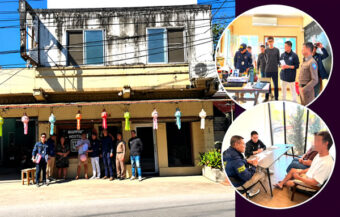
On the ground, Deputy Transport Minister Mr. Patarapong Pataraprasit visited Hua Hin Airport on May 30, 2026. He inspected ongoing development works in Prachuap Khiri Khan province.
During the visit, he reviewed progress under the “Airport for Regional Development” initiative. The programme focuses on transforming secondary airports into economic drivers. As part of this effort, authorities are accelerating project execution.
Transport Ministry pushes runway safety, tunnel works and CAAT compliance for international flights
In addition, the initiative aims to support tourism growth through infrastructure improvements. It also targets improved readiness for international operations. Separately, officials assessed construction timelines and readiness status.
The airport is being prepared for direct international flights. Therefore, acceleration measures have been activated across departments.
Under departmental instructions, the Department of Airports was ordered to fast-track key works. One project includes a road tunnel near Hua Hin Airport. Another involves expanding the runway 16 safety area. These works focus on the runway head section. Completion is scheduled for August 2026.
Crucially, officials emphasised compliance with Civil Aviation Authority of Thailand standards. CAAT sets mandatory safety requirements for airport certification. In turn, compliance is required for international flight approval. Additionally, authorities said upgrades are essential for future direct services. Hence, regulatory alignment remains a core priority.
Certification push intensifies as safety corrections and multi-agency efforts shape Hua Hin Airport’s upgrade
Separately, short-term and long-term safety correction plans were mandated. These address identified safety deficiencies at the airport. Meanwhile, agencies are accelerating certification procedures. The airport is preparing for a public airport operating certificate. CAAT is responsible for issuing the approval.
Importantly, the certificate is required for international commercial operations. It is also viewed as essential for airline confidence. In practice, it confirms compliance with safety standards. Moreover, it supports the launch of new international routes. Therefore, certification has become a key administrative milestone.
Across agencies, the Ministry of Transport is coordinating with multiple sectors in Prachuap Khiri Khan. These include government offices, tourism operators, airlines, and hotels.
Tourism arrivals and border system upgrades advance alongside passenger processing expansion
Alongside this, discussions include the development of integrated travel packages. These packages combine air tickets, accommodation, and transport services. Immigration systems are also being prepared. Customs operations are included in the same framework. Furthermore, plant and animal quarantine facilities are being upgraded.
Border entry readiness is also under review. Immigration and inspection systems are being aligned for higher volumes. In response, agencies are structuring throughput capacity. This supports expected increases in international arrivals. Overall, operational systems are being synchronised.
Currently, Hua Hin Airport handles 300 passengers per hour. The runway measures 2,100 by 35 meters. In addition, the apron accommodates two aircraft simultaneously. These include Airbus A320 and Boeing 737-800 aircraft. As a result, the airport supports medium-scale commercial operations.
Historically, Hua Hin Airport operated international flights between 2018 and 2020. The route connected Kuala Lumpur and Hua Hin. However, operations were suspended during the COVID-19 period. Since then, international services have remained inactive. Consequently, authorities are now working toward restoration.
Domestic operations continue while Thai AirAsia maintains Chiang Mai and Hua Hin routes
Domestically,Thai AirAsia continues operations at the airport. It runs the Chiang Mai to Hua Hin route. This maintains internal connectivity across regions. In turn, it supports domestic tourism expansion. Therefore, scheduled operations remain limited but active.
On Sunday, May 31, 2026, transport policy discussions expanded to Thai Airways International. The ministry proposed increasing domestic flight frequencies. It also proposed new international routes to secondary cities.
In parallel, Deputy Transport Minister Patarapong Pataraprasit met THAI executives. The meeting was confirmed by Ms. Lalida Periswiwatana.
Thai Airways currently operates domestic routes to multiple provinces. These include Chiang Mai, Chiang Rai, Khon Kaen, and Ubon Ratchathani. It also serves Udon Thani, Hat Yai, Krabi, and Phuket. Collectively, this forms a nationwide network.
Separately, the government proposed increasing services to Krabi and Ubon Ratchathani. It also suggested adding Nakhon Si Thammarat. These adjustments aim to strengthen secondary city connectivity. In turn, they are intended to redistribute tourism flows more evenly.
Strategy targets Malaysia, Singapore, Hong Kong links to Krabi, Surat Thani and Hua Hin airports
Additionally, the policy includes proposed international routes from Malaysia, Singapore, and Hong Kong. These would connect to Krabi, Surat Thani, and Hua Hin. In effect, the strategy expands regional entry points. As a result, reliance on major hubs would be reduced.
Structurally, small airports are managed by the Airports Department under the Transport Ministry. Larger international airports are operated by Airports of Thailand Public Company Limited.
Meanwhile, Thai Airways International is no longer a state enterprise. However, the Finance Ministry retains a 38.90 per cent stake. Accordingly, government policy continues to influence aviation coordination and route planning.
Thai Airways suffers turbulence in the boardroom as government exercises powers to appoint directors
A new and purely profit-focused Thai Airways soars high after its return to the stock market in Bangkok
Ms. Lalida stated, “The government is confident that upgrading Hua Hin Airport will be another important mechanism to stimulate the economy, tourism, and distribute income to the region, creating jobs and generating income for people and businesses in the area, while also pushing Hua Hin to become a fully-fledged international destination in the future.”
Join the Thai News forum, follow Thai Examiner on Facebook here
Receive all our stories as they come out on Telegram here
Follow Thai Examiner here
Further reading:
Thai Airways suffers turbulence in the boardroom as government exercises powers to appoint directors
Thai Airways union protests government ‘interference’ in its recovery plan at a critical juncture.
People’s Party economic head questions the government’s plans for Thai Airways after new moves
Thai Airways to refloat on Stock Exchange in June 2025 with a renewed mission as national carrier
Passenger complaint turbulence as Thai Airways appears to plot sky-high Dreamliner expansion