A suspected bitcoin mining empire powered by stolen electricity has been dismantled after DSI raids seized 1,900 machines. More than ฿280 million in power was stolen as investigators hunt the criminal network behind it and potentially other exploits.
Thailand has uncovered one of its biggest suspected cryptocurrency power theft operations after investigators seized 1,900 bitcoin mining machines. Detectives uncovered more than ฿280 million in stolen electricity and have launched a widening hunt for the financiers behind the organised criminal network. The sweeping DSI-PEA investigation, presented on Thursday by Prime Minister Anutin Charnvirakul, exposed a sophisticated high-voltage bypass system that had been operating for more than a year. This triggered a customs probe into imported mining equipment and raised the prospect of further prosecutions as detectives examine financial records, seized devices and explore possible links to public servants.
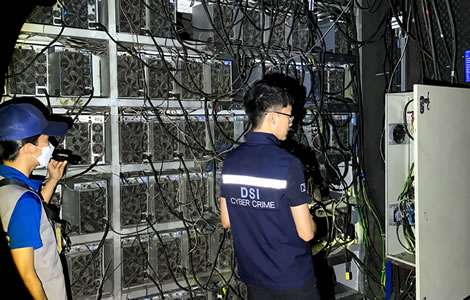
The Department of Special Investigation (DSI) has uncovered one of Thailand’s biggest suspected cryptocurrency power theft operations. Officers seized about 1,900 bitcoin mining machines after tracing stolen electricity worth more than ฿280 million.
The operation centred on warehouses in Samut Sakhon. Investigators are now hunting the investors, organisers and operators believed to have financed the network.
Prime Minister Anutin Charnvirakul announced the results on Thursday during a briefing on Operation Silent Volt. The investigation was carried out jointly by the DSI and the Provincial Electricity Authority (PEA).
He said every relevant agency had been ordered to widen the inquiry. Investigators must identify those behind the operation and prosecute everyone involved.
Customs probe as DSI traces imported bitcoin mining machines and hunts criminal network
In parallel, Mr Anutin ordered the Customs Department to investigate the importation of cryptocurrency mining equipment. Officials will examine how the machines entered Thailand and how they were declared. They will also determine the stated purpose behind each shipment. The investigation has therefore expanded beyond electricity theft.
The case began after engineers at the PEA’s Nakhon Pathom office detected unusual electricity consumption at several warehouses.
The figures stood out immediately. According to DSI Director-General Pol Maj Yutthana Praedam, the suspicious readings triggered a deeper investigation. Officers soon uncovered evidence suggesting the premises had operated as cryptocurrency mining centres for more than a year.
Notably, investigators believe the operation may have formed part of an organised criminal network. Joint inspections by the DSI and PEA uncovered the suspected method used to steal electricity. Officers found evidence that power had been tapped directly from a 22-kilovolt high-voltage distribution system.
DSI uncovers high-voltage bypass system used to power vast illegal bitcoin mining centre
Instead of passing through official meters, the supply bypassed them completely. The illegal connections were reportedly attached to the high-voltage side of transformers. That allowed vast amounts of electricity to be consumed while almost nothing appeared on official bills.
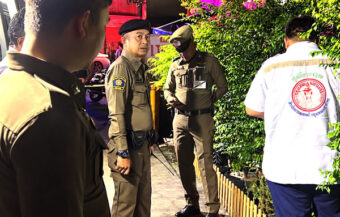
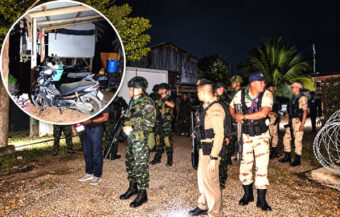
Officers struck on Tuesday. Raids swept across seven locations in Samut Sakhon and neighbouring Nakhon Pathom. Two warehouses were believed to contain industrial-scale mining equipment.
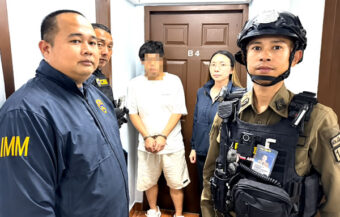
At the same time, officers searched five homes and offices linked to suspected investors and operators. Several suspects were identified during the operation. Investigators also seized documents, electronic records and other evidence for forensic examination.
Inside the warehouses, officers found row after row of cryptocurrency mining machines. About 1,900 units were seized. Authorities estimate the equipment alone is worth around ฿200 million. However, investigators believe the stolen electricity exceeded that figure. Current estimates place the losses at more than ฿280 million.
Separately, investigators are examining the documents recovered during the raids. Financial records, business material and electronic evidence are now under review. Pol Maj Yutthana said the evidence could lead to further prosecutions. More members of the network may yet face criminal charges. He added that investigators will also examine whether public servants played any role in the operation.
Electricity bills of just ฿25,000 exposed bitcoin mining fraud costing the state ฿280 million
PEA Governor Mongkol Treekijjanon described the scheme as a serious economic crime with widespread consequences. He said a legitimate bitcoin mining operation using about 2,000 machines would normally receive monthly electricity bills of around ฿22 million.
Yet the warehouses under investigation reportedly paid just ฿10,000 to ฿25,000 each month. The contrast immediately exposed the suspected bypass operation.
“This has caused substantial economic damage, deprived the state of significant revenue and affected the stability and security of the country’s electricity system,” Mr Mongkol said.
Bitcoin mining is among the world’s most electricity-intensive commercial activities. Powerful computers run continuously to perform billions of mathematical calculations. Those calculations verify cryptocurrency transactions and generate new bitcoin. Electricity therefore becomes one of the industry’s highest operating costs.
Single bitcoin can consume electricity worth ฿620,000 as police trace mining network finances
Studies conducted in the United States show that even efficient mining systems consume about 155,000 kilowatt-hours to produce a single bitcoin. Using Thailand’s electricity tariff of about ฿4 per kilowatt-hour, that amount of power would cost roughly ฿620,000.
By comparison, the average Thai household electricity bill is estimated at around ฿750 per month. The figures illustrate the extraordinary scale of electricity consumed by industrial mining operations.
Bitcoin mining soundproofed room found in Pathum Thani derelict building by police. Millions of baht lost
Chinese mafia run bitcoin mining exploit with devices in containers smashed with billions of baht lost
On another front, investigators are tracing the network’s financial backing. Forensic teams are examining every seized machine and electronic device. Officers are also following money trails linked to the suspected organisers.
The DSI said the investigation remains active as detectives work to identify every participant. Authorities will also determine whether further offences were committed through the financing, importation and operation of the cryptocurrency mining equipment.
Join the Thai News forum, follow Thai Examiner on Facebook here
Receive all our stories as they come out on Telegram here
Follow Thai Examiner here
Further reading:
Thailand and Cambodia face danger from ‘Dragon Head’ the Chinese mafia leader behind the scams
Cyber police and Money Laundering agency seek UK and US co-operation targeting Cambodian networks
United States, South Korea and United Kingdom act against Cambodian scam industry with Thai tie-ins
Ben Smith affair & allegations of links to Cambodian scam centres continues to rage in parliament
Defiant Rangsiman Rome warns he’s not just fighting a defamation case but for the future of Thailand
Ben Smith money fixer to the elite in Thailand lines up ฿100M defamation case against Rangsiman Rome