Foreigners face a tougher banking climate as the Bank of Thailand launches its biggest regulatory overhaul in 27 years. Overseas pensions, property payments and business income could trigger intrusive checks, transfer limits and account restrictions.
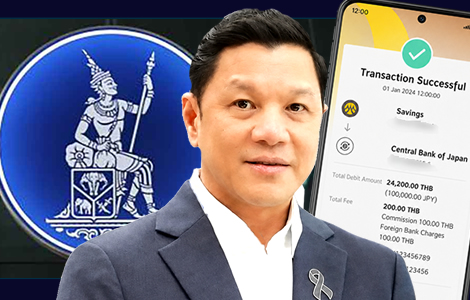
Thailand’s biggest financial regulatory overhaul in 27 years threatens tougher, more intrusive banking for foreigners. Governor Vitai Ratanakorn is bringing digital payments and providers under tighter Bank of Thailand control. Banks must intensify checks on mule accounts, grey capital, foreign QR payments and unusual transfers. Moreover, many customers initially face daily online transfer limits of ฿50,000. However, overseas pensions, property purchases and cross-border business income could trigger automated controls. Foreign customers may then face blocked transfers, document demands and compulsory branch visits. Meanwhile, at least 5,000 personal QR accounts misused for commercial payments have already been suspended. Direct yuan payments also face relentless account closures. Consequently, some analysts fear lawful foreign retirees, investors and business owners face growing uncertainty, disruption and intrusive scrutiny.
Thailand’s accelerating shift towards digital payments has delivered faster commerce, lower costs and greater convenience. However, it has also created a closely monitored financial system. Banks now examine customer identities, transfer patterns and unusual account activity more intensely. Consequently, lawful customers can face restrictions when transactions fall outside standard domestic patterns.
Against that backdrop, the Bank of Thailand is undertaking its biggest organisational overhaul since 1999. Governor Vitai Ratanakorn is leading the central bank’s first major restructuring in 27 years. The changes establish three operational lines covering non-bank providers, consumer protection and payment systems. A new deputy governor will also oversee payment system stability and financial services supervision.
Non-bank finance and instant digital credit expose a widening gap in Thailand’s regulatory system
At its core, the restructuring reflects the financial sector’s transformation since the 1997 crisis. Commercial banks dominated Thailand’s financial system when the present structure was designed. Therefore, the Bank of Thailand concentrated on bank strength, capital reserves and institutional risk. Supervisors also examined lending standards, technology, internal controls and operational resilience.
Since then, Thailand’s financial market has moved far beyond conventional banking. Millions of people now use digital wallets, payment applications and specialist retail lenders. Non-bank businesses provide consumer credit, payment facilities and other financial services. Meanwhile, technology companies can deliver financial products instantly through smartphones.
Even so, the central bank’s organisational structure still largely reflects the market of 1999. Consumers no longer depend exclusively upon commercial banks for credit or payments. Yet some non-bank operators remain under more limited supervision. That imbalance has created a widening regulatory gap.
In response, Governor Vitai is placing non-bank regulation within the Bank of Thailand’s core mission. Commercial banks already face demanding rules covering capital, credit, technology, risk and operations. By comparison, some non-bank providers have faced narrower central bank scrutiny. Their growing market presence has made that distinction increasingly important.
Notably, new products are also blurring the boundary between lending and payment services. Buy Now, Pay Later platforms provide a leading example. These products combine an immediate purchase with short-term retail credit. Digital platforms can place that credit before customers within seconds.
New rules will bring digital credit, consumer charges and payment providers under closer scrutiny
As part of this, the Bank of Thailand is preparing formal Buy Now, Pay Later regulations. The supplied report says the regulations are expected before the end of 2026. They will cover interest calculations, loan terms, fees and product conditions. They will also address the rapid expansion of credit outside commercial banks.
On consumer protection, the restructuring creates a dedicated operational group with wider enforcement responsibilities. The Financial Consumer Protection and Retail Credit Supervision Group will oversee several key functions. It includes the Financial Consumer Protection Policy Division. Separate divisions will also supervise, analyse and inspect retail lending businesses.
In effect, consumer protection is moving from a supporting task into a central bank priority. The new group will scrutinise interest structures, credit conditions and customer charges. It will also monitor financial products offered through non-bank and digital channels. Retail lenders will consequently face more specialised supervision.
Previously, the Bank of Thailand’s model concentrated heavily upon preventing another banking collapse. Supervisors sought strong banks, adequate capital and effective risk management. Those responsibilities remain essential under the new structure. Nevertheless, they will operate beside consumer protection, non-bank regulation and payment stability.
Separately, the overhaul creates the Payment Service Provider Policy and Supervision Division. It will cover payment system policy and financial technology policy. Dedicated teams will also supervise and inspect payment service providers. These functions are gaining importance as Thailand rapidly reduces its dependence on cash.
Thailand places cash and digital payments within one strategy as disruption and fraud risks increase
Alongside that division, another group will oversee payment infrastructure and operational services. The Payment System Infrastructure and Services Division will handle strategy and development. Its remit includes banknote management and payment system services. The Banknote Printing Office will remain within the same operational framework.
Taken together, the changes place physical currency and digital payments inside a broader infrastructure strategy. Traditional banknotes remain important across Thailand. Digital transactions, however, now process enormous volumes of daily commerce. The central bank must therefore oversee both systems within one rapidly changing market.
Crucially, the new deputy governor position confirms the importance of payment stability. Digital payments are no longer treated as a supporting banking function. Instead, they are recognised as essential economic infrastructure. A major disruption can affect households, businesses, banks and supply chains within minutes.
Over recent years, mobile banking and QR codes have transformed everyday payments. Customers can transfer funds instantly without visiting a bank. Businesses can also receive money with lower handling costs. Conversely, that speed has opened new channels for fraud and rapid money laundering.
Mule accounts and rapid laundering drive tighter identity checks, risk ratings and transfer limits
Online criminal networks can receive stolen money within seconds. They can then divide those funds across several accounts. Afterwards, the proceeds can move through additional accounts before victims report the fraud. Each transfer makes recovery and financial tracing more difficult.
For that reason, mule accounts have become a major enforcement target. Fraud networks use them to conceal recipients and frustrate investigators. Some organisations recruit people to open new accounts. Others obtain control of accounts already operating within the banking system.
Across Southeast Asia, criminal organisations have exploited Thailand’s financial infrastructure. Some have recruited foreign nationals to receive or move scam proceeds. Accounts linked to short-term visitors have also attracted concern. Accordingly, banks face greater pressure to detect suspicious customers and transactions earlier.
Under tighter rules, banks must classify customers according to financial risk. They must also strengthen identity checks and monitor unusual transfers. Many online customers initially receive a daily transfer limit of ฿50,000. Higher limits require an additional assessment by the relevant bank.
Routine pensions and major overseas transfers can place lawful foreign residents under bank scrutiny
During that review, a bank can examine identity, financial history and demonstrated transaction needs. The restriction seeks to slow the rapid movement of stolen money. In practice, banks may block transfers that depart sharply from normal account behaviour. Lawful transactions can therefore become caught within automated controls.
Foreign residents are particularly exposed to this problem. Thailand has a substantial community of retirees, investors, professionals and business owners. Their finances often differ from ordinary Thai salary patterns. International transfers are frequently an essential part of their lawful financial activity.
For example, a Thai employee may receive the same domestic salary each month. A foreign retiree may instead receive pension payments from another country. Those funds could arrive through an overseas bank or international payment provider. Currency movements may also change the baht amount every month.
From time to time, the retiree may transfer a much larger sum. The money could finance a condominium purchase or annual health insurance. Alternatively, it could satisfy financial requirements attached to an immigration status. Medical bills and major household expenses can produce similar transfers.
Cross-border business income and changing documents increase compliance risks for foreigners
Despite their legitimacy, these payments may appear irregular to an automated monitoring system. The account does not show a standard domestic salary pattern. Rather, it receives changing foreign amounts at different intervals. A single large payment can also sit far outside its usual activity.
Foreign business owners can display even more complicated financial patterns. Their revenue may originate from customers, processors and partners across several countries. Payments might first enter an international processing account. Later, the owner may transfer consolidated proceeds into a Thai bank account.
At the same time, exchange rates can substantially alter the amounts received. Business expenditure can also vary sharply between months. A company may receive several large transfers during one trading period. The account could then record much lower activity during the next month.
Although such variations are common in cross-border commerce, automated systems may classify them as suspicious. Multiple countries, changing values and international processors can all increase risk scores. A lawful company may consequently face questions about routine commercial income. Access can remain limited while the bank reviews supporting documents.
Beyond transaction patterns, foreign customers can face additional documentation problems. They generally use passports instead of permanent Thai national identity cards. Passports expire and are replaced with new numbers. Visa categories, work permits and registered addresses can also change.
Outdated bank records and branch-only reviews can leave overseas customers unable to access funds
Meanwhile, bank records may still contain an expired passport or previous address. Such differences can trigger demands for updated documents. Banks may seek immigration records, income evidence and proof of residence. They may also request documents explaining particular incoming or outgoing transfers.
In some instances, electronic submissions will not complete the review. The customer must visit a branch before restrictions are removed. Occasionally, the bank may require attendance at the original account-opening branch. That condition can create immediate problems for customers living elsewhere.
The impact becomes more severe when a customer is temporarily outside Thailand. An overseas account holder cannot simply attend a Thai branch. During the restriction, rent, medical insurance and household bills may fall due. A business owner could also lose the ability to pay employees.
As a result, even a temporary restriction can produce substantial financial disruption. Staff, suppliers, landlords and insurers may remain unpaid. The customer may receive little warning before losing access. Resolution can then depend upon documents, branch procedures and staff availability.
Inconsistent banking requirements create a de facto financial barrier for lawful foreign residents
Another complication is inconsistent treatment between institutions. One bank may accept documents that another refuses. Likewise, branches within the same institution may interpret requirements differently. Customers can therefore receive conflicting instructions about visas, income and residence evidence.
One branch may accept a retirement visa and current passport. Another could demand foreign statements and additional proof of residence. Frontline employees also carry risks when approving questionable transactions. Unsurprisingly, some may choose the most cautious interpretation available.
Through this process, a de facto barrier can emerge without any policy targeting foreigners. Automated scoring can flag their international activity. Defensive decisions can then extend the restriction. Repeated documentation checks and inconsistent branch procedures can make resolution more difficult.
For the affected customer, the formal distinction changes little. Money needed for basic payments remains inaccessible. There may also be no immediate explanation or fixed review timetable. A lawful resident can therefore lose financial access without any accusation of wrongdoing.
Consumer protection gains prominence as the central bank tackles weak credit and economic pressure
At the national level, Thailand continues seeking retirees, skilled professionals, investors and international businesses. Each group depends upon reliable banking and payment services. Repeated reviews of normal international transfers can create operational uncertainty. Financial access has become basic infrastructure for anyone living or trading in Thailand.
Within the new structure, consumer protection will receive a dedicated Bank of Thailand platform. This marks a substantial change from the previous organisational model. Customer treatment will sit beside banking stability and monetary policy. Account restrictions and service practices could therefore receive more focused examination.
The wider overhaul follows major policy changes during Governor Vitai’s first nine months. His actions have extended beyond conventional monetary policy and bank supervision. The central bank has reduced its key policy rate to 1%. Excluding the COVID-19 period, that represents an unusually low level.
Through that reduction, the Bank of Thailand sought to ease financing costs. Weak purchasing power and high household debt continue pressuring the economy. Smaller businesses also face limited access to bank credit. These conditions have pushed the central bank towards more targeted financial measures.
Central bank targets small-business lending, digital gold, fees, grey capital and large cash payments
One such measure is the SME Boost programme. The initiative seeks to help banks accept greater lending risk. Smaller companies could consequently gain more working or expansion capital. The programme focuses on businesses struggling through conventional lending channels.
On another front, international pressures have complicated Thailand’s economic position. Financial analysts cite international conflict involving Iran as one source of pressure. Movements in the baht have created further policy challenges. Gold trading has also contributed to currency strength.
To address that problem, the Bank of Thailand has introduced controls involving digital gold trading. It has also examined baht payments connected with those transactions. Banking fees have come under closer scrutiny. Measures have sought to standardise procedures and reduce costs imposed upon customers.
More aggressively, Governor Vitai is targeting grey capital and underground financial channels. The Bank of Thailand is examining several forms of high-value cash activity. These include large cash payments, deposits and foreign currency exchanges. Cash-funded real estate purchases have become another important focus.
Direct yuan payments and foreign QR applications face closures under an uncompromising baht policy
Property can provide a destination for substantial foreign money entering Thailand. Large cash acquisitions can also operate outside normal financing patterns. Hence, the central bank is scrutinising transactions used to purchase real estate. The campaign seeks to identify money moving through opaque channels.
Direct Chinese yuan payments are another enforcement priority. Such transactions can bypass recognised sections of Thailand’s financial system. The central bank insists that payments inside Thailand must properly enter the domestic network. Domestic transactions must ultimately settle in Thai baht.
This requirement also covers foreign QR code applications. Alipay and WeChat Pay transactions conducted in Thailand must be converted into baht. Direct yuan settlement between a customer and merchant is prohibited. Accounts receiving such payments therefore face closure.
Governor Vitai issued an uncompromising warning about the campaign. Replacement accounts will face the same action whenever they are discovered. “If a QR code is used in Thailand, it must be converted into baht,” he said. “If we find direct spending in yuan, we must close the account.”
“If they open a new one, we close it again,” Governor Vitai added. “We will keep doing this to make this type of business difficult.” The message places repeated closures at the centre of enforcement. Operators cannot avoid the crackdown by simply changing their account details.
Thousands of personal QR accounts suspended as direct yuan payments spread beyond Huai Khwang
Earlier, Assistant Governor Chayawadee Chai-Anant disclosed action against person-to-person QR accounts. Those personal facilities had been improperly used for commercial payments. The Bank of Thailand coordinated with Alipay and WeChat Pay providers. At least 5,000 accounts were subsequently suspended.
According to the disclosure, those accounts used personal QR facilities for business transactions. Thai service providers may accept domestic payments only in baht. Chayawadee also warned that breaches can result in legal penalties. Operators therefore face account closures and possible prosecution.
Geographically, the direct yuan problem is highly visible in Bangkok’s Huai Khwang district. The area has even acquired the nickname “Huai Khwang province”. Governor Vitai said similar payment activity was now spreading elsewhere. Comparable practices have appeared in locations including Bo Win.
Because of that spread, the central bank no longer treats this as an isolated district problem. Unregulated payment systems are appearing across a broader area. Such arrangements can keep commercial transactions outside normal Thai settlement channels. They can also support businesses operating beyond effective supervision.
Banks ordered to detect suspicious payment patterns as Thailand tightens its grip on the grey economy
Governor Vitai has placed direct responsibility upon commercial banks. Banks already possess extensive information about account transactions and money flows. Their records show payment values, times, frequency and recipients. Unusual commercial patterns should therefore be visible within existing data.
As an illustration, an account may receive similar transfers throughout the night. That pattern could indicate a personal account processing commercial payments. “How could banks not know, since all the data is in the system?” Governor Vitai said. “If found, they must be closed to clean up the financial system.”
The enforcement campaign reaches far beyond yuan settlement. It forms part of a broader crackdown on Thailand’s grey economy. Underground payment channels can support unregulated businesses and criminal activity. They can also conceal the source and destination of money.
In tandem, large cash transactions are receiving closer examination. Foreign currency exchanges and major deposits are also under scrutiny. Cash-funded property purchases can similarly trigger attention. The central bank is forcing more activity through recognised and monitored financial channels.
Currency speculation stays restricted as the central bank prepares major internal management changes
Regarding foreign exchange, the Bank of Thailand is maintaining restrictions on retail speculation. It has no policy permitting individuals to trade currencies solely for speculative purposes. Governor Vitai said those transactions provide no benefit to the real economy. Legitimate foreign exchange requirements remain available through authorised channels.
Businesses can exchange currencies for trade, investment and hedging. Individuals may also obtain foreign money for travel and recognised personal needs. They must use commercial banks or Bank of Thailand-authorised providers. Licensed money changers and money transfer businesses remain available.
Under this distinction, commercial currency needs remain separate from speculative trading. Governor Vitai said the baht had depreciated by about 5–6%. The movement followed a strengthening United States dollar. Even then, the baht remained broadly aligned with regional currencies.
Thailand also retained about US$300 billion in international reserves. Foreign capital had not recorded an abnormal outflow. Credit rating agencies maintained a stable outlook for the Thai economy. On that basis, Governor Vitai saw no reason to relax restrictions on currency speculation.
Internally, the restructuring may also produce significant management changes. Reports mention new positions, personnel movements and vacancies arising from the overhaul. Senior staff could move into the new operational groups. Management positions may also expand as the central bank reallocates resources.
Resources shift towards wider supervision as banks, non-bank lenders and payment providers face scrutiny
There is also speculation about recruiting external candidates for senior roles. The Bank of Thailand has not officially confirmed that possibility. For now, the prospect remains unconfirmed rather than an established appointment policy. The approved structural changes are already extensive without it.
Administratively, resources are moving from general functions towards direct financial supervision. This realignment reflects the growing importance of non-bank services and payment infrastructure. It also gives consumer protection a permanent institutional base. The Bank of Thailand’s internal priorities will consequently change significantly.
Thailand’s financial system now includes banks, retail lenders and digital wallets. It also covers international payment applications and rapidly expanding online credit products. Supervision can no longer concentrate almost exclusively upon commercial banks. The new structure extends oversight across a much wider financial market.
For commercial banks, the changes bring greater responsibility for identifying criminal transaction patterns. They will also face closer scrutiny over customer treatment. For non-bank providers, the period of limited supervision is narrowing. Retail lenders and payment businesses will face specialised inspections.
Automated monitoring puts lawful foreign transactions at risk as digital financial oversight expands
For customers, automated monitoring will become more prominent. Transfers will be compared against expected income, identity and account behaviour. Unusual activity can trigger restrictions before wrongdoing is established. Customers may then need to document the money’s source and purpose.
Foreign account holders face particular exposure because international activity is normal for them. Overseas pensions, property purchases and cross-border business income can appear irregular. Those transactions may still be fully lawful and documented. Much will depend upon how banks classify and review them.
Ultimately, Thailand’s digital economy is now inseparable from its payment infrastructure. The Bank of Thailand is rebuilding its organisation around that fact. Its first major overhaul in 27 years carries a direct enforcement message. Digital payments, non-bank finance and suspicious money flows will face sustained scrutiny.
Simultaneously, consumer protection will become a central operational responsibility. That work will stand beside banking stability and monetary policy. Governor Vitai’s restructuring is therefore far more than an internal reshuffle. It redraws the Bank of Thailand’s supervisory front lines.
Thailand’s tougher financial front lines span credit, QR payments, grey capital and foreign transfers
Those front lines now stretch from interest rates to retail lending. They also cover QR codes, foreign payments, grey capital and digital credit. The central bank is asserting control over the currency used inside Thailand. Yuan payments bypassing baht settlement will trigger repeated account closures.
For their part, banks must explain suspicious activity already visible within their systems. The central bank expects intervention rather than passive observation. Foreigners living legally in Thailand also face a sharper compliance environment. Their international transactions may require stronger and more current documentation.
Bank of Thailand cracking down on grey capital. New five million baht limit on funds without source details
Bank of Thailand pushes a baht backed stablecoin but warns against Forex trading and payment gateways
In the final analysis, the financial system is becoming faster, broader and more efficient. It is also becoming stricter, more automated and more closely watched. The Bank of Thailand’s new structure is designed for that changed landscape. Its reach will extend far beyond the commercial banks it traditionally supervised.
Join the Thai News forum, follow Thai Examiner on Facebook here
Follow Thai Examiner on Google here
Receive all our stories as they come out on Telegram here
Follow Thai Examiner here
Further reading:
Bank of Thailand Governor orders monitoring of cash withdrawals amid widespread vote buying fears
High powered, secretive meeting chaired by PM agrees robust action against Cambodian networks
Thailand and Cambodia face danger from ‘Dragon Head’ the Chinese mafia leader behind the scams
Cyber police and Money Laundering agency seek UK and US co-operation targeting Cambodian networks
United States, South Korea and United Kingdom act against Cambodian scam industry with Thai tie-ins
Ben Smith affair & allegations of links to Cambodian scam centres continues to rage in parliament