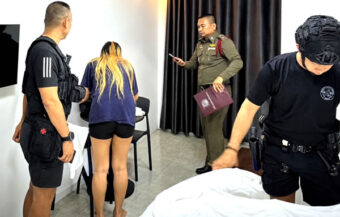
A Koh Samui zoo clash ignites a wider Thai nationalist drive against Israeli misconduct and foreign power. Thai Mai Thon takes its demands to the Israeli Embassy, while Siam Asa seeks police protection over the threats and a reported ฿500,000 bounty.
A bitter dispute involving Israeli tourists at a Koh Samui animal park has exposed a deeper Thai nationalist movement with political connections and access to government. On Monday, Thai Mai Thon, or “Thais Won’t Tolerate It,” took its “Thailand First” campaign to the Israeli Embassy. Its letter cited reported threats, harassment and business disputes involving Israelis in Phuket, Koh Samui, Koh Pha Ngan and Pai. It demanded respect for Thai laws, customs, property rules and business restrictions. However, embassy staff refused the letter and ordered activists to leave it outside. Meanwhile, politically connected Siam Asa helped park owner Jindarat and her French husband, Kevin, seek police protection over reported threats and a ฿500,000 bounty. Thai Mai Thon has now seized upon their case to drive a wider campaign against nominee companies, illegal foreign workers, undocumented migrants and foreign control of Thai occupations.
A dispute involving Israeli tourists and a Koh Samui animal park has widened into a broader Thai nationalist campaign. The confrontation began at Samui Exotic Park on August 11. Since then, the case has moved far beyond one family, one business and one island.
The controversy now combines anti-Israeli anger with pressure against foreigners accused of ignoring Thai laws and customs. In parallel, activists are targeting foreign-controlled businesses, protected occupations and suspected nominee companies. Their campaign places Thai economic rights, land and cultural authority under a single nationalist banner.
The movement has caught many foreign residents and visitors off guard. Until recently, the affair concerned conflicting accounts of a confrontation at a private attraction. Today, it involves nationalist networks, political figures, police agencies, government departments and the Israeli Embassy.
Nationalist campaign widens as activists target foreign businesses and take complaints to Israeli embassy
Notably, the dispute is unfolding during a government campaign against foreign investment structures and Thai nominee firms. Such arrangements can conceal effective foreign control behind Thai shareholders. Nationalist activists say these businesses encroach upon Thai employment, commercial opportunities and property rights.
The campaign extends well beyond Koh Samui. Activists have cited complaints from Phuket, Koh Pha Ngan and Pai district in Mae Hong Son. As a result, the dispute now covers several major destinations with large foreign visitor or resident populations.
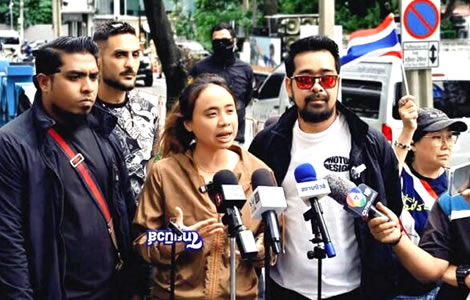
On Monday, August 24, Thai Mai Thon activists visited the Israeli Embassy in Bangkok. The organisation is also known as the Thai Intolerance Team. Its name is variously translated as “Thais Won’t Tolerate It” and the “Impatient Thais” network.
The group attempted to submit a formal letter to the Israeli ambassador. However, embassy staff refused to accept the document directly. Representatives were reportedly instructed to leave it outside the embassy building.
In response, the activists placed the letter outside and departed. The refusal quickly became another part of their public campaign. It also sharpened attention on relations between Israeli representatives and nationalist organisations in Thailand.
Israeli embassy refuses activists’ letter seeking respect for Thai laws, customs and business rules
The letter asked the embassy to address reported misconduct by Israeli tourists and residents. Specifically, it requested greater respect for Thai laws, customs, traditions and culture. It also raised Thai business, employment and property rules.
Separately, the document cited complaints from several parts of the country. These included Phuket, Koh Samui, Koh Pha Ngan and Pai. The complaints concerned reported threats, harassment and disputes with Thai people and business operators.
On another front, the group raised questions about foreign business activity and property arrangements. Those matters already face heightened scrutiny from the Thai government. Activists have now connected them with complaints about foreign behaviour in tourism centres.
Thai Mai Thon said it was not condemning every Israeli national. Instead, it called for individual accusations to be investigated under Thai law. The organisation also requested constructive communication between the embassy and the Thai public.
According to the group, direct communication could prevent further escalation and protect Thai-Israeli relations. Yet the embassy’s refusal to receive its letter became a new source of friction. The activists subsequently publicised the unsuccessful delivery.
Siam Asa backs park owner while Thai Mai Thon turns the Koh Samui dispute into a nationalist campaign
At least three activist networks or identities have become associated with the controversy. Their structures, backgrounds and political objectives differ. Siam Asa has concentrated on supporting the park owner through official channels.
By contrast, Thai Mai Thon has transformed the case into a wider nationalist cause. Its programme covers immigration, foreign workers, nominee businesses and access to public services. The organisation also wants Thai workers and businesses placed first.
Siam Asa directly supports Jindarat, the 35-year-old owner of Samui Exotic Park. It also supports Kevin, her French husband. On August 24, chairman Sukh Saknangrongdej accompanied them to the Central Investigation Bureau.
There, Jindarat submitted a complaint and requested police action. She also sought protection for her family, home and business. Sukh described his involvement as practical assistance rather than a campaign against Israelis generally.
Even so, Sukh has an established political background. He previously contested an election in Bangkok’s Huai Khwang–Wang Thonglang constituency. He was also associated with the Thai Sang Thai Party.
More recently, Sukh contested the 2026 general election for the Kla Tham Party. He has also served on a Bangkok digital-strategy subcommittee. Accordingly, his intervention carries political connections alongside Siam Asa’s civic role.
Siam Asa opens official doors as Thai Mai Thon demands tougher controls on foreigners and businesses
Siam Asa presents itself principally as a public-assistance organisation. Its work includes helping complainants reach government agencies and national police bodies. The organisation has also developed a mental-health platform called Siam Asa MindCare.
Within this case, Siam Asa moved a local complaint into Bangkok’s central police system. It provided the couple with official access, political weight and greater public visibility. Sukh’s involvement also helped convert reported threats into a national law-enforcement matter.
Thai Mai Thon represents the harder nationalist element. Its declared “Thailand First” programme extends far beyond the conduct of Israeli tourists. The organisation describes itself as a movement bringing together people from several professions.
Its stated purpose is protecting Thai citizens and national interests within constitutional democracy. A leading figure is the activist known as Tae Achiwa. Akkarawut Kraisrisombat has also been identified as its chairman or representative.
As part of this programme, Thai Mai Thon demands stronger enforcement against foreigners working illegally. It also targets foreign control of occupations legally reserved for Thai citizens. Suspected nominee businesses form another major focus.
Furthermore, the organisation demands priority for Thai workers, businesses and schoolchildren. It supports restrictions on benefits provided to undocumented migrants. Tougher immigration enforcement and increased deportations are also central demands.
Thai Mai Thon links deportation, nominee firms and migrant restrictions with rising nationalist pressure
Under its platform, foreigners who break Thai law should be removed from the country. The group also campaigns to protect Thai land, businesses, customs and cultural authority. These objectives place economic nationalism alongside migration control.
In a related move, Thai Mai Thon supplied the Ministry of the Interior with information about suspected foreign nominee companies. It also identified jobs reportedly performed by foreigners despite Thai legal restrictions. Such activity suggests access to senior government departments.
Beyond business enforcement, the group has campaigned against free education for children without Thai nationality. Another campaign supported repatriating pregnant migrant workers before childbirth. Its programme therefore reaches employment, migration, education and public welfare.
Against this background, the Koh Samui confrontation has provided a highly visible tourism case. The Israeli connection has also drawn international attention. Anti-Israeli feeling now overlaps with broader hostility towards foreigners accused of exploiting Thailand.
Still, Thai Mai Thon formally denies blaming all Israelis. It instead connects specific complaints with wider concerns about foreign conduct and commercial control. Its embassy letter also demanded investigations under Thai law rather than collective findings.
Movement faces migrant intimidation claims as Israel reports family denied entry and attacked at park
People associated with the movement have faced serious criticism. Human-rights activists have accused some participants of intimidating migrant workers. Some have also faced accusations of violence towards migrants.
For clarity, those accusations remain separate from any proven offence by the organisation. Critics argue that nationalist rhetoric can lead to discrimination or vigilantism. The present campaign, though, has proceeded through official submissions, public demonstrations and police complaints.
Reports have also named an “Impatient Thais” civic network represented by Akkarawut Kraisrisombat. This network may overlap with the current Thai Mai Thon organisation. However, it should not automatically be linked with an earlier movement bearing a similar name.
In 2021, former Red Shirt leader Jatuporn Prompan led another Thai Mai Thon movement. That organisation opposed then-prime minister Prayut Chan-o-cha. It demanded his resignation and focused on domestic government change.
Conversely, the present network concentrates on foreigners, migration, economic protection and national sovereignty. The similar English translations have created confusion. The organisations nevertheless have markedly different declared priorities.
The immediate dispute centres on sharply conflicting accounts of the August 11 incident. Israel’s Ministry of Diaspora Affairs and Combating Antisemitism issued its version on August 13. It described the case as the denial of entry and assault of an Israeli family.
Israeli family says park staff barred entry, assaulted father and frightened two young daughters
According to that report, an Israeli couple arrived with daughters aged six and nine. The family had travelled specifically to visit Samui Exotic Park. Both children had been expecting the outing.
At the entrance, staff reportedly asked where the family came from. After they answered Israel, the family said they were refused admission. The parents then asked staff to reconsider because of their children.
During the exchange, the Israeli woman began recording and requested a manager. The family said one female worker told another employee, “They are Israelis.” That employee then reportedly moved to expel them towards the exit.
The family also said they were explicitly told that Israelis could not enter. Subsequently, the confrontation reportedly became physical. A male employee was accused of shouting obscenities and headbutting the husband near his neck.
The same employee allegedly threw a sign towards the family as they left. The family described the reported attacker as non-Thai. The husband reportedly suffered an injury around his neck.
Meanwhile, the daughters were said to be frightened during and after the confrontation. The Israeli report classified the event as a physical attack and threat. It identified Samui Exotic Park in Mae Nam Soi 1 as the location.
Importantly, the Israeli ministry attached a disclaimer to its report. It said the information came from received reports and technologically assisted network monitoring. The ministry said it tried to ensure accuracy, relevance and timeliness.
Israeli report cites earlier Palestine dispute as park owner details threats, harassment and animal harm
Nonetheless, it did not guarantee the material’s completeness. It also rejected responsibility for its suitability for any particular purpose. The report invited corrections when errors or rights concerns were identified.
The Israeli statement also described an earlier controversy in July 2026. Samui Exotic Park had displayed a “Free Palestine” sign. The business also publicly criticised the conduct of Israeli tourists.
Afterwards, the park faced an online harassment campaign and negative review-bombing. Political hostility surrounding Israel and Palestine therefore preceded the August confrontation. Kevin’s Palestinian flag later became central to the widening controversy.
From Jindarat’s side, the account is sharply different. She accused some Israeli visitors of harassing staff, breaking rules and refusing to pay admission charges. She also reported demands for refunds and behaviour endangering animals.
Her complaints included incidents involving a dead bird and injured animals. Another reported incident concerned a child and chicken droppings. These allegations formed the park’s wider account of earlier trouble involving visitors.
Following the August dispute, Jindarat reported serious threats against her home, park and family. She said threats were made to burn her residence and the attraction. Her relatives were also reportedly targeted.
Reported ฿500,000 bounty raises security fears as competing claims fuel wider nationalist campaign
Most seriously, reports described a ฿500,000 bounty against Kevin. That development turned a dispute over admission into a security matter. It also pushed the couple towards Siam Asa and the Central Investigation Bureau.
At the same time, the Israeli family continued to accuse park staff of nationality-based exclusion and assault. Two directly conflicting narratives now dominate the case. Neither account resolves the claims made by the other side.
For its part, Siam Asa has demanded police protection and an investigation. Thai Mai Thon has carried the dispute into a national campaign. Its representatives have also pressed the Israeli Embassy to address complaints involving other locations.
Five politically sensitive issues now converge around the case. First, Jindarat has reported threats against herself, her family and her business. Second, Kevin displayed a Palestinian flag at the attraction.
Third, a reported ฿500,000 bounty targeted Kevin. Fourth, activists have raised complaints about Israeli conduct across several tourist centres. Finally, the case has merged with campaigns against foreign businesses, property ownership and migration.
Taken together, these factors have fuelled rising nationalism and anti-foreigner sentiment. They have also given anti-Israeli anger a broader domestic platform. The campaign now extends far beyond the events inside Samui Exotic Park.
Thai Mai Thon widens focus from Israeli visitors to foreign workers, investors and nominee businesses
Even then, the movement does not target Israeli visitors alone. Thai Mai Thon’s declared programme also covers migrant workers, foreign residents and international investors. It targets foreigners controlling protected occupations and suspected nominee companies.
For the moment, Israelis remain the campaign’s most visible focus. The Samui confrontation supplied the initial trigger. Complaints from Phuket, Koh Pha Ngan and Pai then widened its national reach.
Geographically, the campaign carries particular force across southern tourism provinces. Phuket, Koh Samui and Koh Pha Ngan host substantial foreign populations. These locations also contain valuable land and numerous foreign-funded businesses.
Because of this, disputes about ownership and nominee structures carry significant economic weight. They also touch established Thai concerns about protected occupations and foreign commercial control. The government’s enforcement campaign has given activists another route into official agencies.
Inside government channels, nationalist groups are supplying complaints and business information. They are also accompanying complainants to national police offices. Several representatives have political backgrounds or links with recognised parties.
Siam Asa provides official access while Thai Mai Thon builds pressure for a broader Thailand First agenda
Siam Asa and Thai Mai Thon therefore perform different but connected functions. The group provides access, assistance and police protection requests. Thai Mai Thon converts individual complaints into broader nationalist demands.
In practical terms, one group opens institutional doors. The other builds public pressure behind a “Thailand First” platform. Their combined involvement has propelled a local dispute into national politics.
The movement’s economic targets are clearly defined. They include illegal foreign workers and foreigners performing occupations reserved for Thais. Suspected nominee companies and undocumented migrants also feature prominently.
Culturally, the movement demands respect for Thai traditions, social rules and national authority. Commercially, it wants Thai citizens prioritised in jobs and business opportunities. Politically, it supports tougher immigration enforcement and deportation.
Land and property have become further battlegrounds. Tourist conduct now sits inside the same nationalist programme. Foreigners accused of disrespecting Thai customs are linked with foreigners accused of controlling restricted businesses.
Nationalists link tourist conduct with protected jobs, immigration, Thai property and business control
The Israeli Embassy’s refusal to accept Monday’s letter added another flashpoint. Thai Mai Thon had asked it to advise Israelis about Thai laws and culture. Instead, representatives were required to leave their document outside.
Despite that rejection, the group continues demanding investigations into individual cases. That distinction remains part of its formal position. Yet its campaign operates amid clear anger directed towards Israeli visitors and residents.
The Samui dispute has supplied allegations, images and reported threats capable of sustaining that anger. Complaints from other destinations have expanded the issue further. The case now links tourism behaviour with business ownership, migration and national sovereignty.
For foreign residents and visitors, the activists’ stated message is blunt. Thai laws, customs and commercial restrictions must be respected. For the government, the groups provide information, political pressure and public support for tougher enforcement.
Israeli embassy rejection deepens dispute as activists demand tougher enforcement against foreigners
Meanwhile, police must examine Jindarat’s complaints and the reported threats against Kevin. They must also consider the Israeli family’s assault claim. The events of August 11 remain fiercely contested.
Whatever the police findings, the dispute’s political expansion is already established. Siam Asa carried the couple into Thailand’s central law-enforcement system. Thai Mai Thon carried their case to the Israeli Embassy.
Koh Samui dispute over a visit by Israelis to a zoo escalated to security checkpoints and plans to deport
Koh Samui Animal Park bans Israeli family including two young girls on the basis of their nationality
Ultimately, the original zoo confrontation is no longer the central issue. It has become a vehicle for rising Thai nationalism and stronger anti-foreigner pressure. It has also connected those forces with growing anti-Israeli feeling.
The campaign now stretches from tourist behaviour to immigration enforcement. It also covers protected jobs, foreign-controlled businesses, nominee companies and property rights. What began at one Koh Samui animal park now reaches Bangkok’s embassies, ministries and police headquarters.
Join the Thai News forum, follow Thai Examiner on Facebook here
Receive all our stories as they come out on Telegram here
Follow Thai Examiner here
Further reading:
Community tensions rise between locals and Israelis in southern Thailand particularly on Koh Phangan
Anutin visits Koh Phangan as nominee crackdown shows 68% of firms with foreign ownership links
Blitzkrieg on foreign firms and enterprises on Koh Phangan continues with French owned resort busted
Russian-Chinese Koh Phangan alliance to sell drugs to foreigners. Accused entered Thailand illegally
Crackdown aimed at upending foreign business trade moves from Koh Phangan to Phuket. Four arrested
Crackdown to wipe out foreign business abuses and ownership on Koh Phangan & Koh Samui intensifies