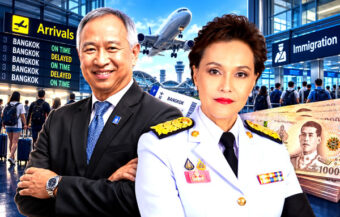
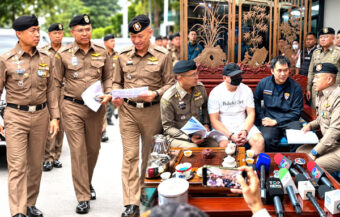
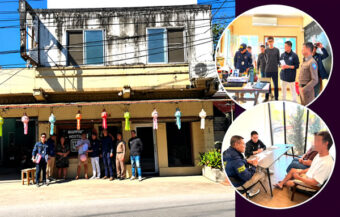
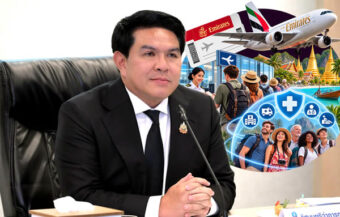
Polpeera receives Thai Mai Thon’s dossier on foreign-controlled Koh Samui businesses, illegal workers and Thai nominees. He vows every credible complaint will face investigation as financial, immigration and corruption agencies join the campaign now.
Deputy Interior Minister Polpeera Suwannachawi has received a report on suspected illegal foreign businesses in Koh Samui from Thai Mai Thon, meaning “Thais Won’t Tolerate It”. Led by activist Akkarawut Kraisisombat, known as Tae Achiwa, the nationalist pressure group reported nominee companies, illegal workers and foreign encroachment on Thai occupations. Mr Polpeera promised every credible complaint would be investigated, including land control, hidden capital and possible official assistance. The submission enters a nationwide campaign already examining 361 companies and more than 100 Phuket firms reporting ฿5 billion in revenue. Meanwhile, Thai Mai Thon has widened its activities following the bitter Samui Exotic Park dispute involving Israeli visitors.
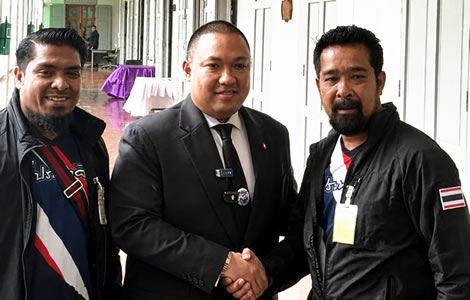
Deputy Interior Minister Polpeera Suwannachawi has ordered follow-up action on suspected illegal foreign businesses operating across Koh Samui. The inquiry follows a formal meeting with activist Tae Achiwa and representatives of Thai Mai Thon.
The group supplied information concerning nominee companies, illegal foreign workers and protected Thai occupations. In response, Mr Polpeera promised coordinated investigations and prosecutions under every applicable law.
The meeting took place at the Interior Ministry’s Damrongtham Centre on August 20. Akkarawut Kraisisombat, widely known as Tae Achiwa, led the activist delegation. Officials from the Damrongtham Centre and the Interior Minister’s Complaints Division attended. During the talks, the group submitted a complaint covering suspected offences in Koh Samui district.
Thai Mai Thon submits Koh Samui complaints as Interior Ministry widens nationwide foreign business drive
Thai Mai Thon means “Thais Won’t Tolerate It”. The organisation operates as a nationalist pressure network rather than a political party. It uses social media, petitions and ministry visits to press for tougher enforcement. Notably, its campaigns target undocumented workers, nominee companies and foreign control of Thai occupations.
The Koh Samui submission concerned foreigners suspected of operating businesses illegally. It also identified possible arrangements involving Thai nominee shareholders. Separately, the activists complained about foreign workers competing unlawfully for Thai jobs. They also reported disrespectful conduct towards local residents.
Mr Polpeera thanked Tae Achiwa and the group for collecting the information. He said the material would improve the ministry’s ability to identify concealed operations. As a result, relevant evidence will be forwarded to agencies holding investigative powers. Those bodies will determine whether inspections or legal proceedings should follow.
The deputy minister said government operations were already under way nationwide. The campaign covers foreign nominees, illegal migrant labour and occupations reserved for Thais. In addition, investigators are examining fraudulent birth registrations and suspected misconduct by officials. The Interior Ministry’s Social Order Committee coordinates the wider programme.
Polpeera says evidence, not nationality, will guide coordinated raids under the Huai Khwang model
Mr Polpeera stressed that enforcement would not target one nationality or ethnicity. Nor would it remain confined to Koh Samui or southern Thailand. Instead, credible information would determine where inspection teams operated. Proven conduct would then determine which laws applied.
The Social Order Committee brings together departments holding separate statutory powers. Consequently, one inspection can produce immigration, labour, commercial and financial cases. Officials can also examine landholding, operating licences and company ownership. Where necessary, investigators can pursue public employees suspected of helping illegal businesses.
Mr Polpeera cited the “Huai Khwang Model” as the government’s working structure. That operation combined raids, worker checks, financial tracing and company investigations. Under this approach, the Ministry of Commerce examined registrations and possible nominee arrangements. Meanwhile, the Ministry of Labour inspected work permits and restricted occupations.
The Immigration Bureau checked visas, residence conditions and permission to remain. Likewise, the Department of Special Investigation handled suspected organised or complex activity. The Public Sector Anti-Corruption Commission examined possible misconduct by government personnel. At the same time, the Anti-Money Laundering Office traced funds and suspicious transactions.
Multiple agencies pursue foreign nominees as southern tourist centres face expanding company checks
Each agency used the legislation falling within its own jurisdiction. Accordingly, several cases could emerge from one illegal enterprise. A foreign operator could face business, employment and immigration proceedings. Thai nominees could also face charges for concealing unlawful foreign control.
Similar operations have already taken place in several provinces. They include Phuket, Koh Phangan and Koh Samui. More recently, the campaign expanded into Sakon Nakhon province. Even so, southern tourist centres remain a principal enforcement target.
Phuket, Koh Phangan and Koh Samui attract extensive international investment. They also support large foreign communities and tourism businesses. Against this background, investigators are checking whether Thai registrations conceal foreign management. They are also examining foreigners working without permission.
In Phuket, more than 100 companies entered a financial and ownership inquiry. Those businesses reported combined annual revenue exceeding ฿5 billion. Beyond that, government records identified 361 companies for closer examination. The investigation reaches far beyond names appearing on registration documents.
Investigators trace capital, bank accounts and land to uncover foreign control behind Thai nominees
Officers are tracing the original source of registered capital. They are also checking who provided later investment and operating funds. In parallel, bank records may identify who controls accounts and receives company income. Investigators can compare those findings with registered shareholders and directors.
Nominee structures can place the required majority of shares with Thai citizens. However, foreign investors may supply the money and retain actual control. For that reason, investigators must establish who finances, manages and profits from each company. Registered ownership may not identify the person directing daily operations.
Company contracts, shareholder payments and management instructions can provide further evidence. Additionally, officers can identify who hires staff and controls company accounts. Those findings can then be compared with activity inside the premises. Any mismatch could deepen the financial and ownership investigation.
Landholding forms another part of the ministry’s campaign. On another front, officers can compare property records with company financing arrangements. They can also examine whether Thai nominees hold land for foreign beneficiaries. Unlicensed construction or commercial activity may generate additional cases.
Naturalised shareholders, illegal workers and officials enter widening Interior Ministry investigation
A separate inquiry concerns naturalised Thai citizens holding shares in foreign-connected companies. Legally, those shares count as Thai ownership. Nevertheless, investigators are checking whether some arrangements conceal foreign capital or control. Reviews may cover investment funds, management powers and genuine ownership rights.
The ministry’s operation also targets foreigners working illegally. Some may lack permits, while others may perform duties outside their approval. Correspondingly, employers can face action for hiring foreign workers unlawfully. Working in occupations reserved for Thais can produce separate charges.
Mr Polpeera said investigations would also follow links to public personnel. Officials may face scrutiny for facilitating, protecting or ignoring illegal operations. Furthermore, those suspected of neglecting their duties can enter the inquiry. Financial records may expose payments linking businesses, intermediaries and officials.
The deputy minister delivered a direct warning during the meeting. Foreigners unlawfully occupying Thai land would face enforcement, he said. Equally, those illegally taking Thai jobs and opportunities would face prosecution. The campaign would apply every relevant law against established offenders.
Mr Polpeera expressed the government’s position in uncompromising terms. “Those who encroach upon, occupy Thai land, or compete for jobs and opportunities with Thai people do not deserve to be in Thailand.” Yet he maintained that the campaign would not target foreigners generally. Evidence of specific offences would remain the legal test.
Ministry targets illegal ownership while promising confidential complaint channel and personal inspections
The ministry would examine illegal ownership, employment, landholding and business control. Therefore, lawful foreign investors, workers and residents were not its stated targets. Enforcement would focus on those breaching Thai commercial or immigration rules. Employment and property offences would also fall within the campaign.
Mr Polpeera invited residents and civic networks to submit further information. Reports can identify suspicious businesses, unlawful employment or questionable land control. Moreover, complainants can identify government offices suspected of neglecting their responsibilities. The ministry will assess credible information through formal procedures.
All relevant complaint documents will reach Mr Polpeera for consideration. Where information carries sufficient weight, he promised to lead inspection teams personally. Importantly, the ministry will protect the confidentiality of those providing evidence. He said, “results will speak for themselves.”
The August 20 meeting gave Thai Mai Thon direct access to a senior ministry figure. It also placed its Koh Samui complaints inside the government’s formal system. Despite that access, state investigators remain responsible for verifying every claim. The activist group cannot decide whether charges follow.
State agencies verify Thai Mai Thon claims as group expands campaigns across southern tourist centres
Government agencies must first gather evidence and identify possible offences. Commerce officials can examine ownership structures, shareholders and company control. Labour and immigration officers can check workers, permits and residence conditions. Financial investigators can then trace the capital behind suspected operations.
Thai Mai Thon previously campaigned against undocumented migrant labour. It also targeted nominee companies and foreign control of restricted Thai work. Earlier, the group opposed state-school admission rules for children without Thai nationality. It claimed nearly 100,000 people supported that petition.
Its attention later moved towards foreign commercial activity in southern tourist destinations. Koh Samui became a prominent focus of the campaign. Specifically, the group claimed foreigners were using nominees to circumvent ownership restrictions. It also complained that illegal workers were displacing Thais.
The August meeting preceded Thai Mai Thon’s involvement in the Samui Exotic Park controversy. That dispute later brought the group greater national exposure. Crucially, however, its ministry submission covered businesses and employment across Koh Samui. It was not limited to the animal park dispute.
Samui zoo threats and Israeli disputes propel Thai Mai Thon into a broader foreign influence campaign
Samui Exotic Park is operated by Thai owner Jindarat and her French husband, Kevin Dimino. The couple reported threats after disputes involving Israeli visitors. Initially, the confrontation concerned park rules and claims that visitors endangered animals. The row widened after the park displayed a Palestinian flag and refused Israelis entry.
An Israeli family separately accused Mr Dimino of assault during another confrontation. Police were therefore examining competing versions of the incident. Subsequently, Jindarat reported threats against her family, home and business. Investigators also examined a reported ฿500,000 reward connected with harming Mr Dimino.
One Israeli man was fined ฿5,000 for making a public death threat. Another Israeli linked to the wider dispute had his visa revoked. Following those developments, Thai Mai Thon connected the controversy with its broader campaign. It highlighted complaints involving foreign conduct, business influence and property conflicts.
Four days after the ministry meeting, Tae Achiwa led activists to the Israeli Embassy. The delegation carried a letter covering several Thai tourist destinations. These included Koh Samui, Phuket, Koh Phangan and Pai. Among other issues, it cited reported intimidation, harassment and commercial disputes.
Embassy refuses activists’ letter as ministry widens foreign business inquiry beyond Israeli nationals
Embassy staff declined to accept the letter directly. Instead, they instructed the activists to leave it outside the building. Thai Mai Thon said it was not condemning every Israeli citizen. Nonetheless, it demanded compliance with Thai laws, customs, property rules and employment restrictions.
The embassy action remained separate from the Interior Ministry process. Still, both events formed part of Thai Mai Thon’s expanding campaign. The August 20 meeting supplied information for official examination. By comparison, the August 24 visit directed complaints towards Israeli diplomatic representatives.
Mr Polpeera’s enforcement programme extends far beyond Israeli visitors or companies. It covers offenders of every nationality and Thais assisting illegal operations. Thus, inspections have involved several nationalities across different provinces. The central questions concern ownership, capital, employment, land and management control.
Investigators can inspect company premises and question registered shareholders. They can also check licences, work permits, accounts and commercial agreements. In turn, land and banking records may reveal links hidden from company filings. The evidence can expose who actually directs each business.
Financial probes, worker checks and corruption inquiries target the money and control behind nominees
Financial inquiries may establish who supplied capital and received profits. Management records may identify who controlled employees and business decisions. By the same token, shareholder interviews can test whether Thai owners exercised genuine authority. Evidence of sham ownership could support nominee charges.
Foreign workers found during raids can face immediate status checks. Immigration officers can examine visas and conditions attached to their stay. Concurrently, labour officials can compare their duties with approved work permits. Employers may face separate prosecution for unlawful hiring.
Evidence involving public employees can be referred to anti-corruption investigators. Similarly, suspicious payments can reach the Anti-Money Laundering Office. One inspection could consequently develop into several connected proceedings. Each agency would prosecute offences falling within its legal remit.
Mr Polpeera became Deputy Interior Minister on March 30, 2026. He serves under Prime Minister and Interior Minister Anutin Charnvirakul. He is also a Bhumjaithai Party MP for Nakhon Ratchasima. Previously, he worked as a political deputy secretary-general to Mr Anutin.
Polpeera’s Interior Ministry campaign targets illegal hotels, grey capital and concealed foreign control
His Interior Ministry work includes social-order enforcement and action against illegal businesses. Operations have covered unlicensed hotels, entertainment venues and suspected foreign nominees. As part of this, the ministry also targets transnational grey capital and corrupt assistance. The Thai Mai Thon submission falls directly within that enforcement programme.
At the meeting, Mr Polpeera thanked the activists for expanding the government’s information base. He said detailed public submissions could expose operations hidden behind legal registrations. At this stage, the ministry must organise and assess the information. Specific matters can then be referred to the responsible investigators.
Agencies will compare the complaints with records already held by government bodies. Provided the evidence supports them, coordinated inspections can follow. Those operations may examine ownership, finance, employment and official involvement together. Conversely, unsupported claims cannot provide a lawful basis for prosecution.
100 Phuket firms with revenues of 5 billion using naturalised citizens investigated after police raids
Drive against foreign owned property and business on Koh Samui and Koh Phangan now targets leases
Koh Samui zoo dispute morphs into wider protest at Israelis and foreigners misbehaving in Thailand
Koh Samui remains the immediate focus of the August 20 submission. The complaint concerns suspected illegal businesses, nominee control and foreign employment. In the meantime, the wider government campaign continues across other provinces. Mr Polpeera said proven offenders would face every relevant law.
The meeting also created a direct reporting channel between activists and the ministry. Henceforth, further credible complaints can enter the same review system. Mr Polpeera promised personal inspections where the information justified intervention. Ultimately, he said enforcement outcomes would demonstrate the government’s commitment.
Join the Thai News forum, follow Thai Examiner on Facebook here
Follow Thai Examiner on Google here
Receive all our stories as they come out on Telegram here
Follow Thai Examiner here
Further reading:
Frenchman’s Koh Samui business empire enmeshed in knotty police probe of nominee firms and pot farm
Drive against foreign owned property and business on Koh Samui and Koh Phangan now targets leases
International reservations system used by hotels targeted in latest Koh Phangan swoop by ministers
Anutin visits Koh Phangan as nominee crackdown shows 68% of firms with foreign ownership links
Blitzkrieg on foreign firms and enterprises on Koh Phangan continues with French owned resort busted
Russian-Chinese Koh Phangan alliance to sell drugs to foreigners. Accused entered Thailand illegally