Anutin’s government faces a 145-MP challenge amid exam fraud, Senate collusion, offshore gambling and floods. Three suspects have been freed after the NACC missed a deadline. The PM vows to explain everything, backed by a firm parliamentary majority.
Prime Minister Anutin Charnvirakul and 17 ministers face a fierce no-confidence challenge from 145 opposition MPs. Three suspects have walked free in a massive examination fraud scandal involving 5,925 candidates. Meanwhile, 26 senators face proceedings over suspected election collusion, while senior Bhumjaithai figures were excluded. A ฿1.9 billion wealth and offshore gambling controversy has also embroiled two ministers. Thailand’s ฿898.8 billion fiscal deficit and devastating floods add to the pressure. Anutin insists he can explain everything but has no control over the National Anti-Corruption Commission (NACC). At the same time, his commanding parliamentary majority remains the opposition’s biggest obstacle.
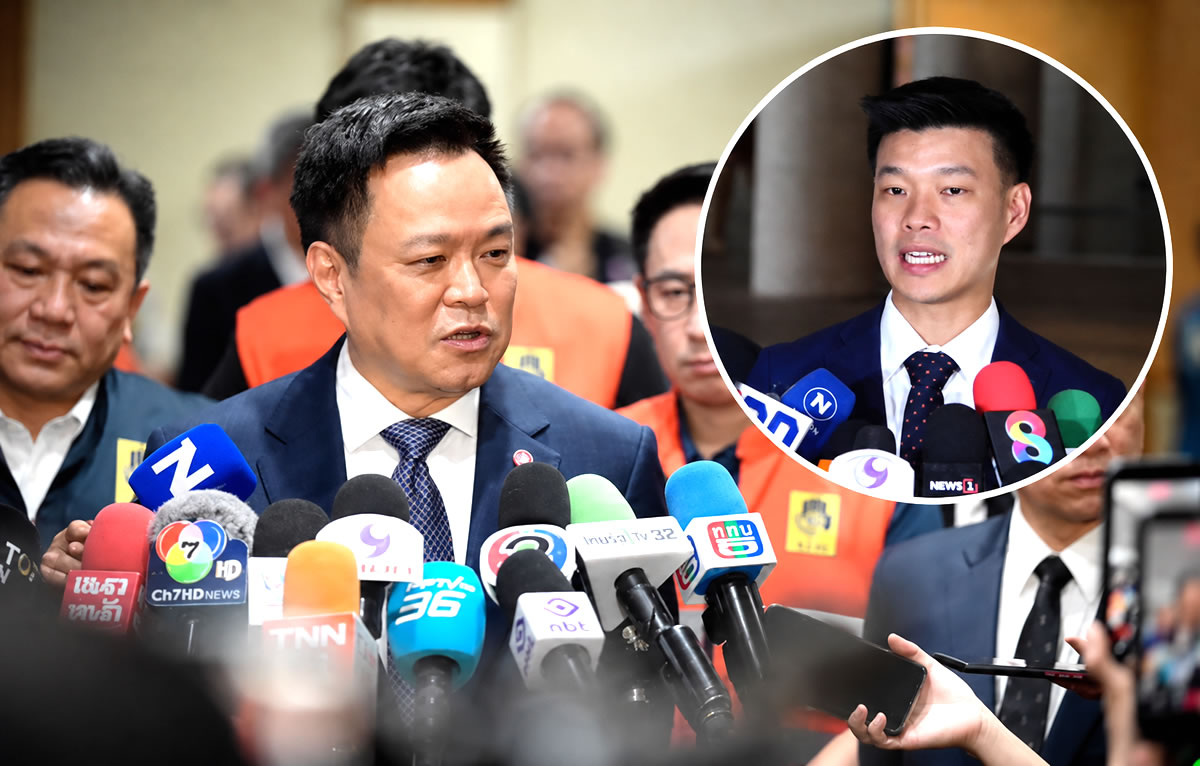
Thailand’s opposition has launched a sweeping parliamentary attack on Prime Minister Anutin Charnvirakul and 17 Cabinet ministers. The no-confidence motion comes amid fresh corruption controversies, economic weakness and widespread anger over flooding.
Crucially, three suspects in a massive local government examination scandal have been released following a missed prosecution deadline. Meanwhile, the unresolved 2024 Senate collusion investigation continues to trouble the governing Bhumjaithai Party.
A separate gambling controversy involving a Bhumjaithai MP’s Australian husband has added further pressure. However, Anutin retains a commanding parliamentary majority. The opposition faces a difficult battle to remove his government.
Opposition files no-confidence motion against Anutin as 145 MPs challenge the government over misconduct
The motion was formally submitted on Thursday, October 8, by opposition leader Natthaphong Ruengpanyawut. It carries 145 signatures from the People’s Party, Democrat Party and three smaller opposition parties.
The seven-page document invokes Section 151 of the Constitution. It accuses government figures of corruption, serious ethical violations, abuse of power and mismanagement. Furthermore, it targets individual ministers across several government departments. The challenge follows months of political controversy involving Bhumjaithai and institutions responsible for investigating wrongdoing.
Natthaphong has described the campaign as an effort to confront Thailand’s entrenched “blue regime”. The description refers to the political network surrounding Bhumjaithai and its influential figures. In particular, opposition MPs question the party’s relationship with institutions responsible for investigating political misconduct.
The government rejects suggestions that independent agencies operate under political instructions. Nevertheless, the accusations have become central to the parliamentary offensive. The opposition intends to examine ministerial conduct alongside the handling of several major investigations.
Anutin and senior ministers face scrutiny as opposition widens its attack across the governing coalition
The motion names Anutin, Deputy Prime Minister and Finance Minister Ekniti Nitithanpraphas and Deputy Prime Minister and Commerce Minister Suphajee Suthumpun. Defence Minister Lt Gen Adul Bunthamcharoen and Justice Minister Police Lt Gen Rutthaphon Naowarat are also targeted.
In addition, Digital Economy and Society Minister Chaichanok Chidchob and Deputy Interior Minister Worasit Liangprasit face questioning. The accusations cover economic policy, law enforcement, public accountability and the handling of national emergencies.
Initially, opposition parties considered restricting the motion to Bhumjaithai ministers. Instead, the final submission includes ministers from other coalition parties. This broadens the confrontation beyond the prime minister’s political organisation.
At the same time, it increases the challenge facing the opposition. Coalition MPs would need to vote against ministers from parties supporting their own government. No such substantial shift in parliamentary allegiance has been established.
Natthaphong has also indicated that evidence presented during the debate could support subsequent legal proceedings. Consequently, the opposition’s challenge extends beyond the immediate parliamentary vote. Any further proceedings would depend on evidence and the relevant statutory requirements. Several politically sensitive investigations are already continuing through separate legal channels.
Local government exam fraud involving 5,925 candidates raises scrutiny after three suspects are freed
The most immediate controversy concerns the National Anti-Corruption Commission’s handling of the local government recruitment examination scandal. Investigators uncovered extensive manipulation of examination results and suspected organised corruption.
The inquiry identified 5,925 candidates whose scores had been altered. Furthermore, investigators discovered networks of intermediaries suspected of coordinating the manipulation. The case involves recruitment examinations for positions within local government organisations.
The Department of Local Administration and the examination oversight committee subsequently ordered the original results to be cancelled. Corrected rankings were issued, while affected local bodies were instructed to revoke appointments.
Separately, evidence was forwarded to police and the NACC for criminal investigation. The administrative measures addressed examination results and appointments. However, the criminal inquiry continues into those suspected of organising and facilitating the fraud.
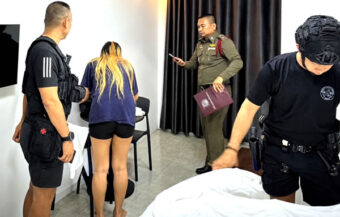
On Wednesday, October 7, that investigation suffered a significant procedural setback. Three suspects were released after the NACC failed to complete prosecution procedures within the permitted period.
The development immediately raised questions about the management of the case. Moreover, it handed the opposition another issue ahead of the no-confidence debate. The suspects were released despite the continuing investigation into the wider examination network.
Three suspects walk free after 84-day remand expires before NACC completes local government fraud case
Thai PBS identified the three by their first names as Pichit, Asawin and Thotsaphon. All were arrested on July 14 and remanded the following day. Their maximum 84-day remand period expired on October 7.
However, investigators had not completed the case file required for prosecution. Consequently, the suspects were released under the applicable detention rules. The decision did not amount to a judicial finding clearing them of wrongdoing.
Pichit, a local government official, is suspected of arranging personnel and premises for altering examination papers. Asawin reportedly coordinated between local officials and the university conducting the examinations. His sister, Thotsaphon, was also suspected of participating. The three remain subjects of the continuing investigation. Their precise roles and criminal responsibility have not been determined by a court.
The NACC subsequently explained that police had already used four remand periods before transferring the case. This left commission investigators with only three further periods to complete the necessary procedures. Yet the investigation remained unfinished when the legal deadline expired.
The commission was therefore unable to secure continued detention through the existing remand process. Its explanation has not ended the political controversy surrounding the release.
NACC investigates 110 suspected broker networks as examination fraud inquiry stretches into November
The scale of the suspected examination fraud is substantial. Seven NACC investigation teams are working on the case. More than 1,000 witness interviews have already been conducted. Notably, investigators have identified 110 suspected broker networks connected with the examination irregularities.
Representatives of 44 networks have been interviewed, alongside another 51 identified lower-level brokers. Police have also examined financial transactions involving approximately ฿55 million.
On another front, police in six provinces have recorded 81 related cases. Thirty-one have been transferred to the NACC, leaving another 50 outstanding. The investigation therefore extends well beyond the three suspects released this week.
Further formal accusations are now expected in late November. Previously, investigators had anticipated additional action in late October. Those accused will have opportunities to respond before subsequent proceedings.
The three released suspects reportedly face no current restrictions preventing them from leaving Thailand. In response, the NACC has indicated that extradition procedures could be considered if necessary. However, no information establishes that any of the three has left the country. Investigators continue examining financial evidence and the suspected recruitment networks.
Bhumjaithai MP retracts remarks on senior official as Anutin rejects claims of a compromised NACC inquiry
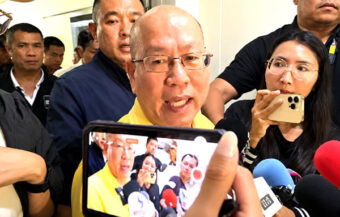
The examination scandal has also produced controversy involving senior government officials. Earlier, Bhumjaithai MP Arsphol Suntraiphop made remarks implicating figures within the local government system.
Arsphol chairs the House anti-corruption committee. Among those mentioned was Narucha Kosacivilize, a former Department of Local Administration director-general. However, Arsphol subsequently withdrew or qualified his remarks. He insisted that Narucha was not involved.
No finding of wrongdoing against Narucha was established by those statements. Nevertheless, the reversal became another point of controversy in the investigation. Opposition MPs are expected to question the handling of the case and its delayed prosecution procedures. The missed deadline has also drawn attention to coordination between police investigators and the NACC.
On Friday, Anutin rejected suggestions that the commission had deliberately mishandled the case to protect suspects. Speaking at the Department of Disaster Prevention and Mitigation, he defended the NACC’s independence. He also insisted that the government had acted against those involved. “How could the NACC be involved in a rigged case? I don’t believe it,” the prime minister said.
“The NACC operates within its own laws, and no one can pressure or influence it. All actions have been taken according to the law. The government has done its best, arresting many people involved.”
Anutin defends NACC independence as deputy interior minister addresses delays in recruitment fraud case
Asked whether the opposition would raise the scandal during the no-confidence debate, Anutin said he was prepared. “I can explain everything. Matters concerning the NACC must be asked of the NACC itself, as the government cannot answer on their behalf.”
He stressed that the commission operates independently. Accordingly, ministers could not answer questions concerning its internal decisions. The government, he maintained, had cooperated with investigators.
Deputy Interior Minister Worasit Liangprasit also defended the ministry’s handling of the investigation. He said the case involved numerous people and complex legal procedures. In addition, investigators were bound by statutory restrictions governing detention without prosecution.
The release of suspects does not establish corruption or political interference. Nevertheless, the missed deadline has become a prominent issue in the opposition’s parliamentary challenge.
In parallel, the unresolved 2024 Senate selection scandal continues to generate political controversy. The Election Commission’s investigation originally involved 427 respondents and a case file containing 75,722 pages. Separate inquiries examined suspected organised voting and political coordination during the selection process. The investigation has drawn attention to the relationship between political parties, senators and election oversight institutions.
Election Commission pursues 77 in Senate selection case but excludes Anutin and senior Bhumjaithai figures
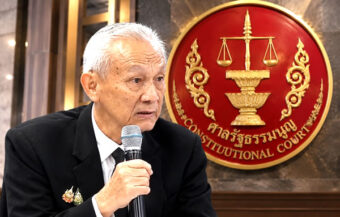
On September 14, the Election Commission resolved to proceed against 77 people. They included 26 serving senators. However, Prime Minister Anutin and Bhumjaithai powerbroker Newin Chidchob were not among those referred. Other political figures examined during the broader investigation were also excluded. Consequently, the decision substantially narrowed the group facing proceedings.
The outcome followed disagreements between investigative committees over the evidence. Committee 26 and the Department of Special Investigation examined material concerning suspected organised voting networks.
By contrast, Committee 36 subsequently reached different conclusions. The Election Commission’s majority decision reflected the narrower assessment. Opposition figures have questioned whether influential political personalities received favourable treatment. The commission’s decision nevertheless remains operative unless successfully challenged through legal proceedings.
The case now faces another important procedural stage. The Election Commission must proceed with the relevant Supreme Court referral within the applicable legal period. The expected deadline falls in November.
If the Supreme Court accepts the petitions, 26 serving senators could be required to suspend their duties. Such a development would affect the upper chamber’s composition while proceedings continue.
Senate collusion inquiry separate from confidence vote as gambling questions reach Bhumjaithai MP
The Senate investigation remains separate from the parliamentary no-confidence process. It does not directly determine whether Anutin retains the confidence of the House of Representatives. Even so, the controversy concerns the integrity of the 2024 selection process. Allegations of organised political influence remain subject to legal proceedings. The opposition has incorporated the case into its wider criticism of Bhumjaithai.
Another controversy has brought scrutiny closer to the governing party’s parliamentary ranks. Bhumjaithai MP Suchada Sangtanasap faces questions concerning her Australian husband, Taiyang Zhang.
The matter involves reported connections to an offshore cryptocurrency gambling platform and substantial financial holdings. Suchada, also identified as Suchada Zhang Thaensap, has denied wrongdoing.
The couple have faced scrutiny over declared combined wealth exceeding ฿1.9 billion. This includes a cryptocurrency-related loan valued at approximately ฿1.44 billion. The loan has been associated with the collapsed Three Arrows Capital hedge fund. Separately, reports have linked Zhang to Shuffle.com, an online cryptocurrency gambling platform. The business operates through a Curaçao-registered company.
Offshore gambling platform draws legal scrutiny as Rangsiman presses agencies over police crackdown
The platform’s overseas licensing arrangements have become part of a dispute concerning Thai gambling laws. A foreign licence does not automatically authorise gambling services in Thailand. Equally, overseas investment does not itself establish a Thai criminal offence. The legal questions concern the activities involved and whether they fall within Thai criminal jurisdiction.
People’s Party MP Rangsiman Rome has pressed government agencies for information about the matter. His inquiries have also examined an earlier government announcement concerning a crackdown on six gambling websites.
That operation reportedly resulted in 49 arrests and involved substantial financial turnover. However, different accounts have provided conflicting figures concerning the money involved. Parliamentary investigators have also sought clarification about subsequent prosecutions and enforcement action.
At a parliamentary hearing on Wednesday, October 7, neither Suchada nor her husband appeared. Government representatives were also unable to provide important documents concerning the earlier gambling operation. Consequently, several questions remained unanswered. Rangsiman has continued seeking information about the investigations and financial arrangements.
Two ministers face questions over overseas gambling law as opposition prepares to challenge economy
The controversy has drawn Justice Minister Rutthaphon Naowarat and Digital Economy Minister Chaichanok Chidchob into the dispute. Senior prosecutor Parames Inthrachumnum publicly challenged Rutthaphon’s interpretation of Thai criminal jurisdiction over overseas gambling businesses.
Subsequently, the Justice Ministry clarified its position. Chaichanok also serves as Bhumjaithai’s secretary-general. The controversy therefore involves government gambling enforcement and figures connected with the governing party.
Anutin has separately criticised Rangsiman’s parliamentary activities. The disagreement has added to tensions over legislative scrutiny. However, no criminal finding against Suchada or Zhang has been established in the reported matter. Nor has evidence established criminal wrongdoing by the ministers named in the motion. The parliamentary inquiry continues alongside the government’s campaign against illegal online gambling and financial crime.
Beyond these investigations, opposition parties are preparing to challenge the government’s economic record. Thailand faces weak growth, substantial household debt and constrained public finances.
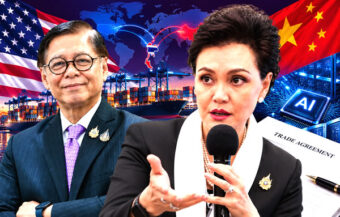
Furthermore, public debt has limited the government’s capacity for additional economic stimulus. Finance Minister Ekniti faces scrutiny over fiscal management, revenue collection and economic performance. Commerce Minister Suphajee is expected to face questions concerning exports, investment and business confidence.
Thailand faces weak growth and fiscal pressures as opposition targets finance and commerce ministers
The opposition can also point to Vietnam’s stronger economic performance. Vietnam has recorded faster growth and continued investment expansion. In contrast, Thailand continues to struggle with weaker domestic demand and structural economic difficulties. The comparison comes as Thai businesses face pressure from household indebtedness, limited purchasing power and slower activity.
Thailand’s fiscal position has added to the pressure. Final fiscal 2025 accounts recorded a deficit of approximately ฿898.8 billion, representing an increase of 20.6%. Moreover, the country’s three major tax departments missed their revenue targets.
Public debt reached approximately 65.08% of GDP, leaving limited space below the statutory 70% ceiling. These figures have increased attention on government spending, taxation and future borrowing.
The World Bank has projected Thai economic growth of approximately 2% for 2026. The outlook remains modest compared with Vietnam’s stronger expansion. As a result, the opposition can question the government’s economic priorities and response to weak domestic activity. However, economic weakness does not itself establish ministerial misconduct. Ministers will have an opportunity to defend their policies during the debate.
Flooding across Thailand puts Anutin’s disaster response and relief operations under parliamentary review
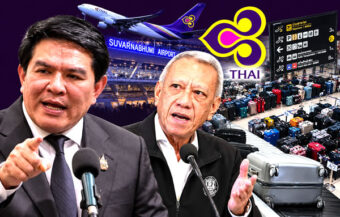
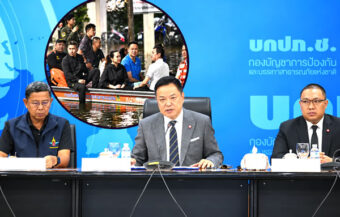
Recent flooding has added another major issue to the parliamentary confrontation. Widespread inundation has affected households, businesses and industrial operations across Thailand. Transport disruption and temporary factory closures have created further economic losses. In addition, the flooding has placed pressure on government emergency services and local officials. Affected households have sought assistance and compensation.
Opposition MPs intend to question flood warnings, prevention measures and emergency operations. They are also expected to examine the distribution of financial assistance. Anutin holds both the premiership and the interior portfolio.
Consequently, he has direct responsibility for overseeing the national disaster response. On Friday, he appeared at the Department of Disaster Prevention and Mitigation as flood management remained a government priority.
Earlier reports identified extensive disruption across Bangkok and other provinces. Approximately 329,000 households were affected in the capital’s worst-hit districts. Nationwide flooding affected more than 2.6 million people across multiple provinces. Meanwhile, transport networks, commercial operations and public services faced additional pressure. The scale of disruption has placed emergency preparedness and relief operations under parliamentary scrutiny.
Flood damage hits thousands of businesses while Anutin retains a strong majority against censure motion
Industrial losses have become another significant concern. The Federation of Thai Industries reported that 4,216 businesses across 55 provinces had been affected. More than 4,000 were small and medium-sized enterprises. Furthermore, many businesses required financial assistance to resume normal operations. Flood-related losses among affected industrial businesses were reported to exceed ฿1 billion.
Manufacturers faced temporary interruptions, including disruption affecting major automotive operations. Businesses dependent on transport and tourism also experienced difficulties. The opposition can therefore examine both emergency response and the economic consequences of flooding. However, responsibility for particular losses would require evidence concerning specific government decisions and actions.
Despite the controversies, Anutin retains a substantial parliamentary advantage. The governing coalition was reported to control approximately 295 seats when formed. It therefore entered office with a working majority in the 500-member House of Representatives. The opposition’s no-confidence motion carries 145 signatures. Assuming a full House, at least 251 votes would be required to pass a no-confidence motion.
Accordingly, the signatories would need another 106 MPs to support their challenge. That calculation assumes every signatory votes against the government. It also assumes the House retains its full membership. The opposition must therefore secure substantial support from MPs who have not joined the motion.
Kla Tham and Pheu Thai hold key parliamentary numbers as opposition seeks support beyond 145 signatories
The Kla Tham Party remains particularly important to the parliamentary arithmetic. It won 58 seats in the February 2026 election and remains outside the coalition.
However, Kla Tham MPs previously supported the government’s budget legislation. The party has not joined the no-confidence motion. Anutin has also suggested that Kla Tham could eventually enter his government. No formal coalition agreement has been confirmed.
Pheu Thai is another important factor. The party won 74 seats at the election and remains the government’s largest coalition partner after Bhumjaithai. Its continued support is central to the prime minister’s parliamentary position. A substantial withdrawal of that support would change the government’s majority. However, the supplied information contains no indication that Pheu Thai intends to abandon the coalition.
The breadth of the opposition’s motion creates another difficulty. Ministers from several governing parties are targeted. Therefore, success would require coalition MPs to vote against their own political partners. Such an outcome would require a significant change in parliamentary voting commitments. No such shift has been established in the available information.
Anutin prepares to defend ministers as corruption and Senate cases follow distinct separate legal tracks
On Thursday, Anutin dismissed concerns about the challenge. He said ministers were ready to explain their conduct and defend their records. Furthermore, he indicated that the debate would allow the government to present its achievements. Natthaphong has suggested that evidence presented during the proceedings could support later legal action against individual ministers.
Those proceedings would remain separate from the parliamentary vote. Consequently, a government victory in the House would not determine the outcome of independent investigations. The NACC examination inquiry remains active, with further formal accusations expected in late November. Police are also handling outstanding cases connected with the recruitment scandal.
The Senate collusion investigation remains unresolved. Its next major procedural stage concerns the expected Supreme Court referral in November. Separately, parliamentary scrutiny of the offshore gambling controversy continues. Investigators are seeking further financial information and records of earlier enforcement operations. Each case involves different legal procedures and institutions.
The government therefore faces several investigations alongside the parliamentary challenge. None automatically determines the outcome of the no-confidence motion.
For now, Anutin retains the parliamentary numbers required to defend his government, provided coalition MPs remain united. The opposition has sufficient signatures to force a debate. However, it has not demonstrated the additional support required to remove the prime minister or his ministers.
Government retains parliamentary advantage as opposition awaits debate and November case deadlines
The timing of the Section 151 debate has yet to be confirmed in the supplied material. As of Friday, October 9, the confrontation centres on the examination scandal, Senate collusion investigation and offshore gambling controversy. Economic weakness and the government’s flood response provide further grounds for parliamentary questioning.
The prime minister has rejected suggestions that the NACC investigation was manipulated. Ministers have also defended their handling of the matters under scrutiny. The opposition is preparing to challenge those explanations in Parliament. Nevertheless, the government enters the confrontation with a substantial majority and continued support from its coalition partners.
Licenced online gambling site abroad linked to the husband of a government MP raises legal quandary
Senators from the ‘blue’ camp move against dissident Election Commissioner Sitthichot Intrawises
The immediate parliamentary contest will depend on coalition voting discipline. Separately, the corruption investigations and related legal proceedings will continue under their respective statutory processes. Anutin controls sufficient seats to survive the motion if his coalition holds together. The next major stages of the examination and Senate investigations are expected in November.
Join the Thai News forum, follow Thai Examiner on Facebook here
Follow Thai Examiner on Google here
Receive all our stories as they come out on Telegram here
Follow Thai Examiner here
Further reading:
Licenced online gambling site abroad linked to the husband of a government MP raises legal quandary
House Committee chair Rome to call Bhumjaithai MP and Australian husband on Wednesday over wealth
Bhumjaithai MP files police report against People’s Party’s Rangsiman Rome over scammer link remarks
Former cabinet minister and Pheu Thai highflyer clarifies Ben Smith and luxury Gulfstream jet story
PM Paetongtarn suspended from duties while Deputy Prime Minister Suriya Jungrungruangkit takes power