Tourism Minister Surasak Phancharoenworakul has unveiled Thailand’s biggest tourism policy overhaul in years, proposing a new public-private decision system, a ฿3 billion stimulus, India visa reform, an expanded EU visa regime and a long-delayed tourist levy.
Thailand is preparing a far-reaching tourism policy overhaul, with Tourism and Sports Minister Surasak Phancharoenworakul proposing a new public-private consultation system alongside a ฿3 billion tourism stimulus, easier visa access for Indian visitors, standardised European Union entry rules, a long-delayed foreign tourist levy and a major ministerial restructuring, in a sweeping package designed to change how tourism policy is developed before it reaches the Cabinet.
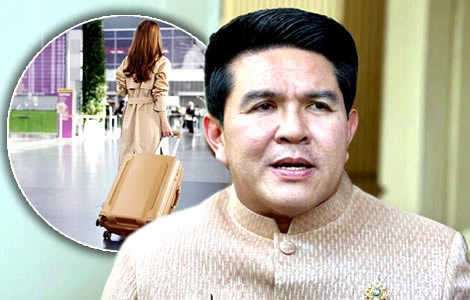
The government is preparing a sweeping overhaul of tourism policy after growing criticism from industry leaders over recent decisions affecting Thailand’s visitor economy. Tourism and Sports Minister Surasak Phancharoenworakul has responded with proposals covering policymaking, visa rules, domestic travel incentives and a long-delayed foreign tourist levy.
More importantly, he wants the private sector involved before new initiatives are announced. The changes follow mounting concern that tourism businesses have not been adequately consulted over policies directly affecting international arrivals.
In response, Mr Surasak has proposed establishing a Thai Tourism Promotion Policy Committee to strengthen cooperation between the government and business. The body will review tourism proposals before they reach ministers or the Cabinet.
It will also serve as a formal channel for industry recommendations. The minister said the objective is to ensure future tourism policies reflect operational realities rather than government planning alone.
New tourism policy committee will give businesses a formal role before ministry approves major moves
The proposal follows successful efforts to secure representation for both the Ministry of Tourism and Sports and the Tourism Council of Thailand on the Joint Public-Private Sector Committee. That committee was established under an order issued on June 23 to coordinate economic policy between government agencies and the private sector.
Under the new tourism structure, Mr Surasak will chair the committee. Senior ministry officials and business representatives will jointly examine proposals before forwarding recommendations to the national economic committee.
Government representatives will include the ministry’s permanent secretary, the governor of the Tourism Authority of Thailand, the director-general of the Department of Tourism and representatives from the Designated Areas for Sustainable Tourism Development Administration.
Meanwhile, private sector members will include the Association of Thai Travel Agents, the Thai Hotels Association, the Thai Transport Association, the Thai Airline Association and other tourism organisations. Together, they will consider policy, identify problems and recommend practical solutions before new measures are announced.
Specialist tourism subcommittees will examine industry issues before recommendations reach the minister
As part of the restructuring, the ministry also plans to establish specialist subcommittees covering individual sectors of the tourism industry. Each will focus on operational issues affecting its area of responsibility.
Hotel operators, airlines, transport companies and tourism associations will all participate. Their recommendations will then move to the main committee before reaching ministers. The ministry believes this process will strengthen policymaking and improve communication between government and industry.
Mr Surasak said tourism policy should no longer be developed solely by government officials. Instead, private businesses should participate from the earliest stage. They should help identify obstacles, recommend solutions and shape future direction.
Equally, the ministry will seek industry feedback before announcing major initiatives. According to the minister, consultation should become an integral part of tourism policymaking rather than an exercise conducted afterwards.
The announcement comes after renewed criticism of the government’s quality-over-quantity tourism strategy. Industry representatives have questioned several recent decisions affecting foreign visitors.
Tourism criticism prompts broader reforms as minister seeks closer cooperation with business sector
In particular, concerns have focused on revised visa arrangements for important international markets. Operators have also argued that Thailand must remain competitive as neighbouring destinations continue expanding their tourism sectors. Against that backdrop, the ministry is now seeking closer cooperation with businesses while preparing a broader package of reforms.
Separately, Mr Surasak confirmed plans to seek approximately ฿3 billion from the central government budget during the 2027 fiscal year. The funding will support a new domestic tourism stimulus programme called “Travel to Help Thailand Plus.”
The proposal will replace earlier co-payment initiatives, including “We Travel Together” and “Travel Thailand Half Price.” However, officials intend to redesign the programme to reflect current tourism conditions. They also want participation to become significantly easier.
The government expects to provide support worth around ฿3,000 for each entitlement. Initially, at least one million entitlements are planned. Officials are still considering whether the government should subsidise 50% or 60% of travel costs. They are also reviewing how many entitlements each participant should receive. Nevertheless, Mr Surasak said simplicity, convenience and speed will guide the final design.
Three billion baht tourism stimulus would fund one million travel entitlements under a redesigned scheme
“Overall, the government definitely plans to implement a co-payment project for the tourism sector. Initially, it’s expected to be around 3,000 baht per entitlement.
Whether it will be named as is, whether the government will contribute 50% or 60%, and how many entitlements per person will be granted, will be considered further. However, the principle of implementation will be based on ease of use, convenience, and simplicity. It may also not be limited to weekdays, weekends, or major and minor cities,” said Mr Surasak.
Notably, the programme is expected to begin during the fourth quarter of 2026. It will continue for eight months. That timetable will cover both high and low tourism seasons. Different destinations experience different seasonal peaks.
Consequently, the ministry believes a longer programme will spread benefits more evenly throughout the country and provide support across a wider range of tourism businesses.
On another front, the ministry has identified visa policy as requiring urgent attention. Mr Surasak said recent government changes should now be reviewed. He specifically supports easier entry arrangements for Indian visitors. Indian nationals currently pay a ฿2,000 Visa on Arrival fee after recent revisions replaced previous arrangements. Tourism operators have criticised that decision, arguing India remains one of Thailand’s fastest-growing visitor markets.
India visa reform and EU access proposals aim to strengthen Thailand’s competitiveness in key markets
Accordingly, the Ministry of Tourism and Sports will ask the Ministry of Foreign Affairs to reconsider the current system. Mr Surasak supports introducing a new 15-day visa-free entry arrangement for Indian tourists.
Previously, Indian visitors entered Thailand under the Visa on Arrival system. The minister said they now represent one of Thailand’s most important growth markets. He also described India as offering strong long-term tourism potential.
Meanwhile, Mr Surasak wants visa arrangements standardised across all European Union member states. European Union nationals currently receive 30-day visa-free entry. However, the ministry wants identical treatment applied throughout the bloc.
The minister said this would promote equality while avoiding any perception of discrimination. Both visa proposals are expected to reach the Cabinet around July this year.
In parallel, the ministry is accelerating plans to introduce the long-discussed foreign tourist levy. Initially, the charge will apply only to visitors arriving by air. Officials are considering a fee of between ฿300 and ฿500. The levy would be collected automatically through airline ticket purchases. As a result, visitors would pay before arriving in Thailand.
Foreign tourist levy to fund visitor insurance and tourism facilities before expanding beyond air travellers
According to the ministry, the revenue would finance life insurance coverage for foreign tourists. It would also reduce pressure on government finances. In addition, the funds would support improvements to tourism infrastructure.
Tourist attractions and public restroom facilities have both been identified. Part of the revenue would also promote domestic tourism and strengthen the sector’s long-term competitiveness.
Mr Surasak said officials expect to finalise the proposal before collection begins during the first quarter of 2027. However, arrangements for travellers arriving by land and sea remain under discussion. Those visitors often come from neighbouring countries and cross the border frequently. Therefore, officials believe additional consultation is required before extending the levy beyond air travellers.
“For foreign tourists travelling by land and sea, further discussions and considerations will be needed in the next phase, as most are from nearby markets and travel frequently. As for Thai citizens entering the country, the ticket booking system will issue refunds immediately upon booking of airline tickets,” Mr Surasak said.
Tourism restructuring would separate cultural and sporting responsibilities across two new ministries
Thai citizens will not ultimately bear the cost of the levy. Instead, the airline ticketing system will automatically refund the charge when Thai passengers purchase their tickets.
However, Mr Surasak noted that broader questions surrounding departure taxes remain the responsibility of the Ministry of Finance. Any decision on those measures must therefore come from that ministry.
Beyond tourism policy, Mr Surasak also outlined progress on the government’s planned ministerial restructuring. The Ministry of Tourism and Sports is expected to divide its responsibilities under a new administrative model.
Tourism functions will move into a proposed Ministry of Culture and Tourism. Meanwhile, sports agencies will form part of a separate Ministry of Sports.
Under the proposal, the Tourism Authority of Thailand, the Department of Tourism, the Tourist Police Division and the Designated Areas for Sustainable Tourism Development Administration will all become part of the Ministry of Culture and Tourism. The government believes the revised structure will place tourism and cultural promotion under one organisation. Officials also expect closer coordination between both sectors.
Existing staff would be reassigned under ministry overhaul without increasing government workforce
By contrast, the Office of the Permanent Secretary of the Ministry of Tourism and Sports will become part of the Ministry of Sports. Provincial Tourism and Sports Offices will also transfer into that structure.
The National Sports University and the Sports Authority of Thailand will likewise move under the sports ministry. The restructuring is intended to create clearer responsibilities while reducing duplication.
Importantly, Mr Surasak said the government does not intend to recruit additional staff. Existing personnel will instead be reassigned under the new structure. Responsibilities will also be clarified between tourism and sports agencies. The minister said this approach will avoid overlapping duties while improving administrative efficiency. Officials expect the restructuring to be completed before the end of this year.
“According to the plan to expand the ministry, we will not increase the workforce. We will use the existing personnel, but we may expand responsibilities and clarify the division of personnel between tourism and sports to avoid overlap. We expect the new structure to be completed by the end of this year.”
Culture and Tourism merger would strengthen policy coordination and raise the ministry’s profile
Mr Surasak also expressed strong support for merging tourism with the Ministry of Culture. He said the proposal offered advantages for both sectors. Tourism would gain greater prominence within the government.
At the same time, cultural promotion would become more closely integrated with visitor development. He argued the combined organisation would become one of the government’s most important ministries.
The minister said, in his view, the merger would elevate tourism within the public sector while strengthening the role of culture in attracting visitors. He also believes the new Ministry of Culture and Tourism would carry significantly greater economic value than the current structure. The reorganisation is expected to proceed alongside wider government reforms during the coming months.
Taken together, the ministry’s proposals represent one of the broadest tourism policy packages presented this year. They combine structural reform with increased industry consultation, new domestic travel incentives, revised visa arrangements and a new funding mechanism for tourism infrastructure. The package also reflects growing recognition that the private sector wants a larger role in shaping policy before decisions are announced.
Tourism reforms combine consultation, visa changes and funding measures into one broad policy package
Instead of relying exclusively on government agencies, the ministry now intends to involve airlines, hotels, travel associations, transport operators and other industry groups throughout the policymaking process.
Their views will be considered before proposals are submitted to the Joint Public-Private Sector Committee and, ultimately, the Cabinet. Officials believe this process will produce more practical policies while strengthening cooperation across the tourism industry.
At the same time, the government is attempting to stimulate domestic travel through direct financial support. The proposed “Travel to Help Thailand Plus” programme would provide at least one million subsidised travel entitlements while simplifying application procedures. Ministers also hope the redesigned scheme will encourage travel throughout the year instead of concentrating support during selected periods.
Internationally, the ministry is pursuing changes to visa policy after criticism from tourism operators over recent revisions. India has emerged as the immediate priority because of its growing importance to Thailand’s tourism economy.
Visa reform, tourism incentives and a new levy to reshape Thailand’s visitor strategy over the coming year
The proposal for 15-day visa-free entry is intended to replace the current Visa on Arrival arrangements that require Indian visitors to pay the ฿2,000 fee upon arrival.
The ministry also wants European Union visa arrangements standardised. Officials argue that equal treatment across all member states would remove concerns about inconsistent policy while reinforcing Thailand’s image as an open destination. Those proposals are expected to be submitted to the Cabinet in the coming weeks.
Finally, the long-delayed foreign tourist levy is again moving towards implementation. If approved, the charge will initially apply only to air passengers and will be collected through airline ticket purchases. Revenue will fund visitor insurance, tourism facilities and domestic tourism initiatives. Collection is expected to begin during the first quarter of 2027, while separate arrangements for land and sea arrivals continue to be examined.
Quality over Volume tourism strategy questioned by industry insiders as Thailand faces gradual decline
Tourism Minister passes on concerns of Chinese envoy to Thailand over coverage of ‘grey Chinese’ used in media coverage
The combined package demonstrates the ministry’s intention to reshape how tourism policy is developed as well as how the industry is supported. Businesses are set to receive a formal role in policy formation.
Domestic tourism would receive new financial backing. Visa rules could change for two important international markets. Meanwhile, a new tourist levy would provide funding for infrastructure and visitor protection. Together, the measures would redefine key elements of Thailand’s tourism strategy over the coming year.
Join the Thai News forum, follow Thai Examiner on Facebook here
Receive all our stories as they come out on Telegram here
Follow Thai Examiner here
Further reading:
Irishman’s madness on a Phuket highway sparks a viral video and online outrage over Free Visa access
New Zealand Day brothers have landed back home in their own country after 4 months in detention