King Harald V dies peacefully at 89 as Haakon VIII takes Norway’s throne and declares “All for Norway”. But rape convictions, Queen Mette-Marit’s Epstein links, a lung transplant and fading public support now shadow the historic new royal succession.
Norway entered a new royal era on Friday as King Harald V died peacefully at 89 and his son became King Haakon VIII. The 53-year-old monarch pledged “All for Norway” while crowds mourned outside Oslo’s Royal Palace. Yet he inherits a crown damaged by his stepson’s rape convictions, Queen Mette-Marit’s Epstein links and declining public support. His wife also begins her reign after a lung transplant for an incurable disease. Meanwhile, Crown Princess Ingrid Alexandra becomes heir as Haakon draws on decades of military, diplomatic and constitutional preparation.
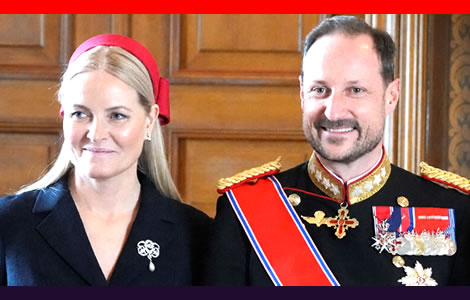
Norway’s Crown Prince Haakon became King Haakon VIII on Friday following the death of his father, King Harald V. The Royal Palace said King Harald died peacefully on August 28, aged 89. Under Norway’s constitutional rules, his 53-year-old son automatically succeeded him that morning. Crown Princess Mette-Marit became Queen Mette-Marit upon her husband’s accession.
Hours later, the palace announced the new king’s regnal name through its official Instagram account. King Haakon VIII adopted “All for Norway” as his royal motto. He has also pledged “everything for Norway” at the beginning of his reign. The palace announcement formally confirmed Norway’s first new monarch since King Harald inherited the throne.
Notably, “All for Norway” has been used throughout Norway’s modern monarchy. King Haakon’s father, grandfather and great-grandfather each selected the same pledge. The tradition began after the modern monarchy was established in 1905. His choice firmly connects the new reign with the three kings preceding him.
Norway mourns King Harald as Haakon inherits a monarchy under pressure from damaging scandals
Across Oslo, Norwegians gathered outside the Royal Palace after confirmation of King Harald’s death. Large crowds stood silently while a cannon salute marked his passing. In parallel, the government and palace began preparing the traditional royal funeral ceremony. Messages of sorrow also followed from Norway and overseas.
King Harald remained a central national figure throughout his reign. He continued performing royal duties despite declining health during his final years. As his condition worsened, Crown Prince Haakon repeatedly served as regent. Those appointments gave the future king direct experience of his constitutional responsibilities.
Even so, King Haakon inherits a monarchy battered by controversy surrounding his closest relatives. His stepson received a four-year prison sentence in June after a major criminal trial. Separately, Queen Mette-Marit faced scrutiny over her former contacts with Jeffrey Epstein. Princess Märtha Louise’s activities also generated criticism of the royal household.
Public support for the monarchy remains above 50%. Yet its popularity has declined during recent years. The damage intensified as Marius Borg Høiby’s trial dominated national coverage. Høiby is Queen Mette-Marit’s son from a previous relationship and carries no royal title.
Høiby rape convictions and Epstein disclosures place Norway’s royal family under intense scrutiny
During the trial, Høiby faced four rape charges and other accusations. The court convicted him of two rape charges but acquitted him of the other two. Additionally, he was convicted of assault and abuse within a close relationship. His lawyers said they would appeal the convictions.
Against that backdrop, the proceedings placed sustained pressure on the royal family. They also brought Queen Mette-Marit’s private life and family relationships under renewed examination. King Haakon remained beside his wife throughout the case. He also continued performing royal duties as his father’s health deteriorated.
On another front, disclosures emerged about Queen Mette-Marit’s previous contacts with Epstein. The American financier was a convicted sex offender who later died. Mette-Marit maintained contact with him after his criminal conduct became publicly known. In response, she apologised and admitted exercising poor judgement.
Queen Mette-Marit has not been accused of wrongdoing connected with Epstein. In a March television interview, she said he had manipulated and deceived her. She also said she felt unsafe during a 2013 encounter at his Palm Beach mansion. Nonetheless, those explanations failed to end public scrutiny of the relationship.
Mette-Marit battles incurable lung disease as Haakon’s long path towards the Norwegian throne unfolds
At the same time, Mette-Marit was undergoing treatment for a serious and incurable lung condition. The Royal Palace disclosed her chronic pulmonary fibrosis diagnosis in 2018. The rare disease progressively damaged her ability to breathe. It also caused coughing, fatigue, weight loss and reduced appetite.
Because of the illness, she sometimes withdrew from official duties or reduced her public engagements. She underwent a lung transplant in June. Throughout the treatment, Haakon remained beside her while continuing his work for the crown. She now enters the new reign as Queen Mette-Marit.
King Haakon VIII was born Haakon Magnus on July 20, 1973. He is King Harald and Queen Sonja’s younger child and only son. His sister, Princess Märtha Louise, was born two years earlier. However, Norway’s succession rules then placed sons before older daughters.
Accordingly, Haakon became heir when his grandfather, King Olav V, died in 1991. Norway had amended its Constitution one year earlier to establish gender-neutral succession. Crucially, that reform was not applied retroactively. Haakon therefore remained ahead of Märtha Louise despite being younger.
Ingrid Alexandra becomes heir as Haakon VIII connects Norway’s ancient and modern royal traditions
Following Friday’s accession, Princess Ingrid Alexandra became Crown Princess and direct heir. Her younger brother, Prince Sverre Magnus, follows her in the succession. Under the revised rules, Ingrid Alexandra retains precedence because she is the firstborn child. The transition therefore places a woman directly next in line for Norway’s throne.
Historically, Norway’s monarchy traces its origins to King Harald Fairhair during the ninth century. Six kings named Haakon ruled Norway during the Middle Ages. The present royal system, however, emerged after Norway regained independence from Sweden in 1905. Voters then decided whether the country should restore its monarchy.
In that plebiscite, three-quarters of participating voters supported the monarchy. The first king of the restored institution selected the name Haakon VII. For that reason, the new monarch became Haakon VIII rather than continuing the medieval numbering. His regnal name directly identifies him with the modern royal settlement.
Today, Norway’s monarch serves as the formal head of state. Political power rests with the elected parliament and government. Within that framework, the king performs constitutional, ceremonial and representative duties. The royal family also promotes Norway during international visits and major national events.
Naval, diplomatic and university training prepared Haakon for Norway’s modern constitutional throne
King Haakon’s preparation combined ordinary schooling with royal, military and diplomatic training. Initially, he attended a state primary school rather than receiving completely private tuition. The decision reflected the Scandinavian royal tradition of social equality. His secondary education, by contrast, was private.
From childhood, Haakon understood that his future had already been decided. In a 1998 book, he recalled dreaming of owning a toy shop. Before long, he realised that his position created an unavoidable path towards the throne. His later education focused increasingly on public service and international affairs.
In 1995, Haakon graduated from the Royal Norwegian Naval Academy. He also completed the Foreign Ministry’s trainee programme for diplomats. Later, he studied political science at the University of California, Berkeley. He graduated with a bachelor’s degree in the subject.
After Berkeley, Haakon attended the London School of Economics and Political Science. There, he completed a master’s degree in development studies. His academic specialisation covered international trade and Africa. Taken together, his training spanned defence, diplomacy, politics, development and international economics.
Surfing, music and Mette-Marit defined Haakon’s informal but fiercely scrutinised public royal life
Beyond official preparation, Haakon developed strong interests in music and outdoor sports. He became an avid surfer, skier and general sportsman. As a young man, he attended music festivals across Europe. His musical interests included both rock and rap.
In one interview, Haakon told Norwegian broadcaster NRK that he might otherwise have become a surfer. He said professional surfing would have been his dream without royal blood. The interest remained a prominent part of his public identity. It also reinforced his reputation for a less formal royal style.
Years later, NRK displayed that informality during interviews marking the couple’s 50th birthdays in 2023. One old recording showed Haakon playing guitar while Mette-Marit and Ingrid Alexandra sang. Another showed him copying a Norwegian rapper’s movements with his children. Watching the clips, he laughed and said, “I am all in.”
His relationship with Mette-Marit had earlier tested that less conventional approach to royal life. Haakon met Mette-Marit Tjessem Høiby at a Kristiansand music festival in 1999. She was a commoner and single mother. Her background immediately triggered intense public criticism.
In particular, her son’s father had served a prison sentence for cocaine possession. Mette-Marit had also attended parties where illegal drugs were used. Inevitably, the relationship divided Norway. Some supported the couple, while others questioned her suitability for the royal family.
Haakon defends Mette-Marit’s troubled past before King Harald approves their controversial marriage
Amid the dispute, the newspaper VG examined Haakon’s relationship with the Norwegian public. It wrote in 2000 that he “lives closer to the people than any other heir to the throne before him.” The observation captured both the attraction and the risks surrounding his choices. His supporters saw accessibility, while sceptics saw a departure from royal convention.
That May, Haakon directly addressed Mette-Marit’s earlier social environment during an NRK interview. He said “a youth culture emerged in Oslo” during the early 1990s. He acknowledged that Mette-Marit was “an active part of this environment at the time.” He added: “It is clear that there is relatively extravagant partying there.”
Despite the criticism, Haakon sought King Harald’s permission to marry her. His father understood the pressures surrounding marriage to a commoner. King Harald had himself married Sonja Haraldsen after facing resistance. Ultimately, he approved his son’s marriage.
Haakon and Mette-Marit married at Oslo Cathedral in August 2001. Following the ceremony, the couple’s popularity rose sharply. Her informal manner, striking appearance and undisguised affection for Haakon helped win public acceptance. Their image combined royal ceremony with an effort to maintain ordinary family life.
Family scandals destroy the royal balance as Haakon assumes greater duties during Harald’s decline
Frequently, the couple appeared on newspaper and celebrity magazine covers. Away from those appearances, they attempted to protect their privacy. They also sought relatively normal routines while raising their children. The couple later had Ingrid Alexandra and Sverre Magnus together.
As part of the marriage, Haakon became stepfather to Marius Borg Høiby. Høiby remained outside the formal royal structure and received no title. For many years, the family maintained a careful balance between ceremony and domestic informality. Høiby’s prosecution eventually destroyed that balance.
Then came the renewed Epstein disclosures involving Mette-Marit. Combined with Høiby’s convictions, they placed the future king’s immediate household under relentless scrutiny. Her severe illness added another strain during the same period. King Harald’s declining health simultaneously required Haakon to assume more official duties.
Elsewhere in the family, Princess Märtha Louise generated further controversy. She has written books claiming that she communicated with angels. Critics linked her activities with the royal family’s broader reputational problems. Consequently, several separate disputes converged before Haakon inherited the throne.
For the new king, these pressures now accompany every constitutional and ceremonial responsibility. His years as regent, however, gave him practical experience at the highest level. He repeatedly acted for King Harald as the late monarch’s health weakened. He also represented Norway extensively at home and overseas.
Haakon takes the crown without coronation as Norway mourns King Harald and begins a difficult new reign
No separate coronation was required for Haakon to become king. His accession took effect immediately upon his father’s death. Likewise, Ingrid Alexandra became Crown Princess at that moment. The constitutional transfer therefore proceeded automatically and without delay.
Friday’s succession closed King Harald’s reign and opened Norway’s first new reign for decades. The late king had continued working despite persistent health difficulties. He also guided the monarchy through scandals involving several close relatives. His death brought mourners directly to the palace grounds.
Norway’s Telenor exits True with a huge profit since 2021 merger as Chearavanont family tightens control
Norway and Thailand work together as the kingdom seeks a Free Trade deal with EFTA regional bloc
Now, Norway has entered formal mourning while funeral preparations continue. King Haakon VIII stands at the centre of that transition. His preparation began when he became heir in 1991. Since then, it has included naval service, diplomacy, university study and repeated periods as regent.
Personally, his route to the throne also included a fiercely contested marriage. He remained beside Mette-Marit through illness, scandal and her son’s criminal prosecution. Professionally, he assumed growing responsibilities as King Harald’s condition declined. Those experiences form the immediate background to his reign.
On Friday morning, the crown passed directly from Harald V to Haakon VIII. Later, the Royal Palace confirmed the new king’s name and motto. Both linked him directly with the modern monarchy established in 1905. King Haakon VIII began his reign with the pledge: “All for Norway.”
Join the Thai News forum, follow Thai Examiner on Facebook here
Follow Thai Examiner on Google here
Receive all our stories as they come out on Telegram here
Follow Thai Examiner here
Further reading:
CP boss says Thailand must engage US and become Southeast Asia’s top data centre with cheap energy
Thailand’s obscure negotiation strategy with United States an outlier as PM promises a ‘secret deal’
Thaksin does not rule out joining talks in US as Thai team finalises plans. They fly out on Thursday