Thailand and China are deepening ties with a sweeping cultural push covering UNESCO heritage, tourism, film, museums and creative industries. The move follows 50 years of diplomatic relations and aims to boost exchanges, tourism and Asia’s global cultural influence.
Thailand and China have agreed to deepen cooperation in cultural heritage, tourism, film, museums and creative industries, signalling a broader effort to strengthen ties beyond trade and diplomacy. The agreement, reached during talks between Culture Minister Sabida Thaiseth and Chinese Ambassador Zhang Jianwei in Bangkok, builds on 50 years of diplomatic relations and places new emphasis on UNESCO heritage cooperation, cultural tourism and the global promotion of Asian culture.
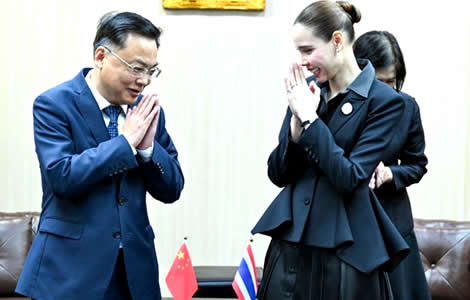
Thailand and China have agreed to expand cultural cooperation, placing heritage, tourism, film and creative industries at the centre of a new phase in bilateral relations. The commitment emerged during talks between Culture Minister Sabida Thaiseth and Chinese Ambassador to Thailand Zhang Jianwei on June 17.
The discussions came as both governments seek to build on the 50th anniversary of diplomatic relations, celebrated throughout 2025. Rather than focusing solely on exchanges, officials examined ways to produce more tangible outcomes from cultural cooperation.
The ambassador paid a courtesy call on Sabida at the Ministry of Culture at 10am. The meeting took place in the reception room on the seventh floor of the Cultural Building in Bangkok.
Thai and Chinese officials map wider cooperation agenda after landmark 50th anniversary year talks held
Present were Deputy Permanent Secretary Ranee Itharat, representing the permanent secretary, ministerial adviser Parmes Potharakul, ministerial secretary Sarasanan Arnoporn and Assistant Permanent Secretary Urusaya Intarasuksri. Senior ministry executives also attended. Alongside them were representatives from the Chinese Embassy and other relevant officials.
At the outset, both sides reviewed progress since the diplomatic anniversary year. They then turned to areas where cooperation could be expanded. Human resource development featured prominently in the discussions.
Equally important were creative industries, cultural tourism, museums and film. The talks also covered future high-level visits between the two countries. Taken together, the agenda reflected an effort to broaden cooperation across multiple cultural sectors.
Sabida emphasised the importance of culture as a bridge between the people of Thailand and China. She said cultural cooperation strengthens connections while encouraging learning and knowledge exchange.
Sabida pushes cultural exchanges, management expertise and tourism into new phase of cooperation
She also highlighted the value of sharing experience in cultural management. As part of this, officials discussed ways to develop cultural capital through cooperation between institutions and professionals. The minister said such efforts could create sustainable social and economic value.
Notably, both governments signalled a desire to move beyond symbolic exchanges. The focus shifted towards practical cooperation and measurable results. Officials explored mechanisms for expanding professional exchanges and institutional partnerships.
They also discussed opportunities to strengthen cultural learning between the two countries. In response to growing interest in cultural tourism, both sides examined ways to support the sector through deeper collaboration.
Film emerged as another area of interest. Officials exchanged views on expanding cooperation and encouraging greater interaction within the industry. Separately, museum development formed a significant part of the agenda.
Discussions covered management practices, knowledge sharing and institutional expertise. Those exchanges reflected a broader push to strengthen links between cultural organisations. Consequently, several areas were identified where cooperation could be expanded in the future.
UNESCO heritage cooperation moves centre stage as Thailand and China promote Asian identity globally
A substantial portion of the meeting focused on cultural heritage. Here, attention turned to cooperation under UNESCO frameworks. Both sides expressed support for deeper collaboration in preserving and promoting cultural assets.
They also discussed ways to strengthen heritage conservation efforts. Beyond preservation, the talks addressed the dissemination of cultural knowledge and historical understanding. The objective was to increase awareness of Asian heritage among international audiences.
On another front, officials discussed the role of cultural heritage in promoting Asian identity globally. Both countries expressed a shared commitment to advancing that objective. They agreed that heritage cooperation can help showcase Asia’s historical achievements and cultural traditions. At the same time, they stressed the importance of safeguarding cultural assets for future generations. Heritage preservation, therefore, emerged as a common priority.
The UNESCO dimension added a wider international context to the discussions. Through that framework, Thailand and China see opportunities for broader engagement on cultural issues. Moreover, cooperation in heritage offers a platform for presenting Asian culture on the world stage.
Both sides expressed support for continued collaboration in this area. The discussions highlighted the growing importance of culture within international relations.
Meanwhile, the meeting highlighted the expanding role of cultural diplomacy within Thailand-China ties. Trade, investment, tourism and education have long anchored the relationship. Culture is now assuming a more visible role.
Cultural diplomacy gains prominence as Thailand and China broaden institutional cooperation
In parallel, officials discussed how cultural exchanges can strengthen people-to-people links and deepen mutual understanding. They also examined ways to develop human potential through learning and professional cooperation.
For Thailand, the discussions aligned with efforts to strengthen cultural assets and broaden international engagement. For China, they offered another avenue for expanding cooperation with a key regional partner.
The meeting therefore carried significance beyond cultural affairs alone. It reflected a wider commitment to strengthening bilateral ties through practical cooperation.
King Maha Vajiralongkorn and Queen Suthida warmly welcomed in Beijing by China’s President Xi Jinping
Talks with Chinese ambassador indicate link between politics and Chinese visitors numbers to Thailand
By the close of the talks, both sides had reaffirmed support for continued engagement across heritage, tourism, creative industries, museums and film. They also endorsed stronger cooperation within UNESCO frameworks.
Looking ahead, officials signalled a commitment to sustained exchanges and long-term collaboration. The Ministry of Culture described the discussions as another important step in strengthening friendship between Thailand and China.
Ultimately, the meeting reinforced culture’s growing role in bilateral relations while setting a broader framework for future cooperation.
Join the Thai News forum, follow Thai Examiner on Facebook here
Receive all our stories as they come out on Telegram here
Follow Thai Examiner here
Further reading:
Concern for US tariff deal as new Thai government shows enthusiasm for stronger links with Beijing
Thailand’s once mighty tourism industry is failing but now faces further damage from overvalued baht
Rate cut anticipated as outgoing Bank of Thailand governor attends last Monetary Policy Committee
Last minute tweaks in Bangkok as deal is finalised with U.S. However, Thailand may not match Vietnam