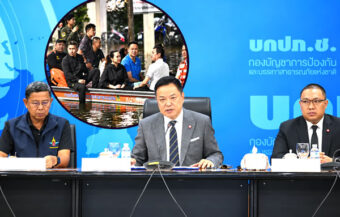
Island raids become a nationwide foreign business crackdown as 112 Koh Phangan firms face land probes and 30-year leases come under scrutiny. Yet Thailand grants billion-baht investors faster approvals while actual foreign investment fell 19.5% in the first quarter of 2026.
Thailand’s foreign business crackdown is racing from holiday-island raids into a nationwide test of property rights and investor confidence. Deputy Interior Minister Worasit Liengprasit said on Tuesday that thousands of Surat Thani companies face scrutiny, including 112 Koh Phangan entities holding 124 land plots. Arrests, hotel closures and nominee investigations are mounting as officials also target long-promoted lease arrangements. The drive follows a 2023 Supreme Court ruling voiding prepaid extensions beyond the first registered 30-year term. Yet, Thailand is simultaneously handing billion-baht industrial projects tax holidays and accelerated approvals to such investors. Meanwhile, actual foreign direct investment plunged 19.5% annually during the first quarter of 2026. The widening crackdown now exposes a stark divide between Prime Minister Anutin Charnvirakul’s nationalist enforcement drive and Thailand’s urgent pursuit of foreign capital to inject momentum into the economy.
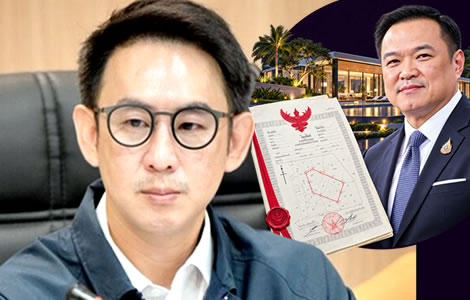
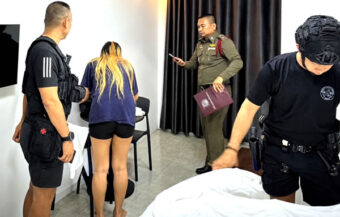
Deputy Interior Minister Worasit Liengprasit on Tuesday detailed an expanding crackdown across Surat Thani’s principal holiday islands. The operations cover Koh Samui, Koh Phangan and, increasingly, Koh Tao. At the same time, further enforcement action was unfolding on Koh Tao. Officials closed foreign-linked businesses and made arrests over breaches of Thailand’s employment laws.
Some 46 people have been arrested on the small island since January. The cases form part of a much larger national operation. More broadly, the campaign covers businesses, employment, company ownership, landholding and property arrangements. Its reach now extends far beyond individual immigration or employment offences.
Worasit said the operation must move beyond lists and preliminary irregularities. Instead, agencies must connect records and pursue every case to completion. As part of this, business, land, tax, labour, provincial and police offices must work together. Officials must also distinguish lawful operators from companies requiring further investigation.
Surat Thani scrutiny reaches 25,864 firms as foreign shareholders dominate thousands of companies
Surat Thani has 25,864 registered legal entities, according to figures presented by Worasit. Of these, 11,721 have foreign shareholders. Notably, foreigners hold more than 49% of the shares in 9,281 entities. Those figures have placed the province’s corporate structures under extensive examination.
Koh Samui alone has 12,906 registered legal entities. By comparison, Koh Phangan has another 5,009. Consequently, both islands have become priority areas for company, property, hotel and employment inspections. Both are also important economic centres with substantial foreign involvement.
Initial screening identified 5,486 legal entities sharing registered company addresses. Officials also found 4,621 people holding shares across multiple companies. Crucially, Worasit said those indicators did not establish wrongdoing. They instead identified businesses requiring deeper checks.
On another front, the Surat Thani Area Revenue Office 2 is examining 110 entities. The cases concern possible nominee arrangements and foreign business operations. So far, officials have completed action involving 12 entities worth a combined ฿7.538 million. Another 98 cases remain under examination.
In parallel, the Koh Phangan land investigation has produced substantial findings. Officials examined 1,832 legal entities holding land across the island. They identified 112 entities whose foreign shareholding information exceeded the legal threshold. Those companies will now undergo further checks under established procedures.
Koh Phangan land probe targets 124 plots as hotels and linked companies face physical inspections
Together, the 112 entities hold 124 land plots. The properties cover approximately 86 rai, three ngan and 42.4 square wah. Of the companies, 104 were newly identified. The remaining eight had already been subject to court judgments.
The Surat Thani governor has ordered eight entities to dispose of nine land plots. Elsewhere in the process, another 28 entities are awaiting possible disposal orders. Koh Phangan’s branch Land Office is compiling evidence covering the remaining 76 entities. The cases have therefore reached several separate legal stages.
Worasit ordered provincial officials to follow every case through the legal process. In his words, investigations must not remain figures inside official reports. Officials must document what happened after each irregularity was found. That includes whether cases reached prosecutors, courts or land disposal proceedings.
The campaign also covers hotels and other commercial premises. Since May 13, officials have pursued several cases across Koh Samui and Koh Phangan. Some remain under evidence gathering, while others have reached prosecutors. Additionally, arrest warrants have been issued in several cases.
On August 14, inspection teams targeted several premises across Koh Phangan. These included hotels operating without licences, connected companies and other suspected businesses. From that point, the operation moved from database screening into physical inspections. Investigators are also following financial records and corporate links uncovered during those visits.
Foreign worker prosecutions widen as Anutin’s national campaign targets nominees and land control
Foreign employment has become another major part of the campaign. Surat Thani has issued work permits to 7,542 foreign nationals. These include 4,101 people on Koh Samui and 2,513 on Koh Phangan. Even so, officials have prosecuted 104 foreign workers.
The offences include working without permits and operating beyond permitted employment rights. Other cases concern occupations legally reserved for Thai nationals. In addition, officials have prosecuted 46 employers and business premises. Enforcement therefore extends beyond workers to the companies employing them.
Worasit said lawful foreign operators must receive fair treatment. By contrast, investors using nominees, legal loopholes or prohibited structures would face investigation. He ordered officials to “inspect properly, expand investigations fully and follow every case to completion.” The stated target was legal compliance rather than prosecution numbers alone.
The crackdown began days after Prime Minister Anutin Charnvirakul took office in September 2025. Initially, officials concentrated on holiday islands and principal tourism provinces. Since then, the government has extended the operation nationwide. Thousands of foreign-owned or foreign-linked companies have faced inspections, document checks and investigations.
Officials are examining whether foreigners operate businesses through Thai nominee shareholders. They are also investigating companies used to acquire or control land. Under Thai law, foreigners generally cannot own land directly. The Foreign Business Act also restricts foreign participation across several protected industries.
Legal foreign structures face funding checks as raids spread and 30-year leases enter the spotlight
Foreigners can establish companies and invest under approved legal structures. Nevertheless, Thai shareholders cannot hold shares merely for foreign beneficiaries. For that reason, investigators are checking the source of shareholders’ funds. They are also examining who exercises effective control over each company.
Officials want evidence that Thai partners invested their own capital. Beyond that, they are checking whether those partners participate genuinely in each business. Land offices have received urgent instructions covering suspicious property transactions. Operations have spread across Phuket, Chon Buri, Surat Thani and other tourism centres.
Pattaya has also come under scrutiny. Three raids there targeted a suspected Israeli nominee network controlling assets worth several hundred million baht. Meanwhile, Phuket officials checked more than 100 companies with combined revenue exceeding ฿5 billion. Sixteen people were prosecuted following that operation.
Those prosecuted included ten Thais, two Canadians, three Russians and one Kazakhstani. Separately, officials had already flagged 361 companies nationwide for closer examination. Earlier operations concentrated heavily on Koh Samui and Koh Phangan. Now, Koh Tao has become another prominent target.
The latest Koh Tao arrests concern foreign businesses and breaches of employment legislation. Yet the government’s campaign has also moved deeper into company and property law. Last week, a senior Interior Ministry official raised concerns about repeated 30-year leases. Officials are now examining long-term arrangements connected to foreign property purchasers.
Supreme Court voids prepaid lease extensions designed to provide foreign buyers with 90-year control
The development follows Supreme Court Judgment No. 4655/2566. The Supreme Court decided the case in 2023. Later, the judgment was published and attracted widespread attention in 2025. It directly affected arrangements presented as 90-year property leases.
The dispute concerned land and a house in Phuket. The property was leased for 30 years from May 10, 1990. The tenant paid ฿1.5 million for that initial term. Simultaneously, the owner promised two additional 30-year leases.
The tenant paid another ฿1.2 million in advance for those extensions. In effect, the complete structure sought to provide control for 90 years. Such contracts became widely known as “30+30+30” leases. Developers used them extensively in Phuket, Koh Samui and other resort markets.
Foreigners generally cannot hold freehold title to Thai land. Accordingly, renewable leases were marketed as an alternative to permanent ownership. Buyers received one registered 30-year lease. Private contracts then promised another two terms covering 60 years.
The Supreme Court found that the arrangement circumvented Section 540 of the Civil and Commercial Code. That provision limits leases of immovable property to 30 years. A new lease can be granted after the original term expires. However, future terms cannot effectively be granted and prepaid from the outset.
The court declared both advance renewal provisions void. It also rejected the tenant’s claim to enforce personal contractual rights. Otherwise, those promises would have defeated the statutory limit. The court therefore treated the agreement according to its complete 90-year purpose.
Registered 30-year leases survive ruling as future extensions leave foreign buyers exposed to owners
Importantly, the judgment did not cancel properly registered 30-year leases. The first registered term remains enforceable for its agreed duration. Advance extensions, though, do not provide equivalent legal protection. A second lease requires the landowner’s agreement after the first expires.
The owner can then demand different conditions or market-level rent. Alternatively, the owner can refuse another lease entirely. Moreover, heirs, creditors or subsequent owners may reject promises not registered against the title. Foreign purchasers must therefore secure another agreement after 30 years.
In the Phuket case, the tenant remained after the first term ended. The Supreme Court upheld the owner’s right to recover possession. The tenant was ordered to leave the property. Furthermore, the court imposed damages of ฿30,000 for every month of continued occupation.
The ruling exposed the legal weakness of prepaid 90-year structures. Some purchasers had paid prices reflecting occupation for three consecutive terms. In reality, only the first 30 years provided a registered leasehold right. The following 60 years depended upon future cooperation from the owner.
The Interior Ministry’s examination of these contracts has widened the campaign substantially. Previously, many operations concentrated on illegal employment, foreign-controlled businesses and nominee shareholders. Now, established property arrangements and long-term leases have also entered the operation. More foreign property purchasers consequently face questions about existing contracts.
Foreign residents watch febrile crackdown as legal certainty becomes the central investment concern
Raids and arrests have received extensive national coverage. Foreign businesspeople and property owners have repeatedly appeared in reports about inspections and nominee arrangements. Against this backdrop, a febrile atmosphere has developed across principal foreign investment centres. The campaign has also attracted attention among long-term foreign residents.
Many foreign residents have lived, invested and conducted business in Thailand for several decades. Some purchased homes through registered leases. Others formed companies with Thai business partners. As a result, the inspections affect numerous established commercial and property arrangements.
For every investor, legal certainty is the first requirement. This applies to multinational corporations, family companies and individual property purchasers. Capital is committed on the expectation that ownership rights will remain secure. Investors also require enforceable contracts and consistent legal treatment.
This requirement does not protect unlawful nominee companies. Nor does it protect prohibited land ownership or businesses operating without permission. Such arrangements remain subject to investigation and prosecution under Thai law. At the same time, lawful investors require clarity over ownership, licences, leases and company structures.
Secure ownership and enforceable contracts remain essential from small hotels to major manufacturers
Investors need to know how officials will apply existing legislation. Equally, they must understand whether that approach will remain consistent. Property investment is particularly sensitive because capital remains committed for many years. Before purchasing, investors must know precisely what they own.
They must also understand how long each legal right continues. Similarly, they must know whether those rights bind heirs, creditors and future owners. A registered ownership right and a private contractual promise are not identical. The Supreme Court ruling demonstrated that distinction directly.
The same requirements apply across every investment level. A billion-baht manufacturer depends upon secure assets and enforceable agreements. Likewise, a foreigner operating a small hotel or restaurant requires the same foundations. Individual home purchasers also rely upon registered rights and predictable property rules.
Large incentives can accelerate a particular project. Tax concessions, however, cannot replace enforceable contracts or legally secure assets. Fast approvals can reduce bureaucracy. Ultimately, every completed investment must still operate within Thailand’s wider legal framework.
Investment figures face scrutiny as Thailand shifts from Thaksin’s welcoming foreign-resident policy
The present campaign can be assessed through two separate sets of facts. First, officials are identifying illegal nominee structures and employment offences. Second, investment figures will show whether foreign capital continues entering Thailand during intensified enforcement. At present, those figures do not cover the crackdown’s most active period.
The current policy also marks a change from earlier efforts to recruit foreign residents and investors. Those efforts were particularly visible under former Prime Minister Thaksin Shinawatra. After taking office in 2001, Thaksin promoted Thailand as a regional business centre. His government also promoted aviation, healthcare and tourism.
Thaksin’s government viewed foreigners as customers, investors and sources of expertise. The “I Love Farang” campaign encouraged a welcoming attitude towards Western visitors and residents. In that campaign, the word “farang” was used positively. Public-facing businesses were also encouraged to welcome foreign customers.
In 2003, Thaksin’s government launched the Thailand Elite programme. Affluent foreigners could purchase long-term visa privileges. They also received expedited immigration treatment and other services. The programme represented a direct effort to recruit affluent long-term residents.
Thaksin-era restrictions before Prayut pivoted from nationalist controls to long-term resident visas
Membership did not provide permission to work. Nor did it allow members to own Thai land. At the policy level, Thaksin also pursued free-trade agreements and expanded investment incentives. His government additionally discussed reducing restrictions affecting foreign investment and business ownership.
The Foreign Business Act remained in force. Foreigners stayed limited to minority ownership across numerous protected industries. Exemptions and Foreign Business Licences provided legal routes in qualifying cases. Still, the broader ownership restrictions remained intact.
The 2006 coup ended Thaksin’s period in office. A stronger nationalist shift followed the 2014 military takeover led by General Prayut Chan-o-cha. The military government emphasised enforcement, public order and national sovereignty. Immigration officers pursued overstayers and tightened several visa practices.
Officials also arrested foreigners working without permits. On top of that, foreign-controlled companies, illegal tour operators and nominee businesses received additional attention. Over time, Prayut’s government adopted an extensive programme to attract foreign residents and investment. Thailand sought capital, advanced technology, skilled professionals and international companies.
The government launched its ten-year Long-Term Resident visa in September 2022. The programme targeted wealthy global citizens, pensioners, remote professionals and highly skilled workers. Successful applicants received long-term residence. They also reported to immigration annually instead of every 90 days.
Prayut’s foreign land proposal collapsed before Anutin intensified nationalist business inspections
Other benefits included airport services and easier access to work permits. Certain qualifying professionals also received tax concessions. Under the plan, Thailand aimed to attract one million wealthy or skilled residents over five years. The Board of Investment linked the scheme to capital, expertise, technology and domestic spending.
Prayut’s cabinet also approved a limited foreign land ownership proposal. Qualifying foreigners could have purchased up to one rai of residential land. To qualify, applicants needed to invest at least ฿40 million for three years. The proposal immediately provoked a strong political and public reaction.
Opponents accused the government of selling national assets. Public concern also focused on foreign demand increasing residential property prices. In response, the government withdrew the proposal in November 2022. The episode exposed the sensitivity surrounding foreign ownership of Thai land.
Since then, attention has increased on foreign-controlled businesses in several tourism centres. Public debate has covered Russian businesses in Phuket and Chinese investment across several sectors. Israeli-operated ventures have also received scrutiny. Meanwhile, foreign-controlled companies on Koh Samui and Koh Phangan have faced repeated inspections.
Prime Minister Anutin’s Bhumjaithai Party adopted a strong nationalist position before the February 2026 election. The party subsequently won 193 House seats. It then formed a government with Pheu Thai and several smaller parties. Since taking office, Anutin has intensified action against nominees and illegal foreign businesses.
Anutin offers FastPass incentives to billion-baht projects while tightening scrutiny of foreign firms
The campaign also targets prohibited landholding arrangements. In a related move, the government has strengthened visa screening. Foreigners repeatedly entering as tourists while conducting business have received particular attention. Yet officials are simultaneously pursuing major foreign investment through a different policy channel.
Thailand launched its FastPass programme in June 2026. The scheme coordinates eight agencies handling factory licences, environmental permission, customs, electricity and industrial estates. Qualifying projects generally require investment exceeding ฿1 billion. That calculation excludes land and working capital.
Projects must operate in strategic or high-technology industries. In return, they must provide employment, technology transfers or supply-chain benefits. Eligible investments generally qualify for at least eight years of corporate income-tax exemptions. The programme can reduce some procedures by as much as 50%.
Previously, certain approval processes required up to 60 working days. Under FastPass, the government says approximately US$21 billion in projects could be unlocked. Targeted industries include electronics, semiconductors, electric vehicles, biotechnology and artificial intelligence. Data centres and advanced manufacturing projects also qualify.
Major investors gain state support as smaller foreign ventures face checks and growing investment risks
Apart from FastPass, six special measures were introduced to advance US$9.2 billion of stalled projects. Other support includes faster factory and environmental approvals. The government is also intervening over electricity connections and industrial land. Large investors can receive import-duty exemptions and coordinated visa services.
Executives and specialists may qualify for Long-Term Resident visas. FastPass, however, principally serves major strategic projects. It provides fewer direct benefits for smaller hotels, restaurants, service companies and property businesses. Thailand is therefore applying markedly different policies across the investment market.
Major technology projects receive tax incentives, accelerated approvals and direct government coordination. On the other side, smaller foreign-linked ventures face stronger shareholder, banking, employment and property checks. These smaller investments remain important across tourism and service centres. They are, nonetheless, less visible in national investment announcements.
Bank of Thailand figures show actual foreign direct investment rose strongly during 2025. Net FDI liabilities reached approximately ฿602.66 billion for the full year. The first quarter produced ฿112.99 billion. Subsequently, the second quarter brought a much larger ฿205.02 billion.
Actual foreign investment falls 19.5% as central bank figures trail promotional application totals
Third-quarter net FDI stood at ฿127.82 billion. The final quarter recorded another ฿156.83 billion. In early 2026, net FDI fell to ฿90.99 billion. That represented a 19.5% annual decline.
One quarterly fall does not establish a sustained downturn. Related-company loans and reinvested earnings can make FDI figures volatile. Even so, the figures measure investment transactions recorded as entering Thailand. They also expose the difference between actual FDI and investment applications.
Board of Investment applications concern proposed projects. Some projects may proceed several years later. Others may change, shrink or never materialise. Board approvals provide permission and state incentives, but they do not prove that capital entered Thailand.
Bank of Thailand FDI, in contrast, includes equity transactions and reinvested earnings. It also covers financing between related companies. The Board of Investment reported approximately ฿1.36 trillion in foreign applications during 2025. Actual net FDI recorded by the central bank was approximately ฿603 billion.
The two totals are not directly comparable. Despite that, recorded FDI was below half the value of foreign applications. UN Trade and Development placed Thailand’s 2024 inflow at approximately US$10.58 billion. On that basis, the 2025 central bank total showed a substantial increase in actual investment.
Foreign investment clusters in finance and manufacturing as a handful of global projects dominate
The money was concentrated across several sectors. Financial and insurance activities accounted for approximately ฿164.03 billion during 2025. Manufacturing attracted approximately ฿133.67 billion. Real estate, for its part, received approximately ฿79.66 billion.
Wholesale and retail activities accounted for approximately ฿29.99 billion. Electricity and utilities received approximately ฿13.42 billion. One caveat is that finance included an exceptional ฿112.82 billion second-quarter inflow. That figure cannot automatically be treated as new factories or production.
Manufacturing delivered a more consistent contribution. Yet quarterly totals varied across electronics, vehicles, electrical equipment and chemicals. The central bank does not divide investors into multinational and smaller-business categories. Rather, it classifies FDI by country, sector and financial instrument.
No reliable multinational-versus-small-investor percentage can therefore be calculated from the published tables. Even so, available project figures show substantial concentration among major companies. TikTok’s proposed data-hosting investment alone was valued at ฿126.8 billion. Other commitments came from several global technology and manufacturing groups.
Global technology giants dominate approvals while smaller firms face crackdowns and mixed investment
Amazon Web Services, Google and Microsoft have announced major investments. Chinese electronics groups have also made substantial commitments. In the same vein, data-centre operators and electric-vehicle manufacturers have pursued large projects. Several investments can consequently dominate annual Board of Investment totals.
Thousands of smaller foreign-linked companies, by comparison, operate throughout tourism and services. Their investments are less visible within national promotional announcements. Even so, they support hotels, restaurants, property services, retail operations and smaller manufacturers. Their decisions can also respond quickly to changing business conditions.
The intensified nominee and land investigations accelerated during the second quarter of 2026. The latest Bank of Thailand figures, though, reach only the first quarter. Those figures therefore exclude much of the nationwide enforcement period. Early sectoral movements were also mixed.
Real-estate FDI fell from ฿21.83 billion to ฿21.32 billion during the first quarter. Conversely, accommodation and food-service FDI increased from ฿729 million to ฿1.07 billion. Manufacturing FDI also rose from ฿43.52 billion to ฿66.36 billion. Singapore-origin net FDI became negative during the quarter.
Chinese and Japanese net investment remained positive. None of these movements establishes that the crackdown caused the overall decline. For now, the figures provide a baseline before later quarterly data become available. The second-quarter figures will cover more of the intensified campaign.
Nominee-linked registrations plunge as later data must establish the crackdown’s investment impact
The Department of Business Development also reported falls in registrations considered vulnerable to nominee involvement. Those registrations fell 51% during the first quarter. They then declined another 65% during April and May. The government presents those falls as successful enforcement.
The data do not separate the reasons behind the reduction. They do not show how many illegal nominee ventures were abandoned. Nor do they identify lawful investors delaying or restructuring proposed businesses. The totals measure registrations rather than the motivations behind each decision.
Second and third-quarter central bank figures will provide a broader measurement later in 2026. In the meantime, company registrations and foreign property transactions will provide further evidence. Foreign condominium transfers will also be relevant. So will registered leases, cancellations and Foreign Business Licence applications.
Commercial property activity in Phuket, Chon Buri and Surat Thani will provide additional indicators. Foreign chamber surveys may also record changes in business confidence. Regional comparisons will include Vietnam, Malaysia and Indonesia. Those results, however, are not yet available.
For now, the figures establish three facts. Actual FDI increased strongly during 2025. It then fell 19.5% annually during the first quarter of 2026. Meanwhile, the nationwide crackdown reached its most intensive stage after that reporting period.
Legal certainty remains critical as Thailand affords global companies better treatment than smaller firms
Current data therefore do not quantify the campaign’s effect on later investment decisions. Nor do they measure confidence in Thai property arrangements or contractual security. Legal certainty remains the first requirement for investors at every level. That requirement covers ownership, leases, licences and enforceable agreements.
It applies to a US$1 billion technology project. Equally, it applies to a small hotel, restaurant, factory or property purchase. Large investors can absorb longer reviews and specialist legal costs. Smaller investors face those costs across a much lower capital base.
Expanding probe into foreign property ownership looking at company ownership of condos in 16 provinces
Drive against foreign owned property and business on Koh Samui and Koh Phangan now targets leases
Thailand is now offering accelerated treatment to selected global corporations. Simultaneously, officials are intensifying scrutiny across smaller foreign-owned business and property sectors. The resulting investment picture will emerge from recorded transactions, not approved proposals. Later Bank of Thailand figures will provide the first broader measurement.
Join the Thai News forum, follow Thai Examiner on Facebook here
Receive all our stories as they come out on Telegram here
Follow Thai Examiner here
Further reading:
Drive against foreign owned property and business on Koh Samui and Koh Phangan now targets leases
International reservations system used by hotels targeted in latest Koh Phangan swoop by ministers
Anutin visits Koh Phangan as nominee crackdown shows 68% of firms with foreign ownership links
Blitzkrieg on foreign firms and enterprises on Koh Phangan continues with French owned resort busted
Russian-Chinese Koh Phangan alliance to sell drugs to foreigners. Accused entered Thailand illegally
Crackdown aimed at upending foreign business trade moves from Koh Phangan to Phuket. Four arrested
Crackdown to wipe out foreign business abuses and ownership on Koh Phangan & Koh Samui intensifies