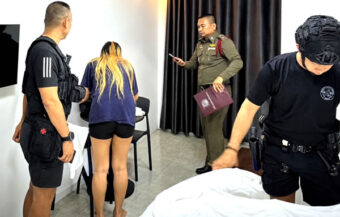
Steel cage beds, barred rooms and psychiatric patients trigger the closure of a Kanchanaburi care home licensed for elderly care. Inspectors found 129 beds instead of 50. Now Thailand is checking 1,200 centres as a second disturbing case emerges too.
Thailand has shut a Kanchanaburi care home after inspectors found psychiatric patients behind bars and sleeping in steel cage beds. Sothornchai Nursing Home was licensed for elderly care, yet psychiatric patients made up more than 90% of residents. Inspectors found 129 beds despite approval for 50, while the facility had swollen to almost three times its licensed size. The scandal began with abuse claims before inspectors uncovered barred rooms, razor wire and serious safety breaches. Now, a second home in Nonthaburi faces investigation over claims an elderly resident was chained to his bed. Meanwhile, Thailand has ordered checks on 1,200 care centres as questions grow over how Sothornchai’s licence was renewed just weeks before inspectors shut it down.

Thailand has shut a Kanchanaburi care home where inspectors found psychiatric patients behind bars and beds covered by steel cages. The centre was licensed for elderly and dependent people.
Yet more than 90% of its residents were psychiatric patients. Inspectors counted 129 beds despite a licence allowing only 50. Its operating area had also swollen to almost three times the approved size. Now, a second facility faces investigation in Nonthaburi over claims that an elderly resident was chained to his bed.
The Department of Health Service Support revoked Sothornchai Nursing Home’s licence on Wednesday. The centre is in Tha Muang district, Kanchanaburi. Public Health Minister Pattana Prompat ordered officials to prepare closure documents immediately. In response, arrangements began to move residents to families, government care or appropriate medical facilities.
Inspectors uncover huge expansion at Kanchanaburi care home after abuse complaint triggers official raid
The action followed complaints involving confinement, abuse and conditions inside the centre. Soon afterwards, disturbing images of steel-covered beds emerged. Heavy metal frameworks completely surrounded some mattresses. In effect, a resident placed inside could be enclosed within the bed. Inspectors also found barred rooms with doors locked from outside. Elsewhere, concertina razor wire had been installed around parts of the property.
The scale of the operation produced another major finding. Sothornchai held a licence for just 50 beds. Inspectors found 129. Likewise, the centre had approval to operate across only 1,600 square metres. Instead, it occupied approximately 4,300 square metres. Earlier inspection information put the figure as high as 4,641 square metres. Consequently, the operation had grown to almost three times its approved floor area.
The case began with a 63-year-old woman’s account of life inside Sothornchai. She appeared on television programme Hone-Krasae after leaving the facility. According to her, a son and daughter-in-law placed her there against her wishes. She claimed she remained inside for more than two years. Additionally, she accused staff of assault, threats and forcing her to take medication. Eventually, she managed to get a message outside asking for help.
Those accusations remain disputed and are subject to police investigation. Nevertheless, the resulting government inspection uncovered extensive licensing and operational violations. Dr Phuwadet Surakot heads the Department of Health Service Support. He confirmed that officials had revoked the centre’s operating licence. Therefore, the order closes Sothornchai rather than merely suspending its operations.
The operator has 30 days to appeal. For now, however, the centre must stop operating. Employees have been told to leave. Residents must also be removed or transferred. At the same time, the controversial enclosed beds have been dismantled.
Inspectors find unsafe buildings as psychiatric patients dominate centre licensed for elderly care
Inside the buildings, inspectors found another series of problems. Bathroom floors were cracked and subsiding. Walls were damaged, while differences between floor levels created additional concerns. Stair rails were inadequate. In addition, rubbish arrangements failed to meet requirements. Officials also reported problems with wastewater treatment.
The food preparation area produced further findings. Ventilation was inadequate. More seriously, pesticides were reportedly being stored beside food ingredients. Taken together, these findings formed part of the case supporting the closure.
Yet the centre’s resident population brought a different regulatory problem into sharp focus. Sothornchai was licensed for elderly and dependent care. In reality, officials found psychiatric patients dominated its population. More than 90% of residents fell into that category. Notably, most of the more than 100 residents were aged between 18 and 59.
Earlier figures provided during the investigation showed the same striking imbalance. One breakdown identified 81 psychiatric patients. By comparison, only eight residents were elderly. Another three were rehabilitation patients. The centre employed 19 carers to look after those residents.
Officials also found patients taking psychiatric medication. Separately, others were undergoing rehabilitation following drug treatment. Inspectors then turned to their medical records. They said the files lacked sufficient accuracy and detail. In some cases, required diagnostic certificates from doctors were reportedly missing.
Probe shifts to unauthorised psychiatric care as five residents are moved for more serious treatment
As a result, investigators moved beyond building standards and licensing capacity. They examined whether Sothornchai was effectively providing psychiatric care outside its authorised role. The Department of Health Service Support said the centre breached the Medical Facility Act. Psychiatric treatment requires an appropriately licensed medical establishment. Such facilities also require doctors and specialist personnel.
There is a limited exception for less serious psychiatric cases. Elderly and dependent-person centres can accommodate certain patients classified at the “green” level. However, those patients must not display severe agitation or create serious disturbances. They must also present no significant danger to other people. Patients outside that category require treatment at appropriately licensed medical facilities.
Against that background, Department of Mental Health teams began assessing Sothornchai’s residents individually. At least five were subsequently placed at the more serious “yellow” level. Accordingly, officials arranged their transfer to suitable treatment facilities. Other residents can return to relatives where appropriate. Those needing continued residential care can move to alternative centres.
The steel structures around beds became the most visible feature of the scandal. Some consisted of complete metal frameworks above and around the sleeping area. Once closed, the structure effectively enclosed the person inside. Other residents stayed behind barred doors. Nonetheless, the owner has vigorously defended the arrangements as measures for handling difficult psychiatric cases.
Owner defends cage-covered beds as safety measures while son admits possible assessment failures
Former nurse Ying “Maew” Pornsermsiri said some residents could become violent or severely agitated. Some could damage property, she said. Others could wander away or endanger themselves. Furthermore, she said residents could pose a danger to other people. Ying maintained the enclosed beds could stop vulnerable residents falling and injuring themselves.
She also defended the locked and barred accommodation. In her account, those arrangements protected patients during periods of dangerous behaviour. Some residents interviewed by television reporters offered similar explanations. They said enclosed beds were used while they displayed uncontrollable behaviour. Once their condition improved, they said, the practice stopped.
The owner’s son, Teerapop Rangsisukanon, went further. He acknowledged that he personally designed the controversial beds. Teerapop said he had studied health sciences at the University of Auckland. He said the design followed his examination of incidents involving residents. According to him, the objective was to stop patients harming themselves or others.
Still, Teerapop acknowledged possible weaknesses in the centre’s procedures. He conceded there may have been shortcomings when residents were assessed. He also accepted possible weaknesses in examining their medical histories.
Mental health chief rejects cage-covered beds as former resident describes confinement and restraint
The Department of Mental Health has drawn a firm distinction between medical restraint and the structures found at Sothornchai. Director-general Dr Kittisak Aksornwong said severely agitated psychiatric patients can sometimes require temporary restraint. Patients presenting an immediate danger can also require secure isolation. Specialist rooms can therefore have strong doors and protective features.
Even so, those facilities must be designed specifically to prevent patients harming themselves. Dr Kittisak said the Sothornchai arrangements were different.
“For psychiatric patients who are calm, or for general people, using cages to confine or cover beds, as seen at this centre, is not a medical standard and cannot be done under any circumstances,” he said.
Thailand’s Mental Health Act also sets rules governing restraint. Section 17 permits physical restraint, confinement or isolation only where necessary to prevent danger. That danger can involve the patient, another person or property. Crucially, restraint must occur under close supervision by treatment professionals. It must also comply with recognised professional standards.
On another front, former residents have come forward with accounts of their treatment. One man, identified as “Uncle Chang”, described his experience to Thai television. He said relatives took him to Sothornchai. Yet he denied suffering from psychiatric illness or having drug problems.
Former resident describes cage bed ordeal as discovery of 15-year-old widens care home investigation
He claimed he was handcuffed during the journey to the centre. Upon arrival, he said his telephone and wallet were taken. He claimed he was then placed inside one of the cage-covered beds. Furthermore, he said staff stripped him and put him into a diaper.
His account also described conditions affecting other residents. He claimed some people urinated or defecated into containers. According to him, longer-term residents were given jobs around the centre. Those duties included carrying waste bags and distributing food. Ultimately, his sister pursued legal action and he left the facility.
Those claims remain allegations rather than established investigative findings. They nevertheless form part of the expanding police and regulatory inquiries.
A separate discovery involved a 15-year-old staying at Sothornchai. Officials encountered the youngster while examining the centre. The teenager reportedly spoke to journalists from behind a barred area. He told them he wanted to go home. Officials then contacted his mother.
She subsequently arrived and collected him. Reports said she had never previously seen the conditions inside the centre. The circumstances surrounding his placement there have added another element to the investigation.
Owner denies assault claims as residents are moved to families, government care and medical facilities
For her part, Ying rejects accusations that she assaulted the 63-year-old complainant. She said the woman’s son asked Sothornchai to accept his mother. According to Ying, staff followed procedures when collecting her. She also denied physically attacking the woman.
Ying said she later contacted the woman’s son three times. On each occasion, she said, she asked him to collect his mother. She claimed he repeatedly postponed doing so. Eventually, the son took his mother home. Ying has also rejected claims that the woman was deliberately imprisoned.
Police must therefore examine sharply conflicting accounts surrounding the original complaint. At the same time, health regulators are dealing with violations they documented during their own inspection. Those findings do not depend on the disputed abuse allegations.
Following the closure order, Ying said she did not know whether Sothornchai could reopen. She nevertheless hoped improvements might eventually bring the operation into compliance. In the immediate term, however, its residents must leave. Staff must also depart, while the enclosed beds have already been dismantled.
Families can collect residents where suitable arrangements exist. Alternatively, officials will move people requiring continuing care to other facilities. Patients needing medical treatment will go to appropriate healthcare establishments. Those without immediate family arrangements can enter government care.
Fresh questions over oversight after care home licence was renewed just two months before closure
In parallel, mental health specialists are determining the appropriate destination for psychiatric residents. Some require more intensive psychiatric supervision. Others may qualify for less intensive residential care. The five patients assessed at the yellow level require suitable medical treatment.
The case has also drawn attention towards previous government oversight. Significantly, Sothornchai was not operating without a licence. The centre had been through the regulatory system. Its licence had also been renewed.
The latest renewal was reportedly issued on August 3. That was barely two months before the closure. The Department of Health Service Support said renewals were processed online under existing procedures. Physical inspections, officials said, were conducted annually.
Sothornchai’s next physical inspection was reportedly due in November. Instead, complaints forced officials through its doors weeks earlier. What they found differed substantially from the licence on file.
There were 129 beds instead of 50. Operations covered roughly 4,300 square metres instead of 1,600. One earlier figure placed the actual area at 4,641 square metres. In addition, psychiatric patients comprised more than 90% of residents.
Inspectors also documented barred accommodation and enclosed beds. They found shortcomings involving sanitation and building safety. Food preparation and wastewater arrangements also failed requirements. Furthermore, patient records raised concerns, including missing diagnostic documentation.
Regulators examine past oversight as separate Nonthaburi care home faces claims of chaining resident
As part of the fallout, a committee is examining previous regulatory oversight. Investigators will examine how the enclosed beds came into use. They will also examine the huge psychiatric population inside an elderly and dependent-person facility. Another question concerns how the operation expanded so far beyond its approved capacity.
The Public Health Ministry has also said the owner faces legal action over violations found during inspections. Those proceedings are separate from disputed allegations made by former residents.
Then the case widened beyond Kanchanaburi.
Police and public health officials inspected another elderly care facility in Nonthaburi on Wednesday. The centre stands in Soi Rewadi 22, Talat Khwan, Muang Nonthaburi. This time, an elderly former resident triggered the investigation.
He claimed staff chained him to his bed while he underwent rehabilitation. He also claimed he was forced to urinate into a bottle. Those accusations remain under investigation. So far, officials have announced no findings comparable to those documented at Sothornchai.
Reporters initially went to the Nonthaburi centre after the claims emerged. They could see four or five elderly residents inside. Despite repeated ringing of the entrance bell, nobody responded. Calls to the telephone number displayed outside also reportedly went unanswered.
Nonthaburi probe expands as Thailand orders inspections of 1,200 registered care centres nationwide
Later, police and provincial public health officials entered the premises. Their investigation is examining the centre’s operations and treatment practices. Specifically, officials are checking whether those practices comply with legal requirements.
The Nonthaburi probe has emerged as Thailand launches a much wider inspection programme. The Department of Health Service Support has ordered checks nationwide. Approximately 1,200 registered elderly and dependent-person care centres fall within the order. Regional offices have been given two months to inspect them.
The Medical Council has separately called for broader scrutiny of care standards. Staffing arrangements are among the issues requiring examination. Post-licensing inspections and complaint procedures are also included. In addition, the review covers safeguards surrounding residents’ treatment and movement.
This national inspection will focus on centres already operating within the formal licensing system. Sothornchai’s case showed a large gap between its licence and documented operations. It had approval for 50 beds but operated 129. It had approval for 1,600 square metres but used almost three times that space.
More strikingly, it held a licence for elderly and dependent care. Yet psychiatric patients comprised more than 90% of its residents. Most were aged between 18 and 59. Some received psychiatric medication. Others were undergoing rehabilitation following drug treatment.
National checks target psychiatric classifications and restraint standards after Kanchanaburi scandal
The nationwide checks will therefore also put psychiatric classifications under examination. Mental health officials distinguish stable patients from those needing specialist supervision. Green-level psychiatric patients can stay in certain non-hospital care settings. By contrast, more serious cases require appropriately licensed psychiatric facilities.
Those facilities must have suitable medical staff. Equally, any restraint must meet legal and professional standards. Temporary restraint is permitted when a psychiatric patient presents a danger. Secure isolation can also be used in defined circumstances. Both measures, however, require professional supervision.
Sothornchai’s owner maintains the enclosed beds were intended to protect residents. Her son says he designed them for that purpose. Some residents have also said they were used during periods of uncontrollable behaviour. Against that, Thailand’s top mental health official says cage-covered beds are not accepted treatment for calm patients.
That distinction now forms part of the official investigation. Investigators must also determine how residents were assessed before entering Sothornchai. Patient records and missing diagnostic documentation are already under examination.
Separately, police continue examining claims involving assault, confinement and forced medication. Those accusations are contested. The 63-year-old complainant and centre management have provided opposing accounts. Other former residents have since made additional claims.
Government findings drive licence revocation while police continue probing disputed abuse allegations
The physical findings, however, were documented directly by government inspectors. They found the barred rooms. In addition, they found the enclosed beds. Officials counted 129 beds where only 50 were licensed. They also measured an operation far larger than the authorised area.
Inspectors further established the overwhelming psychiatric makeup of the centre. They documented building and sanitation failures. They identified food preparation concerns. Moreover, they found shortcomings in patient documentation.
Consequently, the Department of Health Service Support revoked Sothornchai’s operating licence. The owner can appeal within 30 days. Until then, the centre is closing and residents are being moved elsewhere.
Beyond Kanchanaburi, the Nonthaburi investigation is continuing. Its former resident’s claims have not yet been established. Officials are now inspecting the facility and checking its treatment practices.
Nationwide care home inspections begin as Sothornchai closes and legal proceedings now move forward
Across Thailand, another process has also begun. About 1,200 registered care centres now face inspections within two months. Officials will check licensing, staffing, facilities and care requirements. They will also examine whether psychiatric patients fall within permitted classifications.
For Sothornchai, that scrutiny has already produced a decisive result. The cage-covered beds have been dismantled. Staff have been told to leave. Residents are returning to families or being transferred elsewhere.
Man who caused a disruption at Nonthaburi hospital claiming a device was planted in his head committed
Deranged School principal killer lodged in psychiatric institution for assessment by Songkhla police on Thursday
The licence has been revoked. Legal proceedings over documented violations are expected. Police inquiries into former residents’ allegations continue. At the same time, investigators are examining how the centre passed through previous regulatory oversight.
Join the Thai News forum, follow Thai Examiner on Facebook here
Follow Thai Examiner on Google here
Receive all our stories as they come out on Telegram here
Follow Thai Examiner here
Further reading:
A kingdom suffering from a rising mental health crisis linked to drugs and depression suffers mayhem
Murder suspected by police in Pakkred, Nonthaburi. Wealthy barber charged with premeditated killing