Thai police have widened the probe into a Thai Airways flight attendant arrested with heroin in Australia, raiding her home, probing deleted Facebook courier messages and hunting a transnational drug syndicate as tougher airport screening is ordered.
A Thai Airways International flight attendant’s arrest with one kilogramme of heroin at Melbourne Airport has triggered an international manhunt for the traffickers behind the shipment, with Thai police raiding her Bangkok condominium, probing deleted Facebook courier messages, examining CCTV footage and linking the case to an earlier Australia-bound heroin operation. As investigators work alongside the Australian Federal Police to identify the network’s organisers, the scandal has also forced an urgent overhaul of airport security, with flight crews facing tougher screening amid fears drug syndicates are exploiting airline personnel and courier services to move narcotics across borders.
Thai authorities have dramatically expanded their investigation into the arrest of a Thai Airways International flight attendant accused of carrying heroin into Australia. Detectives have searched her Bangkok condominium, questioned her boyfriend and intensified cooperation with Australian investigators. The inquiry has now shifted beyond one suspect to the criminal network believed to have organised the shipment.
On June 29, the Office of the Narcotics Control Board (ONCB) confirmed it was working closely with the Australian Federal Police (AFP). Investigators are exchanging intelligence gathered after the attendant’s arrest at Melbourne Airport. Officers believe the new information could expose the people directing the operation.
According to the ONCB Deputy Secretary-General and spokesperson Ms Areephak Ngernbumroong, the two agencies have worked together under Taskforce Storm since 2016. The operation exchanges intelligence, expands investigations and coordinates arrests. It also targets assets linked to suspects in Thailand, Australia and other countries.
Thai and Australian investigators intensify joint hunt for heroin network after Melbourne airport arrest
Notably, Ms Areephak said recent intelligence from Australia had established clearer facts surrounding the case. Investigators are now analysing that material alongside evidence gathered in Thailand. Their immediate goal is to identify everyone connected to the alleged heroin shipment and dismantle the wider trafficking network.
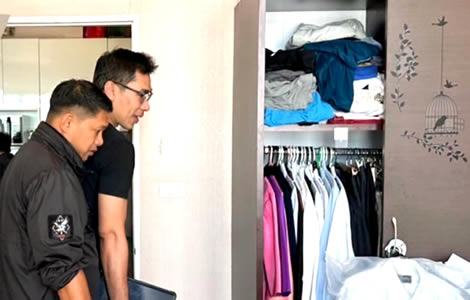
As part of this effort, ONCB officers searched the suspect’s apartment in Bangkok’s Bang Na district. Detectives questioned her boyfriend and examined items recovered inside the room. Officers are investigating the ownership of the heroin and tracing those believed to have recruited the courier. At the same time, they are identifying other suspected members of the organisation.
Investigators are also trying to answer the central question. Did the 26-year-old attendant know heroin was hidden inside the luggage? Or did she believe she was transporting ordinary goods for payment? Officials said both possibilities remain under examination while evidence continues to emerge.
The suspect, identified only as Meena, worked as a flight attendant for Thai Airways International. Australian authorities arrested her after she landed at Melbourne Airport last Thursday. Border officers allegedly found one kilogram of heroin concealed inside her luggage.
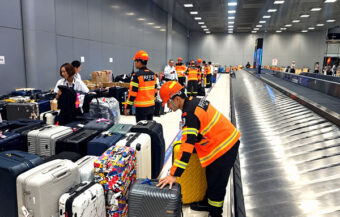
Australian officers inspect 12 bags as heroin seizure raises questions over courier’s knowledge of shipment
Australian reports said she travelled with 12 pieces of luggage. However, two bags immediately drew the attention of border officials during inspection. The heroin has an estimated Australian street value of A$500,000, or about 11.4 million baht.
In parallel, Thai investigators travelled to Phayao province to interview the suspect’s mother. According to the ONCB, Australian authorities allowed only her mother to speak with her after the arrest. Officers said Meena last returned home in April.
Her mother told investigators that her daughter regularly sent home 10,000 baht each month. She also said her daughter was still repaying student loan debt and did not appear financially comfortable.
Meanwhile, financial investigators examined the suspect’s banking records. They found no unusually large balances or suspicious financial movements. Justice Minister Rutthaphon Naowarat later confirmed that officers searched her Bang Na condominium. They discovered no illegal items during the search. However, investigators recovered several empty parcel boxes, which are now being examined as potential evidence.
CCTV footage and parcel boxes become fresh evidence as investigators widen search for organisers
Separately, detectives secured CCTV footage from the condominium. The recording shows a man delivering a package to the building on June 22. Investigators have not determined what the parcel contained. Even so, they believe the delivery could become an important part of the inquiry.
Attention has also turned to the suspect’s online communications. Pol Lt Gen Suriya Singhakamol, secretary-general of the ONCB, said investigators recovered conversations involving a Facebook account using the name “Rose”.
The account sought someone travelling to Australia who could transport about 20 kilograms of cargo. The shipment was described as OTOP products under Thailand’s One Tambon, One Product programme.
According to police, Meena and her boyfriend exchanged messages with the account holder before accepting the job. Investigators believe they attempted to verify the person’s credibility first. They then allegedly agreed to carry the shipment for 8,800 baht. Officers are now examining whether that payment reflected normal courier rates. The “Rose” Facebook account has since been deleted.
Facebook courier offer and deleted account emerge as detectives trace recruitment behind heroin shipment
On another front, investigators examined the suspect’s side business. Friends told police she worked as a personal shopper. She accepted overseas orders, purchased goods in Thailand and carried them abroad. Authorities noted that such commercial activity is generally prohibited for cabin crew.
Nevertheless, investigators acknowledged that some flight attendants supplement their income in similar ways. Detectives are now examining whether traffickers exploited that business model.
In response to questions about the suspect’s knowledge, Justice Minister Rutthaphon Naowarat urged caution. Australian authorities seized the heroin. However, Thai investigators must establish the surrounding circumstances before reaching conclusions. He said the investigation would be guided entirely by the evidence.
Australian authorities have refused the suspect bail. Pol Lt Gen Suriya said investigators expected clearer information within about four weeks. Until then, Thai and Australian investigators will continue exchanging intelligence as the inquiry progresses.
Earlier Phuket heroin case examined as police compare courier methods and possible criminal network links
The case has also revived interest in an earlier heroin investigation. In May, police intercepted six kilograms of heroin sewn into silk blouses. The shipment originated in northern Thailand and was addressed to a Thai flight attendant living in Phuket. Investigators said the drugs were also destined for Australia.
That attendant advertised courier services online. He told police he believed he was transporting legitimate goods. He also said it was the third similar shipment he had accepted for delivery. Detectives are now comparing the circumstances of both cases for possible links.
Likewise, investigators are examining whether organised traffickers deliberately target airline personnel offering courier services. The ONCB believes such arrangements may provide criminal groups with another route into Australia. Officers are analysing recruitment methods, delivery patterns and communication records.
Beyond the criminal investigation, Thai authorities are tightening counter-smuggling operations. Ms Areephak said the ONCB continues working with international partners against transnational drug trafficking. Airport Interdiction Task Forces and Seaport Interdiction Task Forces already operate across Thailand.
ASEAN airport and seaport task forces expand crackdown on international narcotics trafficking routes
Regional cooperation has also expanded through ASEAN Airport Interdiction Task Forces and ASEAN Seaport Interdiction Task Forces. Training programmes now include transport operators and private logistics companies handling international parcels.
Elsewhere, Transport Minister Phiphat Ratchakitprakarn ordered a review of airport screening procedures. He said pilots, stewards and flight attendants have traditionally received less intensive screening than ordinary passengers because of their operational duties. However, he said airline crew would now face stricter screening before departure.
Mr Phiphat explained that airport X-ray systems mainly detect explosives. Drug detection relies on intelligence, police, Customs officers and sniffer dogs.
Consequently, additional preventive measures will focus on outbound international passengers. He also noted that Thailand remains a transit point for several narcotics. Stronger controls are therefore required.
Transport minister orders tighter screening of flight crews after Australian heroin trafficking arrest case
Importantly, Mr Phiphat stressed that random inspections already apply to all nationalities. Thai travellers are not singled out for additional scrutiny. He also said the incident did not result from negligence because existing procedures had been followed.
However, concealment methods continue to evolve, requiring improved technology and stronger detection systems.
Suvarnabhumi Airport management also responded. It said existing X-ray scanners are designed primarily to detect explosive devices. Drug enforcement instead depends on intelligence sharing, risk assessments and targeted inspections. Airport officials, police and Customs officers already work together to identify high-risk passengers. Security operations and drug interdiction measures will now be strengthened further.
ONCB warns travellers never to carry unknown parcels as heroin investigation gathers pace across borders
Finally, the ONCB said it was discussing enhanced screening measures with Airports of Thailand. Ms Areephak said all departing passengers, including airline crew, already undergo security screening for dangerous items and prohibited articles before boarding international flights.
She also issued a direct warning to the public. People should never accept parcels or luggage for international transport unless they know exactly what is inside. Drug trafficking groups frequently conceal narcotics inside ordinary packages.
Another woman arrested off a flight from Thailand in late May smuggling dangerous drugs into Australia
Thai Airways air hostess held in an Australian prison on heroin trafficking charges. Thai police seek details
Anyone carrying them can quickly become a criminal suspect. Offences involving Category 1 narcotics, including heroin, crystal methamphetamine, methamphetamine and ecstasy, carry penalties ranging from life imprisonment to the death penalty under Thai law and the laws of many destination countries.
The ONCB urged anyone with information relating to drug trafficking to contact its 24-hour hotline on 1386.
Join the Thai News forum, follow Thai Examiner on Facebook here
Receive all our stories as they come out on Telegram here
Follow Thai Examiner here
Further reading:
Bungling French drug dealer arrested at Phuket Airport after cocaine sachets found on concourse
Phuket Airport Immigration Chief rebuts UK tabloid coverage linked with the arrest of a UK tourist
24 year old New Zealand tourist arrested. Cocaine found inside his passport clearing Phuket Airport