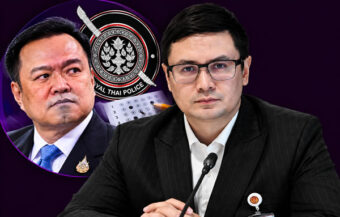
Thailand will tighten airport security for pilots and cabin crew after a Thai Airways flight attendant’s heroin arrest in Australia. Transport Minister Phiphat denied negligence, ruled out any flight ban and ordered stricter crew screening and a security overhaul.
Thailand will immediately tighten airport security for pilots and cabin crew after the heroin arrest of a Thai Airways flight attendant in Australia exposed a long-standing gap in crew inspections. Deputy Prime Minister and Transport Minister Phiphat Ratchakitprakarn admitted trusted airline personnel were not routinely subjected to the same drug screening as passengers. However, he rejected claims of negligence, insisted Thailand’s aviation standing remains intact, ruled out any Australian ban on Thai airlines and ordered a security review while police in both countries pursue the trafficking network behind the case.
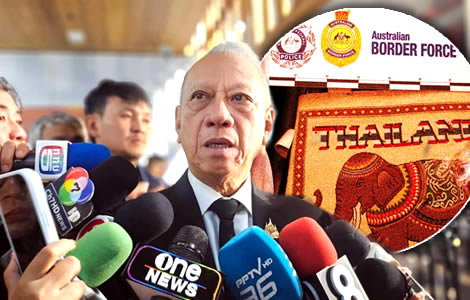
Deputy Prime Minister and Transport Minister Phiphat has defended Thailand’s aviation security system after Australian police arrested a Thai airline flight attendant over the alleged smuggling of one kilogram of heroin.
He insisted there was no negligence. He also said he does not expect Australia to impose restrictions on Thai airlines. However, he acknowledged that long-standing inspection practices for flight crews must change. Captains, flight attendants and stewards will now face much stricter security screening.
Speaking at Parliament at 9.40 am on June 30, Mr Phiphat said he immediately informed the president of Airports of Thailand (AOT) after learning of the arrest by the Australian Federal Police. He also ordered a review of current airport inspection procedures.
In response, aviation agencies will tighten preventative measures across the sector. The review will focus particularly on inspections involving airline personnel.
Crew security overhaul follows admission that trusted flight personnel now face much stricter inspections
Mr Phiphat said airport security has traditionally concentrated on explosives detection. Meanwhile, narcotics enforcement has relied mainly on intelligence operations and trained sniffer dogs. He acknowledged that approach now requires revision.
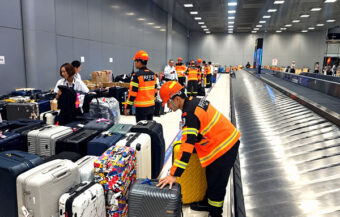
In the past, captains, stewards and flight attendants were treated differently from ordinary passengers. Instead, inspections reflected long-standing professional trust. Consequently, routine checks concentrated on explosives rather than narcotics. Drug detection dogs were generally not used to screen flight crews.
He said that practice created opportunities for increasingly sophisticated concealment methods. Accordingly, stronger safeguards are now required. Mr Phiphat accepted responsibility following the Australian arrest.
He said preventative measures must be strengthened immediately. At the same time, he stressed that traffickers continually adapt their smuggling techniques. Airport security, he added, must evolve at the same pace.
Thailand remains confident Australia will not restrict flights after heroin arrest and despite tighter screening
Notably, Mr Phiphat described Thailand as a major international aviation hub. Millions of passengers pass through the country’s airports each year. As part of this, Thailand can also become a transit point for different types of narcotics.
He said authorities must recognise that risk. Therefore, inspection procedures must become more rigorous while maintaining existing security standards.
Despite the arrest, Mr Phiphat dismissed suggestions that Australia could suspend or ban Thai airlines. Instead, he said Australian border authorities already conduct strict inspections on every international arrival.
Random searches are standard practice. Moreover, they apply regardless of nationality. He said Australian procedures already target all incoming passengers rather than any particular country.
Separately, Mr Phiphat rejected reports suggesting Thai travellers would face exceptional scrutiny overseas. According to him, Australia, Japan, China, the United States and European countries all conduct random inspections. Those checks frequently involve trained sniffer dogs. Likewise, passengers from every nationality are selected. “There is no specific focus on Thai people,” he said.
Thailand orders tougher crew checks while maintaining close coordination with Australian aviation authorities
Even so, Mr Phiphat accepted the incident had exposed weaknesses in inspection procedures for airline personnel. Future screening will become significantly stricter.
Flight crews will increasingly face inspections similar to those already applied to ordinary passengers. He said the case requires a complete reassessment of personnel security requirements across the aviation sector.
On another front, reporters asked whether Australia had introduced additional measures following the arrest. Mr Phiphat said Thailand remains in constant contact with Australian authorities.
However, he noted the investigation had only recently begun. Further action, he said, will involve Thai Airways management, Airports of Thailand and the Civil Aviation Authority of Thailand (CAAT). He also noted that many international airports operate outside AOT’s control. Accordingly, instructions have already been issued to those airports.
Phiphat rejects claims of lax airport security as inspections and narcotics enforcement continues
Asked whether flights between Thailand and Australia had been cancelled, Mr Phiphat gave a direct answer. There had been no cancellations, he said. International services continue to operate normally.
Likewise, he rejected suggestions that Thai airlines would automatically face tighter overseas treatment. Australia, he said, already applies comprehensive inspections regardless of an airline’s country of origin.
To illustrate the point, Mr Phiphat referred to Australia’s strict border controls. Even food carried by passengers receives careful inspection. If prohibited items are discovered, travellers must remove them. Inspection procedures differ between countries. Nevertheless, rigorous border enforcement is already common at major international airports.
The minister also rejected criticism that Thailand’s airport security system was lax. “It is inaccurate to say we are lax,” he said. Thailand follows established inspection procedures, he added. Describing the system as lax would wrongly suggest existing measures are ineffective. Instead, airports already conduct regular security inspections. Narcotics enforcement also remains a continuous priority.
ONCB intelligence operations to complement tougher airport checks as traffickers adopt new methods
In parallel, Mr Phiphat highlighted the role of the Office of the Narcotics Control Board (ONCB). The agency carries out intelligence operations and in-depth investigations into drug trafficking.
Those investigations complement airport screening procedures. Airport authorities also conduct continuous security checks. Together, those measures form Thailand’s existing narcotics enforcement framework.
Nevertheless, Mr Phiphat accepted that no country can intercept every smuggling attempt. Traffickers constantly alter their concealment methods. Authorities must therefore continue improving their own capabilities. Better technology will be required. Improved inspection procedures will also be needed. Similar smuggling cases, he noted, have occurred in many countries, not only Thailand.
When reporters again asked whether relaxed treatment of airline crews contributed to the incident, Mr Phiphat acknowledged previous practices would end. “In the past, we may have shown mutual respect,” he said. “Going forward, we must be more thorough.” He said airline personnel will now face much closer scrutiny before departure.
Modern scanners under review as Thailand seeks stronger detection of concealed narcotics in baggage
Attention then turned to detection technology. Mr Phiphat said many countries still rely primarily on trained sniffer dogs. However, traffickers use increasingly sophisticated concealment methods.
Some narcotics are hidden inside sealed food cans. Once an item appears to contain ordinary canned food, determining its contents becomes extremely difficult. Therefore, he said Thailand should examine modern scanning technology capable of identifying concealed narcotics inside sealed containers.
Police in Thailand and Australia hunt to track down network behind the arrest of a Thai Airways hostess
Another woman arrested off a flight from Thailand in late May smuggling dangerous drugs into Australia
Finally, Mr Phiphat again dismissed suggestions that Australia would restrict Thai airlines following the case. Thailand and Australia already maintain established channels of cooperation, he said.
Moreover, Thailand continues to comply with international aviation standards. He also insisted the country’s credibility had not been damaged by the incident. Instead, the immediate priority is tightening inspections of airline personnel, strengthening airport security and maintaining close coordination with Australian authorities as the investigation proceeds.
Join the Thai News forum, follow Thai Examiner on Facebook here
Receive all our stories as they come out on Telegram here
Follow Thai Examiner here
Further reading:
Bungling French drug dealer arrested at Phuket Airport after cocaine sachets found on concourse
Phuket Airport Immigration Chief rebuts UK tabloid coverage linked with the arrest of a UK tourist
24 year old New Zealand tourist arrested. Cocaine found inside his passport clearing Phuket Airport