Under mounting pressure over cannabis, Bhumjaithai insists it backed medicine, not recreational use, and says a failed cannabis law left illegal shops, regulatory gaps and weak enforcement to take hold.
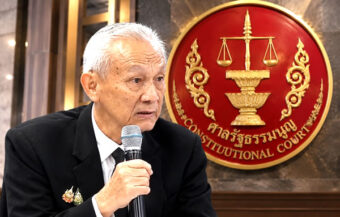
Bhumjaithai Party legal heavyweight Supachai Jaisamut has launched the party’s strongest defence yet of Thailand’s controversial cannabis policy, insisting it never supported recreational use and blaming today’s booming cannabis trade on Parliament’s failure to pass a long-promised regulatory law. As pressure mounts from major drug seizures in Europe and growing calls for a crackdown, the ruling party is now urging MPs to urgently pass a Medical Cannabis Act, arguing that years of legal uncertainty, illegal shops and weak enforcement stem from a regulatory vacuum rather than the 2022 decriminalisation policy signed off by Prime Minister Anutin Charnvirakul, then the Minister of Public Health.
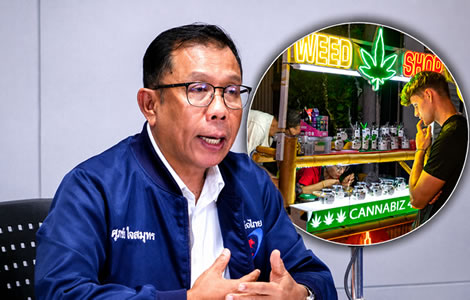
Top Bhumjaithai Party figure and legal expert Supachai Jaisamut on Saturday sought to distance the ruling party from the liberal availability of cannabis that followed its removal from Thailand’s narcotics list in June 2022.
He insisted the Bhumjaithai Party has never supported recreational cannabis use. Instead, he argued the controversy stems from the failure to enact the regulatory law intended to accompany the policy introduced by then Public Health Minister, and now Prime Minister, Anutin Charnvirakul.
Mr Supachai made the remarks in a statement posted on his personal Facebook page on Saturday, July 4. He titled the post Medical Cannabis: The Truth Society Should Know and the Bhumjaithai Party’s Unchanging Stance.
Party says cannabis policy has always focused on medical use and rejects blame for later problems
In the statement, he said cannabis has become one of Thailand’s most contentious political issues. He argued that public debate, media coverage and political attacks have created the impression that Bhumjaithai alone was responsible for legalising cannabis and the problems that followed. In response, he said the party believed it was time to present what he described as the facts.
“The Bhumjaithai Party believes it’s time to present the facts honestly,” Mr Supachai wrote. He added that the party’s position “has never changed: supporting cannabis for medical and health purposes, not for recreational use.” He also stressed that cannabis should operate “under clear laws, with a regulatory system in place, and with public safety as the primary concern.”
According to Mr Supachai, the original policy pursued three objectives. It sought to improve access to alternative treatment for patients. It also aimed to support medical research and innovation.
At the same time, it was intended to create economic opportunities for farmers and legally operating entrepreneurs. However, he insisted that none of those objectives contemplated unrestricted recreational use.
Failed cannabis bill left legal vacuum that party says fuelled today’s regulatory and enforcement problems
Notably, Mr Supachai said removing cannabis from the narcotics list did not mean uncontrolled public access. Instead, he said the Bhumjaithai Party consistently argued that Thailand required dedicated legislation before the new framework could function properly.
That proposed law would regulate cultivation, production, distribution, advertising, dispensing and cannabis use. It would also establish safeguards against abuse while protecting legitimate medical treatment. As part of this, every stage of the industry would operate under clear legal supervision.
However, that legislative framework never came into force. Mr Supachai said the Medical Cannabis Bill proposed by the Bhumjaithai Party failed to pass the House of Representatives in 2022 because of political reasons.
Consequently, Thailand entered an extended period without a dedicated cannabis law despite removing the plant from the narcotics list. He argued that the country has spent more than two years operating within that regulatory vacuum.
Mr Supachai said many of today’s problems have arisen from those legislative gaps. He pointed to illegal cannabis shops operating across Thailand. He also referred to widespread recreational consumption. Separately, he criticised what he described as negligence by government officials. Therefore, he argued that the current situation reflects the absence of regulation rather than the party’s stated policy.
“When specific legislation is not yet finalised, the country inevitably faces regulatory gaps,” Mr Supachai wrote. He described that outcome as “an important lesson that all parties should work together to address, rather than using it as a political issue for mutual blame.”
Supachai urges strict regulation instead of reversing cannabis policy and ending medical treatment access
On another front, Mr Supachai rejected calls to reverse the policy entirely. He argued that closing access would disadvantage patients who benefit from medical cannabis.
Instead, he said Thailand should urgently establish an effective regulatory system, close legal loopholes and enforce the law more rigorously. He maintained that regulation, rather than prohibition, remains the appropriate response.
He also outlined measures the party believes should form part of the new legal framework. Cannabis use should be restricted to medical purposes. Prescriptions should remain under medical supervision. Sales to children and young people should be prohibited. Likewise, advertising that encourages misuse should be banned. In parallel, he called for appropriate penalties against those who breach the law.
Mr Supachai also argued that future cannabis policy should rest on evidence rather than political rhetoric. “The Bhumjaithai Party believes that sound public policy must be based on scientific evidence, not emotions or fear,” he wrote. He added that policymakers should consider medical data, societal concerns and lessons learned from previous enforcement.
Beyond the domestic debate, Mr Supachai said Thailand still possesses significant economic potential in the sector. He argued the country could become a regional hub for medical cannabis.
Nevertheless, he stressed that such ambitions depend upon a transparent, robust and trustworthy regulatory system. That framework, he said, should support research, pharmaceutical production, product development and value-added opportunities for the agricultural sector.
Party presses parliament to pass medical cannabis law and restore controls before August debate begins
Accordingly, he repeated that the Bhumjaithai Party does not support recreational cannabis use. Instead, it intends to protect patients’ rights to treatment while supporting cannabis for recognised medical purposes.
At the same time, the party will continue advocating strict legislation designed to safeguard wider society. He said that the position has remained unchanged since the policy was first formulated.
Massive cannabis seizure from Thailand by Polish and German officials piles further pressure on Bangkok
Screws are being fitted and are soon to be turned on Thailand’s cannabis industry which must be reined in
Mr Supachai also disclosed that the Bhumjaithai Party submitted a draft Medical Cannabis Act to the House of Representatives last week. When Parliament reconvenes in August, he said the legislation should receive urgent consideration. He also urged Members of Parliament from every political party to work together to secure its passage after the previous bill failed in 2022.
Finally, Mr Supachai said effective public policy must protect patients and society simultaneously. “Patients must not be deprived of access to treatment, while children and youth must receive strong protection,” he wrote.
He concluded that this balance has always defined the Bhumjaithai Party’s cannabis policy and remains the objective of its proposed Medical Cannabis Act.
Join the Thai News forum, follow Thai Examiner on Facebook here
Receive all our stories as they come out on Telegram here
Follow Thai Examiner here
Further reading:
Bungling French drug dealer arrested at Phuket Airport after cocaine sachets found on concourse